AP Calculus BC Help — Video Lessons & Practice
Get clear, step-by-step explanations for every AP Calculus BC topic and build exam-ready confidence.
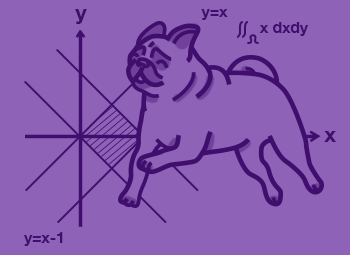
Expert Video Solutions
Watch it solved then solve the next alone.
Unlimited Practice
Practice until it actually clicks.
Test Prep Included
Practice with real included exam questions.
Try It Now
Test your knowledge
Our approach aligns with the evidence
Exam Scores
Better Recall
Less Anxiety
AP Calculus BC Topics
1. Limits & Continuity
2. Derivatives
3. Derivative Applications
4. Integrals
5. Integration techniques
6. Integral Applications
7. Differential Equations
8. Sequence and Series
8 Chapters · 68 Topics · 454 Videos
Discover Our Learning Areas
Explore key subjects and start learning with interactive content.




What Is AP Calculus BC?
AP Calculus BC is a College Board Advanced Placement course and exam that covers the equivalent of two semesters of university-level calculus. It builds on the foundations of AP Calculus AB — limits, derivatives, and integrals — and extends into more advanced territory including integration techniques, parametric and polar equations, vector functions, and infinite sequences and series. For high school students in New Zealand taking this course, it offers a genuine pathway to earning university credit before graduation. It is one of the most rigorous AP courses available, and strong performance on the exam can accelerate your university maths pathway significantly.
What Topics Are Covered in AP Calculus BC?
AP Calculus BC follows the College Board curriculum framework, which is divided into ten units. The course opens with limits and continuity — the language underlying all of calculus — before moving into differentiation: definitions, basic rules, and applications such as related rates and optimisation. Integration follows, covering the Fundamental Theorem of Calculus, u-substitution, and area between curves.
BC-exclusive content adds significant depth. Integration techniques expand to include integration by parts, partial fractions, and improper integrals. Differential equations introduce slope fields, separable equations, and Euler's method. Parametric equations, polar coordinates, and vector-valued functions form their own unit, requiring you to differentiate and integrate in new coordinate systems. The course closes with infinite sequences and series — one of the most concept-dense sections in any high school maths course — covering geometric series, p-series, and convergence tests including the ratio, integral, comparison, limit comparison, and alternating series tests, as well as Taylor and Maclaurin polynomial approximations.
Is AP Calculus BC Hard? Where Do Students Struggle?
AP Calculus BC is consistently ranked among the most challenging AP courses. Its difficulty comes not just from the volume of content but from the depth of understanding required. You cannot succeed by memorising procedures alone — the free-response section in particular rewards students who understand why a method works, not just how to apply it.
The series and sequences unit is where most students struggle the most. Knowing which convergence test to use in a given situation — and being able to justify your choice — is a skill that takes genuine practice to develop. Integration techniques are a close second: integration by parts and trigonometric substitution require both procedural accuracy and the ability to choose the right approach quickly under exam conditions. Parametric and polar calculus also challenges students who are used to working only in Cartesian coordinates.
The good news is that each of these topics responds well to clear, method-focused teaching and consistent practice. Breaking each concept down to its underlying logic — rather than treating it as a formula to memorise — is the most reliable path through the harder sections.
How Is AP Calculus BC Assessed?
The AP Calculus BC exam is administered by the College Board each May. It consists of two main sections. Section I is multiple choice, with 45 questions over 105 minutes split into a 60-minute no-calculator portion and a 45-minute calculator-permitted portion. Section II is free response, with 6 questions over 90 minutes — again split between calculator and no-calculator parts.
The exam is scored on a scale of 1 to 5. A score of 3 is generally the minimum required for university credit, though many universities require a 4 or 5 for credit in calculus-intensive programmes. Students who take the BC exam also receive an AB subscore, which reflects their performance on the questions that overlap with the AB curriculum. This subscore is useful if you are applying to universities that weight AB and BC credit differently. For New Zealand students pursuing international university pathways, a strong AP Calculus BC score is widely recognised.
Why StudyPug for AP Calculus BC?
StudyPug is built around one core idea: teach the method, not just the answer. Every AP Calculus BC video lesson is made by a certified teacher who walks through each problem step by step — showing you how to think through series convergence, how to choose an integration technique, and how to set up a differential equation — so that you can handle similar questions on your own during the exam.
The platform starts with a short diagnostic assessment that identifies the specific calculus topics where you need the most work. Rather than starting from the beginning of a course you already partly know, you focus your time on the gaps that actually matter. Adaptive practice then adjusts difficulty based on your responses, keeping you challenged without overwhelming you.
StudyPug's AP exam prep is built into the subscription. Practice tests and exam-style questions are based on the College Board framework, so the format and difficulty level you practise with closely matches what you will face in May. Everything is accessible anytime — whether you are reviewing series tests at midnight before your exam or catching up on polar coordinates over the weekend.
For New Zealand students taking AP Calculus BC, the curriculum coverage maps to the College Board's AP framework directly. You also get access to every other subject and grade level in the StudyPug library — all in one subscription.
What You Learn: AP Calculus BC Curriculum Coverage
StudyPug covers the full College Board AP Calculus BC curriculum across all ten units:
- Limits and Continuity — evaluating limits algebraically and graphically, continuity conditions, limits at infinity, and the Squeeze Theorem.
- Differentiation: Definition and Fundamental Properties — average and instantaneous rates of change, basic differentiation rules including product, quotient, and chain rules.
- Differentiation: Composite, Implicit, and Inverse Functions — implicit differentiation, derivatives of inverse trigonometric functions, and higher-order derivatives.
- Contextual Applications of Differentiation — related rates, linear approximation, L'Hôpital's Rule.
- Analytical Applications of Differentiation — Mean Value Theorem, optimisation, curve sketching.
- Integration and Accumulation of Change — Riemann sums, the Fundamental Theorem of Calculus, u-substitution.
- Differential Equations — slope fields, separation of variables, Euler's method, exponential models.
- Applications of Integration — area between curves, volumes of revolution, arc length.
- Parametric Equations, Polar Coordinates, and Vector-Valued Functions — calculus in parametric and polar form, motion along curves.
- Infinite Sequences and Series — convergence tests, Taylor and Maclaurin series, error bounds.
No validated internal topic URLs are available for this page in the current sitemap map. Links will be placed once the MAP is updated for this course.
Using StudyPug for AP Calculus BC
Getting started is straightforward. Once you sign up, the diagnostic assessment gives you a personalised picture of where you stand across the AP Calculus BC units. From there, you can follow StudyPug's suggested study path or jump directly to the topics you need most — series convergence before your mock, integration techniques before your free-response practice, or a full-course review in the weeks leading up to the May exam.
Each topic has a certified-teacher video that teaches the concept, followed by practice problems with step-by-step solutions. If you get a problem wrong, the worked solution shows you exactly where your reasoning went off track — not just the right answer, but why the method works. You can use Photo Search to take a picture of a calculus problem from your textbook or worksheet and find the matching StudyPug lesson instantly, across all grades and subjects.
StudyPug is fully mobile-optimised, so you can practise on any device. Your progress is tracked automatically, and the adaptive system continues to adjust as your skills improve. The 30-day money-back guarantee means there is no risk in getting started. If StudyPug is not the right fit within the first 30 days, you can request a full refund — no questions asked.
For AP Calculus BC, consistent practice is the single biggest predictor of exam performance. StudyPug gives you the videos, the practice problems, the exam-style tests, and the personalised study path to make that practice as effective as possible. Start today and build the calculus skills you need to perform on exam day.
AP Calculus BC FAQ
Unsure how StudyPug works? Need help with setting up? Check our frequently asked questions or contact us for help.
What do you learn in AP Calculus BC, and what topics does it cover?
AP Calculus BC covers all of AP Calculus AB plus additional advanced topics. Core content includes limits, continuity, derivatives, and definite and indefinite integrals. Beyond AB, BC adds integration techniques such as integration by parts and partial fractions, parametric and polar equations, vector functions, and infinite sequences and series including Taylor and Maclaurin series. The course also covers differential equations, including slope fields and Euler's method. It is a rigorous university-level course designed to build deep mathematical reasoning alongside procedural fluency.
What is the difference between AP Calculus BC and AP Calculus AB?
AP Calculus AB covers roughly one semester of university calculus — limits, derivatives, and basic integration. AP Calculus BC covers roughly two semesters, adding integration techniques, infinite series, parametric curves, polar coordinates, and vector calculus. The AP BC exam includes all AB content plus these extra topics. Students who score well on BC often receive more university credit. If you are comfortable with pre-calculus and want to move faster, BC offers a more complete introduction to university-level mathematics in a single course.
Is AP Calculus BC hard, and where do students struggle most?
AP Calculus BC is widely considered one of the most demanding AP courses. Most students find infinite series — especially convergence and divergence tests — to be the hardest section, because it requires juggling multiple tests and knowing when to apply each. Integration techniques such as integration by parts and trigonometric substitution also trip up many learners. Strong algebra and a solid understanding of AB content are essential foundations. The difficulty is manageable with consistent practice and clear explanations, but it does require more study time than most high school maths courses.
What should I take before AP Calculus BC, and what comes after it?
You should have completed Pre-Calculus or equivalent — including strong skills in functions, trigonometry, and algebra — before starting AP Calculus BC. Many students also take AP Calculus AB first, though motivated learners can take BC directly. After BC, common next steps include university courses in Multivariable Calculus (Calculus III), Linear Algebra, and Differential Equations. A high AP exam score can earn significant credit at most universities, allowing you to skip introductory maths and move straight into more advanced study.
Is AP Calculus BC on the AP exam, and how is it tested?
Yes. The AP Calculus BC exam is set by the College Board and taken in May each year. It has two sections: multiple choice (45 questions, 105 minutes) and free response (6 questions, 90 minutes). Section I is split into a no-calculator and a calculator-permitted portion; so is Section II. The exam is scored 1–5, and a score of 3 or above typically earns university credit at New Zealand and international universities. Students also receive an AB subscore reflecting their performance on the AB-equivalent portions of the exam.
What is one of the hardest concepts in AP Calculus BC, and how do you tackle it?
Infinite series convergence is consistently the topic students find most challenging in AP Calculus BC. The difficulty is knowing which convergence test to apply — ratio test, integral test, comparison test, alternating series test — and why. A reliable approach is to build a decision flowchart: first check if terms go to zero (divergence test), then look at the series structure to select the appropriate test. Practise each test separately before combining them. Understanding the geometric series and p-series as benchmarks helps enormously. Regular timed practice with worked examples builds both speed and accuracy for the free-response section.




Written by the StudyPug Team
Last updated June 5, 2026
3 M+
students
★★★★★
4.8 average
K–12
all grades