Grade 7 Science Help for Your Child
Targeted assessments find gaps in ecosystems, mixtures, and heat transfer — then adaptive practice builds real understanding.

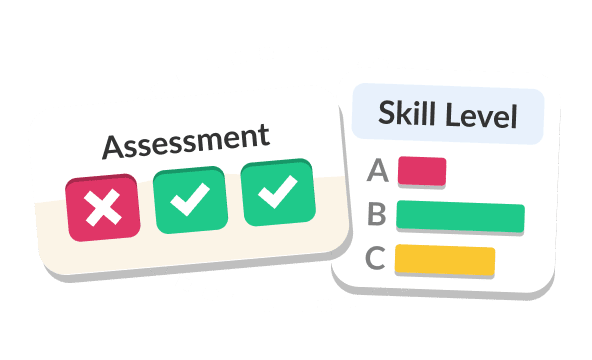
Finds the Gaps
Shows exactly what your child must study.
Step-by-Step Videos
Your child learns steps and solves alone.

Curriculum Aligned
Matches your child's curriculum exactly.
Try It Now
Test your knowledge
Our approach aligns with the evidence
Exam Scores
Better Recall
Less Anxiety
Grade 7 Science Topics
1. Research Methods
2. Mechanisms
3. Evidence
4. Elements
7. Electricity
8. Forces
10. Geology
12. Atmosphere
13. Climate Change
15. Human Impact
16. Engineering
17. Applications
18 Chapters · 39 Topics · 28 Videos
Discover Our Learning Areas
Explore key subjects and start learning with interactive content.


What Is Grade 7 Science?
Grade 7 Science is a pivotal year in the Canadian provincial science curriculum. Students move beyond simple observation and begin investigating complex systems — how living things interact in ecosystems, how substances can be mixed or separated, and how heat moves through different materials. The three core strands — interactions in ecosystems, mixtures and solutions, and heat transfer — form the foundation your child will build on in Grade 8 and beyond. Understanding these concepts well now prevents gaps from compounding in later science courses.
What Does My Child Learn in Grade 7 Science?
Across the year, your child develops scientific thinking alongside specific content knowledge. In the interactions in ecosystems strand, they explore biodiversity, food webs, biotic and abiotic factors, and human impact on natural environments. In mixtures and solutions, they investigate how substances dissolve, how solutions can be separated, and the difference between mechanical mixtures and solutions. In heat transfer, they learn how heat energy moves through conduction, convection, and radiation, and how these principles apply in everyday life. Scientific inquiry skills — forming hypotheses, designing fair tests, recording data, and drawing conclusions — are woven throughout every strand.
Is Grade 7 Science Difficult?
Many families notice a real jump in complexity at Grade 7. The vocabulary becomes more technical, the concepts more abstract, and the expectation to apply knowledge — not just recall it — increases sharply. Topics like food-web dynamics or the properties of solutes and solvents can trip up even capable students if one foundational concept is misunderstood. The challenge is rarely a lack of ability; it is usually a small gap that goes unnoticed until it grows. A targeted diagnostic assessment can find that gap quickly so your child gets support on exactly the right concept rather than repeating work they already understand.
How Is Grade 7 Science Assessed?
Provincial science assessments at Grade 7 typically include written tests, lab practicals or reports, inquiry projects, and ongoing teacher observation of scientific skills. Provinces like Ontario and British Columbia expect students to demonstrate both knowledge of the curriculum content and the ability to think scientifically — plan investigations, interpret evidence, and communicate findings clearly. Quiz replay practice is particularly valuable here because it builds the kind of confident, flexible recall that performance assessments require, not just short-term memorisation before a single test.
Why StudyPug for Grade 7 Science?
StudyPug is built around one core idea: find exactly what your child does not yet understand, then build it systematically. The diagnostic assessment maps your child's knowledge against the provincial Grade 7 Science curriculum in minutes. Adaptive practice then adjusts to their level — presenting questions and explanations that are challenging enough to build understanding without being overwhelming. Certified-teacher video lessons explain the method behind each concept, so your child sees how a knowledgeable teacher approaches ecosystems, chemical properties of mixtures, or heat transfer — not just a list of facts to memorise.
Progress tracking gives you a parent-level view of what your child has practised, how their quiz scores are trending, and which topics still need attention. The 30-day money-back guarantee means there is no risk in trying it. Free sample practice content is also available so you can see the approach before committing to a subscription.
What Grade 7 Science Topics Does StudyPug Cover?
StudyPug covers the full Grade 7 Science provincial curriculum, including all three major strands. Key topics include:
- Interactions in Ecosystems: biodiversity, food webs and food chains, biotic and abiotic factors, ecosystem balance, and human impact on biodiversity
- Mixtures and Solutions: pure substances versus mixtures, mechanical mixtures versus solutions, solutes and solvents, concentration, and separation techniques
- Heat Transfer: sources of heat, particle theory of heat, conduction, convection, radiation, and insulation in everyday contexts
- Scientific Inquiry: forming hypotheses, designing experiments, recording and interpreting data, and communicating scientific conclusions
If you would like to see how the Grade 7 Science topics align with your province, you can explore the Ontario grade 7 science curriculum or the British Columbia grade 7 science curriculum for detailed strand-by-strand breakdowns.
How to Use StudyPug for Grade 7 Science
Getting started takes only a few minutes. When your child first logs in, they complete a short diagnostic assessment that identifies their strengths and the specific concepts they need to work on. StudyPug then builds a personalised practice path through the Grade 7 Science curriculum. Most families find that 20–30 minutes of focused practice per day produces steady, measurable improvement — consistency matters far more than occasional long sessions.
As your child practises, they can replay quizzes on any topic until they feel genuinely confident. You receive progress updates through the parent dashboard so you can see improvement week over week without having to sit alongside your child for every session. Whether your child is preparing for an upcoming test on ecosystems, working through the mixtures and solutions unit, or building heat transfer knowledge ahead of a lab, StudyPug gives them a clear, supported path forward.
Grade 7 Science FAQ
Unsure how StudyPug works? Need help with setting up? Check our frequently asked questions or contact us for help.
How will StudyPug help my child with Grade 7 Science?
StudyPug starts with a diagnostic assessment that finds exactly where your child needs support in Grade 7 Science. Adaptive practice then builds understanding step by step — whether the challenge is ecosystems, mixtures and solutions, or heat transfer. Parents can follow along using the progress dashboard, so you always know how your child is doing.
What Grade 7 Science topics are covered?
Grade 7 Science covers interactions in ecosystems, mixtures and solutions, and heat transfer — the three core strands in the provincial science curriculum. StudyPug includes practice and explanations for all key concepts across these strands, so your child is prepared for every part of the course, including assessments and projects.
Is Grade 7 Science hard?
Grade 7 Science introduces more abstract concepts than earlier grades, such as food webs, chemical properties of solutions, and conduction versus convection. Many students find it a jump from Grade 6. The good news is that with targeted practice on the specific concepts your child finds difficult, the subject becomes much more manageable. StudyPug's diagnostic assessment pinpoints those spots quickly.
Does StudyPug match the provincial science curriculum?
Yes. StudyPug's Grade 7 Science content is aligned to the provincial science curriculum, including the expectations followed in Ontario and British Columbia. Every topic your child covers at school — from biodiversity and ecosystems to properties of mixtures — is represented, so practice reinforces exactly what teachers are teaching in class.
How is Grade 7 Science assessed in school?
In most Canadian provinces, Grade 7 Science is assessed through a combination of tests, quizzes, lab reports, projects, and teacher observation of scientific inquiry skills. Provincial expectations emphasise both knowledge of concepts and the ability to apply scientific thinking. StudyPug's quiz replay feature helps your child practise until they are genuinely confident before each school assessment.
What comes after Grade 7 Science?
Grade 8 Science builds directly on Grade 7 foundations, moving into cells and body systems, fluids, mechanical systems, and Earth's water systems. Students who have a strong handle on ecosystems, mixtures, and heat transfer from Grade 7 find the transition to Grade 8 much smoother. StudyPug's progress tracking shows which Grade 7 concepts are solid before your child moves on.





Written by the StudyPug Team
Last updated June 5, 2026
3 M+
students
★★★★★
4.8 average
K–12
all grades