Grade 3 Science Help for Your Child
Adaptive practice and diagnostic assessments aligned to the provincial science curriculum.
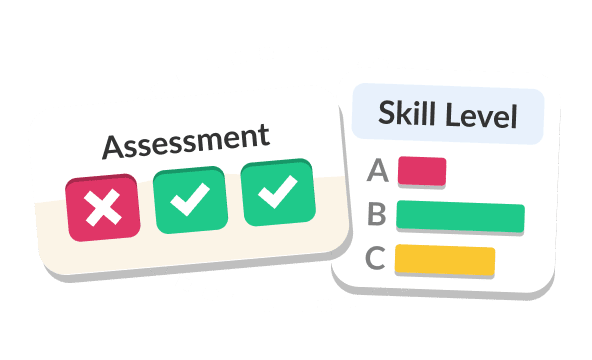
Finds the Gaps
See what your child needs to review.
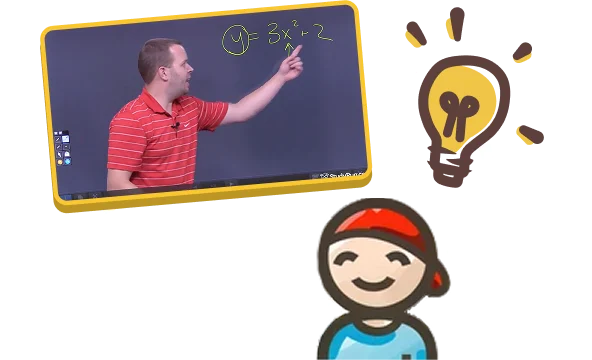
Step-by-Step Videos
Child follows lessons then solves alone.
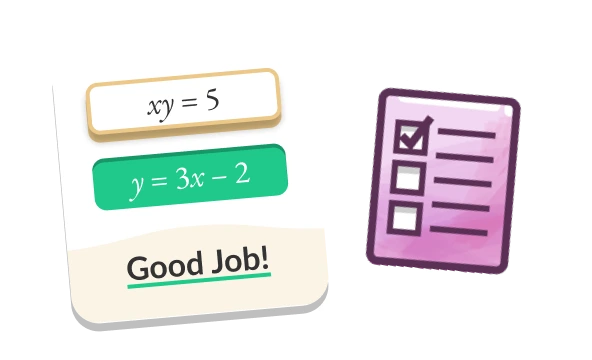
Practice That Adapts
Questions adapt to build your child's confidence.
Try It Now
Test your knowledge
Our approach aligns with the evidence
Exam Scores
Better Recall
Less Anxiety
Grade 3 Science Topics
1. Advanced Investigation
2. Ecosystems
3. Adaptations
4. Food Chains
5. Energy Pyramids
6. Forces
7. Simple Machines
8. Thermal Energy
9. Landforms
10. Earth Materials
11. Solar System
14. Engineering Process
15 Chapters · 38 Topics · 28 Videos
Discover Our Learning Areas
Explore key subjects and start learning with interactive content.

What Is Grade 3 Science?
Grade 3 Science is where children move from simple observation into structured scientific inquiry. At this level, the provincial science curriculum focuses on three core areas: growth and changes in plants, forces and structures, and the properties of soils. Your child learns to ask questions, make predictions, record observations, and draw conclusions — skills that build the foundation for every science course that follows. It is an exciting year, but it can also be the first time children hit concepts that feel genuinely difficult, particularly when forces and soil types become more detailed than earlier grades.
What Do Children Learn in Grade 3 Science?
The provincial Grade 3 Science curriculum typically covers three main units. In the plants unit, children study how plants grow, what they need to survive, and how they reproduce and change through their life cycles. In the forces and structures unit, they explore how pushes and pulls act on objects, how structures are designed to withstand forces, and what makes a structure strong or weak. In the soils unit, they examine the properties of different types of soil, what soils are made of, and why healthy soil matters for living things. Across all three units, Grade 3 students develop scientific vocabulary, practice recording observations, and begin to connect their findings to real-world examples.
Is Grade 3 Science Hard?
For many children, Grade 3 is the first year science feels like a proper subject with tests and structured learning — rather than just show-and-tell exploration. Some concepts, like understanding how compression and tension work in a structure, or explaining the difference between clay, sandy, and loamy soil, require a level of abstract thinking that younger children are just developing. The good news is that this content responds very well to repeated, targeted practice. When a child revisits a difficult concept in small steps — with immediate feedback — understanding tends to build quickly. StudyPug's diagnostic assessment identifies the exact sticking points, so practice time is never wasted on things your child already knows.
How Is Grade 3 Science Assessed?
In the provincial science curriculum, Grade 3 students are assessed in several ways. Teachers use hands-on activities to observe scientific thinking in action. Short quizzes and unit tests check conceptual understanding. Students may also complete written responses where they explain their reasoning or describe an experiment's outcome. Assessment at this level looks not just at the right answer but at the ability to communicate scientific thinking clearly. StudyPug prepares children for all of these formats by reinforcing both the content knowledge and the skill of explaining answers — building real understanding rather than surface-level memorization.
What Comes After Grade 3 Science?
After Grade 3 Science, children move into Grade 4 Science, which introduces habitats and communities, light and sound, and rocks and minerals. The plant biology and soil knowledge from Grade 3 feeds directly into Grade 4's habitat and earth-science topics, so a strong Grade 3 foundation genuinely matters. Students who leave Grade 3 with confident understanding of forces, structures, and plant systems arrive in Grade 4 ready to build on that knowledge rather than playing catch-up. Starting early with targeted support keeps the progression smooth.
Grade 3 Science Topics and Curriculum Alignment
StudyPug's Grade 3 Science content is aligned to the provincial science curriculum. For province-specific curriculum details, you can explore the Ontario Grade 3 science curriculum and the British Columbia Grade 3 science curriculum. These pages outline exactly which expectations and learning outcomes are covered, so you can see how StudyPug practice maps to what your child's teacher is teaching. If your child is in another province, the core Grade 3 topics — plants, forces and structures, soils — are broadly consistent across Canadian provincial curricula, and StudyPug's content covers all of them.
Why StudyPug for Grade 3 Science?
StudyPug is built for the way children actually learn — through practice, feedback, and repetition — not passive reading. Here is what makes it work for Grade 3 Science families:
- Diagnostic assessment that finds gaps fast. Instead of guessing where your child needs help, a short diagnostic assessment maps their understanding across all Grade 3 Science topics and creates a targeted practice path from day one.
- Adaptive practice that adjusts to your child. As your child works through Grade 3 Science topics, the practice adjusts to their level — reinforcing areas of weakness without boring them on concepts they have already understood.
- Step-by-step video lessons from certified teachers. When a concept is genuinely confusing, your child can watch a certified teacher explain the method clearly — the same way a good classroom teacher would, without shortcuts.
- Quiz replay for real understanding. Your child can retake any quiz as many times as needed. This is one of the most effective ways to move from vague familiarity to confident knowledge — especially for the kind of terminology-heavy content in Grade 3 Science.
- Photo Search for quick help. If your child gets stuck on a question, Photo Search lets them find support quickly — a secondary tool that keeps momentum going rather than letting frustration build.
- A parent dashboard that keeps you informed. The progress dashboard shows completed topics, quiz scores, and areas still needing attention across all Grade 3 Science units. No science background required — the reports are clear and actionable.
- 30-day money-back guarantee. Try StudyPug with full access. If it is not the right fit within 30 days, you get your money back. Free practice content is also available before you subscribe.
What Your Child Will Learn and Practice
A Grade 3 Science subscription covers the full provincial curriculum for the year. Your child will practice identifying the parts of a plant and explaining their functions, predicting how different forces act on everyday structures, comparing soil types by their properties, and applying scientific vocabulary to describe observations. Each topic builds on the last, so by the end of the year your child has a cohesive understanding of Grade 3 Science — not a collection of disconnected facts. The adaptive practice ensures that time spent on StudyPug is always focused on the next most important thing to learn, not on content your child has already understood.
How to Use StudyPug for Grade 3 Science
Getting started takes less than five minutes. Your child completes a short diagnostic assessment that identifies strengths and gaps across Grade 3 Science topics. StudyPug then builds a targeted practice path. Most families find that 15 to 20 minutes of daily practice makes a noticeable difference within four to six weeks — consistency matters more than long sessions for this age group. You can check the parent dashboard as often as you like to see progress, adjust goals, or spot topics that need more attention before a school test. When your child gets stuck, quiz replay and step-by-step explanations from certified teachers are always available. The goal is confident, independent science understanding — built one topic at a time.
Grade 3 Science FAQ
Unsure how StudyPug works? Need help with setting up? Check our frequently asked questions or contact us for help.
What science topics does Grade 3 Science cover?
Grade 3 Science covers growth and changes in plants, forces and structures, and the properties of soils — all core areas of the provincial science curriculum. Your child will explore how plants grow and change, how structures are built to withstand forces, and what different soil types are made of. StudyPug's practice aligns with exactly what your child's teacher covers in class, so there are no surprises on tests.
Is Grade 3 Science hard for most children?
Many Grade 3 students find science exciting but can struggle when abstract concepts like forces or soil composition come up without enough hands-on reinforcement. The transition from simple observation (Kindergarten to Grade 2) to more structured inquiry in Grade 3 can be a big step. StudyPug's diagnostic assessment identifies where your child finds it tricky, then adaptive practice builds understanding gradually — so the challenge stays manageable.
What comes after Grade 3 Science?
After Grade 3 Science, students move into Grade 4 Science, which introduces habitats and communities, light and sound, and rocks and minerals. The plant and soil knowledge from Grade 3 directly supports the habitat and earth-science topics ahead. Building a strong Grade 3 foundation now means your child enters Grade 4 with confidence rather than gaps.
How is Grade 3 Science assessed in the provincial curriculum?
In the provincial science curriculum, Grade 3 students are typically assessed through teacher observations, hands-on activities, quizzes, and short written responses. Skills like scientific inquiry, recording observations, and explaining findings are all evaluated. StudyPug's practice-based approach mirrors this by building both conceptual understanding and the ability to explain answers — not just memorize them.
How will StudyPug help my child with Grade 3 Science?
StudyPug starts with a short diagnostic assessment that identifies exactly where your child needs help in Grade 3 Science — whether that's plant life cycles, forces on structures, or soil properties. From there, adaptive practice focuses effort where it matters most. You can check the parent dashboard any time to see quiz scores, completed topics, and areas still needing work.
Does this match what my child learns in school?
Yes. StudyPug's Grade 3 Science content is aligned to the provincial science curriculum. Whether your child is in Ontario, British Columbia, or another province, the topics covered reflect what their classroom teacher is teaching. You can explore the Ontario Grade 3 science curriculum and British Columbia Grade 3 science curriculum alignment pages for full details.





Written by the StudyPug Team
Last updated June 5, 2026
3 M+
students
★★★★★
4.8 average
K–12
all grades