Physics Help: Video Lessons & Practice
Work through every topic with clear, step-by-step solutions. Start your free practice test now!

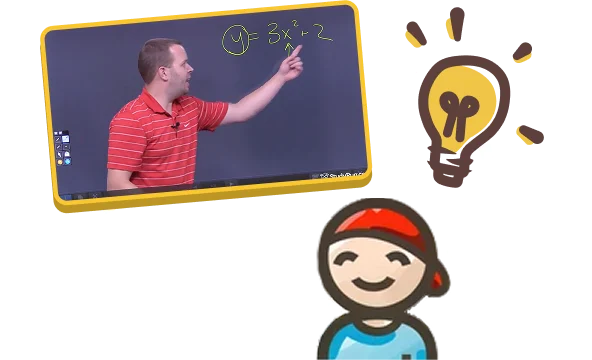
Certified-Teacher Physics Videos
Watch step-by-step lessons from experienced instructors who teach the method, not just the answer — so you're ready for the next course, not just this exam.
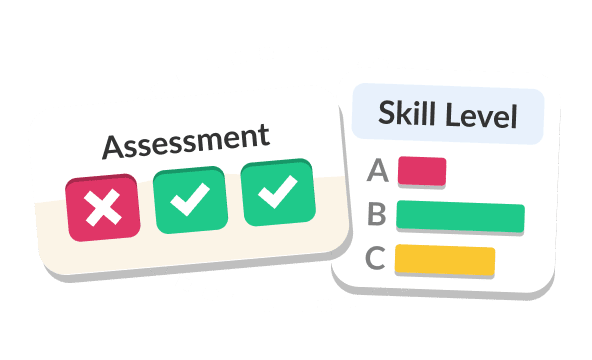
Diagnostic Assessment
A quick diagnostic pinpoints exactly where you need to focus, so you study efficiently and stop wasting time on topics you already know.

Adaptive Physics Practice
Practice problems adjust to your performance level, building your confidence from basic mechanics to advanced electromagnetism at your own pace.
Physics Topics
1. Scalars, Vectors and Motion
2. Kinematics
3. Forces
4. Work and Energy
5. Momentum
6. Equilibrium
7. Circular Motion
8. Gravitation
9. Electrostatics
10. Geometric Optics
Discover Our Learning Areas
Explore key subjects and start learning with interactive content.





What is Physics?
Physics is the science of matter, energy, space, and time — the discipline that seeks to understand the fundamental laws governing everything from the motion of a falling object to the behaviour of electromagnetic waves and the structure of the universe. If you're searching for physics help, you're working with one of the most mathematically rigorous and conceptually rewarding subjects in the sciences.
At the senior secondary level in Australia (Years 11–12, ATAR pathway) and at university, Physics builds a systematic understanding of the natural world through observation, mathematical modelling, and experimental investigation. It sits at the foundation of engineering, medicine, astrophysics, and every branch of physical science.
What topics are covered in Physics?
Physics spans a broad curriculum that deepens significantly as you progress. In Australian senior secondary Physics (VCE, HSC, QCE, WACE), the curriculum typically covers:
- Mechanics: kinematics, Newton's laws, projectile motion, circular motion, energy, momentum, and collisions
- Waves and optics: wave properties, sound, light, refraction, diffraction, and interference
- Thermodynamics: heat transfer, temperature, gas laws, and entropy
- Electromagnetism: electric fields, magnetic fields, Faraday's law, induction, and AC/DC circuits
- Modern physics: special relativity, quantum mechanics, photoelectric effect, and nuclear physics
University Physics extends each of these areas with calculus-based treatment and introduces topics such as classical electrodynamics, statistical mechanics, and astrophysics.
How is Physics different from other sciences?
Physics is distinguished from Biology and Chemistry by its emphasis on mathematical derivation and universal laws. While Chemistry focuses on atomic and molecular interactions and Biology on living systems, Physics seeks the most fundamental description of reality — the equations that describe force, energy, and fields apply universally, from subatomic particles to galaxies. This makes Physics both uniquely powerful and more mathematically demanding. Students who build strong physics problem-solving skills find that the analytical thinking transfers directly to engineering, computing, and quantitative science disciplines.
Why do students find Physics hard?
Physics requires simultaneous conceptual understanding and mathematical fluency. The most common difficulty is applying the right principle to an unfamiliar situation — memorising formulas is not enough. Students frequently struggle with:
- Vector analysis: correctly resolving forces and velocities into components
- Free-body diagrams: identifying all forces acting on an object before writing equations
- Electromagnetism: visualising invisible fields and applying calculus to flux calculations
- Quantum mechanics: building intuition for probabilistic, non-classical behaviour
The solution is not more formula sheets — it's watching the method modelled clearly, then practising with feedback. That's the approach that builds lasting understanding.
What are the most important Physics topics for ATAR and university exams?
For Australian ATAR Physics exams (VCE, HSC, QCE, WACE), the highest-weighted and most frequently examined areas are typically mechanics, electromagnetism, and modern physics. Examiners consistently test multi-step problems that require students to connect concepts across topics — for example, combining energy conservation with circular motion, or applying Faraday's law in a practical circuit scenario.
At university, mid-semester and final exams focus heavily on mechanics, electrostatics, and wave behaviour in the first year, with electrodynamics and quantum mechanics featuring strongly in second and third year. Thorough practice with past exam-style questions — based on real exam formats — is the most reliable preparation strategy.
What comes after Physics, and where does it lead?
Senior secondary Physics is a prerequisite or strong recommendation for engineering, medicine, dentistry, and science degrees at Australian universities. University Physics I and II typically precede specialised courses in Classical Mechanics, Electrodynamics, Quantum Mechanics, and Statistical Thermodynamics. Students who complete a Physics major or combined degree can pursue careers in astrophysics, medical physics, materials science, data science, finance (quantitative analysis), and research. Physics graduates are among the most analytically capable problem-solvers in any industry.
Why use StudyPug for Physics help?
StudyPug is built around a straightforward principle: understand the method deeply, and the exam takes care of itself. Here's what that looks like in practice for Physics students.
Start with a diagnostic. Before you watch a single video or attempt a single practice problem, StudyPug's diagnostic assessment identifies exactly which Physics topics need your attention. You won't waste hours revising mechanics you already understand when it's electromagnetism that's costing you marks.
Certified-teacher video lessons that teach the why. Every Physics lesson on StudyPug is taught by an experienced, certified teacher — not generated by AI. The focus is always on the method: why this equation applies, how to set up the problem, and what to check. That level of understanding is what separates students who can handle unseen exam questions from those who can only replicate familiar examples.
Adaptive practice that builds at your pace. After each video, adaptive practice problems adjust to your performance. Get a question right and the next one stretches you further. Struggle, and the system scaffolds back to reinforce the concept. This is how Physics skills are actually built — not through passive reading, but through deliberate, feedback-rich practice.
Full course depth in one subscription. One StudyPug subscription covers Physics alongside every other subject and course — Mathematics, Chemistry, Biology, and more. You're never paying per subject or per topic. And with a 30-day money-back guarantee, there's no risk in getting started.
What you learn — Physics topic coverage on StudyPug
StudyPug covers the full Physics curriculum relevant to Australian senior secondary and university students, including:
- Kinematics and dynamics — displacement, velocity, acceleration, and Newton's three laws
- Energy and momentum — work-energy theorem, conservation laws, elastic and inelastic collisions
- Circular motion and gravitation — centripetal force, gravitational fields, orbital mechanics
- Waves and sound — wave properties, resonance, Doppler effect, standing waves
- Light and optics — reflection, refraction, diffraction, interference, and polarisation
- Thermodynamics — heat, temperature, gas laws, and the laws of thermodynamics
- Electric fields and electrostatics — Coulomb's law, field lines, electric potential
- Circuits — Ohm's law, series and parallel circuits, capacitors, and Kirchhoff's laws
- Magnetism and electromagnetic induction — Faraday's law, Lenz's law, transformers
- Modern physics — special relativity, quantum mechanics, photoelectric effect, nuclear physics
Each topic area includes step-by-step video lessons, worked examples, adaptive practice problems, and mock exam questions based on real exam formats. No validated internal topic links are available for this page at present — browse all Physics topics directly on StudyPug.
How to use StudyPug for Physics practice and exam prep
Getting the most from StudyPug for Physics is straightforward. Here's a recommended approach that works whether you're preparing for VCE, HSC, QCE, WACE, or a university Physics exam.
Step 1 — Run the diagnostic. Let the diagnostic assessment tell you where to start. This takes the guesswork out of study planning and ensures you're focused on the topics that will move your results.
Step 2 — Watch the video lesson for each topic. For every topic the diagnostic flags, watch the certified-teacher lesson. Pause, rewind, and rewatch as many times as you need — there's no limit. The goal is to understand the method, not just copy the answer.
Step 3 — Practise with adaptive problems. After each lesson, work through the adaptive practice set. The system adjusts difficulty in real time. Work through problems until the concepts feel automatic — that automaticity is what you need in an exam under time pressure.
Step 4 — Attempt mock exams before your assessment. In the weeks before your ATAR exam, mid-semester test, or university final, use StudyPug's mock exams and practice tests. These are structured to reflect real exam formats — not just topic-by-topic drills, but the kind of multi-concept, multi-step problems examiners set.
Step 5 — Review and close gaps. After every mock exam, go back to the video lessons for any topic where you dropped marks. This targeted review loop — diagnose, watch, practise, test, review — is the most efficient path to consistent Physics improvement.
Start with free practice content today, then access the full StudyPug library with a subscription backed by a 30-day money-back guarantee.
Physics FAQ
Unsure how StudyPug works? Need help with setting up? Check our frequently asked questions or contact us for help.
What do you learn in Physics, and what topics does it cover?
Physics covers the fundamental laws governing the physical world. Core topics include classical mechanics (kinematics, Newton's laws, energy, momentum), waves and optics, thermodynamics, electromagnetism, electric circuits, and modern physics (quantum mechanics, special relativity). At the university and senior secondary level in Australia, you'll also encounter fields such as astrophysics and nuclear physics. The subject builds from foundational principles to complex mathematical modelling, preparing you for engineering, medicine, and science careers.
What is the difference between Physics and Chemistry at university level?
Physics focuses on matter, energy, forces, and the fundamental laws of the universe — from subatomic particles to cosmological scales. Chemistry focuses on the composition, properties, and reactions of substances at the molecular and atomic level. There is overlap in areas like quantum mechanics and thermodynamics, but Physics is typically more mathematically intensive, emphasising derivations, vector analysis, and differential equations. Students taking both often find that physics provides the theoretical framework that underpins chemical behaviour.
What are the prerequisites for Physics, and what comes after it?
Senior secondary Physics (Years 11–12) requires solid Year 10 Mathematics, particularly algebra and basic trigonometry. University Physics requires Calculus I as a co-requisite or prerequisite. After completing introductory university Physics, students progress to Classical Mechanics II, Electrodynamics, Quantum Mechanics, Thermal Physics, and Optics. For engineering students, Physics underpins Statics, Dynamics, and Electrical Engineering units. A strong foundation in Physics opens pathways into astrophysics, materials science, medical physics, and research.
Is Physics hard, and where do students struggle most?
Physics is widely considered one of the more challenging science subjects because it combines conceptual reasoning with rigorous mathematics. Students most commonly struggle with vector analysis, free-body diagrams, applying Newton's laws in multi-step problems, and understanding electric fields. Electromagnetism and quantum mechanics are consistently cited as the hardest university-level topics. The key difficulty is that Physics requires you to understand the why behind formulas — memorising equations without grasping the method leads to poor exam performance, especially in multi-concept problems.
How is Physics assessed in Australia — what do ATAR exams and assignments look like?
In Australia, senior Physics (Years 11–12) is assessed through the ATAR (Australian Tertiary Admission Rank) pathway, which varies by state. In Victoria (VCE), assessment includes School-Assessed Coursework (SACs) and an end-of-year written examination. NSW (HSC Physics) uses internal assessments plus a final HSC exam. Queensland (QCE) uses internal assessments and an external exam. University Physics is typically assessed through mid-semester exams, a final examination, laboratory reports, and problem-set assignments. Practice tests and mock exams are essential preparation for all these formats.
What is one of the hardest topics in Physics, and how do you approach it?
Electromagnetism — particularly Faraday's law, Maxwell's equations, and electromagnetic induction — is one of the most challenging Physics topics at both senior secondary and university level. Students often find it hard because it requires visualising invisible fields while applying calculus simultaneously. The most effective approach is to start with the conceptual picture: understand what a changing magnetic flux physically means before writing any equation. Then practise systematically — work through flux calculations, Lenz's law applications, and circuit induction problems step by step. Seeing the method modelled clearly before attempting problems independently makes a significant difference.