Differential Equations Help: Video Lessons & Practice
Work through every topic with clear solutions. Start your free practice test now!
Value vs. Private Tutor
Expert Differential Equations help affordably.

Multi-Subject
Stuck on Differential Equations? Switch anytime.
Practice Until Perfect
Practice until it truly clicks before test.
Try It Now
Test your knowledge
Our approach aligns with the evidence
Exam Scores
Better Recall
Less Anxiety
Differential Equations Topics
1. Introduction to Differential Equations
2. First Order Differential Equations
3. Second Order Differential Equations
4. Laplace Transforms
4 Chapters · 26 Topics · 151 Videos
Discover Our Learning Areas
Explore key subjects and start learning with interactive content.




What is Differential Equations?
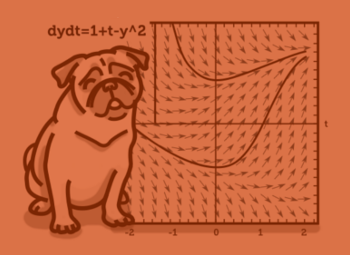
Differential Equations is the branch of mathematics that studies equations relating an unknown function to one or more of its derivatives. At Australian universities, it is a core second-year subject for students in engineering, physics, mathematics, and the quantitative sciences. Rather than solving for a number, you are solving for a function — one that describes how a system changes over time or space. That makes the course both conceptually demanding and practically powerful: the same mathematics models everything from electrical circuits to heat flow to population dynamics.
What topics are covered in Differential Equations?
A typical Australian university Differential Equations course moves through several major method families. You begin with first-order ODEs — separable equations, linear equations solved with an integrating factor, and exact equations. You then progress to second-order linear ODEs with constant coefficients, including homogeneous and non-homogeneous cases solved by undetermined coefficients or variation of parameters. The course then introduces Laplace transforms as an algebraic approach to solving initial-value problems. Later topics usually include systems of ODEs solved via eigenvalue methods, series solutions around ordinary and singular points, and often a brief introduction to partial differential equations such as the heat equation or wave equation.
Is Differential Equations harder than Calculus?
Most students find Differential Equations harder than Calculus I or II, though not necessarily harder than Calculus III. The key difference is that in calculus you typically apply a well-defined procedure — differentiate this, integrate that. In Differential Equations, the first and hardest skill is classification: identifying which type of equation you are looking at and therefore which technique applies. A student who cannot distinguish a separable equation from an exact equation will apply the wrong method and waste the entire working. This metacognitive demand — thinking about the problem before solving it — is what makes the course feel steep early on. Regular practice with varied problem types, combined with understanding the reasoning behind each method, is the most reliable path through.
How do separable and exact equations differ?
Both are first-order ODE techniques, but they apply to different equation structures. A separable equation can be rearranged so that all terms involving y (and dy) are on one side and all terms involving x (and dx) are on the other, allowing you to integrate both sides independently. An exact equation has the form M(x,y)dx + N(x,y)dy = 0, where the partial derivative of M with respect to y equals the partial derivative of N with respect to x — a condition that guarantees a potential function exists. If the exactness condition fails, you may be able to find an integrating factor to make the equation exact. Students often confuse the two because both involve integration, but the structural test and solution method are entirely different.
What makes Laplace transforms so challenging?
Laplace transforms are powerful precisely because they convert a differential equation into an algebraic equation in the transform variable s — much easier to rearrange and solve. The challenge comes in three places. First, you must build genuine fluency with the transform table, knowing not just the standard results but how to adapt them using linearity, shifting theorems, and the derivative property. Second, working backwards via the inverse Laplace transform almost always requires partial fraction decomposition, and errors in partial fractions cascade through the entire solution. Third, problems involving step functions (Heaviside functions) or impulse functions (Dirac delta) require careful application of the second shifting theorem, which many students apply incorrectly under exam conditions. The remedy is cumulative: work many examples in order of complexity, and always verify your inverse transform by differentiating back.
How are systems of ODEs solved using eigenvalue methods?
When you have two or more first-order ODEs involving the same unknown functions, you can write the system in matrix form x' = Ax. The solution method mirrors what you do for second-order linear equations: find the eigenvalues of A, then find the corresponding eigenvectors, and construct the general solution from those paired components. The three cases — distinct real eigenvalues, repeated eigenvalues, and complex conjugate eigenvalues — each produce a different solution form. Complex eigenvalues lead to real oscillatory solutions via Euler's formula, which connects Differential Equations back to the trigonometric knowledge from Calculus II. Systems problems feature heavily in Australian university finals and mid-semester assessments, so they deserve significant practice time.
Why StudyPug for Differential Equations?
StudyPug is built for exactly the kind of multi-method course that Differential Equations is. The platform opens with a diagnostic assessment that maps your current knowledge across every ODE topic — separable equations, Laplace transforms, eigenvalue systems, and more — and tells you precisely where to focus first. You are not guessing which chapter to revise; you are working on the specific gaps that will cost you marks.
From there, certified-teacher concept videos walk through each technique step by step. These are not AI-generated explanations — they are made by experienced instructors who teach the reasoning behind every move, not just the mechanical steps. That distinction matters in Differential Equations because the same integral that appears in a separable equation reappears inside a Laplace transform inverse, and a teacher who explains the connection saves you hours of confusion later.
As you practice, StudyPug's adaptive practice adjusts the difficulty of questions to match your improving ability. You are never stuck doing problems that are too easy to be useful, and you are never thrown into problems so hard they are demoralising. The system keeps you in the productive zone. Before your mid-semester test or final exam, mock exams based on real exam-style questions let you simulate assessment conditions and identify any remaining weak points.
One subscription covers every university mathematics course on StudyPug — Calculus I, II, and III, Linear Algebra, Statistics, and Differential Equations — so you never pay separately for a resource when you move between courses. Every subscription is backed by a 30-day money-back guarantee, which is the only guarantee StudyPug makes. Free daily practice content means you can start building differential equations skills before committing to a plan.
What you learn in Differential Equations on StudyPug
StudyPug's Differential Equations content covers the full scope of a standard Australian university course. Topics include:
- First-order ODEs: separable, linear (integrating factor), exact, and Bernoulli equations
- Second-order linear ODEs: homogeneous with constant coefficients, method of undetermined coefficients, variation of parameters
- Laplace transforms and inverse transforms, including step and impulse functions
- Systems of first-order ODEs via eigenvalue and eigenvector methods
- Series solutions: power series method and the Frobenius method near regular singular points
- Applications: mechanical vibrations, electrical circuits, population and mixing models
- Introduction to partial differential equations including the heat and wave equations
Each topic is broken into short, focused lessons so you can target exactly the concept causing trouble rather than sitting through an entire lecture to find one explanation. No validated internal topic-page links are available in the current MAP for this course page — visit the StudyPug Differential Equations course page directly to browse all individual topic lessons.
How to use StudyPug for Differential Equations
The most effective workflow on StudyPug for a course like Differential Equations follows three stages. First, run the diagnostic assessment at the start of semester or after your first lecture week. It identifies the topics you already understand from Calculus II (such as integration techniques) and flags the genuinely new material that needs focused attention.
Second, use the concept videos to build understanding topic by topic. Watch each video fully the first time, then attempt the practice problems. If you get a problem wrong, re-watch the relevant section rather than just reading the worked solution — the video explanation reinforces the method in a way that passive reading rarely does. You can watch lessons as many times as you need; there is no penalty for re-watching.
Third, in the two to three weeks before your mid-semester test or final exam, shift to the mock exam and practice test library. Work through exam-style problems under timed conditions, then review every question you answered incorrectly using the step-by-step solutions. This stage is where adaptive practice earns its value: the difficulty adjusts based on your performance history, so the system knows which ODE techniques still need consolidation and focuses your remaining preparation time there.
StudyPug is available on any device, so you can review a Laplace transform technique before a tutorial, run through practice problems between lectures, or watch a video solution on your phone while travelling across campus. Differential Equations rewards consistent, cumulative practice — and StudyPug is designed to make that practice as efficient and focused as possible. Start your free practice today and see how quickly your confidence builds.
Differential Equations FAQ
Unsure how StudyPug works? Need help with setting up? Check our frequently asked questions or contact us for help.
What do you learn in Differential Equations, and what topics does it cover?
Differential Equations covers methods for solving equations that relate a function to its derivatives. Core topics include first-order ODEs (separable, linear, exact), second-order linear equations, systems of ODEs, Laplace transforms, series solutions, and an introduction to partial differential equations. You also study applications such as population models, electrical circuits, and mechanical vibrations. The course builds the mathematical toolkit engineers, physicists, and mathematicians rely on throughout their degree and careers.
What is the difference between Differential Equations and Calculus III?
Calculus III (Multivariable Calculus) extends single-variable calculus to functions of several variables — covering partial derivatives, multiple integrals, and vector calculus. Differential Equations picks up where Calculus II leaves off and focuses specifically on equations involving derivatives and how to solve them analytically and qualitatively. While Calc III broadens the calculus landscape, Differential Equations deepens your ability to model and solve dynamic systems. Many degree programs require both, and Calc III is often a co-requisite or prerequisite.
What are the prerequisites for Differential Equations, and what course comes after it?
You typically need Calculus I and II before taking Differential Equations; some programs also require Linear Algebra as a co-requisite because matrix methods are central to solving systems of ODEs. After Differential Equations, students commonly progress to Partial Differential Equations, Numerical Methods, Complex Analysis, or advanced applied mathematics courses. Engineering students often follow it with courses in control systems or fluid mechanics, where ODE modelling is applied directly.
Is Differential Equations hard, and where do students struggle most?
Differential Equations is widely regarded as one of the harder first-year university mathematics subjects. Students most commonly struggle with Laplace transforms — particularly inverse transforms and applying the convolution theorem — and with series solutions using power series or Frobenius method. Systems of ODEs with repeated or complex eigenvalues also trip many students up. The key challenge is that each method requires you to recognise which technique to apply before you can solve anything, so pattern recognition through regular practice is essential.
How is Differential Equations assessed at Australian universities?
Assessment varies by institution but typically combines mid-semester tests or assignments (worth 30–50% of the final mark) with a two-hour final exam. Some courses include weekly online quizzes or written problem sets. The final exam at most Australian universities is closed-book and emphasises problem-solving across all major techniques. Achieving a passing grade usually requires demonstrated competence in both analytical methods and applications, so practising exam-style problems under timed conditions is highly recommended.
What is one of the hardest topics in Differential Equations, and how do you approach it?
Laplace transforms are considered the hardest single topic by most students. The method involves transforming a differential equation into an algebraic equation in a new variable s, solving it, then applying the inverse transform to recover the solution. The difficulty lies in building fluency with the transform table, handling partial fractions correctly, and applying theorems for derivatives and step functions. The best approach is to work through progressively harder examples, check your inverse transforms carefully, and practise recognising standard forms before attempting complex problems.




Written by the StudyPug Team
Last updated June 5, 2026
3 M+
students
★★★★★
4.8 average
K–12
all grades