Calculus 2 Help: Video Lessons & Practice
Work through every topic with clear solutions. Start your free practice test now!
Value vs. Private Tutor
Expert help without the tutor price tag.

Multi-Subject
Struggling with limits and geometry.
Practice Until Perfect
Keep practicing until it truly clicks.
Try It Now
Test your knowledge
Our approach aligns with the evidence
Exam Scores
Better Recall
Less Anxiety
Calculus 2 Topics
1. Integrals
2. Integration Techniques
3. Integration Applications
4. Differential Equations
5. Sequence and Series
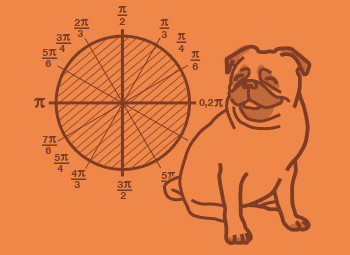
6. Parametric Equations and Polar Coordinates
6 Chapters · 49 Topics · 346 Videos
Discover Our Learning Areas
Explore key subjects and start learning with interactive content.

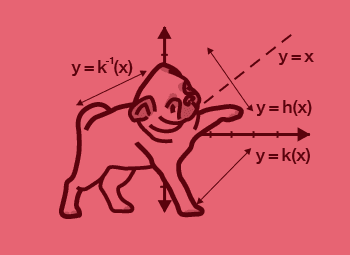
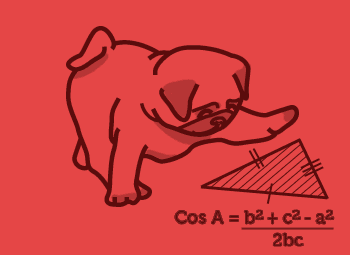
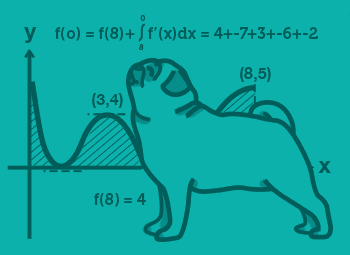


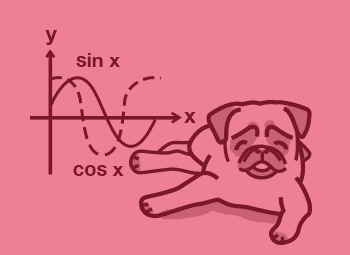
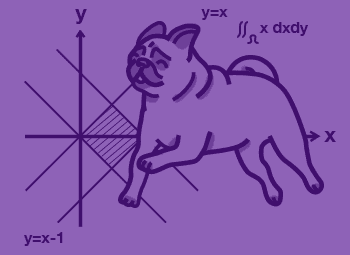

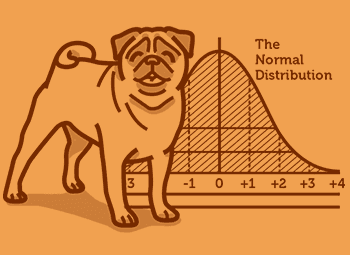
What is Calculus 2?
Calculus 2 is the second course in the standard university calculus sequence, building on the differentiation and basic integration skills developed in Calculus 1. The course deepens your understanding of integration — introducing a wide range of techniques — and then extends into the entirely new territory of infinite sequences and series. It is a core requirement for most STEM degrees in Australia, and a direct gateway to Calculus 3, Linear Algebra, and Differential Equations.
At its heart, Calculus 2 is about two big ideas: how to compute complex integrals, and how to understand infinite processes. By the end of the course, you will be able to evaluate integrals that have no elementary antiderivative using convergence arguments, represent functions as infinite polynomial-like expressions using power series, and work with curves and regions defined in polar and parametric form.
What topics are covered in Calculus 2?
Calculus 2 is one of the most content-dense mathematics units at university level. The syllabus typically moves through the following areas:
Advanced integration techniques — integration by parts, trigonometric integrals, trigonometric substitution, partial fractions, and improper integrals. Each technique requires you to recognise the structure of the integrand and select the right approach — a skill that develops only through repeated practice.
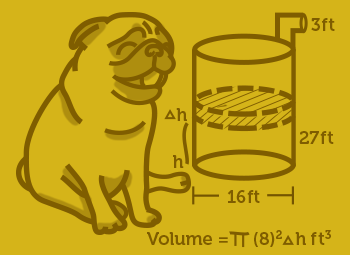
Applications of integration — areas between curves, volumes of solids of revolution (disk, washer, and shell methods), arc length, and surface area. These topics are where integration meets geometry, and visualising the setup is often the hardest part.
Sequences and series — this is often the most conceptually challenging section. You will study the behaviour of sequences, then move to infinite series and learn a family of convergence tests: Divergence, Integral, Comparison, Limit Comparison, Alternating Series, Ratio, and Root tests. Power series, radius of convergence, Taylor series, and Maclaurin series follow.
Parametric equations and polar coordinates — representing curves and computing areas in non-Cartesian frameworks. These topics tie back to integration and prepare you for the multivariable geometry of Calculus 3.
Is Calculus 2 harder than Calculus 1?
Most students find Calculus 2 harder than Calculus 1, and for a specific reason: the variety. In Calculus 1, once you learn differentiation rules you apply a relatively uniform process. In Calculus 2, each new integration technique is a new tool, and knowing when to use which tool — and how to handle the algebra that follows — requires much more developed judgement.
Series convergence adds a second layer of difficulty. The concepts are more abstract than anything in Calculus 1, and there is no mechanical process that covers every case. Students who rely on memorising steps, rather than understanding the reasoning behind each convergence test, tend to struggle significantly on exams.
The practical implication: Calculus 2 rewards students who practise actively, work through many varied problems, and get comfortable identifying their own weak spots early. Passive review of lecture notes is rarely enough to do well on the final exam.
What do students struggle with most in Calculus 2?
Based on the topics students most frequently seek help with, the common sticking points are:
Choosing the right integration technique. There is no universal rule for which method to apply. Students who struggle typically do so because they are trying to remember a list rather than reading the integrand's structure. Building a decision-making habit — starting with simpler methods and escalating — is the key skill to develop.
Series convergence tests. The Ratio and Root tests are conceptually straightforward once the idea of limits of ratios is clear. The Comparison and Limit Comparison tests are trickier because they require choosing an appropriate comparison series, which is itself a judgement call. Many students find it helpful to study these tests in pairs and understand what structural features of the series each test is designed to exploit.
Setting up volumes of revolution. The disk, washer, and shell methods all work correctly when applied to the right situation — but setting up the integral with the correct limits and the correct expression for the radius requires careful visualisation. Drawing the region and the solid before integrating is almost always worth the extra minute.
Taylor and Maclaurin series. Students who understand the pattern of derivatives can generate these series reliably. Those who only memorise the standard expansions (e^x, sin x, cos x) hit problems as soon as the exam presents a function they have not seen before.
Why StudyPug for Calculus 2?
StudyPug is built around one core idea: understanding the method, not just getting the answer. That philosophy matters especially in Calculus 2, where the exam will present problems you have not seen before, and your ability to reason through the method under time pressure is what determines your result.
Every Calculus 2 lesson on StudyPug is created by a certified teacher — not AI-generated — and each video is structured to teach you why a technique works as well as how to execute it. That distinction matters when you are in an exam and the integrand looks slightly different from anything you practised. If you understand the logic behind integration by parts, you can adapt. If you only memorised a procedure, you cannot.
The diagnostic assessment runs before you start studying and identifies precisely which topics need work — so you are not spending revision time on material you already handle correctly. Adaptive practice then adjusts the difficulty of problems to your current level, keeping sessions productive without becoming demoralising. And because one StudyPug subscription covers all your university mathematics units — Calculus 1, 2, and 3, Linear Algebra, Differential Equations, and Statistics — there is no additional cost as you progress through your degree.
For Australian students preparing for mid-semester exams and final exams, StudyPug provides mock exams and timed practice sets that replicate assessment conditions. Watch the corresponding concept video as many times as you need, then switch to practice problems to consolidate. The 30-day money-back guarantee means your first month carries no financial risk.
What you will learn — Calculus 2 course coverage
StudyPug's Calculus 2 course covers the full university syllabus, structured to move from foundational technique through to advanced applications:
- Review of integration fundamentals and the Fundamental Theorem of Calculus
- Integration by substitution, by parts, and by trigonometric substitution
- Partial fraction decomposition for rational functions
- Trigonometric integrals and improper integrals
- Applications: area, volume (disk/washer/shell), arc length, surface area
- Sequences: limits, monotone sequences, bounded sequences
- Infinite series: convergence and divergence, all major convergence tests
- Power series, interval and radius of convergence
- Taylor series and Maclaurin series, including standard expansions
- Parametric equations: calculus with parametric curves
- Polar coordinates: curves, area, and arc length in polar form
Every topic is covered with concept videos, worked examples, and practice problem sets. The course is designed to take you from first principles through to the level of difficulty you will encounter in your end-of-semester exam.
Using StudyPug for Calculus 2
Getting started is straightforward. After signing up, the diagnostic assessment takes a few minutes and generates a personalised study plan pointing you to the highest-priority topics. From there, a typical study session on StudyPug looks like this: watch the concept video for the topic you are working on, paying attention to the method being demonstrated rather than just the final answer. Then move to the practice problems for that topic. The adaptive system will adjust difficulty based on how you perform — pushing you harder when you are comfortable, stepping back when you need more reinforcement.
For exam preparation, use the mock exams and practice tests under timed conditions. If a question trips you up, go back to the corresponding video, rewatch the relevant section, and try a different set of practice problems on the same topic. This loop — video, practice, identify gap, video, practice — is the most effective use of study time in a content-heavy course like Calculus 2.
StudyPug is fully mobile-optimised, so you can continue practice between lectures or during commuting time. Free daily practice content is available without a subscription, so you can start a Calculus 2 practice test right now before making any commitment.
Calculus 2 FAQ
Unsure how StudyPug works? Need help with setting up? Check our frequently asked questions or contact us for help.
What do you learn in Calculus 2, and what topics does it cover?
Calculus 2 builds directly on Calculus 1 and covers a broad set of topics essential for STEM degrees. Core areas include advanced integration techniques (substitution, integration by parts, partial fractions, trigonometric integrals), improper integrals, applications of integration (areas, volumes, arc length), sequences and series (convergence tests, power series, Taylor and Maclaurin series), and parametric equations and polar coordinates. Some courses also introduce differential equations. Together, these topics form the analytical foundation for Calculus 3, Linear Algebra, and higher-level mathematics.
What is the difference between Calculus 2 and Calculus 3?
Calculus 2 focuses on integration and infinite series in one variable — building your toolkit for anti-differentiation and understanding how functions behave over intervals or as infinite sums. Calculus 3 (often called Multivariable Calculus) extends differentiation and integration to functions of two or more variables, introducing partial derivatives, multiple integrals, and vector calculus. Calculus 2 is the direct prerequisite for Calculus 3; the series and parametric work you do in Calc 2 directly prepares you for the surfaces and curves you encounter in Calc 3.
What are the prerequisites for Calculus 2, and what course comes after it?
The standard prerequisite for Calculus 2 is a pass in Calculus 1 (or an equivalent first-year calculus unit), which should have covered limits, differentiation, basic integration, and the Fundamental Theorem of Calculus. Strong algebraic and trigonometric fluency is also essential. After Calculus 2, most students proceed to Calculus 3 (Multivariable Calculus) and may also take Linear Algebra or Differential Equations concurrently — both of which appear in the same StudyPug subscription.
Is Calculus 2 hard, and where do students struggle most?
Calculus 2 is widely considered one of the most challenging first- and second-year university mathematics units. The difficulty comes from the sheer variety of integration techniques — knowing which method to apply when requires practice, not just memorisation. Students most commonly struggle with choosing the right convergence test for series, setting up volumes of revolution correctly, and handling the algebra-heavy steps in partial fractions and trigonometric substitution. The good news: these are all learnable skills, and consistent practice with step-by-step worked solutions makes a significant difference to exam performance.
How is Calculus 2 assessed — mid-semester tests, finals, and assignments?
Assessment structure varies by Australian university, but Calculus 2 units typically combine several components: weekly or fortnightly assignments or online quizzes (often 10–20% of the final mark), a mid-semester exam (roughly 20–30%), and a final exam (50–60% or more). Some units also include tutorial participation. The final exam is comprehensive and time-pressured, so practising under exam conditions — using mock tests and timed problem sets — is one of the highest-leverage study strategies you can use before the end-of-semester period.
What is one of the hardest topics in Calculus 2, and how do you approach it?
Series convergence is consistently the topic students find hardest in Calculus 2. There is no single algorithm: you need to select the right test — Ratio, Root, Integral, Comparison, Limit Comparison, Alternating Series — based on the structure of the series. The best approach is to build a decision framework: first check if the terms approach zero (divergence test), then identify the series type. Work through many varied examples rather than just reviewing theory, and always verify your reasoning on the boundary cases. StudyPug's concept videos walk through the method for each test, and the practice problems let you drill the decision process until it becomes automatic.





Written by the StudyPug Team
Last updated June 5, 2026
3 M+
students
★★★★★
4.8 average
K–12
all grades