Calculus 1 Help: Video Lessons & Practice
Work through every topic with clear solutions. Start your free practice test now!
Value vs. Private Tutor
Expert Calculus 1 help without the price tag.

Multi-Subject
One subscription unlocks all subjects.
Build Mastery
Master every topic before you move on.
Try It Now
Test your knowledge
Our approach aligns with the evidence
Exam Scores
Better Recall
Less Anxiety
Calculus 1 Topics
1. Limits
2. Differentiation
3 Chapters · 31 Topics · 217 Videos
Discover Our Learning Areas
Explore key subjects and start learning with interactive content.





What is Calculus 1?
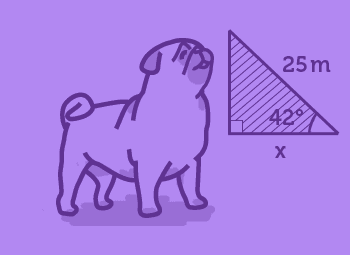
Calculus 1 is the first university-level mathematics course that formally studies rates of change and accumulation — the twin pillars of differential and integral calculus. In a single semester you move from the precise definition of a limit through to the Fundamental Theorem of Calculus, gaining the tools that underpin engineering, physics, economics, and every quantitative discipline. It is the gateway course: do well here and every subsequent STEM unit becomes more manageable.
What topics are covered in Calculus 1?
A standard Australian university Calculus 1 unit covers five main areas. Limits and continuity establish the logical foundation — including one- and two-sided limits, limit laws, and the epsilon-delta definition. Differentiation rules follow: power, product, quotient, and chain rules, plus derivatives of trigonometric, exponential, and logarithmic functions. Applications of derivatives include curve sketching, finding local and global extrema, the Mean Value Theorem, L'Hôpital's Rule, optimisation problems, and related rates. The final section introduces integration: Riemann sums, definite and indefinite integrals, basic antiderivative rules, substitution, and the Fundamental Theorem of Calculus. Assessment-heavy topics like related rates and optimisation appear on both mid-semester and final exams, so targeted practice is essential.
Is Calculus 1 hard at Australian universities?
Compared with VCE Mathematical Methods, first-year Calculus 1 is more abstract and moves faster. The difficulty is less about individual calculations and more about seeing why each technique works — a gap that opens up when students memorise steps without understanding the underlying concept. The three most commonly failed topics are the epsilon-delta definition of a limit, implicit differentiation, and multi-step related rates problems. The good news is that Calculus 1 rewards consistent practice: every technique has a pattern, and once you can identify the pattern quickly under exam conditions, the course becomes far more manageable. Working through graded practice problems — starting easy, building to exam-difficulty — is the most reliable preparation strategy.
How is Calculus 1 assessed in Australia?
Most Australian universities split Calculus 1 assessment across a mid-semester exam (typically 30–40%), a final exam (40–50%), and weekly assignments or online quizzes. Many units carry a hurdle requirement: you must achieve at least 40–50% on the final exam to pass the unit, regardless of your overall mark. Grading uses the standard Australian university scale — High Distinction (HD, 85%+), Distinction (D, 75–84%), Credit (C, 65–74%), Pass (P, 50–64%). Because the final exam carries significant weight and a hurdle, practising with timed mock exams that mirror the question style is the single highest-value study activity in the weeks before the exam period.
What comes after Calculus 1?
Calculus 1 feeds directly into Calculus 2 (advanced integration, sequences and series) and runs alongside or leads into Linear Algebra and, later, Differential Equations. Students in engineering, physics, and data science also encounter Multivariable Calculus (Calculus 3) in their second year. Understanding the why behind Calculus 1 techniques — not just how to execute them — is what separates students who find Calculus 2 straightforward from those who struggle again. This is why StudyPug's certified-teacher videos focus on the method and reasoning, not just the worked answer.
Why use StudyPug for Calculus 1?
StudyPug is built for exactly the situation most first-year students face: a fast-paced unit with high-stakes assessment, limited one-on-one lecture time, and patchy prerequisite knowledge. Three things set it apart for Calculus 1.
First, the diagnostic assessment. Rather than starting from page one of a textbook, StudyPug's diagnostic identifies precisely which topics are weak — whether that is limits, chain rule, or integration by substitution — so every study session is targeted. This is especially useful for students whose VCE background left some precalculus gaps that are now quietly undermining university work.
Second, certified-teacher concept videos that teach the method. Each video is made by an experienced instructor and walks through not just the steps but the reasoning — why you choose a particular technique, what to watch for, and how the same idea appears in different question types. You can watch a video as many times as you need, pause at the tricky step, and rewatch the night before the final. These are not AI-generated summaries; they are structured lessons designed for deep understanding.
Third, adaptive practice. StudyPug's practice system adjusts difficulty based on your performance — if you are getting related rates questions right, it pushes you toward harder multi-step versions; if you are struggling with chain rule, it consolidates that before moving on. This keeps practice productive rather than either too easy to be useful or too hard to be motivating.
One subscription also covers every other university mathematics course — Calculus 2, Calculus 3, Linear Algebra, Differential Equations, and Statistics — so you are set for the entire degree, not just this semester.
What you learn: Calculus 1 course coverage
StudyPug's Calculus 1 content covers the full unit as taught at Australian universities. Topic areas include:
- Limits: one-sided limits, limit laws, continuity, limits at infinity, and the squeeze theorem
- Differentiation: definition of the derivative, power/product/quotient/chain rules, implicit differentiation, higher-order derivatives, derivatives of trig/exp/log functions
- Applications of derivatives: increasing/decreasing functions, local and absolute extrema, concavity and inflection points, curve sketching, optimisation, related rates, L'Hôpital's Rule, and the Mean Value Theorem
- Integration: Riemann sums, the definite integral, antiderivatives, the Fundamental Theorem of Calculus, and substitution
- Exam-style practice: mid-semester and final exam mock tests with full worked solutions
Each topic is broken into short, focused lessons so you can go straight to the concept you need rather than sitting through irrelevant material.
Using StudyPug for Calculus 1
A practical study routine with StudyPug looks like this. At the start of semester, run the diagnostic to map your starting point. Each week, watch the concept video for the topic covered in lectures — this gives you a second explanation at your own pace, which reinforces the ideas before tutorials. Before assignments, work through the adaptive practice problems on that week's topic until the difficulty plateaus; the platform will keep pushing the questions harder as you improve. In the two weeks before a mid-semester or final exam, shift to mock exam mode: attempt a timed practice test, review every question you got wrong using the step-by-step solution, then re-attempt similar problems. This test-review-retest loop is the most efficient exam preparation method, and StudyPug's practice library is deep enough to support multiple rounds without repeating identical questions.
StudyPug works on any device — laptop, tablet, or phone — so you can fit practice around a busy schedule, whether that is between lectures or late the night before a tutorial. There is no fixed study plan you have to follow; you move at your own pace and focus on what actually needs work.
Calculus 1 FAQ
Unsure how StudyPug works? Need help with setting up? Check our frequently asked questions or contact us for help.
What do you learn in Calculus 1, and what topics does it cover?
Calculus 1 introduces the mathematics of change and accumulation. Core topics include limits and continuity, differentiation rules (power, product, quotient, and chain), applications of derivatives such as curve sketching, optimisation and related rates, and an introduction to integration including the Fundamental Theorem of Calculus. By the end of the course you have the foundation needed for Calculus 2, physics, and engineering subjects.
What is the difference between Calculus 1 and Calculus 2?
Calculus 1 focuses on limits, derivatives, and a brief introduction to integration. Calculus 2 builds on that foundation with advanced integration techniques (integration by parts, trigonometric substitution, partial fractions), sequences and series, and often an introduction to parametric equations. Mastering differentiation and basic integration in Calculus 1 is essential before tackling the heavier integral work in Calculus 2.
What are the prerequisites for Calculus 1, and what course comes after it?
Most Australian universities require strong precalculus skills: algebraic manipulation, trigonometry, exponential and logarithmic functions, and familiarity with function notation. Some courses also expect a VCE Mathematical Methods background. After Calculus 1 you typically progress to Calculus 2 (or Multivariable Calculus), Linear Algebra, and Differential Equations — all covered in one StudyPug subscription.
Is Calculus 1 hard, and where do students struggle most?
Calculus 1 has a steep initial learning curve, especially for students who find algebra or trigonometry shaky. The biggest difficulty spikes occur at the epsilon-delta definition of limits, the chain rule applied to composite functions, and setting up related rates or optimisation problems. Implicit differentiation also trips many students up. With regular practice and clear worked examples, these hurdles are manageable — the key is working through problems step by step, not just reading theory.
How is Calculus 1 assessed at Australian universities?
Assessment typically combines a mid-semester exam (worth around 30–40%), a final exam (40–50%), and weekly assignments or online quizzes. Some universities use hurdle requirements — you must pass the final exam to pass the unit regardless of your overall mark. Grading follows the standard Australian scale: High Distinction (85%+), Distinction (75–84%), Credit (65–74%), Pass (50–64%). Practising with timed mock exams is the most effective way to prepare.
What is one of the hardest topics in Calculus 1, and how do you approach it?
Related rates is consistently the toughest topic — it requires setting up a geometric or physical relationship, differentiating implicitly with respect to time, and substituting known values cleanly. The best approach is a four-step method: draw and label a diagram; write the equation relating the variables; differentiate both sides with respect to t using the chain rule; substitute and solve. Working through many varied examples (ladder problems, volume problems, shadow problems) builds the pattern recognition that makes exam questions feel routine.





Written by the StudyPug Team
Last updated June 5, 2026
3 M+
students
★★★★★
4.8 average
K–12
all grades