Year 11 Maths Extension 1 Help — Video Lessons & Practice
Get clear, step-by-step explanations for any Maths Extension 1 problem and build exam-ready confidence.

Expert Video Solutions
Watch experts think then solve alone.
Build Mastery
Master one topic before the next.

Test Prep Included
Practice free real exam-style questions.
Try It Now
Test your knowledge
Our approach aligns with the evidence
Exam Scores
Better Recall
Less Anxiety
Maths Extension 1 Topics
1. Adding and Subtracting Fractions
2. Multiplying and Dividing Fractions
3. Pythagorean Theorem
4. Percents
5. Surds
6. Algebraic Expressions
7. Introduction to Relations and Functions
8. Linear Functions
9. Simultaneous Equations
10. Factorisation
11. Quadratic Functions
12. Solving Quadratic Equations
13. Inequalities
14. Algebraic Fractions
15. Reciprocal Functions
16. Angles, Lines, and Transversals
17. Scale Factors and Similarity
18. Properties of Triangles
19. Congruent Triangles
20. Circles
21. Functions
22. Polynomial Functions
23. Rational Functions
24. Indices
25. Exponential Functions
26. Logarithmic Functions
27. Trigonometric Ratios and Angle Measure
28. Sine Rule and Cosine Rule
29. Trigonometric Graphs
30. Trigonometric Identities
31. Solving Trigonometric Equations
32. Inverse Trigonometric Functions
33. Bearings
34. Series
35. Growth and Decay
37. Permutations and Combinations
38. Discrete Probabilities
40. Limits
41. Derivatives
42. Derivative Applications
43. Integrals
44. Integral Applications
45. Parametric Equations
45 Chapters · 282 Topics · 1959 Videos

Ready to practice Maths Extension 1?
Try practice questions on every Maths Extension 1 topic — with instant feedback and step-by-step video solutions when you get stuck.
Discover Our Learning Areas
Explore key subjects and start learning with interactive content.







What is Maths Extension 1?
Maths Extension 1 is a higher-level mathematics course offered in Years 11 and 12 in New South Wales. It is designed for students with a strong aptitude for mathematics who want to go deeper than the standard Advanced course. Year 11 Maths Extension 1 extends the Advanced content with more sophisticated treatments of functions, trigonometry, polynomials, and calculus — topics that require precise reasoning and the ability to tackle unfamiliar problem types under exam conditions.
In the HSC system, Maths Extension 1 is worth 2 additional units on top of Advanced Maths, contributing to your ATAR. The course is a prerequisite for Maths Extension 2 in Year 12 and is highly regarded by universities for competitive degrees in science, engineering, actuarial studies, and economics.
What topics are covered in Year 11 Maths Extension 1?
Year 11 Maths Extension 1 organises its content into four broad areas:
Functions. You extend your understanding of functions to cover inverse functions (including how to restrict domains to create inverses), further work on curve-sketching, and absolute value functions. Understanding one-to-one functions is essential here — it underpins a lot of what comes later with inverse trigonometry.
Trigonometry. Beyond the unit circle, you study sum and difference identities, double angle formulae, and — most critically — inverse trigonometric functions (arcsin, arccos, arctan). This is consistently the most challenging part of the Year 11 Extension 1 course.
Polynomials. You explore the factor theorem, remainder theorem, and relationships between roots and coefficients of polynomials (sum and product of roots). Questions in this section often require systematic algebraic manipulation and proof-style reasoning.
Introductory calculus. Extension 1 introduces related rates of change and more demanding applications of differentiation than Advanced Maths — setting the foundation for the harder calculus encountered in Year 12.
Is Maths Extension 1 hard compared to Maths Advanced?
Yes — most students find the jump to Extension 1 significant. The content is harder, but more importantly, the style of thinking required is different. Advanced Maths problems generally follow recognisable patterns that reward practiced technique. Extension 1 problems more often require you to combine ideas from different topic areas or adapt a technique you know to an unfamiliar setting.
The topics students struggle most with in Year 11 are inverse trigonometric functions, polynomial roots relationships, and applying differentiation to rates-of-change problems that involve setting up the equation yourself. The good news: these difficulties are highly predictable, which means targeted practice on exactly these concepts goes a long way. A short diagnostic at the start of your study reveals which of these areas needs the most attention.
How is Maths Extension 1 assessed in the HSC?
Your results in Maths Extension 1 come from two sources: school-based assessments across Year 11 and Year 12, and the final HSC examination.
The Year 11 internal assessments vary by school but typically include topic tests, a half-yearly exam, and a yearly exam. These do not count toward your HSC directly, but they determine whether you continue in the course and build the skills you need for Year 12.
The HSC Maths Extension 1 exam (sat at the end of Year 12) includes a multiple-choice section and extended response questions requiring full working. Marks are awarded for correct method as well as correct answers — understanding why a method works, not just what answer it produces, is essential. The exam tests content from both Year 11 and Year 12 Extension 1.
Extension 1 results are scaled in the ATAR calculation, typically favourably, which rewards students who take on the challenge and perform well.
What comes after Year 11 Maths Extension 1?
Students who complete Year 11 Maths Extension 1 progress to Year 12 Maths Extension 1 (and continue alongside Year 12 Advanced Maths). Year 12 Extension 1 builds directly on what you learn in Year 11 — adding proof by mathematical induction, the binomial theorem, further trigonometric identities and equations, and an introduction to vectors.
Students with exceptional ability and interest may also choose to add Maths Extension 2 in Year 12, which is the most demanding mathematics course in NSW and covers topics including complex numbers, proof, vectors in three dimensions, and advanced integration. Extension 2 requires Extension 1 and a high level of mathematical maturity.
Why StudyPug for Maths Extension 1?
StudyPug is built around the specific challenges Extension 1 students face: the content is hard, the exam rewards method-mastery over answer-getting, and most students cannot pinpoint exactly where their gaps are until a test reveals them.
Start with a diagnostic. StudyPug's diagnostic assessment identifies precisely which Maths Extension 1 topics need work before you waste time reviewing things you already know. This is particularly valuable in Extension 1, where weak foundations in one topic (say, restricted domains) quietly undermine performance in a later topic (inverse trig).
Learn the method, not just the answer. Every lesson is taught by a certified teacher who walks through problems step-by-step, explaining the reasoning behind each move. You learn how to approach a class of problems — not just how to get the answer to one example. This is exactly what HSC markers reward.
Practise adaptively. After watching a lesson, adaptive practice problems adjust in difficulty based on how you perform. If you are finding polynomial questions straightforward, the system increases the challenge. If inverse trig is proving difficult, it gives you more practice at a level where you can actually build fluency before moving harder.
All content on StudyPug is aligned to the NSW Maths Extension 1 syllabus, so every topic you study and every practice problem you complete is directly relevant to your school assessments and the HSC. There is no irrelevant filler to wade through.
What you learn — Maths Extension 1 curriculum coverage
StudyPug covers the full Year 11 Maths Extension 1 syllabus as specified by NESA, including:
- Functions and inverse functions, including restricted domains and one-to-one functions
- Further curve-sketching and absolute value functions
- Trigonometric identities — sum and difference, double angle, product-to-sum formulae
- Inverse trigonometric functions: arcsin, arccos, arctan — domains, ranges, graphs, and equations
- Polynomials: factor theorem, remainder theorem, multiple roots, sum and product of roots
- Related rates of change and applications of differentiation
- Introductory calculus problem-solving in unfamiliar contexts
Because no validated topic-level URLs are available in the link map for this course at this time, browse all available Maths Extension 1 topics directly from the StudyPug course page to find the specific lessons you need.
How to use StudyPug for Maths Extension 1
Step 1 — Take the diagnostic. Before you start watching videos or practising, run the diagnostic assessment. It takes a short time and gives you a clear picture of which Extension 1 topics are strong and which need attention. This shapes everything that follows.
Step 2 — Watch the concept video. For any topic the diagnostic flags (or any topic coming up in class), find the corresponding StudyPug lesson. Watch the certified-teacher video all the way through once, focusing on the method and reasoning — not just copying the steps. Pause and rewind freely; that is the point of on-demand video.
Step 3 — Work through adaptive practice. After the video, move straight into practice problems. Start where the adaptive system places you. Work through problems actively — attempt each one before looking at any solution. The system will increase difficulty as your accuracy improves.
Step 4 — Use Photo Search for any problem you get stuck on. If a homework or assessment question has you stuck, Photo Search lets you find the matching StudyPug lesson quickly, so you can watch the method explained and then return to your problem.
Step 5 — Review regularly. Maths Extension 1 topics connect to each other — strong polynomial skills support later calculus work; solid function understanding supports inverse trig. Regular short review sessions maintain fluency across the whole course, not just the current topic.
StudyPug is available on any device, any time — so whether you are reviewing at 10 pm before a test or working through new content on the weekend, your full Extension 1 lesson library is always there. Every subscription is backed by a 30-day money-back guarantee.
Maths Extension 1 FAQ
Unsure how StudyPug works? Need help with setting up? Check our frequently asked questions or contact us for help.
What do you learn in Maths Extension 1, and what topics does it cover?
Year 11 Maths Extension 1 builds on Advanced Maths with harder content across four main areas: functions (including inverse functions and further curve-sketching), trigonometry (compound angles, inverse trig functions), polynomials (factor and remainder theorems, roots), and introductory calculus (rates of change, related rates). The course is designed for students who enjoy mathematical reasoning and want to develop deeper problem-solving skills beyond the standard Advanced course.
What is the difference between Maths Extension 1 and Maths Advanced?
Maths Advanced is the standard Year 11–12 mathematics course covering core topics like algebra, functions, trigonometry, statistics, and calculus at a solid but accessible level. Maths Extension 1 covers all of Advanced and adds significantly harder content — deeper work on polynomials, inverse trigonometric functions, proofs by induction (in Year 12), and further calculus techniques. Extension 1 is intended for students with strong mathematical ability and requires more abstract thinking and rigorous problem-solving.
Is Maths Extension 1 hard, and where do students struggle most?
Yes — Maths Extension 1 is one of the more demanding Year 11 courses in NSW. Students most commonly struggle with inverse trigonometric functions (the notation and restricted domains trip many people up), polynomial division and the factor theorem, and applying calculus to unfamiliar problem contexts. The jump in abstraction from Advanced Maths can feel steep at first. Consistent practice with worked examples and making sure you understand the method — not just the answer — makes a significant difference early on.
What should I study before Maths Extension 1, and what comes after it?
You should have a solid foundation in Year 10 Mathematics — particularly algebraic manipulation, functions and their graphs, trigonometry (SOHCAHTOA and the unit circle), and an introduction to differentiation. After Year 11 Extension 1 you move into Year 12 Maths Extension 1, which introduces proofs by mathematical induction, binomial theorem, further trigonometric identities, and vectors. High-achieving students may also consider adding Maths Extension 2 in Year 12 for even more advanced content.
Is Maths Extension 1 assessed on the HSC, and how is it tested?
Yes. Maths Extension 1 contributes to your HSC in NSW and is worth 2 units (on top of the 2 units from Advanced Maths). The HSC Extension 1 exam consists of multiple-choice questions and extended response questions that require full working. Internal school assessments across Year 11 and Year 12 also count toward your final ATAR. Questions are designed to test understanding of method and reasoning, not just recall — which is why learning how to solve problems, not just what the answer is, matters so much for this course.
What is one of the hardest concepts in Maths Extension 1 and how do you tackle it?
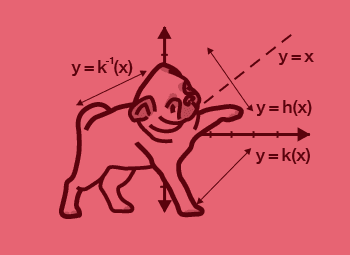
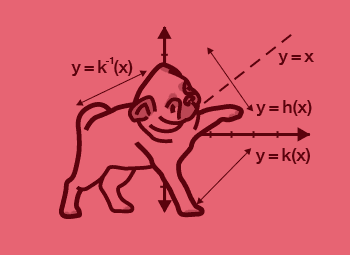
Inverse trigonometric functions are consistently the concept students find hardest in Year 11 Extension 1. The restricted domains (e.g. arcsin defined only on [−π/2, π/2]) feel arbitrary until you understand why they're needed to make the function one-to-one. The best approach: start by sketching the original trig function, mark the restricted domain, then reflect across y = x to see the inverse. Work through domain and range carefully before attempting any equations. Practising a variety of exam-style questions on this topic builds the pattern recognition you need under test conditions.





Written by the StudyPug Team
Last updated June 5, 2026
3 M+
students
★★★★★
4.8 average
K–12
all grades