7th Grade Science Help for Your Child
Targeted practice that finds science gaps and builds real understanding — human body systems, chemical reactions, and ecology covered.

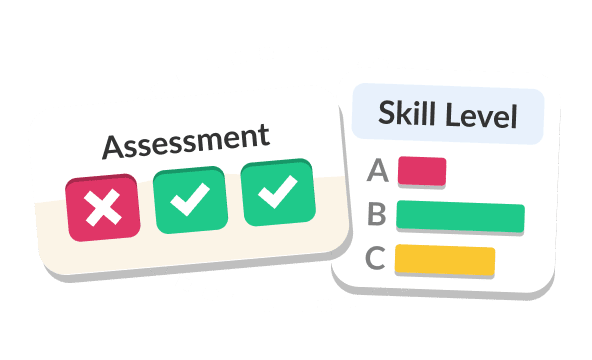
Finds the Gaps
Shows what your child must review before the test.
Step-by-Step Videos
Watch real teaching to solve problems alone.

Matches School Work
Matches your child's state standards exactly.
Try It Now
Test your knowledge
Our approach aligns with the evidence
Exam Scores
Better Recall
Less Anxiety
7th Grade Science Topics
1. Research Methods
2. Mechanisms
3. Evidence
4. Elements
7. Electricity
8. Forces
10. Geology
12. Atmosphere
13. Climate Change
15. Human Impact
16. Engineering
17. Applications
18 Chapters · 39 Topics · 28 Videos
Discover Our Learning Areas
Explore key subjects and start learning with interactive content.




What Is 7th Grade Science?
7th Grade Science marks a significant step in your child's scientific education. At this level, students move beyond observation-based learning and begin engaging with more complex, interconnected ideas across life science, earth science, and physical science. Topics like human body systems, chemical reactions, ecology, and genetics basics require students to think analytically, connect concepts, and apply scientific reasoning — skills that carry through every grade that follows.
For many families, 7th grade is the year science starts to feel genuinely challenging. If your child is finding it hard to keep up, targeted practice aligned to state science standards can make all the difference. StudyPug gives parents a clear, structured way to support their child's science learning at home — without guesswork.
Is 7th Grade Science Hard?
Yes — and that is completely normal. The jump from 6th to 7th grade science is one of the largest in middle school. Students are introduced to abstract concepts like genetics and chemical bonding for the first time, while also expected to understand interdependent systems in ecology and the mechanics of the human body. Many students who did well in earlier grades find themselves struggling when these topics arrive.
The most effective response is not more time spent studying the same material — it is identifying which specific concepts are causing confusion and targeting those directly. A diagnostic-first approach does exactly that. Rather than having your child work through everything from the beginning, StudyPug's diagnostic assessment pinpoints the gaps and focuses practice where it is actually needed.
What Do Students Learn in 7th Grade Science?
7th Grade Science covers a broad range of topics across all three major science disciplines. In life science, students study the human body — including the digestive, respiratory, circulatory, and nervous systems — as well as the foundations of genetics and how traits are inherited. In physical science, chemical reactions, properties of matter, and the basics of chemistry become central topics. In earth science, students explore ecology, food webs, energy flow through ecosystems, and how human activity affects the natural world.
Scientific inquiry is woven throughout the year. Students are expected to design experiments, interpret data, and communicate their findings — skills that state science standards assess directly. StudyPug's practice content covers all of these areas and is structured to reflect exactly what your child's school curriculum requires.
How Is Science Assessed in 7th Grade?
7th grade science is assessed through a combination of classroom quizzes, unit tests, lab reports, and in many states, end-of-year standardised assessments. State science standards define what students are expected to know and be able to do at each grade level. These assessments often include multiple-choice questions on content knowledge, as well as applied questions that ask students to interpret diagrams, analyse data, or explain processes in writing.
Quiz replay on StudyPug is particularly useful for assessment preparation. Your child can retake practice quizzes on any topic — human body systems, chemical reactions, or ecology — until they demonstrate real understanding rather than surface-level recall. Practice content is designed based on the types of questions students encounter on real state science assessments.
Why StudyPug for 7th Grade Science Help?
StudyPug was built to give families a structured, effective alternative to one-size-fits-all science support. Here is what sets it apart for 7th Grade Science:
- Diagnostic assessment first. Before your child practises a single question, a quick diagnostic identifies exactly which 7th grade science topics need attention. No time is wasted on concepts they already understand.
- Adaptive practice. Practice adjusts to your child's current level. As understanding builds, the difficulty increases — keeping your child challenged without overwhelming them.
- Step-by-step video lessons by certified teachers. Real teachers walk through each concept — from chemical reactions to human body systems — explaining the method clearly and in a format students can revisit as many times as they need.
- Quiz replay. Your child can retake any quiz until they genuinely understand the material. This builds real knowledge rather than short-term memorisation before a test.
- Parent progress tracking. The parent dashboard gives you a clear view of your child's completed sessions, quiz performance, and areas that need more attention — updated after every practice session.
- 30-day money-back guarantee. There is no risk in getting started. If StudyPug is not the right fit for your child, you can request a full refund within 30 days.
Free practice content is available so your child can experience the approach before you subscribe. No free trial on paid plans — just real, free practice questions to try right now.
What Topics Does 7th Grade Science Cover on StudyPug?
StudyPug's 7th Grade Science content covers the full range of topics your child encounters throughout the school year, all aligned to state science standards:
- Human body systems — digestive, respiratory, circulatory, nervous, and musculoskeletal
- Chemical reactions — reactants, products, evidence of chemical change, conservation of mass
- Ecology — food webs, energy pyramids, ecosystems, and the impact of human activity
- Genetics basics — heredity, traits, and the role of DNA in passing characteristics between generations
- Scientific inquiry — experimental design, data collection, analysis, and communicating results
If your child's school or state follows a specific regional curriculum breakdown, you can explore aligned resources for your area. For example, families in Florida can review the Florida grade 7 science curriculum, while families in New York can explore the New York grade 7 science curriculum to see exactly how content maps to what their child is learning in school.
How to Use StudyPug for 7th Grade Science
Getting started is straightforward. When your child first logs in, the diagnostic assessment takes a short time to work through and immediately produces a focused practice path based on their results. From there, your child can work through adaptive practice questions, watch certified teacher video lessons to clarify concepts, and replay quizzes on any topic until they feel confident.
For best results, 20 to 30 minutes of consistent daily practice builds stronger understanding than occasional longer sessions. Science comprehension grows through repeated exposure and reinforcement — a short, focused daily habit is more effective than cramming before a test.
As a parent, you can check the dashboard at any time to see what your child has completed, where they are improving, and which topics still need work. The progress view gives you an honest, ongoing picture of your child's science development — so you are never left guessing about how they are really doing.
Ready to help your child build real 7th Grade Science understanding? Get started today and see the difference targeted, curriculum-aligned practice makes.
7th Grade Science FAQ
Unsure how StudyPug works? Need help with setting up? Check our frequently asked questions or contact us for help.
What science topics are covered in 7th Grade Science?
7th Grade Science covers human body systems, chemical reactions, ecology and food webs, genetics basics, and scientific inquiry skills. All content aligns with state science standards so your child practices exactly what is expected at their grade level — nothing irrelevant, nothing missing.
Is 7th grade science hard for most students?
Many students find 7th grade science challenging because topics like chemical reactions and genetics introduce abstract concepts for the first time. The jump in complexity from 6th grade is real. Structured, targeted practice that identifies gaps early makes a significant difference in how quickly your child builds confidence and understanding.
What science standards does 7th Grade Science follow?
Content is built around state science standards for Grade 7 across the US. Whether your child's school emphasizes life science, earth science, or physical science, the practice materials are aligned to those standards — so classroom topics and StudyPug practice reinforce each other directly.
What comes after 7th Grade Science?
After 7th Grade Science, students move into 8th Grade Science, which deepens forces and motion, waves and light, chemistry foundations, and Earth science. The human body systems and chemical reactions concepts from 7th grade form a direct foundation. Strong 7th grade understanding prevents gaps from carrying into 8th grade and beyond.
How does the diagnostic assessment work for my child?
A quick diagnostic assessment pinpoints exactly where your child has gaps across the 7th grade science curriculum — whether that's body systems, ecology, or chemical reactions. It then creates a focused practice path so your child spends time on what actually needs work, not on topics they already understand.
How will this help my child with 7th Grade Science?
StudyPug identifies your child's specific science gaps through diagnostic assessment, then serves adaptive practice that adjusts to their level. Step-by-step video lessons taught by certified teachers explain the method clearly. Quiz replay lets them retake assessments until real understanding is built — not just short-term memorisation.





Written by the StudyPug Team
Last updated June 5, 2026
3 M+
students
★★★★★
4.8 average
K–12
all grades