SAT Prep: Practice Tests & Video Solutions
Pinpoint your weak areas with a diagnostic, then strengthen them with unlimited practice tests and certified-teacher video solutions.
Step-by-Step Videos
Watch once then solve the next alone.
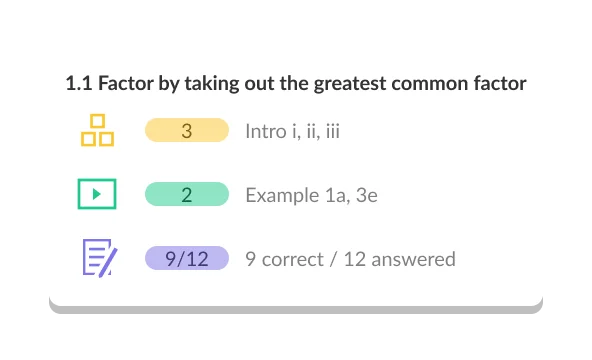
Unlimited Practice
Practice until it truly sticks.

Test Prep Included
Practice real SAT questions in your plan.
Try It Now
Test your knowledge
Our approach aligns with the evidence
Exam Scores
Better Recall
Less Anxiety
SAT Test Prep Topics
1. Understanding Integers
2. Adding and Subtracting Integers
3. Multiplying and Dividing Integers
4. Number Theory
5. Adding and Subtracting Fractions
6. Multiplying and Dividing Fractions
7. Operation with Decimals
8. Fractions, Decimals, and Percents
9. Ratios, Rates, and Proportions
10. Introduction to Variables and Expressions
11. Solving Linear Equations
12. Linear Inequalities
13. Measuring Systems
14. Number System
15. Radicals
16. Exponents
17. Operations of Polynomials
18. Introduction to Relations and Functions
19. Linear Functions
20. Systems of Equations
21. Factoring Polynomials
22. Quadratic Functions
23. Solving Quadratic Equations
24. Rational Expressions
25. Function Notation
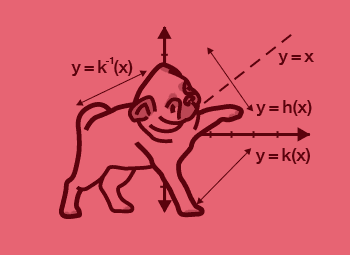
26. Transformations of Functions
27. Polynomial Functions
28. Direct and Inverse Variation
29. Trigonometry with Right Triangles
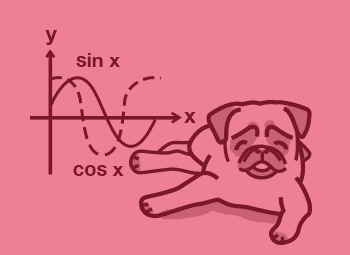
30. Trigonometric Ratios and Angle Measure
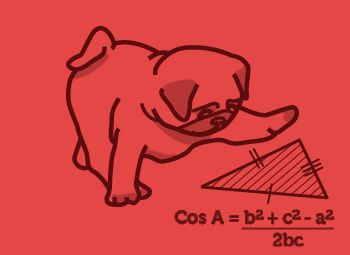
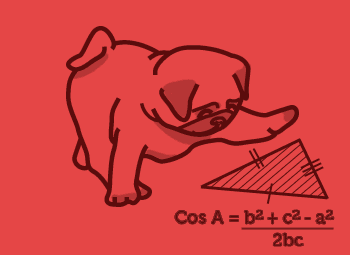
31. Law of Sines and Cosines
32. Imaginary and Complex Numbers
33. Angles, Lines, and Transversals
34. Circles
35. Surface Area and Volume
37. Data and Graphs
38 Chapters · 219 Topics · 1657 Videos
Discover Our Learning Areas
Explore key subjects and start learning with interactive content.











What Is the SAT and What Does It Cover?
The SAT is a standardised admissions test developed by the College Board, widely used by US universities and increasingly accepted by institutions worldwide, including a growing number in the UK. It measures the skills students develop in school — particularly in maths and evidence-based reading and writing — and is designed to help colleges assess readiness for undergraduate study. For UK students applying to US universities, or to UK programmes that request standardised test results, a strong SAT score can strengthen an application considerably.
The test is offered in a digital adaptive format at registered test centres. It runs for approximately two hours and fourteen minutes in its current digital form. The Maths section accounts for half the total score and is the area where focused preparation tends to produce the most significant gains.
SAT Format and Sections
The digital SAT is divided into two main sections: Reading and Writing, and Maths. Each section is split into two adaptive modules. Your performance on the first module of each section determines the difficulty level of the second module — meaning the test adjusts in real time based on how you are doing. The total score ranges from 400 to 1600.
The Maths section covers algebra, problem-solving and data analysis, advanced maths concepts, and additional topics including geometry and trigonometry. A built-in graphing calculator is available for the entire Maths section in the digital format, though knowing when and how to use it efficiently still requires solid preparation.
How Is the SAT Scored, and What Is a Good Score?
The SAT produces two section scores of 200–800 each: one for Reading and Writing and one for Maths. These combine to give a composite score of 400–1600. The average score is approximately 1050. For UK students targeting competitive US universities, a composite of 1300–1400 is generally considered strong, with 1500+ placing you among the top applicants. Many UK universities that consider SAT scores for entry to foundation or international programmes look for scores in the 1200–1350 range. There is no wrong-answer penalty on the digital SAT, so you should always attempt every question.
What Content Areas Are Tested in SAT Maths?
SAT Maths tests four content areas. Heart of Algebra covers linear equations, inequalities, and systems of equations — this is the largest single category. Problem-Solving and Data Analysis covers ratios, percentages, proportional reasoning, and interpreting graphs and statistics. Passport to Advanced Math tests quadratic equations, polynomial functions, and complex algebraic manipulation. Additional Topics in Maths covers plane geometry, coordinate geometry, and trigonometry.
The two heaviest-weighted areas are Heart of Algebra and Passport to Advanced Math, so students who strengthen those two areas first tend to see the largest score improvements. A diagnostic practice test is the most efficient way to identify which of these content areas needs the most attention before you begin a full study plan.
What Is the Hardest Part of the SAT, and How Do You Handle It?
Most students find Passport to Advanced Math the most demanding section. Questions here require you to manipulate complex expressions, work with non-linear functions, and reason about algebraic structure — skills that benefit from understanding the method rather than just applying a formula. The adaptive second module can also present more challenging questions if you perform well on the first, so preparation needs to extend into genuinely difficult material rather than stopping at the comfortable middle tier.
The most effective strategy is to study the step-by-step method for each question type, practise under timed conditions with full-length papers, and review every incorrect answer by working through a video solution that explains the reasoning — not just the final answer.
Why StudyPug for SAT Preparation?
StudyPug is built around one principle: understanding the method, not memorising answers. Every SAT video lesson is taught by a certified teacher who walks through the reasoning behind each question type, so when a similar question appears on test day — phrased differently or in a new context — you know how to approach it. Videos are not AI-generated; they are made by qualified educators who know the exam inside out.
The preparation system combines three things that work together. A diagnostic assessment identifies exactly which content areas need the most work so your study time is spent where it counts. Adaptive practice then adjusts the difficulty of questions to your current level, keeping you challenged without overwhelming you. And unlimited full-length SAT practice papers based on real exam patterns let you build timing, format familiarity, and confidence through repeated attempts — retaking any quiz or test as many times as you need.
Progress is tracked automatically, so you can see improvement over time and know when you are ready to move on to the next content area. All of this is available on any device, fully mobile-optimised, so you can prepare at home, at school, or on the go.
StudyPug offers free SAT practice content as a no-risk starting point. Full access to all practice tests, video solutions, and the diagnostic is available on subscription, backed by a 30-day money-back guarantee. There is no free trial of the paid plan — but the money-back guarantee means you can start with confidence.
Ready to begin? Explore SAT prep on StudyPug and take your first diagnostic today.
What You Will Learn: SAT Maths Coverage
StudyPug's SAT maths preparation covers all four tested content areas in full. Topic areas include:
- Heart of Algebra: solving and graphing linear equations, systems of equations, linear inequalities, and interpreting linear models
- Problem-Solving and Data Analysis: ratios and proportional relationships, percentages, unit conversions, scatterplots, two-way tables, and statistical measures
- Passport to Advanced Math: quadratic equations and functions, polynomial operations, rational and radical equations, exponential functions, and interpreting function notation
- Additional Topics: area and volume, circle theorems, right-triangle trigonometry, and working with complex numbers
Each topic is broken into short, focused lessons so you can target exactly the areas the diagnostic flags, rather than working through material you already know. Concept videos teach the method; practice questions test it; and full-length papers bring it all together under realistic timed conditions.
How to Build Your SAT Study Plan
A well-structured SAT study plan moves through four phases. Phase 1 (Week 1): Take a full-length diagnostic practice paper under timed conditions. Review your results to identify your weakest content areas by category. Phase 2 (Weeks 2–6): Work through the topic videos and adaptive quizzes for your weakest two content areas first, then cover the remaining areas systematically. Aim for daily sessions of thirty to forty-five minutes — consistency outperforms occasional long sessions. Phase 3 (Weeks 7–10): Take a full-length timed practice paper every weekend. After each paper, watch video solutions for every question you got wrong. Track your progress and note which content areas still need reinforcement. Phase 4 (Final Fortnight): Focus on timed practice and review only. Complete at least two full-length papers in the two weeks before test day. Avoid introducing new topics — build familiarity and timing confidence instead.
Students who begin preparation eight to twelve weeks before their test date and follow a structured plan tend to see the clearest improvement. If your timeline is shorter, prioritise Heart of Algebra and Passport to Advanced Math, as these carry the greatest weight in the Maths section score.
SAT Test Prep FAQ
Unsure how StudyPug works? Need help with setting up? Check our frequently asked questions or contact us for help.
What does the SAT cover, and how is it structured?
The SAT is divided into two main sections: Evidence-Based Reading and Writing (EBRW) and Maths. The Maths section is split into a no-calculator portion and a calculator-allowed portion. In total the test runs approximately three hours (or three hours fifty minutes with the Essay, though the Essay is now optional and discontinued at most test centres). Questions range from multiple-choice to student-produced responses. The digital SAT, now rolling out globally, uses an adaptive module format — your performance on the first module influences the difficulty of the second.
How is the SAT scored, and what counts as a good score?
The SAT is scored on a scale of 400–1600, combining two section scores of 200–800: one for EBRW and one for Maths. The average score sits around 1050. A score of 1200 or above is generally considered competitive for many UK universities that accept SAT results, and 1400+ places students in the top tier of applicants. There is no penalty for wrong answers, so you should always attempt every question. Your score report also includes subscores and cross-test scores to help identify specific strengths and weaknesses.
What subjects and content areas are tested on the SAT Maths section?
The SAT Maths section covers four main content areas: Heart of Algebra (linear equations and inequalities), Problem-Solving and Data Analysis (ratios, percentages, statistics), Passport to Advanced Math (quadratics, functions, complex equations), and Additional Topics in Maths (geometry, trigonometry, complex numbers). Heart of Algebra and Passport to Advanced Math carry the greatest weight. Questions test both procedural fluency and the ability to apply concepts to real-world contexts, so understanding the method — not just memorising formulas — is essential for a strong score.
How should I prepare for the SAT, and how long does it take?
Most students benefit from eight to twelve weeks of focused preparation, though students starting from a strong maths base can make meaningful gains in four to six weeks. Begin with a diagnostic practice test to identify your weakest content areas. Then work through those topics systematically using concept videos and targeted quizzes before returning to full-length practice papers. Aim for at least two full-length timed practice tests in the final fortnight. Consistent daily sessions of thirty to forty-five minutes tend to produce better results than irregular long cramming sessions.
When should I take the SAT, and how do I register?
In the UK, the SAT is offered several times a year — typically in March, May, June, August, October, November, and December — at registered test centres. Registration is handled through the College Board website (collegeboard.org). It is advisable to register at least four to six weeks before your chosen test date to secure a place at a convenient centre. Many students take the SAT in Year 12 or early Year 13 so they have time for a retake if needed. Check the College Board site for current UK test dates, deadlines, and fees.
What is the hardest part of the SAT Maths section, and how do I tackle it?
Most students find the Passport to Advanced Math questions the most challenging — these involve manipulating complex equations, working with functions, and interpreting algebraic expressions in context. The no-calculator module also catches students off-guard because efficient mental arithmetic and strong conceptual understanding matter more than calculator shortcuts. The best approach is to study the underlying method for each question type using step-by-step video solutions, then practise repeatedly under timed conditions. Understanding why a method works — not just how to apply it — is what separates a good score from a great one.





Written by the StudyPug Team
Last updated June 5, 2026
3 M+
students
★★★★★
4.8 average
K–12
all grades