AP Chemistry Help — Video Lessons & Practice
Get clear, step-by-step explanations for every AP Chemistry topic and build exam-ready confidence.

Step-by-Step Videos
Real teaching that builds problem-solving skills.
Practice Until Perfect
Keep practicing until you truly get it.
Test Prep Included
Practice real exam questions built in.
AP Chemistry Topics
1. Foundation Chemistry
3. Acid-Base Theory
4. Solubility and Precipitation
5. Enthalpy and Thermodynamics
6. Redox and Electrochemistry
7. Kinetics
8. Atomic Structure and Properties
9. Chemical Bonding
10 Chapters · 68 Topics · 583 Videos
Discover Our Learning Areas
Explore key subjects and start learning with interactive content.


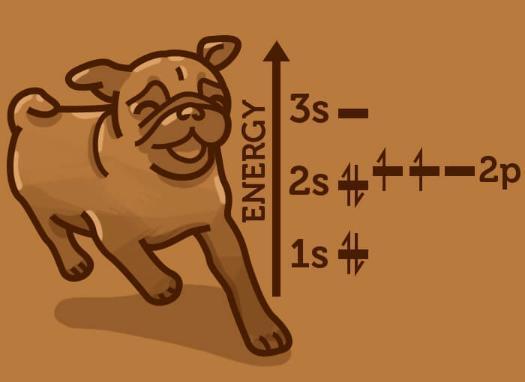




What is AP Chemistry?
AP Chemistry is a university-level chemistry course offered through the College Board's Advanced Placement programme. It is designed for students who want to study chemistry at a deeper, more rigorous level than standard school courses — and who want the opportunity to earn university credit before they even graduate. The course covers everything from atomic structure and chemical bonding through to thermodynamics, chemical equilibrium, kinetics, and electrochemistry, all developed with the quantitative reasoning skills universities expect.
For UK students, AP Chemistry is an internationally recognised qualification that sits alongside or above A-Level Chemistry in depth. Many students take it to strengthen their university applications or to access credit at US institutions.
Is AP Chemistry hard?
AP Chemistry has a reputation as one of the most challenging AP courses available, and that reputation is well earned. The course demands both conceptual understanding and strong mathematical fluency. Students who struggle typically find that they have gaps in foundational skills — balancing equations, working with moles, or applying algebra under exam conditions — rather than an inability to understand the chemistry itself.
The good news is that difficulty in AP Chemistry is almost always addressable with targeted practice. Knowing which topics to focus on, rather than re-reading the entire syllabus, is the most efficient path forward. A diagnostic assessment that identifies your specific weak points at the start of revision is the fastest way to close those gaps before the AP exam.
What topics are covered in AP Chemistry?
AP Chemistry follows the College Board's nine-unit framework. Here is what that covers in practice:
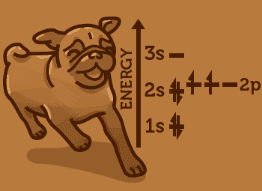
- Atomic structure and properties — electron configuration, periodic trends, and the quantum model of the atom.
- Molecular and ionic compound structure and properties — bonding types, Lewis structures, VSEPR theory, and intermolecular forces.
- Stoichiometry — mole calculations, limiting reagents, percentage yield, and solution concentration problems.
- Chemical reactions — reaction types, net ionic equations, and the behaviour of acids and bases.
- Kinetics — rate laws, reaction mechanisms, activation energy, and the Arrhenius equation.
- Thermodynamics — enthalpy, entropy, Gibbs free energy, and Hess's Law calculations.
- Chemical equilibrium — the equilibrium constant K, Le Chatelier's Principle, and ICE table problems.
- Acids, bases, and buffers — pH calculations, titration curves, and Henderson-Hasselbalch applications.
- Electrochemistry — galvanic and electrolytic cells, standard reduction potentials, and Faraday's Law.
Each of these units builds on the previous one, which is why identifying and fixing early gaps pays dividends across the whole course.
How is AP Chemistry assessed, and what does the AP exam involve?
The College Board AP Chemistry Exam is typically sat in May and consists of two sections totalling three hours and fifteen minutes. Section I contains 60 multiple-choice questions, accounting for 50% of your total score. Section II contains seven free-response questions — including long-form problems requiring calculations, written justifications, and experimental design — making up the remaining 50%.
Scores are reported on a scale of 1 to 5. Most universities offering AP credit require a score of 3 or above, though selective institutions often set the bar at 4 or 5. StudyPug's AP Chemistry practice tests are structured around the real AP exam format, so you become familiar with the question types and timing before exam day arrives.
What is the difference between AP Chemistry and A-Level Chemistry?
Both AP Chemistry and A-Level Chemistry are respected pre-university qualifications, but they differ in structure and style. A-Level Chemistry (AQA, OCR, Edexcel) typically runs over two years, with AS and A2 content assessed through terminal exams and internally assessed practical work. AP Chemistry follows a one-year College Board framework assessed through a single standardised exam in May, with a stronger emphasis on multiple-choice reasoning and laboratory analysis.
Depth-wise, the two qualifications are broadly comparable, though AP Chemistry places particular emphasis on quantitative problem-solving and written scientific justification in its free-response section. UK students who take AP Chemistry gain a credential that is well understood by both UK and US university admissions teams.
Why StudyPug for AP Chemistry help?
StudyPug is built around how students actually learn chemistry — by working through problems step by step, not by passively reading a textbook. Here is what makes it effective for AP Chemistry in particular:
Diagnostic Assessment. Before you watch a single video, StudyPug's diagnostic assessment identifies exactly which AP Chemistry topics are your weakest. That means your revision time is focused where it makes the most difference — no wasted hours on topics you already understand.
Certified-Teacher Video Lessons. Every AP Chemistry lesson on StudyPug is taught by a certified teacher. These are not AI-generated explanations — they are step-by-step worked lessons that teach you the method, so you can apply the same approach to new problems independently. When you understand how to solve a stoichiometry problem, rather than memorising a worked example, you can handle any variation the AP exam throws at you.
Adaptive Practice. After watching a lesson, adaptive practice problems adjust in difficulty based on how you are performing. If you are finding questions easy, the platform challenges you further. If you are making errors, it brings you back to the foundational step you need to revisit. This keeps practice sessions productive rather than repetitive.
AP Exam-Style Mock Tests. StudyPug's practice tests are based on real AP Chemistry exam-style questions — covering both multiple-choice and free-response formats — so you build familiarity with the exam structure alongside your chemistry knowledge.
Free Practice Content. You can access free AP Chemistry practice problems on StudyPug without a subscription. It is a genuine, no-commitment way to get started and identify where you need support.
30-Day Money-Back Guarantee. Every StudyPug subscription is backed by a 30-day money-back guarantee. If it is not the right fit, you can request a full refund — no questions asked.
What you learn — AP Chemistry curriculum coverage
StudyPug's AP Chemistry content is aligned to the College Board AP Chemistry curriculum framework. Every unit from atomic structure through to electrochemistry is covered with video lessons, worked examples, and practice problems. The coverage is designed to match what appears on the AP exam, so you are never studying material that will not be tested — and you are never missing a topic that will.
Because no validated internal topic-page links are available for this course in the current sitemap, each topic is accessible directly through the AP Chemistry course page on StudyPug. The course navigator on the platform lets you jump to any unit, lesson, or practice set directly.
How to use StudyPug for AP Chemistry revision
The most effective workflow for AP Chemistry on StudyPug is straightforward:
- Run the diagnostic. Let StudyPug identify your weak topics before you start — this saves hours of unfocused revision.
- Watch the concept video. For each flagged topic, watch the certified-teacher lesson. Focus on the method being used, not just the answer being reached.
- Complete the adaptive practice. Work through practice problems immediately after the video while the method is fresh. The adaptive engine will adjust difficulty as you go.
- Sit a mock test. Once you have covered your weak areas, run an AP Chemistry practice test under timed conditions. Review any questions you missed using the video solutions.
- Repeat for remaining gaps. Use the diagnostic results and your mock test errors to prioritise what to study next.
Students who follow this cycle consistently — diagnostic, video, practice, mock test, review — report the clearest and fastest improvement across AP Chemistry topics. The platform is available 24 hours a day, seven days a week, so you can fit revision around school, extracurriculars, and life in general.
If you are ready to stop feeling stuck and start building real exam confidence, StudyPug gives you everything you need in one place. Start Learning today — and if it is not right for you within 30 days, your money back, no questions asked.
AP Chemistry FAQ
Unsure how StudyPug works? Need help with setting up? Check our frequently asked questions or contact us for help.
What do you learn in AP Chemistry, and what topics does it cover?
AP Chemistry covers the fundamental principles of chemistry at a university introductory level. Core topics include atomic structure, chemical bonding, stoichiometry, thermodynamics, kinetics, chemical equilibrium, acids and bases, electrochemistry, and organic chemistry basics. Students also develop quantitative problem-solving and laboratory analysis skills. The course is designed to build deep conceptual understanding alongside the mathematical fluency needed for the AP exam and beyond.
What is the difference between AP Chemistry and A-Level Chemistry?
AP Chemistry is a US-curriculum course that follows the College Board framework and ends with a standardised AP exam, whereas A-Level Chemistry follows the UK national curriculum through exam boards such as AQA, OCR, or Edexcel. Both are rigorous pre-university qualifications, but AP Chemistry places a stronger emphasis on multiple-choice strategy and laboratory investigations, while A-Level Chemistry typically spans two years with modular assessments. Many UK students study AP Chemistry alongside or instead of A-Level for international university applications.
Is AP Chemistry hard, and where do students struggle most?
AP Chemistry is widely regarded as one of the most demanding AP courses. Students most commonly struggle with stoichiometry calculations, understanding chemical equilibrium and Le Chatelier's Principle, electrochemical cell notation, and multi-step thermodynamics problems. The mathematical demands are significant, and success requires both conceptual understanding and strong problem-solving habits. Consistent practice with worked examples — rather than simply reading notes — is the most reliable way to build confidence across these tricky areas.
What should I study before AP Chemistry, and what comes after it?
Students should have a solid grounding in GCSE or equivalent chemistry, including balancing equations, the periodic table, basic atomic structure, and introductory acid-base chemistry. A strong foundation in algebra and scientific notation from maths is equally important. After AP Chemistry, students are well prepared for university-level general chemistry, biochemistry, or chemical engineering. A strong AP exam score (4 or 5) can earn university course credit at many US and international institutions, saving time and tuition costs.
Is AP Chemistry on the AP exam, and how is it tested?
Yes — AP Chemistry culminates in the College Board AP Chemistry Exam, typically sat in May. The exam is three hours and fifteen minutes long and consists of two sections: a 60-question multiple-choice section (50% of the score) and a free-response section with seven questions, including long-form calculation and explanation tasks (50% of the score). Scores range from 1–5, with most universities accepting scores of 3 or higher for credit. StudyPug's practice tests are based on real AP Chemistry exam-style questions to help you prepare effectively.
What is one of the hardest concepts in AP Chemistry, and how do you tackle it?
Chemical equilibrium — particularly applying the ICE table method and interpreting the equilibrium constant K — is consistently rated the hardest concept by AP Chemistry students. The key is understanding that equilibrium is dynamic, not static, and that K reflects the ratio of products to reactants at a fixed temperature. Tackle it by working through ICE table problems systematically: write the balanced equation, set up Initial/Change/Equilibrium rows, and substitute into the K expression. Practising this method across many question types until the steps become automatic is far more effective than re-reading theory.





Written by the StudyPug Team
Last updated June 5, 2026
3 M+
students
★★★★★
4.8 average
K–12
all grades