Calculus 2 Help: Video Lessons & Practice
Step-by-step lessons from certified teachers — tackle integration, series, and more with confidence.
Value vs. Private Tutor
Expert teaching without tutor prices.

Multi-Subject
Struggling in Calc 2 isn't permanent.
Practice Until Perfect
Practice until it actually clicks.
Try It Now
Test your knowledge
Our approach aligns with the evidence
Exam Scores
Better Recall
Less Anxiety
Calculus 2 Topics
1. Integrals
2. Integration Techniques
3. Integration Applications
4. Differential Equations
5. Sequence and Series
6. Parametric Equations and Polar Coordinates
6 Chapters · 49 Topics · 346 Videos
Discover Our Learning Areas
Explore key subjects and start learning with interactive content.


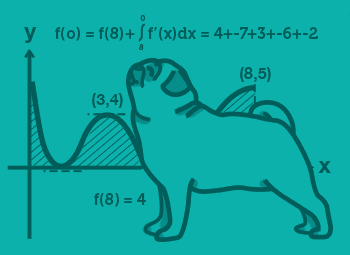
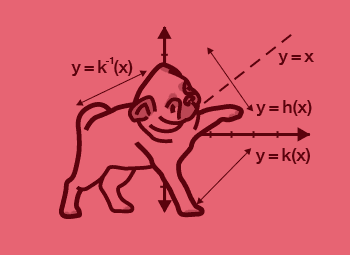

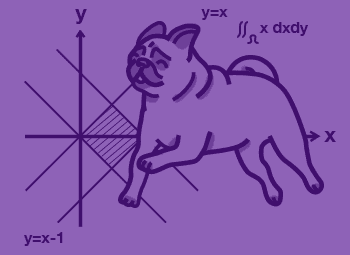


What is Calculus 2?
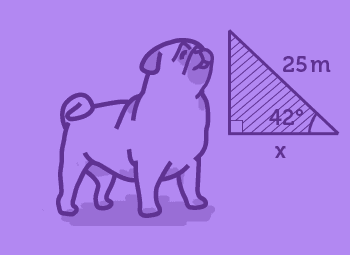
Calculus 2 is the second course in the standard university calculus sequence, focused on the theory and application of integration, infinite series, and new coordinate systems. It picks up where Calculus 1 leaves off — moving from the mechanics of differentiation into the deeper structures of accumulated change, summation, and approximation that underpin virtually every quantitative field from physics and engineering to economics and data science.
At UK universities the course typically runs across one semester or one term and sits within a broader Year 1 or Year 2 mathematics or engineering programme. The material is demanding, but it rewards students who approach it with a consistent practice habit and a clear sense of which technique to apply to which problem type.
What topics are covered in Calculus 2, and which are hardest?
The core curriculum moves through several major areas. Integration techniques — including integration by parts, trigonometric integrals, trigonometric substitution, and partial fraction decomposition — make up a substantial portion of the early course. Students then move into applications of integration (arc length, surface area, volumes of revolution) before the course shifts into sequences and series.
The series portion is where most students encounter real difficulty. You must not only evaluate series but determine whether they converge or diverge — and choose correctly between the Ratio Test, Root Test, Comparison Test, Limit Comparison Test, Alternating Series Test, and Integral Test. Taylor and Maclaurin series add another layer: constructing polynomial approximations for functions and understanding their radius of convergence.
The final section of most Calculus 2 courses covers parametric equations and polar coordinates — a conceptually different way of describing curves that requires rethinking familiar ideas about area and arc length.
Each of these areas demands both conceptual understanding and reliable algebraic execution. A single sign error in a partial fractions decomposition will cascade through the rest of a problem. That is why StudyPug's certified-teacher lessons focus on the method — explaining why each step is taken, not just what the answer is — so you build the judgement to catch and correct errors under exam pressure.
How does Calculus 2 connect to Calculus 3 and beyond?
Calculus 2 is the essential bridge to the rest of university mathematics. The integration techniques you develop here appear constantly in Differential Equations, where solving equations analytically often requires integration by parts or partial fractions. The series concepts reappear in Fourier Analysis and Numerical Methods. The coordinate-system fluency you build with polar and parametric representations is prerequisite knowledge for Calculus 3's treatment of surfaces, volume integrals, and vector fields.
Linear Algebra is typically studied in parallel or immediately after Calculus 2. While the subject matter is different, the habit of precise, step-by-step reasoning that Calculus 2 demands transfers directly. Students who come out of Calculus 2 with solid fundamentals find the transition to Calculus 3 significantly less steep.
With a StudyPug subscription, Calculus 2, Calculus 3, Linear Algebra, Differential Equations, and Statistics are all available under a single plan — so you never need to stop and purchase a new resource when you progress to the next course.
How is Calculus 2 assessed at UK universities?
Assessment formats vary between institutions, but the most common structure at UK universities combines problem-set coursework (typically 20–30% of the overall module mark) with a closed-book written examination held in the summer assessment period (70–80%). Some departments also include mid-semester in-class tests or online quizzes that count toward the final mark.
The written examination almost always requires full working — you cannot score well by writing down a correct answer without demonstrating the correct reasoning. Examiners look for evidence that you can select the appropriate integration technique, execute it accurately, and interpret the result. For the series portions, you are typically asked to test for convergence, find intervals of convergence, and derive Taylor series from scratch.
The best preparation combines regular topic-by-topic practice with full timed mock exams. StudyPug's practice tests are structured to mirror this exam environment, so you build the pacing and problem-selection instincts that written examinations reward.
Why use StudyPug for Calculus 2 help?
Most Calculus 2 students do not struggle because the material is impossible — they struggle because standard lecture formats move quickly and leave little room for the kind of repeated, structured exposure that builds real fluency. StudyPug is built around solving that specific problem.
The diagnostic assessment takes a few minutes and returns a precise map of where your Calculus 2 knowledge has gaps. Instead of working through every topic from the beginning, you can focus immediately on integration by parts, or series convergence tests, or whichever area is pulling your grade down. That efficiency matters enormously when semester deadlines are close.
The certified-teacher video lessons are not recordings of a lecture hall — they are purpose-built instructional videos that walk through the reasoning behind every step. You can pause, rewind, and watch a lesson on improper integrals or polar area as many times as you need until the method genuinely makes sense. The lessons are made by experienced instructors, not AI-generated content.
Adaptive practice then keeps you working at the right level of challenge. As your accuracy on integration problems improves, the system introduces more complex question types. As you approach your assessment period, the mock exam format gives you realistic timed practice under conditions that match what you will face on the day.
The 30-day money-back guarantee means there is no financial risk in getting started. Free daily practice content is also available without a subscription, so you can try the practice system on genuine Calculus 2 problems before making any commitment.
What Calculus 2 topics does StudyPug cover?
StudyPug's Calculus 2 content covers the full scope of the standard university curriculum:
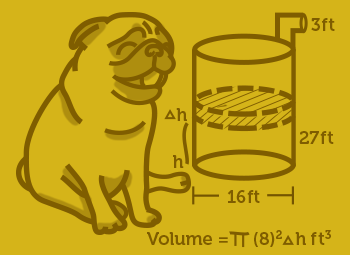
- Integration techniques: substitution, integration by parts, trigonometric integrals, trigonometric substitution, partial fraction decomposition, improper integrals
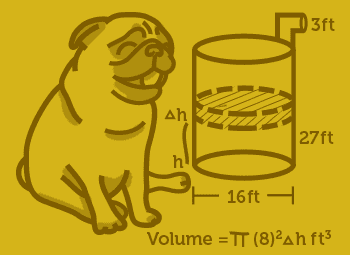
- Applications of integration: area between curves, volumes of solids of revolution (disc, washer, shell methods), arc length, surface area
- Sequences and series: convergence and divergence, geometric and p-series, the Ratio Test, Root Test, Comparison Tests, Alternating Series Test, Integral Test
- Power series and representations: radius and interval of convergence, differentiating and integrating power series
- Taylor and Maclaurin series: deriving series expansions, Taylor's Remainder Theorem, common series (e^x, sin x, cos x, ln(1+x))
- Parametric equations: derivatives and integrals of parametric curves, arc length in parametric form
- Polar coordinates: converting between systems, area in polar coordinates, arc length in polar form
Every topic has its own set of video lessons and practice problems. Because no validated individual topic URLs are currently available for this page, navigate to the Calculus 2 course page on StudyPug to browse the full topic list and jump directly to the area you need.
How to use StudyPug to improve your Calculus 2 grade
The most effective pattern is straightforward. Start with the diagnostic assessment — it takes only a few minutes and immediately tells you which Calculus 2 topics deserve the most attention. Use that result to build a revision list ordered by priority rather than working through the course from the beginning.
For each topic on your list, watch the certified-teacher video lesson once at normal pace to understand the method, then work through the adaptive practice problems. When you make errors, revisit the relevant lesson section — the videos are structured so you can jump to the specific step where your understanding broke down.
As your assessment period approaches, shift to the mock exam practice tests. Attempt them under timed conditions with no notes, then review every question you missed with the step-by-step worked solutions. Repeat this cycle two or three times across different practice tests before your actual examination.
If you are also enrolled in Calculus 3, Linear Algebra, or Differential Equations in the same or following semester, all of those courses are available immediately within your subscription — no extra cost, no separate sign-up. Start your free practice now and see exactly where your Calculus 2 preparation stands.
Calculus 2 FAQ
Unsure how StudyPug works? Need help with setting up? Check our frequently asked questions or contact us for help.
What do you learn in Calculus 2, and what topics does it cover?
Calculus 2 builds directly on Calculus 1 differentiation by developing integration in depth. Core topics include advanced integration techniques (substitution, integration by parts, partial fractions, trigonometric substitution), improper integrals, sequences and series (convergence tests, power series, Taylor and Maclaurin series), parametric equations, and polar coordinates. Many courses also introduce applications such as arc length, surface area, and volumes of solids of revolution. Together these topics form the backbone of higher-level applied mathematics and engineering modules.
What is the difference between Calculus 2 and Calculus 3?
Calculus 2 focuses on single-variable integration, infinite series, and introductory coordinate systems such as polar and parametric forms. Calculus 3 (often called Multivariable or Vector Calculus) extends these ideas into multiple dimensions — covering partial derivatives, multiple integrals, vector fields, line and surface integrals, and theorems such as Green's, Stokes', and the Divergence Theorem. Students who have a solid understanding of Calculus 2 convergence tests and integration techniques find the transition to Calculus 3 considerably smoother.
What are the prerequisites for Calculus 2, and what course comes after it?
The standard prerequisite is Calculus 1 (covering limits, derivatives, and an introduction to definite integrals). A working knowledge of A-Level Mathematics — particularly C1–C4 equivalent content — is typically expected at UK universities. After Calculus 2, most programmes progress to Calculus 3 (Multivariable Calculus), Linear Algebra, and Differential Equations. These three subjects are commonly bundled in a single StudyPug subscription, so you can begin the next course without any extra cost.
Is Calculus 2 hard, and where do students struggle most?
Calculus 2 is widely regarded as one of the most challenging first- and second-year university modules. The volume of techniques and the abstract nature of infinite series trips up a large proportion of students. The most common struggle points are choosing the right integration technique, applying convergence tests correctly for series, and understanding the behaviour of Taylor and Maclaurin series. Many students also find the shift from familiar derivative-based thinking to summation-based reasoning genuinely difficult. Consistent practice with worked examples is the most reliable way to build confidence.
How is Calculus 2 assessed at UK universities — coursework, exams, and what to expect?
Assessment structures vary by institution, but most UK universities assess Calculus 2 through a combination of problem-set coursework (typically 20–30% of the final mark) and a closed-book written examination in the summer assessment period (70–80%). Some courses also include in-class tests or online quizzes at the midpoint of the semester. The written exam usually requires proof of convergence, full integration workings, and derivation of series expansions. Practising past papers under timed conditions is strongly recommended alongside your regular revision.
What is one of the hardest topics in Calculus 2, and how do you approach it?
Series convergence is consistently ranked as the hardest topic in Calculus 2. Students must recognise which of several tests — Ratio Test, Root Test, Comparison Test, Limit Comparison, Alternating Series Test, or Integral Test — applies to a given series, and then execute the algebra cleanly. The best approach is to build a decision flowchart: start by checking whether the terms go to zero, then identify the form of the general term, and apply the appropriate test. Working through a large set of varied examples in one study session builds the pattern recognition needed for exam conditions.





Written by the StudyPug Team
Last updated June 5, 2026
3 M+
students
★★★★★
4.8 average
K–12
all grades