GED Math Prep: Practice Tests & Video Solutions
Step-by-step video lessons from certified teachers, unlimited practice tests, and a diagnostic that pinpoints exactly where to focus.

Step-by-Step Videos
Learn the method so you solve alone.
Unlimited Practice
Practice until it truly clicks.

Real Exam Practice
Practice real GED exam questions in your plan.
Try It Now
Test your knowledge
Our approach aligns with the evidence
Exam Scores
Better Recall
Less Anxiety
GED Math Test Prep Topics
1. Understanding Integers
2. Adding and Subtracting Integers
3. Multiplying and Dividing Integers
4. Introduction to Variables and Expressions
5. Number Theory
6. Adding and Subtracting Fractions
7. Multiplying and Dividing Fractions
8. Operation with Decimals
9. Number System and Pattern
10. Ratios, Rates, and Proportions
11. Percents
12. Solving One- and Two- Step Equations
13. Solving Multi-Step Equations
14. Linear Inequalities
15. Pythagorean Theorem
16. Radicals
17. Exponents
18. Introduction to Relations and Functions
19. Linear Functions
20. Solving Linear Systems
21. Operations of Polynomials
22. Factoring Polynomials
23. Rational Expressions
24. Reciprocal Functions
25. Quadratic Functions
26. Solving Quadratic Equations
27. Symmetry and Surface Area
28. Scale Factors and Similarity
29. Angles, Lines, and Transversals
30. Properties of Triangles
31. Circles
32. Measuring Systems
33. Surface Area and Volume
34. Introduction to Probability
36 Chapters · 188 Topics · 1508 Videos
Discover Our Learning Areas
Explore key subjects and start learning with interactive content.









What Is the GED Mathematical Reasoning Test?
The GED Mathematical Reasoning test is one of four subject tests that make up the General Educational Development (GED) qualification — a globally recognised credential equivalent to a high school diploma. For students in the UK, the GED provides a pathway to higher education and employment that accepts American-equivalency qualifications. The maths test is 115 minutes long, covering roughly 46 questions across quantitative problem solving and algebraic problem solving. A formula sheet is provided, and most of the exam allows use of the TI-30XS calculator, with a short calculator-free opening section. Understanding what is tested — and how — is the first step towards a focused preparation plan.
GED Math Format and Sections: What to Expect
The GED Mathematical Reasoning test is structured in two parts within a single sitting. Part 1 consists of approximately five questions completed without a calculator — typically testing basic number operations and mental arithmetic. Part 2 covers the remaining questions with the on-screen TI-30XS MultiView calculator available. Question formats include multiple choice, fill-in-the-blank, drag-and-drop, and hot-spot items where you click a location on a graph or diagram. The formula sheet supplied during the exam includes area, perimeter, and volume formulas, as well as key algebraic identities — but knowing how and when to apply each formula is what the test is really assessing.
How Is the GED Math Test Scored?
GED subject tests are scored on a scale of 100 to 200. The standard passing score for GED Mathematical Reasoning is 145. Scores of 165–174 place you at GED College Ready level, indicating readiness for credit-bearing college coursework without remediation. Scores of 175 and above reach GED College Ready + Credit, a level at which some US institutions award college credit. For UK students pursuing university access or vocational pathways, clearing 145 satisfies the qualification requirement; aiming for 165 or higher strengthens applications significantly.
What Content Areas Are Tested on GED Math?
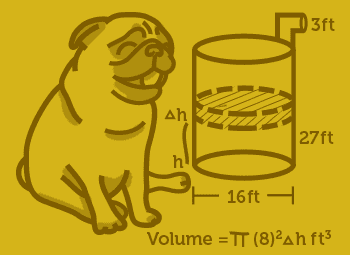
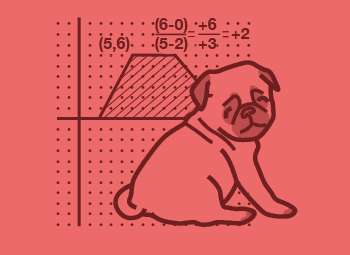
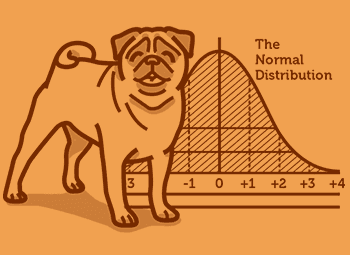
The test is divided into two content domains. Quantitative Problem Solving accounts for approximately 45% of questions and covers whole numbers, fractions, decimals, percentages, ratios, proportions, and introductory statistics including mean, median, and interpreting data displays. Algebraic Problem Solving makes up the remaining 55% and includes linear equations, linear inequalities, polynomial operations, quadratic equations, rational expressions, functions, and coordinate geometry — plotting lines and curves, identifying slopes, and interpreting graphs. Geometry is threaded throughout both domains: area, perimeter, surface area, volume, the Pythagorean theorem, and properties of shapes appear regularly.
What Is the Hardest Section of the GED Math Test?
Most candidates identify the algebraic reasoning questions as the most difficult portion of the exam. Specifically, multi-step linear equations, graphing linear and quadratic functions, and interpreting function notation catch many test-takers off guard. These question types require you to understand the reasoning process, not just recall a formula. Word problems that embed algebraic scenarios in real-world contexts are another common stumbling point. The most effective counter-strategy is deliberate practice: work through each algebraic manipulation step by step, write out every line of working, and retake practice quizzes on algebra topics until your accuracy is consistently high before test day.
Why StudyPug for GED Math Preparation?
StudyPug is built around a preparation model that works for busy adult learners: start with what you don't know, focus there, and build to exam confidence efficiently.
Diagnostic assessment — begin with a short diagnostic that maps your performance across every GED Math content area. Instead of working through topics you have already mastered, you get a personalised starting point that targets the sections most likely to cost you marks.
Certified-teacher video lessons — every lesson is recorded and presented by a certified teacher, not generated by AI. The lessons teach the method behind each problem type so you can handle similar questions you haven't seen before. This is especially important for GED Math, where the algebraic reasoning section demands genuine understanding rather than pattern-matching.
Adaptive practice — quiz difficulty adjusts to your performance. As your accuracy on number operations improves, the system moves you on to more demanding algebraic and geometry questions. You are always working at the edge of your current ability, which is the most efficient way to build score.
Unlimited practice tests — take full-length GED Math practice tests based on real exam formats as many times as you need. Retake quizzes on individual topics until you are consistently scoring above your target. There is no cap on attempts.
30-day money-back guarantee — every StudyPug subscription is backed by a full 30-day money-back guarantee. There is no free trial, but the guarantee means you can begin your preparation with no financial risk.
For students who are also exploring other qualifications, StudyPug offers SAT prep with the same certified-teacher video and adaptive practice system.
GED Math Topics Covered in StudyPug
StudyPug's GED Mathematical Reasoning preparation covers the full scope of both content domains tested on the exam. Core topic areas include:
- Number sense and operations — integers, fractions, decimals, percentages, ratios, and proportions
- Algebraic reasoning — solving and graphing linear equations and inequalities; quadratic equations; polynomial operations; rational expressions
- Functions — evaluating, interpreting, and graphing linear and quadratic functions; function notation
- Geometry — area, perimeter, circumference, surface area, volume; the Pythagorean theorem; coordinate geometry
- Statistics and data analysis — mean, median, mode, range; interpreting tables, bar graphs, line graphs, and scatterplots; basic probability
Each topic is broken into focused lessons, followed by adaptive practice questions that reinforce understanding before you move forward. The sequence mirrors the weighting of the actual exam — algebraic topics receive deeper coverage because they account for the majority of your score.
How to Prepare for the GED Math Test: A Study Plan
A structured 10–16 week preparation plan gives most candidates the best results. Here is a practical framework:
Weeks 1–2: Diagnostic and foundation. Take an initial practice test under timed conditions. Review your results to identify the content areas where you lost the most marks. Use StudyPug's diagnostic to get a topic-by-topic breakdown. Then review foundational number operations — fractions, percentages, and ratios are the building blocks for everything else on the exam.
Weeks 3–8: Systematic topic work. Work through algebraic reasoning topics in order — linear equations, inequalities, graphing, and then quadratic and polynomial content. Follow each video lesson with a topic quiz. Aim for consistent accuracy before moving on. Geometry and statistics can run in parallel as shorter daily sessions.
Weeks 9–12: Full-length practice tests. Begin taking full-length timed practice tests. After each test, review every question you missed — watch the video solution, understand the method, and retake the quiz for that topic. This review loop is the single highest-leverage activity in the final preparation phase.
Weeks 13–16 (if needed): Refinement and confidence. Focus exclusively on the one or two content areas where your practice test scores are still below your target. Retake full-length tests until you are consistently above 150, then above 165 if your goal is College Ready status.
Studying for 45–60 minutes per day on most days is more effective than longer infrequent sessions. The mobile-optimised StudyPug experience makes it easy to keep short daily sessions going even around work or other commitments.
GED Math Test Prep FAQ
Unsure how StudyPug works? Need help with setting up? Check our frequently asked questions or contact us for help.
What does the GED Math test cover, and how is it structured?
The GED Mathematical Reasoning test is a single 115-minute section with approximately 46 questions. It is split into two parts: a short calculator-free part (around 5 questions) and a longer calculator-permitted part. Topics span basic maths operations, number sense, algebraic thinking, geometry, statistics, and data analysis. Questions appear as multiple choice, fill-in-the-blank, drag-and-drop, and hot-spot formats. A formula sheet is provided, but understanding how to apply each formula is what separates passing scores from failing ones.
How is the GED Math test scored, and what counts as a good score?
Each GED subject test, including Mathematical Reasoning, is scored on a scale of 100–200. A score of 145 is the passing threshold. Scores of 165–174 indicate GED College Ready performance, and scores of 175 or above signal GED College Ready + Credit, which can earn you college credit at participating institutions. Aiming for at least 165 gives you the strongest foundation for post-secondary options. Regular practice tests help you track where you sit on this scale before test day.
What subjects and content areas are tested on the GED Mathematical Reasoning test?
The GED Math test covers two broad content areas. Quantitative Problem Solving accounts for roughly 45% of the test and includes whole numbers, fractions, decimals, percentages, ratios, proportions, and basic statistics. Algebraic Problem Solving accounts for approximately 55% and covers linear equations, inequalities, quadratic equations, polynomial operations, functions, and graphing on a coordinate plane. Geometry concepts — area, perimeter, volume, and the Pythagorean theorem — are woven into both areas throughout the exam.
How should I prepare for the GED Math test, and how long does it take?
Most candidates benefit from 8–16 weeks of structured preparation, depending on their starting level. Begin with a diagnostic practice test to identify weak content areas. Then work through targeted concept lessons — algebra and functions are high-yield since they make up the majority of the exam. Follow each topic with topic-specific quizzes, then take full-length timed practice tests in the final weeks to build stamina and exam confidence. StudyPug's step-by-step video lessons and adaptive practice are designed to fit this study-smarter approach.
When should I take the GED Math test, and how do I register?
In the UK and internationally, the GED is administered by Pearson VUE at authorised test centres. You can register at ged.com, create a MyGED account, and book your Mathematical Reasoning test independently from the other three GED subjects — there is no requirement to sit all tests on the same day. Tests are available year-round, so you can schedule when you feel ready. Check Pearson VUE's site for the nearest UK test centre and current seat availability before finalising your date.
What is the hardest part of the GED Math test, and how do I tackle it?
Most candidates find the algebraic reasoning section the most challenging — specifically linear equations, graphing functions, and solving multi-step inequalities. These question types require understanding the method, not just memorising a formula. The best strategy is to practise solving problems step by step, working through each algebraic manipulation deliberately. StudyPug's certified-teacher videos teach exactly this: how to approach each problem type so you can handle variations you haven't seen before. Retaking practice quizzes on algebra topics until your accuracy is consistently high is the most effective preparation.





Written by the StudyPug Team
Last updated June 5, 2026
3 M+
students
★★★★★
4.8 average
K–12
all grades