IB Chemistry Help — Video Lessons & Practice
Get clear, step-by-step explanations for every IB Chemistry topic and build exam-ready confidence.
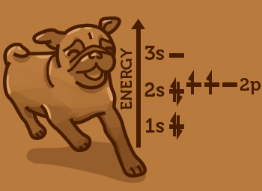
Step-by-Step Video Lessons
Real teaching makes you solve it alone.
Practice Until Perfect
Practice until it truly clicks.
Test Prep Included
Includes real exam-style practice questions.
IB Chemistry Topics
1. Stoichiometry
2. Atomic Structure
3. Periodicity and Elements
4. Chemical Bonding
5. Enthalpy and Thermodynamics
6. Kinetics
8. Acid-Base Theory
9. Redox and Electrochemistry
10 Chapters · 55 Topics · 494 Videos
Discover Our Learning Areas
Explore key subjects and start learning with interactive content.





What is IB Chemistry?
IB Chemistry is a two-year pre-university science course offered as part of the International Baccalaureate Diploma Programme. It is available at Standard Level (SL) and Higher Level (HL), and is studied by students aged 16–19 in schools across the UK and worldwide. The course covers the fundamental principles of chemistry — from atomic structure and chemical bonding through to organic chemistry, thermodynamics, and electrochemistry — assessed through a combination of external examinations and an internal assessment research project.
What topics are covered in IB Chemistry?
The IB Chemistry syllabus is organised into core and additional higher level (AHL) content. Core topics studied by both SL and HL students include stoichiometry and the mole concept, atomic structure, periodicity, chemical bonding and structure, energetics and thermochemistry, chemical kinetics, equilibrium, acids and bases, redox processes, organic chemistry, and measurement and data processing. Higher Level students study these areas in greater depth and add topics such as spectroscopic identification of organic compounds, further aspects of organic chemistry, and detailed electrochemical cell analysis. The course also includes prescribed practical activities and an independent internal assessment investigation, which counts for 20% of the final IB grade.
Is IB Chemistry harder than A-Level Chemistry?
IB Chemistry and A-Level Chemistry are both demanding qualifications, but the challenge is different in character. IB Chemistry requires students to manage five other subjects simultaneously within the Diploma Programme, which creates a significant workload challenge. The chemistry content itself is comparable in depth at HL to A-Level, though the IB places a stronger emphasis on laboratory work and scientific inquiry through the internal assessment. A-Level students focus exclusively on chemistry over two years and sit three terminal papers. Students who thrive under breadth often find the IB format rewarding; those who prefer depth-first specialisation tend to favour A-Level. Both routes lead effectively to university science programmes.
What are the most common struggles in IB Chemistry, and how can you overcome them?
Across the IB Chemistry syllabus, several topics consistently cause difficulty. Stoichiometry and molar calculations demand careful unit tracking and algebraic confidence — many students lose marks through rushed arithmetic rather than misunderstanding. Equilibrium and Le Chatelier's principle require multi-step reasoning about how different stresses shift a dynamic system, which feels abstract until it is worked through with concrete examples. Organic chemistry mechanisms — particularly nucleophilic substitution and elimination — need to be drawn precisely, with correct curly arrow notation. Electrochemistry, including standard electrode potential calculations and constructing cell diagrams, also trips up students who have not built the conceptual framework first.
The most effective strategy for each of these areas is to watch a method-focused explanation before attempting problems — understanding why each step works, not just copying a procedure. StudyPug's certified-teacher videos are structured exactly this way: the teacher demonstrates the reasoning method so you can apply it to any exam question, including unfamiliar contexts in Paper 2 and Paper 3.
How is IB Chemistry examined, and what do the IB Diploma papers look like?
IB Chemistry is externally assessed through three papers sat at the end of Year 2. Paper 1 consists of multiple-choice questions covering the core syllabus (SL: 30 questions; HL: 40 questions). Paper 2 contains structured and extended-response questions requiring written explanations, calculations, and data interpretation. Paper 3 includes data analysis questions based on experimental results and questions on the student's chosen options topic. Higher Level students sit longer versions of Paper 2 and Paper 3. The IB grades on a 1–7 scale; a grade of 4 is considered a pass, while a 6 or 7 is typically required for competitive university entry in science-related fields. In addition, the internal assessment (IA) — an individually designed investigation — is assessed internally and moderated externally, contributing 20% of the total mark.
Why use StudyPug for IB Chemistry?
StudyPug is built specifically to help IB Chemistry students understand the method behind each problem type, not just get a single answer. Every lesson is delivered by a certified teacher in a step-by-step video format — not AI-generated content — so the explanation mirrors the reasoning a great teacher would give in person. The approach means you learn how to solve a class of problem, which is exactly what IB Paper 2 and Paper 3 extended-response questions demand.
The platform begins with a short diagnostic assessment that maps your current IB Chemistry knowledge and identifies the specific topics where you need to focus. This means your revision time goes directly to the gaps that will cost you marks — not to topics you already understand. As you practise, the adaptive system adjusts the difficulty of questions to keep you working at the edge of your current ability, so every session moves you forward.
All content is aligned to the IB Diploma Programme Chemistry syllabus, covering both SL and HL material. Exam-style practice questions based on the format of IB papers are included in your subscription. StudyPug also offers free practice problems — a genuine no-commitment way to see the approach before subscribing. For students who do subscribe, a 30-day money-back guarantee means there is no financial risk.
What you learn: IB Chemistry curriculum coverage
StudyPug covers the full IB Chemistry syllabus for both Standard Level and Higher Level. Key areas include:
- Stoichiometry — mole calculations, empirical and molecular formulae, limiting reagents, percentage yield and atom economy.
- Atomic structure and periodicity — electron configuration, periodic trends, ionisation energy, and electronegativity.
- Chemical bonding and structure — ionic, covalent, and metallic bonding; VSEPR theory; hybridisation (HL); molecular orbital theory (HL).
- Energetics and thermochemistry — enthalpy changes, Hess's law, bond enthalpies, Gibbs free energy (HL), and entropy.
- Chemical kinetics — rate equations (HL), reaction mechanisms, Arrhenius equation (HL), and collision theory.
- Equilibrium — Le Chatelier's principle, equilibrium constant expressions, solubility product (HL).
- Acids and bases — pH calculations, buffer solutions, acid–base titrations, and the Lewis acid–base concept (HL).
- Redox and electrochemistry — oxidation states, galvanic and electrolytic cells, standard electrode potentials (HL).
- Organic chemistry — functional groups, reaction mechanisms, spectroscopy (HL), and multi-step synthesis (HL).
No validated internal topic-page links are available for this course in the current sitemap. Each area above is fully covered within the StudyPug IB Chemistry course.
How to use StudyPug for IB Chemistry revision
The most effective workflow for IB Chemistry students on StudyPug follows three stages. First, run the diagnostic assessment when you start — it takes around 15 minutes and produces a clear picture of your strengths and the gaps most likely to affect your exam score. Second, work through the certified-teacher video lessons for your priority topics. Watch the full explanation first without pausing to take notes; then rewatch with a pen and paper to record the method steps. This active approach makes the technique stick faster than passive reading. Third, use the adaptive practice after each lesson to test whether you can apply the method independently. The system will increase difficulty as you improve, so you are always being challenged at the right level.
For IB Chemistry specifically, it helps to practise Paper 2 extended-response questions regularly from mid-Year 2 onwards. The marking criteria reward clear, structured reasoning — and the StudyPug videos model exactly this kind of clear, step-by-step written response. Combining video revision with timed practice under exam conditions is the most reliable way to build the confidence and accuracy that IB Chemistry papers reward.
IB Chemistry FAQ
Unsure how StudyPug works? Need help with setting up? Check our frequently asked questions or contact us for help.
What do you learn in IB Chemistry, and what topics does it cover?
IB Chemistry covers the core principles of the natural world through topics including stoichiometry, atomic structure, periodicity, chemical bonding, energetics, kinetics, equilibrium, acids and bases, redox and electrochemistry, and organic chemistry. Higher Level students also study additional depth topics such as spectroscopy and biochemistry. The course develops both conceptual understanding and practical laboratory skills, preparing students for university-level science and the IB Diploma external examinations.
What is the difference between IB Chemistry and A-Level Chemistry?
Both qualifications are rigorous pre-university chemistry courses, but they differ in structure and assessment. IB Chemistry is part of the broader IB Diploma Programme, requires students to study six subjects simultaneously, and includes a mandatory internal assessment (IA) research project alongside Papers 1, 2, and 3. A-Level Chemistry focuses solely on chemistry over two years and is assessed through three externally marked papers. IB Chemistry also has Standard Level and Higher Level options within the same programme, while A-Level has a single pathway.
Is IB Chemistry hard, and where do students struggle most?
IB Chemistry is widely considered one of the more demanding IB sciences. Students most commonly struggle with stoichiometry and molar calculations, understanding equilibrium and Le Chatelier's principle, organic chemistry mechanisms, and interpreting electrochemical cells. At Higher Level, spectroscopy and multi-step organic synthesis add further challenge. The combination of mathematical problem-solving and conceptual reasoning can feel overwhelming, particularly in Year 2 when exam pressure builds. Breaking each topic into clear steps — as StudyPug's lessons do — helps make these areas manageable.
What should I study before IB Chemistry, and what comes after it?
Before IB Chemistry, students benefit from a solid GCSE or equivalent foundation in chemistry, particularly in atomic structure, bonding, and basic calculations. Good maths skills — including algebra, logarithms, and graphing — are also essential. After IB Chemistry, high scores open doors to university courses in chemistry, biochemistry, medicine, pharmacy, engineering, and environmental science. Many students who complete IB Chemistry HL find the transition to first-year university chemistry significantly smoother.
Is IB Chemistry tested on the IB Diploma exams, and how is it assessed?
Yes. IB Chemistry is assessed through the IB Diploma Programme external examinations: Paper 1 (multiple choice), Paper 2 (structured and extended response), and Paper 3 (data analysis plus options). These are sat at the end of Year 2. The internal assessment (IA) — an individual investigation — counts for 20% of the final grade. Higher Level students sit a longer Paper 2 and additional Paper 3 material. The IB uses a 1–7 grading scale, with a 4 generally considered a pass.
What is one of the hardest concepts in IB Chemistry, and how do you tackle it?
Equilibrium and the application of Le Chatelier's principle to predict reaction shifts is one of the most consistently difficult areas for IB Chemistry students. It requires understanding how changes in concentration, pressure, temperature, and catalysts affect dynamic equilibrium — often in multi-step reasoning questions. The most effective approach is to start with the conceptual definition, work through visual examples of each stress type, then practise applying the logic to unfamiliar contexts. StudyPug's certified-teacher videos walk through each scenario step by step so you learn the method, not just the answer.




Written by the StudyPug Team
Last updated June 5, 2026
3 M+
students
★★★★★
4.8 average
K–12
all grades