AP Calculus BC Help — Video Lessons & Practice
Get clear explanations for every AP Calculus BC topic and build exam-ready confidence.
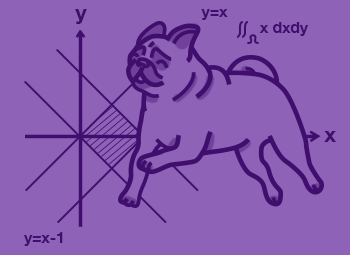
Expert Video Solutions
Watch it solved then try it yourself.
Unlimited Practice
Keep practicing until it truly clicks.
Test Prep Included
Practice with real built-in AP exam questions.
Try It Now
Test your knowledge
Our approach aligns with the evidence
Exam Scores
Better Recall
Less Anxiety
AP Calculus BC Topics
1. Limits & Continuity
2. Derivatives
3. Derivative Applications
4. Integrals
5. Integration techniques
6. Integral Applications
7. Differential Equations
8. Sequence and Series
8 Chapters · 68 Topics · 454 Videos
Discover Our Learning Areas
Explore key subjects and start learning with interactive content.





What Is AP Calculus BC?
AP Calculus BC is an advanced placement mathematics course equivalent to roughly two semesters of first-year university calculus. It extends beyond AP Calculus AB to include advanced integration methods, infinite series, parametric and polar calculus, and vector-valued functions. Students who earn a strong AP exam score often receive direct university credit, placing out of introductory calculus modules entirely — a genuine advantage for anyone entering science, engineering, economics, or mathematics programmes.
In the UK, AP Calculus BC sits alongside — and in many ways surpasses — A-Level Further Mathematics in scope. Many sixth-form students studying Further Maths choose AP Calculus BC to strengthen their university applications or to prepare for the rigour of a mathematics degree.
How Hard Is AP Calculus BC?
AP Calculus BC is widely regarded as one of the most demanding AP courses available. The difficulty comes not just from individual topics — though series convergence and multistep integration are genuinely challenging — but from the breadth of the course. You need to hold a large toolkit of techniques in mind and select the right one quickly under timed exam conditions.
Students who approach the course with solid pre-calculus foundations and ideally some familiarity with AB-level material tend to progress more steadily. The biggest pitfall is neglecting weak areas early: a gap in algebraic manipulation or trigonometric identities will compound as topics build on each other. Regular practice on specific weak spots — guided by a diagnostic — is far more effective than passive re-reading of notes.
What Topics Are Covered in AP Calculus BC?
The AP Calculus BC curriculum is divided into several major units by the College Board:
Limits and Continuity — the foundational unit covering limit laws, one-sided limits, continuity, and the Squeeze Theorem. Differentiation — derivatives of all standard function types, implicit differentiation, related rates, and optimisation. Integration — the definite and indefinite integral, the Fundamental Theorem of Calculus, and applications such as area, volume (disc, washer, shell methods), and arc length. Advanced Integration Techniques (BC only) — integration by parts, partial fractions, improper integrals, and trigonometric substitution. Differential Equations — slope fields, Euler's method, and separable differential equations including logistic growth. Parametric, Polar, and Vector Functions (BC only) — calculus with parametric curves and polar coordinates, including area and arc length in polar form. Infinite Sequences and Series (BC only) — convergence tests, Taylor and Maclaurin series, and power series representations of functions.
How Is AP Calculus BC Different from A-Level Further Maths?
Both courses cover calculus at a deep level, but they differ in structure and emphasis. A-Level Further Mathematics is a UK qualification assessed across two years with modular options (Further Pure, Mechanics, Statistics, Decision). AP Calculus BC is a single focused course assessed in one culminating exam. BC goes deeper on series (Taylor/Maclaurin, power series) than most UK Further Maths modules, while A-Level Further Maths has broader optional content including complex numbers, matrices, and proof by induction.
For students in the UK pursuing AP Calculus BC alongside or instead of Further Maths, the courses complement each other well. The AP exam format — particularly free-response justification — also builds strong written mathematical reasoning skills valued by UK universities.
What Comes After AP Calculus BC?
Completing AP Calculus BC — especially with a score of 4 or 5 — positions you to enter university-level Calculus III (multivariable calculus and vector calculus) directly, skipping two introductory modules. From there, the natural progression moves into linear algebra, differential equations, real analysis, and advanced applied mathematics. In engineering and physics programmes, the topics in BC appear immediately and constantly: series expansions in quantum mechanics, integration techniques in circuit analysis, and differential equations throughout dynamics.
What Are the Most Important Concepts to Practise Before the AP Exam?
Based on how the AP exam is structured, the highest-impact topics to practise are: Series convergence and representation — convergence tests, Taylor series, and interval of convergence questions appear heavily in free response. Integration techniques — expect to use integration by parts, partial fractions, and trigonometric forms without prompting. Differential equations — slope fields and separable equations have appeared in free response almost every year. Parametric and polar calculus — area, arc length, and derivatives in parametric and polar form. Practising past AP free-response questions under timed conditions and reviewing the scoring rubrics is the single most targeted preparation you can do.
Why StudyPug for AP Calculus BC?
StudyPug is built around one core idea: understanding the method, not just seeing the answer. Every AP Calculus BC lesson is delivered by a certified teacher who walks through each step of the reasoning — so when you face a similar problem on your AP exam, you know exactly how to approach it.
Diagnostic Assessment. Before you watch a single lesson, StudyPug's diagnostic identifies precisely where your understanding has gaps. Rather than working through an entire topic list, you focus time where it counts most. For a course as broad as AP Calculus BC, this is the difference between efficient preparation and aimless revision.
Adaptive Practice. Once you start practising, problem difficulty adjusts automatically to your performance level. If you are consistently getting series convergence questions right, the system moves on. If integration by parts is causing errors, it keeps you there until you have genuinely consolidated it. The result is practice that stays productive without becoming repetitive.
AP Exam-Style Questions. StudyPug's practice is built to reflect the style and rigour of the actual AP Calculus BC exam. That includes both the multiple-choice format and the extended justification style of free-response questions — so you practise the kind of mathematical reasoning the exam rewards.
Curriculum Alignment. Lessons follow the College Board AP Calculus BC framework unit by unit, which means whatever your school is teaching in class, StudyPug is ready to reinforce it the same evening.
Free Practice Available. You can access free practice content on StudyPug without a subscription. It is a genuine, no-pressure way to see whether the platform works for you before committing.
30-Day Money-Back Guarantee. Every paid subscription is backed by a 30-day money-back guarantee — the only guarantee StudyPug makes. If it is not working for you, contact support within 30 days for a full refund.
What You Learn: AP Calculus BC Curriculum Coverage
StudyPug's AP Calculus BC coverage is built to the College Board's course and exam description. Below is an overview of the major curriculum areas available on the platform:
- Limits and Continuity — limit laws, the epsilon-delta definition, continuity theorems, and limits at infinity.
- Derivatives and Differentiation Rules — product, quotient, and chain rules; implicit differentiation; higher-order derivatives; related rates and optimisation.
- Applications of Derivatives — mean value theorem, curve sketching, L'Hôpital's Rule, and motion problems.
- Integration Fundamentals — Riemann sums, the Fundamental Theorem of Calculus (both parts), and substitution.
- Applications of Integration — area between curves, volume by discs/washers/shells, and arc length.
- Advanced Integration Techniques — integration by parts, partial fraction decomposition, trigonometric substitution, and improper integrals.
- Differential Equations — slope fields, Euler's method, separable equations, and logistic growth models.
- Parametric Equations and Polar Coordinates — derivatives and integrals for parametric curves; area and arc length in polar form.
- Infinite Sequences and Series — geometric series, p-series, comparison tests, ratio and root tests, alternating series, absolute vs conditional convergence, Taylor and Maclaurin series, and power series with interval of convergence.
No validated internal topic URLs are available for the UK AP Calculus BC page at this time. Browse topics directly from the course page to explore individual lessons.
How to Use StudyPug for AP Calculus BC
Step 1 — Take the diagnostic. Start with the AP Calculus BC diagnostic assessment. It takes a short time to complete and generates a personalised focus list of the topics where your understanding needs the most work. This is your revision roadmap.
Step 2 — Watch the concept video. For each topic on your list, watch the certified-teacher lesson. These are not worked-example compilations — they teach the underlying method so you understand why each step follows from the last. Lessons are concise and focused, typically 5–15 minutes.
Step 3 — Practise adaptively. After each lesson, move straight into practice. The adaptive system adjusts problem difficulty based on your responses, keeping you challenged without overwhelming you. Aim to reach consistent accuracy before moving to the next topic.
Step 4 — Run AP exam-style practice tests. Once you have covered your priority topics, run full AP-style practice sessions. Review any questions you missed by watching the corresponding lesson — StudyPug links problems back to the relevant video, so you always know what to revisit.
Step 5 — Use Photo Search for any stuck moments. If you encounter a problem in your textbook or practice paper that you cannot place, StudyPug's Photo Search lets you find the matching lesson by searching the topic — helping you get unstuck quickly between study sessions.
Whether you are working through AP Calculus BC alongside A-Level Further Mathematics, using it as your primary sixth-form maths challenge, or self-studying for a university application boost, StudyPug gives you a structured, exam-aligned path from first principles to AP exam readiness.
AP Calculus BC FAQ
Unsure how StudyPug works? Need help with setting up? Check our frequently asked questions or contact us for help.
What do you learn in AP Calculus BC, and what topics does it cover?
AP Calculus BC covers a wide range of advanced calculus concepts built on a solid foundation of limits and continuity. Core topics include derivatives and their applications, definite and indefinite integration, integration techniques (substitution, integration by parts, partial fractions), differential equations, parametric equations, polar coordinates, and infinite sequences and series — including convergence tests. It is equivalent in scope to a first-year university calculus course covering both Calculus I and II.
What is the difference between AP Calculus BC and AP Calculus AB?
AP Calculus AB covers approximately one semester of university-level calculus — limits, derivatives, and basic integration. AP Calculus BC covers all of AB plus additional topics: advanced integration techniques, parametric and polar equations, vector-valued functions, and infinite series with convergence tests. BC is the broader and more demanding course. Students who complete BC often earn university credit for two semesters of calculus, making it a significant advantage for science, engineering, and mathematics degrees.
Is AP Calculus BC hard, and where do students most often struggle?
AP Calculus BC is considered one of the most demanding AP courses. The most common trouble spots are infinite series and convergence tests (students often confuse when to apply which test), integration by parts with multiple iterations, and polar and parametric calculus. Differential equations and the conceptual link between a function and its derivatives also trip students up. The volume of new techniques means that gaps in foundational algebra or AB-level calculus can compound quickly, so targeted practice on weak areas is essential.
What should I know before taking AP Calculus BC, and what comes after it?
You should be comfortable with pre-calculus — functions, trigonometry, and algebra — and ideally with AP Calculus AB content (limits, basic derivatives, and basic integrals). Many students take AB before BC, though some schools offer BC directly. After completing AP Calculus BC, students are well prepared for university courses in Calculus III (multivariable calculus), linear algebra, differential equations, and advanced STEM programmes. A strong BC score often earns direct placement into second-year university mathematics.
Is AP Calculus BC on the AP exam, and how is it tested?
Yes. The College Board AP Calculus BC exam is the key assessment. It is a 3-hour 15-minute exam split into two sections: multiple choice (45 questions, ~50% of score) and free response (6 questions, ~50% of score). Each section has a calculator-permitted and a no-calculator portion. Free-response questions require you to show full working and justify reasoning. A score of 3 or above (on a 1–5 scale) is generally considered passing; scores of 4 or 5 typically earn university credit at most institutions.
What is one of the hardest concepts in AP Calculus BC, and how do you tackle it?
Infinite series convergence is consistently the hardest topic for most AP Calculus BC students. You must know when to apply the ratio test, root test, comparison test, limit comparison test, integral test, and alternating series test — and choose correctly under exam conditions. The key strategy is to build a decision flowchart: start by checking if the limit of the general term goes to zero (divergence test), then identify the series type (geometric, p-series, or general), and apply the most efficient test. Practising with varied examples until the selection becomes instinctive is essential for exam success.





Written by the StudyPug Team
Last updated June 5, 2026
3 M+
students
★★★★★
4.8 average
K–12
all grades