Differential Calculus Help: Video Lessons & Practice
Step-by-step lessons on limits, derivatives, and differentiation — with free practice tests and a 30-day money-back guarantee.
Value vs. Private Tutor
Learn from experts without tutor prices.

Multi-Subject
Master derivatives switch subjects tomorrow.
Build Mastery
Actually know it instead of cramming.
Try It Now
Test your knowledge
Our approach aligns with the evidence
Exam Scores
Better Recall
Less Anxiety
Differential Calculus Topics
1. Limits
2. Differentiation
3 Chapters · 31 Topics · 217 Videos
Discover Our Learning Areas
Explore key subjects and start learning with interactive content.


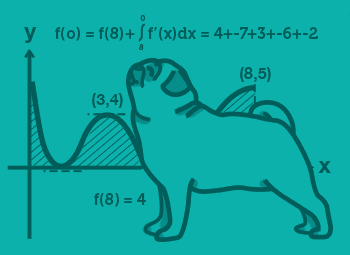
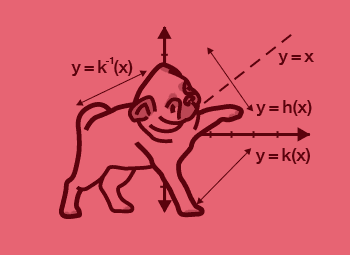
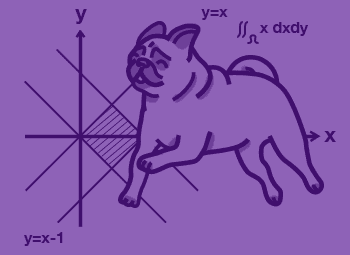


What is Differential Calculus?
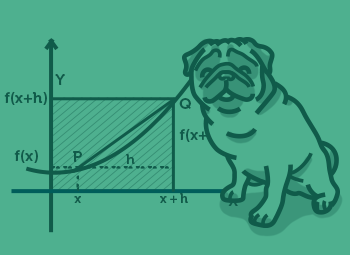
Differential Calculus is the branch of mathematics concerned with rates of change. At its core is the derivative — a precise measure of how a function changes at any given point. From the gradient of a curve at a specific location to the instantaneous velocity of a moving object, differential calculus gives you the tools to describe change mathematically. It underpins A-Level Pure Mathematics, university calculus courses, and a wide range of applied disciplines including physics, engineering, and economics. If you have ever asked "how steep is this curve right here?" you were already thinking in differential calculus terms.
What topics are covered in Differential Calculus?
Differential Calculus builds from foundational ideas to increasingly powerful techniques. You begin with limits and continuity — understanding what it means for a function to approach a value — before moving into first-principles differentiation, where the derivative is defined formally using the limit of a difference quotient. From there the course develops the standard rules: the power rule, product rule, quotient rule, and the critically important chain rule for composite functions. Later topics include implicit differentiation, parametric differentiation, higher-order derivatives, and the application of derivatives to curve sketching and optimisation problems. At A-Level and early university level you will also work with derivatives of trigonometric, exponential, and logarithmic functions, and apply differential calculus to related-rates problems drawn from physics and engineering contexts.
How does Differential Calculus differ from Integral Calculus?
The two main branches of calculus are complementary opposites. Differential Calculus asks: "given a function, how fast is it changing?" and produces a derivative. Integral Calculus asks: "given a rate of change, what is the total accumulated quantity?" and produces an integral. The Fundamental Theorem of Calculus formalises the connection, showing that differentiation and integration are inverse processes. Most UK A-Level and first-year university syllabuses teach differential calculus first, because solid derivative skills are a prerequisite for understanding anti-differentiation, the evaluation of definite integrals, and applications such as area under a curve or volume of revolution.
Is Differential Calculus hard?
Differential Calculus has a reputation for difficulty, and that reputation is partly deserved — but the challenge is almost always about the method, not about abstract intelligence. The limit definition of the derivative can feel opaque on first reading. The chain rule requires you to recognise composite function structure before you can apply it correctly. Implicit differentiation demands that you track dy/dx through every term rather than isolating y first. Related-rates problems add a translation step where you must construct an equation from a word description before any calculus begins. The good news is that every one of these skills is learnable through structured, step-by-step practice. Students who struggle are usually missing one earlier concept that, once filled in, makes the rest fall into place — which is exactly what a diagnostic assessment is designed to surface.
How is Differential Calculus assessed at A-Level and university in the UK?
At A-Level (Edexcel, AQA, OCR, and the reformed specifications), differential calculus features heavily in the Pure Mathematics components at both AS and A2. You can expect questions ranging from straightforward rule-application to multi-step problems involving proof, curve analysis, and applied modelling. At university, assessment typically combines regular problem sheets or coursework, mid-term tests, and a final written examination. University questions often push you to prove results from first principles or apply derivatives to novel, unseen contexts — rewarding deep understanding rather than surface-level rule memorisation. Preparation with real exam-style practice tests, timed under exam conditions, is the most effective way to convert understanding into marks.
What is the hardest part of Differential Calculus, and how do you get through it?
Most students identify the cluster of implicit differentiation, the chain rule with trigonometric functions, and related-rates problems as the hardest material. For implicit differentiation the winning approach is methodical: differentiate every term with respect to x, write dy/dx explicitly whenever you differentiate a y term, and then rearrange algebraically at the end. For the chain rule, the habit of explicitly identifying the outer and inner functions — before you write a single derivative — prevents the most common errors. For related-rates, start by writing down every given quantity and every rate, draw a labelled diagram, and write a connecting equation before you touch calculus. Breaking each technique into a small, repeatable procedure and practising it in isolation before combining with other skills is far more effective than re-reading notes.
Why use StudyPug for Differential Calculus help?
StudyPug is built around the problems that actually prevent students from improving their differential calculus scores. Here is how the platform addresses them directly.
Know exactly what to study. The diagnostic assessment analyses your performance across every major differential calculus topic and identifies the specific gaps — whether that is limit evaluation, chain-rule application, or optimisation setup — so you do not waste revision time on material you already know.
Learn the method, not just the answer. Every video lesson on StudyPug is taught by a certified, experienced mathematics teacher. The lessons explain why each differentiation rule works, not just the steps to follow, so you can apply the method to questions you have never seen before. This kind of understanding is what A-Level and university examiners are looking for — and it is what carries you confidently into Integral Calculus and Differential Equations in your next course.
Practice that adapts to you. The adaptive practice system adjusts question difficulty based on your responses. Get a chain-rule question right and the next one challenges you further; struggle with implicit differentiation and the system brings you back to a slightly simpler version before progressing. This keeps practice productive rather than frustrating.
Prepare for real exams. Mock exam questions and timed practice tests are based on real exam formats, including Edexcel and AQA A-Level papers and university midterm and final-exam question styles. Watching the worked solution videos — as many times as you need — bridges the gap between understanding a method and executing it cleanly under timed conditions.
One subscription, every course. Your StudyPug subscription includes Differential Calculus, Integral Calculus, Linear Algebra, Differential Equations, Statistics, and every other course on the platform. If your studies expand or you want to get ahead for next year, you are already covered — with no additional cost.
Risk-free start. Free daily practice content means you can try differential calculus problems right now without any commitment. When you subscribe, a 30-day money-back guarantee means there is no financial risk in giving full access a try.
What you learn: Differential Calculus topic coverage
A full Differential Calculus course on StudyPug covers every topic you will encounter at A-Level and in first- and second-year university mathematics in the UK. The main areas include:
- Limits and continuity — evaluating limits algebraically and graphically, one-sided limits, limits at infinity, and the formal epsilon-delta definition at university level.
- First-principles differentiation — deriving the derivative from the limit definition of the difference quotient.
- Differentiation rules — power rule, constant multiple rule, sum and difference rules, product rule, quotient rule, and the chain rule for composite functions.
- Derivatives of standard functions — polynomial, rational, trigonometric (sin, cos, tan and their inverses), exponential (e^x and a^x), and logarithmic functions.
- Implicit differentiation — differentiating equations where y is not explicitly isolated, including circles, ellipses, and more complex curves.
- Parametric differentiation — finding dy/dx when x and y are each expressed as functions of a parameter t.
- Higher-order derivatives — second and third derivatives, notation, and applications to concavity and inflection points.
- Applications of derivatives — finding stationary points, classifying maxima and minima, curve sketching, optimisation problems, and rates of change in applied contexts.
- Related rates — problems where two or more quantities change with time and are connected by a differentiable equation.
Because no validated topic-level URLs are currently available in the internal link map for this course, we recommend using the StudyPug topic browser from the course landing page to navigate directly to the lesson you need.
How to use StudyPug for Differential Calculus practice
Step 1 — Take the diagnostic. Before you watch a single lesson, run the diagnostic assessment. It takes a few minutes and produces a personalised map of your differential calculus strengths and gaps. This is the single most time-efficient thing you can do at the start of a revision block.
Step 2 — Watch the concept video for your weakest topic. Go to the identified gap — say, the chain rule — and watch the certified-teacher lesson. The video explains the concept from first principles, works through representative examples, and flags the most common mistakes. You can pause, rewind, and rewatch as many times as you need. There is no time pressure.
Step 3 — Practice immediately after watching. Research on learning consistently shows that active recall immediately after instruction dramatically improves retention. Use the adaptive practice problems for that topic right after you finish the video. The system will adjust difficulty based on your responses and tell you exactly where each answer went right or wrong.
Step 4 — Build to mock-exam conditions. Once you have covered the main topics, move to timed practice tests and mock exams. These mirror A-Level and university exam formats. Work through the questions under exam conditions, then watch the step-by-step solution videos for any question you found difficult. Repeat this cycle in the weeks before your exam.
Step 5 — Use Photo Search for stuck moments. If you are working through a textbook problem and genuinely cannot see where to start, Photo Search lets you find the matching lesson directly — available across all topics and all grades on StudyPug.
Whether you are revising for an A-Level Pure Mathematics paper, preparing for a university midterm, or building your foundation for a degree in mathematics, physics, or engineering, StudyPug provides the structured differential calculus help you need — with certified teachers, adaptive practice, and a clear path from confusion to confidence.
Differential Calculus FAQ
Unsure how StudyPug works? Need help with setting up? Check our frequently asked questions or contact us for help.
What do you learn in Differential Calculus, and what topics does it cover?
Differential Calculus focuses on the concept of the derivative — the instantaneous rate of change of a function. Core topics include limits and continuity, first-principles differentiation, the power rule, product and quotient rules, chain rule, implicit differentiation, higher-order derivatives, curve sketching, and optimisation problems. At A-Level and UK university level you will also encounter related rates of change and applications to kinematics, economics, and engineering. By the end of the course you can analyse how functions behave and solve real-world rate-of-change problems with confidence.
What is the difference between Differential Calculus and Integral Calculus?
Differential Calculus is about rates of change — finding derivatives to determine gradients, velocities, and optimum values. Integral Calculus is the reverse process: accumulating quantities to find areas, volumes, and total change over an interval. The Fundamental Theorem of Calculus links the two, showing that differentiation and integration are inverse operations. Most UK A-Level and university courses teach differential calculus first because understanding derivatives is essential before you tackle anti-differentiation, definite integrals, and their applications.
What are the prerequisites for Differential Calculus, and what course comes after it?
You need a solid grounding in algebra — manipulating expressions, factorising, and working with functions — plus familiarity with trigonometric and exponential functions, as derivatives of these appear early. At A-Level this means comfortable Year 12 Pure Mathematics. After Differential Calculus, the natural progression is Integral Calculus, followed by multivariable calculus, differential equations, and real analysis at degree level. Strengthening your differentiation skills now makes those later courses significantly more approachable.
Is Differential Calculus hard, and where do students struggle most?
Many students find the first encounter with limits and the formal definition of the derivative challenging — the notation can feel abstract. The chain rule and implicit differentiation are the most common sticking points, especially when nested functions or trigonometric terms are involved. Related rates problems trip students up because they require translating a word problem into a calculus equation before you even begin differentiating. Consistent practice on worked examples, rather than just reading through them, is the most reliable way to build real confidence with these topics.
How is Differential Calculus assessed at A-Level and UK university level?
At A-Level (Edexcel, AQA, OCR), differential calculus appears in every Pure Mathematics paper — both AS and A2. Exam questions range from routine differentiation to multi-step problem-solving and proof. At university, assessment typically combines mid-term tests, coursework or problem sheets, and a final written examination covering the full course syllabus. Questions often ask you to prove results from first principles or apply derivatives to unseen applied contexts, so deep conceptual understanding — not just rule memorisation — is essential.
What is one of the hardest topics in Differential Calculus, and how do you approach it?
Implicit differentiation consistently ranks as one of the hardest topics. When a function is defined implicitly — such as x² + y² = 25 — you cannot simply isolate y before differentiating. The approach is to differentiate both sides with respect to x, applying the chain rule to any y terms and writing dy/dx each time, then rearranging to solve for dy/dx. The key insight is treating y as a function of x throughout. Breaking each step down explicitly, practising on circles and ellipses before tackling harder curves, makes the method feel systematic rather than mysterious.




Written by the StudyPug Team
Last updated June 5, 2026
3 M+
students
★★★★★
4.8 average
K–12
all grades