Calculus 3 Help: Video Lessons & Practice
Step-by-step solutions for every topic — from multiple integrals to vector fields.
Value vs. Private Tutor
Expert Calc 3 help without the price tag.

Multi-Subject
Master Calc 3 then switch subjects easily.
Practice Until Perfect
Practice until it truly clicks.
Try It Now
Test your knowledge
Our approach aligns with the evidence
Exam Scores
Better Recall
Less Anxiety
Calculus 3 Topics
1. Three Dimensions
2. Vector Functions
3. Partial Derivatives
4. Partial Derivative Applications
5. Multiple Integrals
6. Multiple Integral Applications
6 Chapters · 34 Topics · 249 Videos
Discover Our Learning Areas
Explore key subjects and start learning with interactive content.


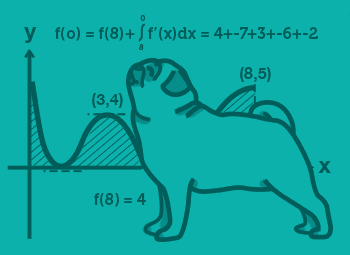
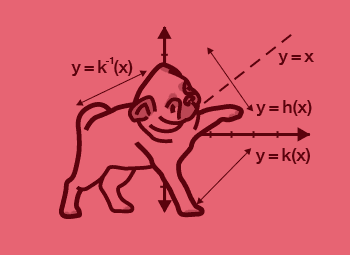
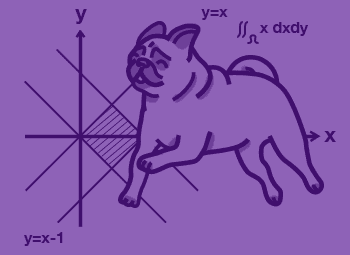


What is Calculus 3?
Calculus 3 is the study of multivariable calculus — the branch of mathematics that extends the ideas of differentiation and integration to functions of two or three variables, and into the geometry of three-dimensional space. Where Calculus 1 and 2 deal with curves and areas in a plane, Calculus 3 deals with surfaces, volumes, and vector fields in space. It is a compulsory module for mathematics, physics, and engineering students at most UK universities, and it underpins a wide range of advanced topics from fluid dynamics to electromagnetism.
What topics are covered in Calculus 3?
A standard UK university Calculus 3 module covers a substantial range of interconnected topics. The course typically opens with vectors and the geometry of three-dimensional space — dot products, cross products, lines and planes. From there it moves into multivariable functions: limits, continuity, and partial derivatives. Students then work through directional derivatives and the gradient, optimisation using Lagrange multipliers, and multiple integrals in Cartesian, polar, cylindrical, and spherical coordinates.
The second half of the course focuses on vector calculus: vector fields, line integrals, surface integrals, and the three major theorems — Green's Theorem, Stokes' Theorem, and the Divergence Theorem. These theorems connect seemingly different types of integrals and are central to applications in physics and engineering. Some modules also include sequences and series or an introduction to differential forms.
Is Calculus 3 harder than Calculus 2?
For most students, yes — Calculus 3 is a step up in difficulty. The core challenge is not just the calculations themselves but the spatial reasoning they require. You are no longer working in two dimensions: you need to visualise surfaces, orientations, and vector flows in three-dimensional space, and set up integrals that correctly capture those structures.
The topics students find hardest are typically setting up the limits for double and triple integrals (especially when changing coordinate systems), understanding and applying Stokes' Theorem correctly, and keeping track of orientation in surface and line integrals. Partial derivatives are generally the most accessible entry point, but chain-rule problems in several variables catch many students off guard. The good news is that consistent, structured practice — working through problems step by step rather than just reading solutions — reliably closes these gaps.
What are the prerequisites for Calculus 3?
You need to be confident with Calculus 1 and Calculus 2 before beginning Calculus 3. That means solid differentiation skills, comfort with integration techniques (substitution, integration by parts, partial fractions), and a working knowledge of sequences and series. A basic introduction to vectors — typically covered in A-Level Further Mathematics or a first-year university linear algebra module — is also very helpful before you encounter the vector geometry that opens most Calculus 3 courses.
After Calculus 3, students commonly move into Differential Equations, Linear Algebra, Real Analysis, or Vector Analysis. A deep understanding of multivariable calculus makes all of these significantly more approachable, because the foundational geometric and analytical thinking carries over directly.
How is Calculus 3 examined at UK universities?
Assessment structure varies by institution, but the most common pattern at UK universities is a combination of coursework or problem sheets (typically 20–30% of the module mark) and a final written examination (70–80%). The exam usually runs two to three hours and requires you to work through a range of problems covering the full syllabus under time pressure — there is rarely a choice of questions in the way some humanities exams allow.
Exam questions test both computational accuracy and conceptual understanding. You may be asked to evaluate a triple integral, state and apply the Divergence Theorem, find the critical points of a multivariable function, or interpret the physical meaning of a result. Some universities also include mid-semester class tests or assessed tutorial sheets. Preparing with practice tests based on real exam-style questions — and reviewing worked solutions to understand where your approach goes wrong — is the most effective preparation strategy.
Why StudyPug for Calculus 3?
Calculus 3 is one of those courses where reading your notes twice is not enough — you need to see the method worked through clearly, then practise it yourself until it becomes automatic. StudyPug is built around exactly that cycle.
Every lesson is taught by a certified, experienced instructor — not generated by AI. The videos explain the reasoning behind each technique, not just the mechanical steps, so when you face an unfamiliar exam question you understand how to approach it rather than looking for a memorised pattern to apply. You can watch any lesson an unlimited number of times until it clicks — no time limit, no pressure.
Before you start, a quick diagnostic assessment identifies the specific Calculus 3 topics where your understanding has gaps. That means you spend your study time where it matters most, rather than reviewing content you already know. As you practise, the adaptive practice system adjusts question difficulty to match your current level — challenging you enough to build real fluency without overwhelming you.
One subscription covers every course on the platform: Calculus 1, 2 and 3, Linear Algebra, Differential Equations, Statistics, and more. You are never paying for a single subject in isolation, which makes StudyPug particularly good value for university students working across several modules simultaneously. Every plan is backed by a 30-day money-back guarantee.
What you learn with StudyPug: Calculus 3 coverage
StudyPug's Calculus 3 course covers the full university syllabus, structured so you can work through topics in order or jump directly to the area you need. Key areas include:
- Vectors, dot products, cross products, and three-dimensional geometry
- Functions of several variables, limits, and continuity
- Partial derivatives and the chain rule in multiple variables
- Directional derivatives, gradient vectors, and tangent planes
- Optimisation of multivariable functions and Lagrange multipliers
- Double and triple integrals in Cartesian, polar, cylindrical, and spherical coordinates
- Vector fields, curl, and divergence
- Line integrals and surface integrals
- Green's Theorem, Stokes' Theorem, and the Divergence Theorem
Each topic includes concept videos, worked examples, and practice problems at graduated difficulty levels. Because no validated topic-level URLs are available for this page at present, topic links will be added once the sitemap is refreshed — you can browse the full topic list directly within the StudyPug platform.
Using StudyPug for Calculus 3: a practical approach
The most effective way to use StudyPug for Calculus 3 is to start with the diagnostic assessment to get a clear picture of where you stand. This takes a few minutes and removes the guesswork from your study plan.
From there, use the concept videos before you attempt practice problems on any new topic — understanding the method first makes the practice far more productive. When you make errors, review the step-by-step solution to identify exactly where your reasoning diverged. The adaptive practice will adjust, giving you more exposure to problem types where you need it.
Before your examinations, work through the Calculus 3 mock tests and practice papers on StudyPug to build speed and accuracy under exam conditions. You can revisit any video lesson as many times as you need — if a topic comes up in a practice test that you are not confident on, go back to the relevant lesson, watch it again, and then practise further before returning to the test. That loop — learn, practise, review, repeat — is what turns Calculus 3 from a course that feels overwhelming into one you can approach with confidence.
Calculus 3 FAQ
Unsure how StudyPug works? Need help with setting up? Check our frequently asked questions or contact us for help.
What do you learn in Calculus 3, and what topics does it cover?
Calculus 3, often called Multivariable Calculus, extends single-variable calculus into three dimensions. Core topics include vectors and geometry of space, functions of several variables, partial derivatives, multiple integrals (double and triple), vector fields, line integrals, surface integrals, and the major theorems — Green's, Stokes', and the Divergence Theorem. Many UK universities also include sequences and series or an introduction to differential forms. It is the foundation for advanced applied mathematics, physics, and engineering modules.
What is the difference between Calculus 3 and Calculus 2?
Calculus 2 (or Calculus B at many UK universities) focuses on single-variable techniques: integration methods, sequences and series, and polar coordinates. Calculus 3 moves into multiple dimensions — you work with functions of two or three variables, compute partial derivatives and multiple integrals, and analyse vector fields in space. The jump is significant because the visual and spatial reasoning required is fundamentally different. Students who are solid on integration and series from Calculus 2 tend to transition more smoothly.
What are the prerequisites for Calculus 3, and what comes after it?
You need a firm grasp of Calculus 1 and Calculus 2 — specifically differentiation, integration techniques, and series. A basic familiarity with vectors (from A-Level Further Mathematics or a first-year linear algebra module) is also very helpful. After Calculus 3, students typically progress to Differential Equations, Linear Algebra, Real Analysis, or Vector Analysis, depending on their degree programme. Understanding Calculus 3 deeply makes those subsequent courses considerably more manageable.
Is Calculus 3 hard, and where do students struggle most?
Most students find Calculus 3 harder than Calculus 2 because it demands three-dimensional thinking alongside the technical calculations. The topics students struggle with most are setting up multiple integrals correctly (choosing the right order and limits), visualising vector fields, and applying Stokes' and the Divergence Theorem in the right context. Partial derivatives themselves are usually accessible, but chain-rule problems in multiple variables trip many people up. Consistent practice with varied problem types — not just reading notes — is what closes those gaps.
How is Calculus 3 assessed at UK universities — coursework, exams, and what to expect?
At most UK universities, Calculus 3 (or its equivalent Multivariable Calculus module) is assessed through a combination of coursework or problem sheets worth roughly 20–30% and a final written examination worth 70–80%. The end-of-year exam typically runs two to three hours and tests a range of topics under time pressure. Some institutions include mid-semester class tests. Exam questions commonly ask you to evaluate multiple integrals, apply the vector integral theorems, and interpret geometric meaning — so both computational fluency and conceptual understanding are required.
What is one of the hardest topics in Calculus 3, and how do you approach it?
Stokes' Theorem is widely considered the most demanding topic in Calculus 3. It relates a surface integral of the curl of a vector field to a line integral around the surface's boundary — and applying it correctly requires you to correctly orient the surface, parameterise the boundary curve, and compute the curl without errors. The best approach is to break it into stages: practice computing curls first, then line integrals, then surface integrals, before combining them in Stokes' problems. Worked examples with clear reasoning at each step are essential — watching the method explained, not just the final answer, is what builds lasting understanding.




Written by the StudyPug Team
Last updated June 5, 2026
3 M+
students
★★★★★
4.8 average
K–12
all grades