Organic Chemistry Help: Video Lessons & Practice
Work through every topic with clear solutions. Start your free practice test now!
Value vs. Private Tutor
Expert help without the tutor price tag.

Multi-Subject
Switch subjects tomorrow with one plan.
Build Mastery
Real mastery before the test not a glance.
Organic Chemistry Topics
1. Introduction to Organic Chemistry
2. Intro to Atomic and Molecular Structure
3. Chemical analysis and structure determination
4. Introduction to organic reactions, reactivity and mechanisms
4 Chapters · 24 Topics · 191 Videos
Discover Our Learning Areas
Explore key subjects and start learning with interactive content.





What is Organic Chemistry?
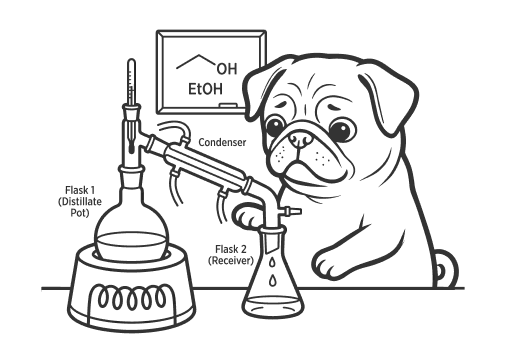
Organic Chemistry is the branch of chemistry concerned with the structure, properties, reactions, and synthesis of carbon-containing compounds. It underpins pharmacology, biochemistry, materials science, and virtually every aspect of modern medicine. At UK universities — and in A-Level Chemistry — it forms a core pillar of the curriculum, building from fundamental concepts like bonding and functional groups through to complex multi-step synthesis and spectroscopic analysis. In short: if you are studying chemistry, biochemistry, pharmacy, or medicine, Organic Chemistry is unavoidable, deeply important, and entirely learnable with the right approach.
What topics are covered in Organic Chemistry at UK university and A-Level?
The scope of Organic Chemistry grows considerably as you progress. At A-Level (OCR, AQA, Edexcel), core topics include alkanes, alkenes, halogenoalkanes, alcohols, carbonyls, carboxylic acids, and an introduction to benzene chemistry and polymers. Spectroscopy — particularly mass spectrometry and NMR — is also examined.
At university level, the curriculum expands to cover stereochemistry in depth (enantiomers, diastereomers, R/S configuration), full mechanistic treatment of nucleophilic substitution (SN1/SN2), elimination (E1/E2), electrophilic addition and aromatic substitution, carbonyl chemistry including enolates and conjugate addition, and multi-step retrosynthetic analysis. Later modules introduce named reactions (Grignard, Wittig, Diels-Alder), organometallic chemistry, and natural product synthesis.
StudyPug covers all of these areas in a single subscription — from foundational A-Level revision right through to university-level synthesis. You do not need separate resources for different levels.
Is Organic Chemistry harder than other science subjects?
Many students find Organic Chemistry more challenging than Physics or Biology — not because the maths is harder, but because it demands a different kind of thinking. You must visualise three-dimensional molecular structures, track electron movement through mechanisms using curly arrow notation, and apply patterns across hundreds of different reaction types.
The core difficulty is not memorisation — it is understanding. Students who approach Organic Chemistry by memorising reaction outcomes without understanding the electron-flow logic behind them hit a wall quickly. Those who invest time in understanding why nucleophiles attack electrophiles, why leaving group ability matters, and how orbital overlap drives reactivity find that the subject becomes much more systematic. The mechanisms start to repeat. The patterns emerge. And what looked like hundreds of unrelated reactions turns out to be a handful of core electronic principles applied in different contexts.
Common specific struggles: drawing curly arrows correctly, keeping track of SN1 vs SN2 conditions, assigning R and S configuration confidently, and interpreting NMR spectra under exam pressure. All of these are addressed in StudyPug's step-by-step certified-teacher lessons.
How is Organic Chemistry assessed in the UK — A-Level and university exams?
At A-Level, Organic Chemistry is examined as part of the full Chemistry papers. AQA, OCR, and Edexcel all include substantial Organic content — mechanism drawing, synthesis planning, and spectroscopy interpretation are standard question types. There are no separate Organic-only exams at A-Level, but the topic typically accounts for a third or more of the written paper marks.
At university, assessment varies by institution but typically includes end-of-year written examinations (two- to three-hour papers), in-course tests or progress exams at the end of each semester, and laboratory practicals with associated write-ups. Some universities also include oral examinations (vivas) or problem-solving workshops as part of the assessed credit. Practical marks can contribute 20–30% of the module grade, so laboratory technique and write-up quality matter alongside exam performance.
Knowing how you will be examined — and practising under those conditions — is one of the highest-leverage things you can do. StudyPug's mock exams and practice tests are structured around real exam question types so you are not encountering the format for the first time in the exam hall.
What are the hardest topics in Organic Chemistry and how do you get past them?
Stereochemistry is the most consistently cited difficulty. R/S assignment, optical activity, and understanding how stereochemistry affects reactivity (SN2 gives inversion; SN1 gives racemisation) require spatial reasoning that feels unfamiliar at first. The fix: draw everything in 3D, use models if available, and practise Cahn-Ingold-Prelog priority assignments until they are automatic.
Reaction mechanisms are the second major barrier. The curly arrow formalism looks straightforward but requires precision — arrows must start at electron density (a lone pair or a bond) and point to where electrons are going. Practise drawing mechanisms from first principles, not copying them. Ask yourself: what is the nucleophile here? What is the electrophile? Why does this step happen?
Spectroscopy — particularly 1H NMR interpretation — trips up students who approach it without a systematic framework. Learn the chemical shift regions, coupling patterns, and integration rules in that order, and practise interpreting spectra for unknown compounds regularly.
StudyPug's certified-teacher concept videos address all three of these areas with step-by-step worked explanations — not just the answer, but the reasoning behind every move.
Why StudyPug for Organic Chemistry?
StudyPug is built around one central idea: understanding the method, not just the answer. Organic Chemistry is exactly the kind of subject where that distinction matters most. Getting the right product in a mechanism question is not enough — you need to show the correct electron flow, explain the stereochemical outcome, and justify your reagent choices. That requires deep understanding, and deep understanding requires the right teaching.
Every lesson on StudyPug is created by a certified, experienced instructor — not AI-generated content. The video lessons are designed to walk you through the thinking process: why this reagent works here, what makes this carbon electrophilic, why this mechanism proceeds by SN2 rather than E2. You can watch as many times as you need until it genuinely makes sense.
The diagnostic assessment means you are not wasting time on topics you already know. You take a short test, the platform identifies your gaps — say, carbonyl chemistry or spectroscopy interpretation — and you work on those specifically. Combined with adaptive practice that adjusts question difficulty to your current level, StudyPug keeps you in the productive zone: challenged but not overwhelmed.
For A-Level students, StudyPug's practice tests are based on real exam formats so that when you sit your AQA, OCR, or Edexcel paper, the question structures are already familiar. For university students, the mock exams for midterms and finals give you the timed, exam-condition practice that makes the difference between knowing the material and performing under pressure.
One subscription covers everything: Organic Chemistry, Inorganic Chemistry, Physical Chemistry, and every other subject on the platform. No additional purchases, no per-topic fees.
What you will learn: Organic Chemistry course coverage on StudyPug
StudyPug's Organic Chemistry content covers the full curriculum from A-Level through to university advanced modules. Key areas include:
- Functional groups and nomenclature — IUPAC naming, identifying and classifying organic compounds
- Reaction mechanisms — nucleophilic substitution (SN1/SN2), elimination (E1/E2), electrophilic addition, radical reactions
- Stereochemistry — chirality, enantiomers, diastereomers, R/S configuration, optical activity, reaction stereochemistry
- Carbonyl chemistry — aldehydes, ketones, carboxylic acids and derivatives, enolates, aldol reactions
- Aromatic chemistry — benzene structure, electrophilic aromatic substitution, directing effects
- Spectroscopy — mass spectrometry, IR, 1H and 13C NMR, structure determination from spectra
- Synthesis and retrosynthesis — multi-step planning, named reactions (Grignard, Wittig, Diels-Alder), protecting groups
- Polymers and biomolecules — addition and condensation polymers, amino acids, peptides, carbohydrates
No validated internal topic links are currently available for this page — topic pages will be linked as the UK Organic Chemistry sitemap is confirmed.
Using StudyPug for Organic Chemistry: a practical guide
Start with the diagnostic. Before watching a single video, take the diagnostic assessment. It takes a few minutes and tells you exactly which Organic Chemistry topics are your weak points right now. This is where most students save significant time — instead of starting at the beginning and working through everything, you go straight to what actually needs work.
Watch the concept video for that topic. Find the lesson, watch the certified-teacher video, and follow the step-by-step reasoning. Pause, rewind, and replay as many times as you need. The lessons are designed to teach the method — so you understand what is happening and why, not just what the answer is.
Do the practice problems. After the video, work through the adaptive practice problems for that topic. The difficulty adjusts to your responses — get several right in a row and the questions step up; struggle and they step back. This keeps the practice productive and avoids the common trap of doing easy problems that don't build real skill.
Use the mock exams for timed preparation. As your A-Level exams or university finals approach, shift to timed practice tests and mock exams. These replicate the exam format — mechanism questions, synthesis problems, spectroscopy interpretation — so you build both the knowledge and the exam technique to perform when it counts.
Free daily practice is available without a subscription — try it today and see how the platform works before committing. Every paid subscription is backed by a 30-day money-back guarantee, so there is no risk in getting started.
Organic Chemistry FAQ
Unsure how StudyPug works? Need help with setting up? Check our frequently asked questions or contact us for help.
What do you learn in Organic Chemistry, and what topics does it cover?
Organic Chemistry focuses on the structure, properties, and reactions of carbon-based compounds. Core topics include functional groups, reaction mechanisms (substitution, elimination, addition), stereochemistry, carbonyl chemistry, aromatic compounds, spectroscopy (NMR, IR, mass spec), and multi-step synthesis. At A-Level and university level in the UK, you also cover polymer chemistry and biochemical applications. The subject builds systematically — each topic relies on what came before, so a solid grasp of bonding and molecular structure early on makes everything that follows much more manageable.
What is the difference between Organic Chemistry and Inorganic Chemistry?
Organic Chemistry deals almost exclusively with carbon-containing compounds — molecules found in living systems, pharmaceuticals, plastics, and fuels — with an emphasis on reaction mechanisms and synthesis. Inorganic Chemistry covers the remaining elements of the periodic table, focusing on coordination compounds, transition metal chemistry, and solid-state structures. The two branches overlap in organometallic chemistry, where carbon-metal bonds are central. At UK universities, both are typically compulsory in the first two years of a chemistry degree, though Organic is usually considered more mechanism-heavy and requires strong spatial reasoning.
What are the prerequisites for Organic Chemistry, and what course comes after it?
You should be comfortable with A-Level Chemistry fundamentals: atomic structure, bonding (covalent, ionic, polar), basic reaction types, and an introduction to functional groups. University-level Organic Chemistry I is the natural starting point; it leads into Organic Chemistry II, where more complex synthesis strategies, named reactions, and retrosynthetic analysis are introduced. From there, students typically progress to Advanced Synthesis, Medicinal Chemistry, or Biochemistry, depending on their degree pathway. Strong maths and a willingness to practise mechanism drawing repeatedly are the most important non-chemistry prerequisites.
Is Organic Chemistry hard, and where do students struggle most?
Organic Chemistry has a reputation as one of the most challenging university science courses — and for good reason. The biggest stumbling blocks are reaction mechanisms (especially pushing curly arrows correctly), stereochemistry (visualising 3D molecular geometry), and keeping track of reagents across multiple reaction types. Students who try to memorise reactions individually rather than understanding the underlying electron movement tend to struggle most. The good news is that once the core mechanistic logic clicks — nucleophiles attack electrophiles, electrons flow from high density to low — a large number of seemingly different reactions start to follow the same patterns.
How is Organic Chemistry assessed at UK universities — coursework, exams, and what should you expect?
At most UK universities, Organic Chemistry is assessed through a combination of written examinations and laboratory practicals. Exams typically include mechanism-drawing questions, synthesis problems, and spectroscopy interpretation. End-of-year written exams (often two-hour papers) carry the largest weighting, with some courses also including mid-year progress tests. Laboratory reports and practical skills are assessed separately and can contribute 20–30% of the module mark. A-Level students sit formal OCR, AQA, or Edexcel Chemistry papers where Organic makes up a substantial portion of the marks — knowing your mechanisms and being able to apply them under exam conditions is essential.
What is one of the hardest topics in Organic Chemistry and how do you approach it?
Stereochemistry — particularly R/S configuration, enantiomers, diastereomers, and their effects on reaction outcomes — is consistently rated the most challenging topic. The key is building genuine three-dimensional intuition rather than pattern-matching. Start by practising with molecular model kits or 3D-visualisation software. Then work through a high volume of practice problems: assign priorities using the Cahn-Ingold-Prelog rules, rotate bonds mentally, and compare mirror images systematically. Connecting stereochemistry to reaction mechanisms early (e.g., SN2 gives inversion, SN1 gives racemisation) helps you see it as a logical outcome of electron movement rather than an arbitrary set of rules to memorise.





Written by the StudyPug Team
Last updated June 5, 2026
3 M+
students
★★★★★
4.8 average
K–12
all grades