Geometry Help — Video Lessons & Practice
Get clear explanations for any Geometry problem and build Leaving Cert confidence.
Value vs. Private Tutor
Get expert Geometry help for less.

Multi-Subject
Struggling? Switch to any subject now.
Practice Until Perfect
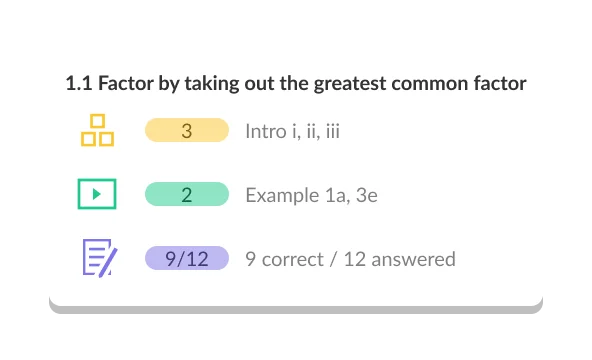
Practice until it actually clicks.
Try It Now
Test your knowledge
Our approach aligns with the evidence
Exam Scores
Better Recall
Less Anxiety
Geometry Topics
1. Measuring Systems
2. Surface Area and Volume
3. Points, Lines, Segments, Midpoints and Chords
4. Circles, plane and coordinate
5. Triangles and special triangles
6. Angles and trigonometry
7. Sine Rule and Cosine Rule
8. Bearings
9. Transformations
10. Similarity
11. 2D figures and 3D figures
12. Probability
13. Logic
15. Set Theory
16. Vectors
17 Chapters · 88 Topics · 766 Videos
Discover Our Learning Areas
Explore key subjects and start learning with interactive content.

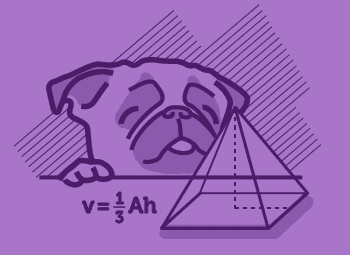

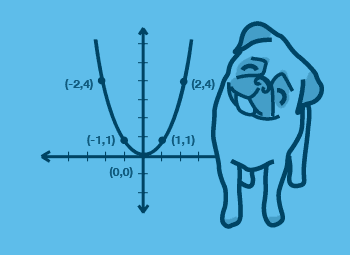

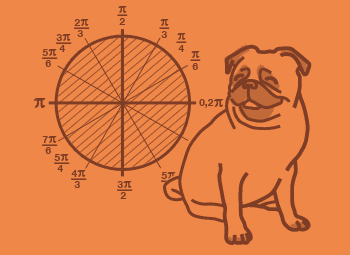



What is Geometry?
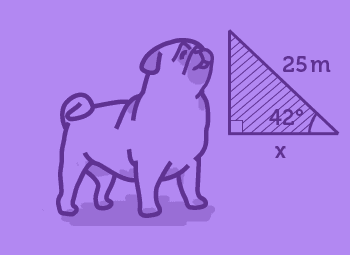
Geometry is the area of mathematics that studies shapes, sizes, positions, and the properties of space. From the angles inside a triangle to the equation of a circle on a coordinate plane, Geometry gives you the tools to describe and reason about the physical world with precision. In the Irish education system, Geometry runs through both Junior Cycle and Senior Cycle mathematics under the Project Maths curriculum, building from foundational angle and line work all the way up to rigorous theorem proofs and coordinate geometry of the circle required for the Leaving Cert.
What topics does Geometry cover in the Irish curriculum?
The Irish Project Maths syllabus organises Geometry across several interconnected strands. At Junior Cycle you encounter basic angle relationships, properties of triangles and quadrilaterals, Pythagoras' theorem, circle vocabulary, introductory coordinate geometry of the line, and geometric constructions using compass and straightedge. At Senior Cycle — the focus for Leaving Cert students — the course deepens into formal theorem proofs (a prescribed list at Higher Level), the coordinate geometry of the circle, area and volume of three-dimensional solids, and more advanced constructions. Trigonometry is taught alongside Geometry and the two strands reinforce each other heavily, particularly in Paper 2 of the Leaving Cert examination.
Is Geometry hard? Where do students struggle most?
Geometry feels straightforward when you are working with diagrams and visual intuition, but difficulty rises sharply when formal proof is introduced at Senior Cycle. The three areas where students most consistently lose marks are:
- Geometric proofs — Students often know the theorem statement but cannot structure a clear, logical argument under timed exam conditions.
- Coordinate geometry of the circle — This topic demands that you hold algebraic and geometric ideas together simultaneously, which trips up even confident students.
- Constructions — Accuracy and knowledge of the correct steps are both required; a misremembered step costs full marks.
The remedy in each case is the same: understand the reasoning, not just the result. When you see why a theorem is true, you can reconstruct the proof rather than trying to recall it word for word. StudyPug's certified-teacher videos are built around exactly this principle — every lesson teaches the method so you can apply it to problems you have never seen before.
How does Geometry connect to the rest of Senior Cycle maths?
Geometry is not an isolated unit — it feeds directly into several other Senior Cycle topics. Coordinate geometry of the line and circle underpins parts of Calculus (finding tangent lines, for example). Trigonometry shares its foundation in triangle properties and angle relationships with Geometry. Statistics and Probability require area reasoning in probability density contexts at Higher Level. Understanding Geometry well therefore makes the rest of Senior Cycle mathematics more manageable, and it is one of the reasons that a solid geometry revision plan pays dividends across the whole exam, not just Paper 2.
Why use StudyPug for Geometry?
StudyPug is designed specifically to help students in the Irish system improve their Geometry results without wasted effort.
Diagnostic Assessment — When you start, a short diagnostic identifies exactly which Geometry topics need attention. Rather than working through everything from scratch, you go straight to the gaps. Students consistently say this is the single biggest time-saver in their revision.
Certified-teacher concept videos — Every Geometry lesson is recorded by a certified teacher, not generated by AI. Each video teaches the method: why you choose a particular theorem, how you structure the proof, what to check when a coordinate geometry answer looks wrong. Learning the method means you can handle exam questions you have never practised before, which is exactly what the Leaving Cert demands.
Adaptive practice — After watching a lesson, the practice system adjusts difficulty based on your responses. If you are finding angle problems easy it pushes you to harder proof work; if circle theorems are shaky it consolidates them before moving on. This keeps progress steady and avoids the false confidence that comes from practising only what you already know.
Leaving Cert alignment — All content is mapped to the Irish Project Maths curriculum at both Ordinary and Higher Level. The exam-style practice questions reflect the format and difficulty of actual Leaving Cert Paper 2 questions, including the theorem proof and construction sections that carry the most marks.
Free practice and a 30-day money-back guarantee — You can access free daily practice problems before committing to a subscription. If you subscribe and decide StudyPug is not the right fit, the 30-day money-back guarantee means you take no financial risk.
What you learn: Geometry curriculum coverage
StudyPug's Geometry library covers the full Irish Project Maths syllabus across Junior Cycle and Senior Cycle. Key areas include:
- Points, lines, and angle relationships (vertically opposite, supplementary, corresponding, alternate angles)
- Triangle properties — congruence, similarity, and the key theorems examined at Junior and Senior Cycle
- Pythagoras' theorem and its applications
- Circle properties — arc, chord, tangent, and the circle theorems prescribed for Leaving Cert
- Coordinate geometry of the line — slope, distance, midpoint, perpendicular bisector, equation forms
- Coordinate geometry of the circle — standard form, finding the equation, tangent lines, intersections
- Geometric constructions required by the syllabus
- Formal theorem proofs (Higher Level Leaving Cert prescribed list)
- Area, surface area, and volume of two-dimensional and three-dimensional shapes
- Transformations — translation, rotation, reflection, and enlargement
Because no validated internal topic URLs are available for this page at this time, explore the full topic list directly in the StudyPug Geometry course to find the specific lesson you need.
How to use StudyPug for Geometry revision
A straightforward approach works best. Start the diagnostic so you know where to focus. Then, for each weak topic, watch the relevant certified-teacher concept video — pause it, work through the example yourself, then check. Move to the adaptive practice set for that topic and work until the system confirms your understanding is solid. As your Leaving Cert date approaches, use the exam-style practice questions to simulate timed conditions on the theorem proof and coordinate geometry sections. Photo Search lets you photograph a handwritten problem from your textbook or past paper and find the matching lesson instantly — a fast way to get unstuck during late-night revision. Everything is available on desktop and mobile, so you can fit Geometry practice around school, activities, and whatever else your week looks like.
Geometry FAQ
Unsure how StudyPug works? Need help with setting up? Check our frequently asked questions or contact us for help.
What do you learn in Geometry, and what topics does it cover?
Geometry is the branch of mathematics concerned with shapes, sizes, angles, and spatial relationships. In the Irish curriculum, you study points, lines, and angles; triangles and their properties; circles and circle theorems; coordinate geometry of the line and circle; transformations; area and volume; and formal proofs and constructions. Both Junior Cycle and Senior Cycle (Leaving Cert) build on these ideas progressively, with the Leaving Cert adding more demanding proof work and coordinate geometry of the circle.
What is the difference between Geometry and Trigonometry?
Geometry deals with the properties and relationships of shapes and figures — angles, lines, triangles, circles, and proofs. Trigonometry, which is closely related, uses ratios (sine, cosine, tangent) to calculate unknown sides and angles in triangles and extends into graphs and real-world applications. In the Irish maths curriculum they are taught alongside each other, especially at Senior Cycle, and many exam questions blend both — so a strong understanding of geometry makes trigonometry considerably easier to follow.
Is Geometry hard, and where do students struggle most?
Many students find Geometry manageable at Junior Cycle but hit a wall at Senior Cycle when formal proofs are introduced. The most common struggles are geometric proofs (knowing which theorems to apply and how to structure the argument), coordinate geometry of the circle (combining algebra with geometric reasoning), and constructions done under exam conditions. The key is understanding the reasoning behind each theorem rather than just memorising results — once the logic clicks, proofs become much more approachable.
What should I take before Geometry, and what comes after it?
Junior Cycle maths covers the foundational geometry — basic angle rules, triangles, Pythagoras, and introductory coordinate geometry — that everything at Senior Cycle builds on. Before tackling Leaving Cert Geometry fully, students should be comfortable with algebra and basic trigonometry. After Geometry, the natural progressions are Trigonometry (deeper), Calculus (which uses coordinate geometry heavily), and further study in engineering, architecture, physics, or any STEM field where spatial reasoning and proof-based thinking are core skills.
Is Geometry on the Leaving Cert, and how is it tested?
Yes — Geometry is a core part of the Leaving Cert Mathematics examination at both Ordinary and Higher Level. At Higher Level, students must know a set of formal theorems and be able to reproduce proofs in the exam; both levels require constructions and coordinate geometry of the line and circle. Questions appear across Paper 2 and can carry significant marks. StudyPug's lessons are aligned to the Irish Project Maths curriculum and cover both Ordinary and Higher Level requirements, including exam-style practice on the topics most likely to appear.
What is one of the hardest concepts in Geometry, and how do you tackle it?
Coordinate geometry of the circle — finding equations, tangent lines, and intersection points — is consistently one of the most challenging Leaving Cert topics. It demands fluency in algebra alongside geometric insight. The best approach is to learn the standard forms first, practise deriving the equation from given information, then work through the steps for finding tangents and chord midpoints systematically. StudyPug's certified-teacher videos walk through each sub-type of problem method by method, so you understand the process and can adapt it to any version that appears on the exam.




Written by the StudyPug Team
Last updated June 5, 2026
3 M+
students
★★★★★
4.8 average
K–12
all grades