Transition Year Maths Help — Video Lessons & Practice
Get clear explanations for any TY Maths problem and build solid foundations for Leaving Cert.
Expert Video Solutions
Watch it solved then try it yourself.
Unlimited Practice
Practice until it truly clicks.
Real Exam Practice
Real Irish exam questions included in plan.
Try It Now
Test your knowledge
Our approach aligns with the evidence
Exam Scores
Better Recall
Less Anxiety
Transition Year Maths Topics
1. Number System and Radicals
2. Adding and Subtracting Integers
3. Multiplying and Dividing Integers
4. Rational Numbers
5. Solving Linear Equations
6. Linear Inequalities
7. Solving Simultaneous Equations
8. Exponents
9. Exponential Functions
10. Exponential Growth and Decay
11. Operations of Polynomials
12. Factorising Polynomial expressions
13. Factorising Quadratic Functions
14. Quadratic Functions
15. Radicals
16. Rational Expressions
17. Reciprocal Functions
18. Coordinates, Quadrants, and Transformations
19. Angles, Lines and Transversals
20. Properties of Triangles
21. Circles
22. Congruent Triangles
23. Scale Factors and Similarity
24. Pythagorean Theorem
25. Introduction to Trigonometry
26. Surface Area and Volume
27. Probability
28. Data and Graphs
29 Chapters · 174 Topics · 1253 Videos

Ready to practice Transition Year Maths?
Try practice questions on every Transition Year Maths topic — with instant feedback and step-by-step video solutions when you get stuck.
Discover Our Learning Areas
Explore key subjects and start learning with interactive content.






What is Transition Year Maths?
Transition Year Maths is a one-year programme offered in Irish secondary schools between Junior Cycle and the Leaving Cert. It is not a standalone exam subject — instead, it is a bridge year designed to consolidate Junior Cycle knowledge, deepen mathematical thinking, and prepare students for the demands of Leaving Cert Maths at Higher or Ordinary Level. Schools have flexibility in designing their TY programme, but most cover algebra, functions, coordinate geometry, trigonometry, statistics, probability, and introductory financial mathematics aligned with the Leaving Cert strands.
Because TY carries no external state examination, many students treat it as a lighter year — but the students who use TY productively to build genuine understanding consistently outperform their peers when Leaving Cert Maths begins in fifth year.
What Topics Are Covered in Transition Year Maths?
TY Maths programmes in Ireland typically span five core strands that mirror the Leaving Cert syllabus:
Algebra and Functions — solving equations, factorising expressions, working with quadratics, and introducing functions and graphs. This strand underpins almost every other topic and is where many students discover they have gaps left over from Junior Cycle.
Coordinate Geometry — lines, circles, and their equations on the Cartesian plane. Students learn to find equations of lines, calculate distances and midpoints, and work with circles — all of which appear prominently on the Leaving Cert Higher Level paper.
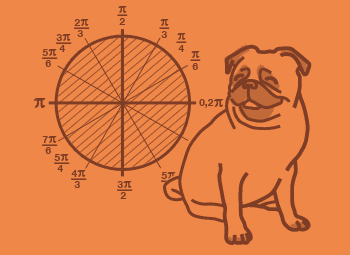
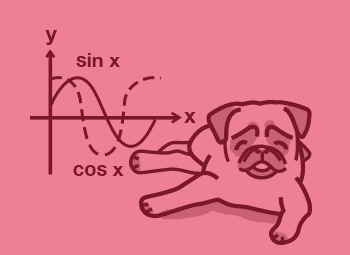
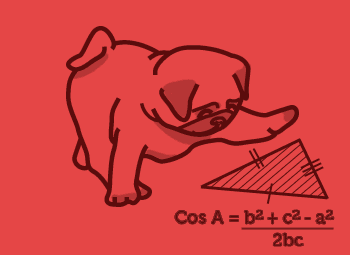
Trigonometry — the unit circle, the sine and cosine rules, area formulae, and solving trigonometric equations. This is consistently the topic students find hardest and the one that benefits most from early, thorough practice in TY.
Statistics and Probability — data interpretation, measures of centre and spread, probability rules, and basic distributions. This strand is weighted heavily on both Leaving Cert papers and is increasingly relevant for CAO courses in business, science, and social science.
Financial Maths — percentages, interest rates, loans, and depreciation. Often underestimated, this topic appears in accessible forms on both Higher and Ordinary Level papers and rewards students who practise the problem types carefully.
Is Transition Year Maths Hard?
TY Maths is not examined, but that does not mean it is easy — the content is a step up in abstraction from Junior Cycle, and the expectations are closer to Leaving Cert than to the Junior Cycle Final Examination.
The most common struggle points are trigonometry (especially the unit circle and applying multiple formulae), algebraic manipulation (factorising and rearranging complex expressions), and coordinate geometry (working with the circle equation). Students who found Junior Cycle Maths manageable sometimes underestimate TY and arrive at fifth year with weak foundations.
The advantage of TY is time. There is no looming state exam, so students can revisit a concept as many times as they need, work through practice problems at their own pace, and genuinely understand the method rather than memorising a procedure they do not follow.
How Does Transition Year Maths Connect to the Leaving Cert?
Every topic in TY Maths connects directly to the Leaving Cert Maths syllabus. The Leaving Cert is the Irish state examination sat at the end of sixth year, and it carries significant weight in the CAO points system used for university entry. Higher Level Maths carries a bonus of 25 CAO points for students who achieve H6 or above — making it one of the highest-leverage choices for any student aiming for competitive third-level programmes.
Students who use TY to build fluency in algebra, trigonometry, and functions typically find the Leaving Cert course far less stressful. They spend less time in fifth and sixth year catching up on fundamentals and more time developing the problem-solving sophistication that Higher Level requires.
TY is also when students should decide whether they will sit Higher or Ordinary Level. A student who struggles with core algebra in TY should address that now — not in the middle of a pressured fifth year — so the decision is made with confidence.
Why Use StudyPug for Transition Year Maths?
StudyPug is built around the way students actually learn — not passive reading, but working through problems with a teacher who shows every step. Here is what makes the platform particularly effective for TY Maths in Ireland:
Diagnostic Assessment. Before anything else, a short diagnostic identifies exactly where your knowledge has gaps. Rather than working through topics you already understand, you go straight to the areas that will make the biggest difference. This is the study-smarter approach — no wasted sessions.
Certified-Teacher Video Lessons. Every lesson is recorded by a certified teacher, not generated by AI. The lessons teach the method — why each step works — so you can apply the same reasoning to problems you have never seen before. This matters enormously for the Leaving Cert, where unseen problem types are the norm.
Adaptive Practice. After watching a lesson, practice problems adjust to your current level. If you are getting questions right, the difficulty increases. If you are struggling, it steps back and consolidates. This means every practice session is at the right level — challenging enough to build skill, not so hard that it discourages.
Irish Curriculum Alignment. Content aligns to the Leaving Cert Maths strands and the topics covered in Irish TY programmes, so you are always practising material that is relevant to your actual course — not a generic international syllabus.
Leaving Cert Exam Preparation. A StudyPug subscription includes access to exam-style practice based on real Leaving Cert question formats. TY is the ideal time to start familiarising yourself with how questions are phrased and what examiners reward, long before the pressure of fifth and sixth year.
Free Practice Content. You can start practising TY Maths topics for free before committing to a subscription. Free practice is genuine content — not a time-limited trial of a locked platform.
30-Day Money-Back Guarantee. Every subscription is covered by a 30-day money-back guarantee. There are no long-term contracts and no lock-in — cancel anytime from your account settings.
What You Learn: Curriculum Coverage for Transition Year Maths
StudyPug's Transition Year Maths content covers the full range of topics Irish students encounter during TY, structured to follow the progression towards Leaving Cert Maths:
- Number systems, indices, and surds
- Algebra — expressions, equations, inequalities, and quadratics
- Functions — notation, graphs, transformations, and inverse functions
- Coordinate geometry of the line and circle
- Trigonometry — ratios, the unit circle, sine and cosine rules, and trig equations
- Statistics — data representation, measures of centre and spread, and the normal distribution
- Probability — basic rules, conditional probability, and counting principles
- Financial mathematics — percentage, interest, loans, and depreciation
Each topic is broken into individual lesson videos with corresponding practice problems, so students can target exactly what they need rather than working through an entire chapter to find the one concept they are missing.
Note: no validated internal topic-page links are available for this page at this time. Links will be added when the SP_PageFeed provides confirmed URLs.
How to Use StudyPug for Transition Year Maths
Step 1 — Take the diagnostic. Start with the short diagnostic assessment. It takes minutes and immediately shows you where to focus. Most students discover two or three specific gaps rather than a general weakness across everything.
Step 2 — Watch the lesson video. For each topic the diagnostic flags, watch the certified-teacher video. Pause, rewind, and watch again as needed — the video is there whenever you need it, at 11pm before a class test or on a Sunday afternoon.
Step 3 — Work through adaptive practice. After the video, complete the practice problems. The adaptive system adjusts as you go, so sessions stay productive rather than repetitive.
Step 4 — Use Photo Search if you are stuck on a specific problem. If you have a homework question you cannot get started on, use Photo Search to find a matching lesson. Take a photo of the problem and StudyPug finds the video lesson that covers that exact concept.
Step 5 — Build exam readiness over TY. Use TY as a low-pressure runway to work through Leaving Cert exam-style questions on each topic. By the time fifth year begins, you will already be familiar with the question formats and the level of reasoning required at Higher Level.
TY is a genuine opportunity — the students who arrive at Leaving Cert Maths with strong TY foundations have a measurable advantage. StudyPug is here to help you build those foundations, one clear step at a time.
Transition Year Maths FAQ
Unsure how StudyPug works? Need help with setting up? Check our frequently asked questions or contact us for help.
What do you learn in Transition Year Maths, and what topics does it cover?
Transition Year Maths in Ireland bridges the Junior Cycle and Leaving Cert, consolidating core skills while introducing new material. Topics typically include algebra, functions, coordinate geometry, trigonometry, statistics and probability, and financial maths. The year is designed to deepen understanding rather than rush ahead, giving students time to build strong foundations. Schools have some flexibility in what they cover, but the programme aligns closely with Leaving Cert Maths strands, so TY is an ideal time to strengthen any weak areas before the Leaving Cert course begins in earnest.
What is the difference between Transition Year Maths and Junior Cycle Maths?
Junior Cycle Maths follows a fixed national specification with formal state examinations at the end, the Junior Cycle Final Examination. Transition Year Maths is non-exam and more flexible — schools design their own TY programme within national guidelines, so there is more room for project work, real-world applications, and revisiting topics at a deeper level. The content overlaps with Junior Cycle strands but is taught at a higher level of abstraction to prepare students for Leaving Cert Higher or Ordinary Level. TY is essentially a bridge year, so the pace and style differ significantly from the examined years on either side.
Is Transition Year Maths hard, and where do students struggle most?
Most students find the jump in abstract thinking the biggest challenge. Topics that cause the most difficulty in TY include algebraic manipulation, especially factorising and solving equations; trigonometry, where the unit circle and multiple formulae need to be memorised and applied; and probability, where the language and notation can be confusing. Coordinate geometry is another common sticking point. The good news is that TY is the right time to address these struggles without the pressure of immediate exams. Students who tackle these topics in TY consistently find Leaving Cert Maths more manageable.
What should I know before Transition Year Maths, and what comes after it?
Students entering TY Maths should be comfortable with Junior Cycle content: basic algebra, number systems, geometry, and data handling. A solid Junior Cycle Foundation or Ordinary Level background is enough to succeed. After TY, students move into Leaving Cert Maths, choosing Higher Level or Ordinary Level. Higher Level is heavily weighted in the CAO points system and opens more doors in science, engineering, and business courses at third level. TY is the best time to decide on your Leaving Cert level and plug any gaps before the two-year course begins.
Is Transition Year Maths relevant to the Leaving Cert, and how does it connect to the exam?
Yes — Transition Year Maths directly feeds into the Leaving Cert Maths syllabus. The Leaving Cert is the Irish state examination taken at the end of sixth year, and it carries enormous weight in CAO points for university entry. TY covers many of the same strands: algebra, functions, geometry, trigonometry, statistics, and probability. Strong performance in Leaving Cert Higher Level Maths (which carries bonus CAO points) is heavily influenced by how well students built their foundations during TY. Using TY productively to practise exam-style problems and video-based solutions gives students a measurable head start.
What is one of the hardest concepts in Transition Year Maths, and how do you tackle it?
Trigonometry — particularly the unit circle, sine and cosine rules, and solving trig equations — is widely considered the most demanding topic in TY Maths. Students often memorise formulae without understanding where they come from, which leads to errors under pressure. The best approach is to understand the geometry behind the ratios first, then practise applying each formula to different problem types. Working through step-by-step video explanations that show not just the answer but the reasoning behind each step helps students build the flexible understanding needed to tackle unseen problems in the Leaving Cert.




Written by the StudyPug Team
Last updated June 5, 2026
3 M+
students
★★★★★
4.8 average
K–12
all grades