Second Year Maths Help — Step-by-Step Video Lessons & Practice
Help your child understand every topic and build confidence, one lesson at a time
Expert Video Solutions
See it once then solve it alone next.
Practice Until Perfect
You keep going until it actually sticks.
Real Exam Practice
Practice with real Irish exam papers.
Try It Now
Test your knowledge
Our approach aligns with the evidence
Exam Scores
Better Recall
Less Anxiety
Second Year Maths Topics
1. Number Theory
2. Adding and Subtracting Integers
3. Multiplying and Dividing Integers
4. Rational Numbers
5. Adding and Subtracting Fractions
6. Multiplying and Dividing Fractions
7. Powers and Exponents
8. Radicals
9. Exponents
10. Ratios, Rates, and Proportions
11. Proportional Relationships
12. Percents
13. Measuring Systems
14. Coordinates, Quadrants, and Transformations
15. Angles, Lines, and Transversals
16. Properties of Triangles
17. Circles
18. Congruent Triangles
19. Symmetry and Surface Area
20. Pythagorean Theorem
21. Introduction to 3-Dimensional Figures
22. Volume
23. Patterns and Solving Equations
24. Linear Equations (Basic)
25. Solving Linear Equations
26. Linear Inequalities
27. Introduction to Relations and Functions
28. Polynomials
29. Operations of Polynomials
30. Data and Graphs
32 Chapters · 152 Topics · 1306 Videos

Ready to practice Second Year Maths?
Try practice questions on every Second Year Maths topic — with instant feedback and step-by-step video solutions when you get stuck.
Discover Our Learning Areas
Explore key subjects and start learning with interactive content.


What is Second Year Maths?
Second Year maths is the middle year of the Irish Junior Cycle, covering the core mathematical strands that every student in Ireland studies between the ages of 12 and 15. In Second Year, students build directly on their First Year knowledge, working deeper into algebra, geometry, trigonometry, statistics, and number — all within the framework of the Junior Cycle maths curriculum set by the National Council for Curriculum and Assessment (NCCA). Strong Second Year maths skills are the foundation for Junior Cycle Final Examination success at the end of Third Year and, further ahead, for Leaving Certificate maths.
What topics are covered in Second Year maths?
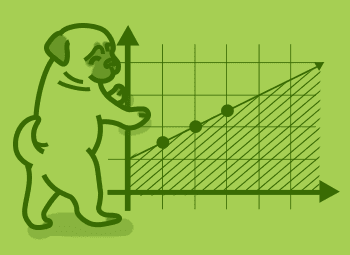
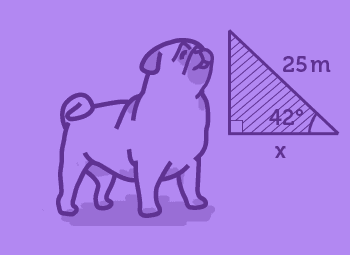
Second Year maths in Ireland spans several key strands of the Junior Cycle syllabus. In algebra, students work with algebraic expressions, linear and quadratic equations, and formulae. In coordinate geometry, they plot and interpret lines on a graph, find slopes and midpoints, and link visual representations to algebraic rules. Trigonometry is introduced formally, with right-angled triangles and the basic ratios — sine, cosine and tangent — forming the core. Students also study statistics and probability, learning to display and interpret data in various forms and to calculate basic probabilities. Alongside these, number work continues with rational numbers, percentages and scientific notation, and geometry deepens with formal proofs and theorems. Together these strands give Second Year students a broad and rigorous mathematical foundation.
Why is Second Year maths a common difficulty, and what can parents do?
Many students find Second Year maths noticeably harder than First Year because the emphasis shifts from arithmetic to abstract reasoning. Algebra in particular requires students to manipulate symbols rather than numbers, and many students find this transition challenging. Coordinate geometry asks them to hold a geometric picture and an algebraic formula in mind at the same time, which is a genuinely new kind of thinking. Trigonometry introduces entirely new vocabulary and a new set of rules to apply correctly.
Parents often notice the signs — longer time spent on homework, reluctance to attempt maths problems, or a drop in results on school tests. The most effective response is consistent, targeted practice on the specific topics causing difficulty, combined with clear explanation of the method. Identifying the exact gap early — rather than doing general revision — makes the biggest difference. StudyPug's diagnostic assessment is designed precisely for this: it finds the gap quickly so your child can focus their effort where it matters most.
How does Second Year maths fit into the Junior Cycle?
The Junior Cycle in Ireland runs across First, Second and Third Year of secondary school. Second Year sits in the middle: it consolidates and extends everything from First Year and begins laying the groundwork for the topics that will be examined in the Junior Cycle Final Examination at the end of Third Year. Maths in the Junior Cycle is assessed at two levels — Higher Level and Ordinary Level — and the level a student takes in Second Year typically shapes which path they follow into Third Year and beyond. Students who secure a strong understanding of Second Year algebra, geometry and trigonometry are in a significantly better position when Third Year revision begins.
Why StudyPug for Second Year maths?
StudyPug is built around three things that make a real difference for Second Year maths students in Ireland: finding the gap, teaching the method, and practising at the right level.
Finding the gap: The diagnostic assessment quickly identifies exactly which Second Year topics your child needs to work on — not a broad guess, but a precise pointer. This means no time is wasted on topics they already understand.
Teaching the method: Every lesson is delivered by a friendly certified teacher in a clear, step-by-step video. The videos do not just show a worked example — they explain why each step works, so your child understands the method and can apply it to problems they have not seen before. These are not AI-generated explanations; they are real teaching from qualified educators.
Practising at the right level: After watching a lesson, adaptive practice questions adjust to your child's level in real time. If a question is too hard, the next one is slightly easier; as confidence grows, the difficulty increases. This means your child is always working in the zone where they are learning, not frustrated or bored.
For families with more than one child, the Family Plan covers up to five children under one subscription at one price — across all year groups and all subjects. The parent dashboard gives you a clear view of each child's progress, so you can see exactly where improvement is happening and where support is still needed.
StudyPug's content is aligned to the Irish Junior Cycle maths curriculum, so every lesson and practice set matches what your child's teacher is covering in school. There is also free practice content available from the start, and a 30-day money-back guarantee on the full plan — so there is no risk in giving it a try.
What your child will learn in Second Year maths with StudyPug
StudyPug's Second Year maths course covers the full breadth of the Junior Cycle syllabus. Topics include:
- Algebra: simplifying expressions, solving linear and simultaneous equations, working with formulae, and an introduction to quadratics.
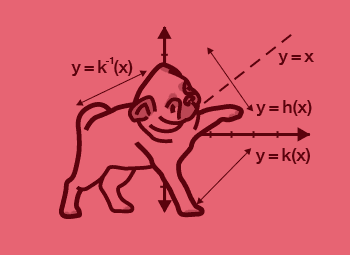
- Coordinate geometry: plotting points and lines, calculating slopes and distances, finding midpoints, and understanding the equation of a line.
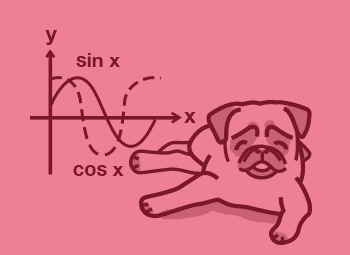
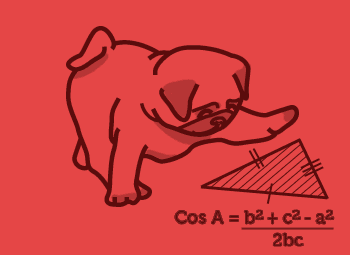
- Trigonometry: right-angled triangles, the trigonometric ratios (sin, cos, tan), and solving for unknown sides and angles.
- Statistics and probability: collecting, displaying and interpreting data; measures of central tendency and spread; calculating and comparing probabilities.
- Number: rational numbers, percentages, ratios, scientific notation, and applied arithmetic problems.
- Geometry: formal geometric theorems, constructions, and applying geometric reasoning to solve problems.
Because no validated topic-level URLs are available in the current internal link map for this course, lessons are accessed directly through the Second Year maths course page on StudyPug. Each topic has its own dedicated lesson sequence, so your child can work through the full course or jump straight to the area they need most.
How to use StudyPug for Second Year maths
Getting started takes only a few minutes. When your child first logs in, the diagnostic assessment identifies the specific topics they need to focus on in Second Year maths. From there, the recommended path through lessons is personalised to fill those gaps first.
A practical routine for most Second Year students is: after each school class, watch the StudyPug video lesson for that topic to consolidate what the teacher covered, then complete the adaptive practice questions. This reinforcement loop — lesson, then practice — is one of the most reliable ways to build lasting understanding rather than surface familiarity.
Before school tests and Junior Cycle mock exams, the practice test feature lets your child work through exam-style questions based on real exam formats, building the time-management and problem-solving skills they need on the day. Parents can check the dashboard at any time to see which topics have been completed, which are still in progress, and where results are improving.
StudyPug works on all devices — desktop, tablet and mobile — so your child can practise at home, on the bus, or anywhere that suits them. The app is safe and straightforward for students of Second Year age, and the parent dashboard keeps you connected to their progress without needing to sit beside them for every session.
Second Year Maths FAQ
Unsure how StudyPug works? Need help with setting up? Check our frequently asked questions or contact us for help.
What does my child learn in Second Year maths, and what topics does it cover?
Second Year maths in Ireland sits in the middle of the Junior Cycle and builds on First Year foundations. Your child will study algebra — including expressions, equations and formulae — coordinate geometry, number systems, statistics and probability, and trigonometry. They also deepen their understanding of geometry and measurement. These topics prepare students for the Junior Cycle Final Examination at the end of Third Year, so strong Second Year skills are essential for progression.
Is Second Year maths hard, and where do students commonly struggle?
Many students find Second Year maths a step up in difficulty because abstract thinking becomes central. The most common struggle points are algebraic manipulation — particularly solving equations with fractions and rearranging formulae — and coordinate geometry, where students must connect visual graphs with algebraic rules. Probability and statistics also trip up students who find worded problems challenging. Early, consistent practice on these areas makes a significant difference to confidence and results by the end of the year.
What should my child know before Second Year maths, and what comes next?
Before Second Year, students should be comfortable with First Year fundamentals: basic algebra, working with integers and fractions, area and perimeter, and introductory statistics. A secure First Year foundation means Second Year concepts build smoothly. After Second Year, students move into Third Year maths where everything covered — algebra, geometry, trigonometry, statistics — is consolidated and examined in the Junior Cycle Final Examination, setting the stage for Leaving Certificate maths.
How does StudyPug maths map to what my child learns at school?
StudyPug's Second Year maths content is aligned to the Irish Junior Cycle maths curriculum. Every video lesson and practice set corresponds to syllabus strands, so your child is reinforcing exactly what their teacher covers in class — not working on unrelated material. The parent dashboard lets you see which topics your child has completed and where they are improving, giving you a clear picture of their progress alongside their school work.
What is one of the trickiest maths concepts in Second Year, and how is it taught?
Algebraic fractions are widely considered one of the trickiest Second Year topics. Students must combine fraction skills with algebraic rules simultaneously, and a small error in one step compounds into a wrong answer. StudyPug's certified teachers break the method down into clearly numbered steps in short video lessons — first isolating the concept, then working through worked examples, before the student practises with adaptive questions that adjust to their level. This step-by-step approach helps students see the method rather than just memorise steps.
How much maths practice should my child do in Second Year?
For most Second Year students in Ireland, 20 to 30 minutes of focused maths practice four to five times per week is more effective than a long single session at the weekend. Regular short sessions reinforce concepts while they are still fresh from class. A good routine is: watch a StudyPug video lesson to clarify the concept, then complete the adaptive practice questions for that topic. Before Junior Cycle mock exams, adding a practice test session helps students build exam confidence alongside regular topic practice.




Written by the StudyPug Team
Last updated June 5, 2026
3 M+
students
★★★★★
4.8 average
K–12
all grades