AP Chemistry Help — Video Lessons & Practice
Get clear, step-by-step explanations for every AP Chemistry topic and build exam-ready confidence.

Step-by-Step Videos
Watch once then solve next problem alone.
Practice Until Perfect
Practice until it actually clicks.
Test Prep Included
Real AP exam questions in your plan.
AP Chemistry Topics
1. Foundation Chemistry
3. Acid-Base Theory
4. Solubility and Precipitation
5. Enthalpy and Thermodynamics
6. Redox and Electrochemistry
7. Kinetics
8. Atomic Structure and Properties
9. Chemical Bonding
10 Chapters · 68 Topics · 583 Videos
Discover Our Learning Areas
Explore key subjects and start learning with interactive content.




What Is AP Chemistry?
AP Chemistry is a College Board Advanced Placement course and exam that covers the equivalent of a first-year university introductory chemistry programme. Students who complete AP Chemistry and score well on the exam — typically a 3, 4, or 5 out of 5 — can earn university credit at hundreds of institutions worldwide, including many in the US, Canada, and the UK.
The course is built around six big ideas: atomic structure and properties, molecular and ionic compound structure, intermolecular forces and properties, chemical reactions, kinetics, and thermodynamics and equilibrium. It combines rigorous conceptual understanding with demanding quantitative problem-solving, laboratory investigation, and scientific reasoning skills. For Irish students, AP Chemistry is most commonly taken alongside or after Leaving Certificate Chemistry, particularly by those applying to universities in the United States or seeking advanced standing for science programmes.
Is AP Chemistry Harder Than Leaving Certificate Chemistry?
Most students find AP Chemistry noticeably more demanding than Leaving Certificate Higher Level Chemistry. While both courses share foundational topics — atomic theory, bonding, thermochemistry, and organic chemistry — AP Chemistry goes considerably deeper in several areas. Chemical kinetics, thermodynamic calculations involving Gibbs free energy and entropy, and the treatment of chemical equilibrium using equilibrium constant expressions and ICE tables all appear at a level of detail not required for the Leaving Cert.
The AP exam also tests experimental design and data analysis explicitly, asking students to evaluate the validity of laboratory setups or interpret graphs and data tables under timed conditions. That said, students who have performed well in Leaving Cert Higher Chemistry have the conceptual grounding to succeed in AP Chemistry — they typically need to deepen their maths fluency and practise applying concepts to unfamiliar problem types rather than starting from scratch.
What Are the Most Difficult Topics in AP Chemistry?
Based on AP exam performance data and common student feedback, the topics that cause the most difficulty are:
- Chemical equilibrium — especially ICE tables, Kp versus Kc, and predicting shifts using Le Chatelier's principle under multiple simultaneous changes.
- Thermodynamics — calculating Gibbs free energy changes, relating ΔG to spontaneity, and connecting thermodynamic quantities to electrochemical cells.
- Electrochemistry — setting up galvanic and electrolytic cells, applying the Nernst equation, and calculating standard cell potentials.
- Stoichiometry and limiting reagents — particularly in multi-step reactions or problems that combine stoichiometry with equilibrium or gas laws.
- Acid-base chemistry — buffer calculations, titration curves, and relating pKa to buffer capacity.
The most effective way to get better at AP Chemistry is not to re-read notes but to watch a worked example of the problem type, understand each step in the solution method, and then immediately attempt a similar problem without help. Repeating this cycle builds the procedural fluency the exam demands.
How Is AP Chemistry Scored, and What Score Do You Need?
The AP Chemistry exam is scored on a 1–5 scale. Section 1 is 60 multiple-choice questions (90 minutes, 50% of total score). Section 2 is 7 free-response questions — 3 long-answer and 4 short-answer — worth the other 50%. The free-response section requires written explanations, multi-step calculations, particulate-level diagrams, and experimental reasoning.
Most universities that accept AP scores for chemistry credit require a 4 or 5, though some accept a 3. For Irish students applying to US universities, a score of 4 or 5 in AP Chemistry can exempt you from first-year general chemistry, saving significant tuition cost and freeing up your schedule for more advanced coursework. Check the specific credit policy of each university on their AP credit chart before the exam.
What Maths Skills Do You Need for AP Chemistry?
AP Chemistry is mathematically demanding. You need to be comfortable with algebra (rearranging multi-variable equations), logarithms (for pH, Nernst equation, and equilibrium calculations), scientific notation, unit analysis (dimensional analysis), and basic graph interpretation. You do not need calculus for the AP exam, but students with a strong background in Leaving Cert Higher Maths will find the quantitative sections more manageable.
Practicing calculations under timed conditions matters as much as understanding the underlying chemistry — AP free-response questions are long, and running out of time is a common reason students underperform. Building speed through regular practice problems is essential preparation.
What Comes After AP Chemistry?
Students who perform strongly in AP Chemistry are well-positioned for first-year university chemistry, which they may skip entirely depending on their score and the university's credit policy. In university, the natural progression is into organic chemistry, physical chemistry, analytical chemistry, and eventually biochemistry or materials science, depending on your degree programme. For Irish students entering medicine, pharmacy, or biochemistry, the depth of understanding you develop in AP Chemistry provides a strong foundation for university-level coursework from day one.
Why StudyPug for AP Chemistry Help?
AP Chemistry help needs to be more than a list of definitions and a formula sheet. StudyPug is built around the idea that understanding the method — not just the answer — is what gets you a better score on the AP exam. Here is what makes it different:
Certified-Teacher Video Lessons That Teach the Method
Every video lesson on StudyPug is made by a certified teacher, not generated by AI. The focus is on showing you how to think through a problem from start to finish — why you set up an ICE table the way you do, what the equilibrium expression is actually telling you, how to choose between two approaches when a thermodynamics question could go multiple ways. When you understand the method, you can handle variations of the same problem type that you have never seen before. That is exactly what the AP free-response section tests.
Diagnostic Assessment — Study Smarter, Not Harder
Before you start working through topics randomly, StudyPug's diagnostic assessment identifies precisely where your gaps are. For a course as broad as AP Chemistry — covering everything from intermolecular forces to electrochemical cells — knowing exactly what to focus on saves weeks of unfocused revision. Students who use the diagnostic spend their study time on the concepts that will move their score, not on reviewing material they already know.
Adaptive Practice That Keeps You at the Right Level
Once you have watched a lesson, you need to practise. StudyPug's adaptive practice adjusts question difficulty based on how you are performing in real time. If you are finding equilibrium calculations straightforward, the practice moves you into harder multi-step problems. If you are struggling with a particular step, it gives you more targeted practice at that level before moving on. This is more efficient than working through a static problem set from a textbook.
AP Exam Prep Included — Based on Real Exam Formats
AP Chemistry exam prep is built into your StudyPug subscription. Practice questions are based on real AP exam formats, including multi-step free-response problems, data analysis questions, and particulate-level diagrams. For Irish students who are also sitting the Leaving Certificate, the conceptual overlap between both exams means your AP preparation reinforces your Leaving Cert Chemistry revision at the same time.
Study Any Time — 24/7 Access on Any Device
AP Chemistry help is available whenever you need it. If you get stuck on a buffer calculation at 11pm the night before a practice exam, you do not have to wait for your next class or a tutor's availability. Watch the relevant video lesson, work through practice problems, and get unstuck in the same session. StudyPug works on desktop, tablet, and mobile.
What You Learn in AP Chemistry — Curriculum Coverage
StudyPug's AP Chemistry content covers all nine units in the College Board AP Chemistry curriculum framework:
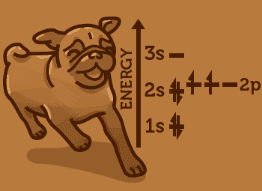
- Unit 1 — Atomic Structure and Properties: Moles, mass spectrometry, electron configuration, photoelectron spectroscopy, periodic trends.
- Unit 2 — Molecular and Ionic Compound Structure: Ionic and covalent bonding, VSEPR theory, molecular geometry, Lewis structures.
- Unit 3 — Intermolecular Forces and Properties: IMFs (London dispersion, dipole-dipole, hydrogen bonding), properties of solids and liquids, solutions, spectroscopy.
- Unit 4 — Chemical Reactions: Net ionic equations, types of reactions, oxidation states, introduction to stoichiometry.
- Unit 5 — Kinetics: Reaction rates, rate laws, integrated rate laws, mechanisms, Arrhenius equation, catalysis.
- Unit 6 — Thermodynamics: Enthalpy, calorimetry, Hess's law, bond enthalpy calculations.
- Unit 7 — Equilibrium: Equilibrium constant expressions (Kc, Kp), ICE tables, Le Chatelier's principle, solubility product, acid-base equilibria, pH and pOH, buffers.
- Unit 8 — Acids and Bases: Strong and weak acids/bases, Ka and Kb, titration curves, Henderson-Hasselbalch equation, acid-base indicators.
- Unit 9 — Thermodynamics and Electrochemistry: Gibbs free energy (ΔG, ΔH, ΔS relationships), spontaneity, standard cell potentials, Nernst equation, electrolysis, Faraday's law.
All lessons are aligned with the College Board AP Chemistry curriculum and the associated Science Practices (modelling, mathematical routines, experimental design, and argumentation) that appear in free-response questions.
Note: No validated curriculum-leaf topic URLs are currently available in the internal link map for this page. Links will be added once the map is updated.
How to Use StudyPug for AP Chemistry
The most effective way to use StudyPug for AP Chemistry is to start with the diagnostic assessment. It takes only a few minutes and produces a prioritised list of the topics where you are most likely to gain marks quickly. Work through those topics first.
For each topic you need to work on, the recommended flow is:
- Watch the concept video. Focus on understanding the method — why each step is taken, not just what the answer is.
- Attempt the practice problems immediately after. Do not wait. Adaptive practice is most effective when your memory of the method is fresh.
- Review any problem you got wrong. Watch the video solution for that specific problem type and identify exactly where your reasoning diverged from the correct approach.
- Return to the topic a few days later for spaced practice. The adaptive system will surface it again at the right interval.
In the weeks before the AP exam, shift your focus to the free-response practice questions. Work through them under timed conditions — the AP Chemistry free-response section is long and time management matters. Use StudyPug's step-by-step video solutions to review any question you could not complete fully.
There is no free trial, but StudyPug is backed by a 30-day money-back guarantee — so you can start with complete confidence, work through your highest-priority AP Chemistry topics, and see whether the platform works for you. If it does not, you can request a full refund within the first 30 days, no questions asked.
AP Chemistry FAQ
Unsure how StudyPug works? Need help with setting up? Check our frequently asked questions or contact us for help.
What do you learn in AP Chemistry, and what topics does it cover?
AP Chemistry covers the core areas of a university-level introductory chemistry course. You study atomic structure and periodicity, chemical bonding, stoichiometry, states of matter, chemical equilibrium, acids and bases, electrochemistry, thermodynamics, and reaction kinetics. The course builds both conceptual understanding and quantitative problem-solving skills, preparing you for advanced study in science, medicine, or engineering.
What is the difference between AP Chemistry and regular Leaving Certificate Chemistry?
Leaving Certificate Chemistry is Ireland's standard senior-cycle chemistry qualification, assessed through the State Examinations Commission. AP Chemistry is an American College Board course that can earn university credit if you score well on the AP exam. Both courses cover similar core chemistry concepts, but AP Chemistry goes deeper into topics like chemical kinetics and thermodynamics and places greater emphasis on experimental design and data analysis. Many Irish students take AP Chemistry for international university applications.
Is AP Chemistry hard, and where do students struggle most?
AP Chemistry is widely considered one of the most challenging AP courses. Students most commonly struggle with stoichiometry and mole calculations, chemical equilibrium (especially ICE tables and Le Chatelier's principle), thermodynamics (Gibbs free energy, entropy), and electrochemistry. The difficulty lies not just in memorising facts but in applying concepts to multi-step problems. Consistent practice with worked examples and understanding the method behind each solution type makes a significant difference.
What should I take before AP Chemistry, and what comes after it?
You should have a solid foundation in algebra and have completed at least one year of general or senior-cycle chemistry before tackling AP Chemistry. Physics and maths at a higher level also support your success. After AP Chemistry, strong students typically progress to university-level organic chemistry, physical chemistry, or biochemistry. A good AP score (3–5) can grant you credit for first-year university chemistry modules in many US and international institutions.
Is AP Chemistry on the AP exam, and how is it tested?
Yes. AP Chemistry is examined by the College Board AP exam, typically sat in May each year. The exam lasts three hours and fifteen minutes and is divided into two sections: multiple-choice (60 questions, 50% of score) and free-response (7 questions, 50% of score). Free-response questions include both long and short answer problems requiring written explanations, calculations, and experimental reasoning. Scores range from 1–5; a score of 3 or above is generally considered passing for university credit purposes.
What is one of the hardest concepts in AP Chemistry, and how do you tackle it?
Chemical equilibrium — particularly solving equilibrium problems using ICE tables and interpreting the equilibrium constant expression — trips up many students. The key is to first understand what equilibrium actually means (rates of forward and reverse reactions are equal, not that concentrations are equal), then practise setting up ICE tables methodically from scratch. Watch a worked example of the same problem type several times, identify the pattern in the setup, and then practise similar problems without looking at the solution until you can work through each step independently.




Written by the StudyPug Team
Last updated June 5, 2026
3 M+
students
★★★★★
4.8 average
K–12
all grades