Calculus 1 Help: Video Lessons & Practice
Step-by-step lessons from certified teachers. Work through every topic with clear solutions.
Value vs. Private Tutor
Get expert Calculus 1 help affordably.

Multi-Subject
One subscription covers all Irish subjects.
Build Mastery
Move on only when you've truly got it.
Try It Now
Test your knowledge
Our approach aligns with the evidence
Exam Scores
Better Recall
Less Anxiety
Calculus 1 Topics
1. Limits
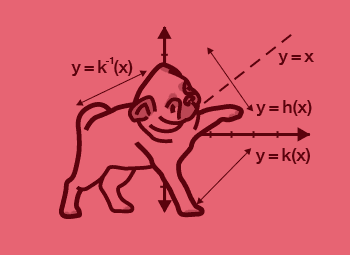
2. Differentiation
3 Chapters · 31 Topics · 217 Videos
Discover Our Learning Areas
Explore key subjects and start learning with interactive content.







What is Calculus 1?
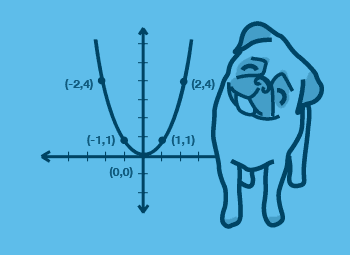
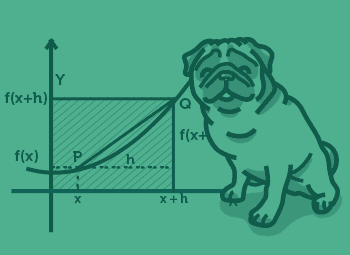
Calculus 1 is the first university-level mathematics course dedicated to the study of change — how quantities vary, accumulate, and relate to one another instantaneously. It is a compulsory module in virtually every science, engineering, economics, and mathematics programme at Irish universities. The course introduces two foundational ideas: the derivative (measuring how a quantity changes at a precise moment) and the integral (measuring accumulated change over an interval), united by the Fundamental Theorem of Calculus.
The material moves faster and demands more conceptual depth than Leaving Certificate Higher Level Maths. Where the Leaving Cert rewards pattern recognition, Calculus 1 rewards genuine understanding — you need to know not just that a rule works, but why it works and when to use it. Building that understanding from the start is the most effective way to protect your grades for the rest of your degree.
What topics are covered in Calculus 1?
A standard Irish university Calculus 1 module covers the following core areas:
Limits and continuity. The limit is the language of calculus. You learn how to evaluate limits algebraically and graphically, apply L'Hôpital's rule, and use the formal epsilon-delta definition. Continuity is examined in terms of limits, and the Intermediate Value Theorem is introduced as a first example of a powerful theoretical result.
Differentiation. From the limit definition of the derivative, you build up the full toolkit: power rule, product rule, quotient rule, and chain rule. These are applied to polynomial, rational, trigonometric, exponential, and logarithmic functions. Implicit differentiation extends the technique to curves that cannot be written as explicit functions.
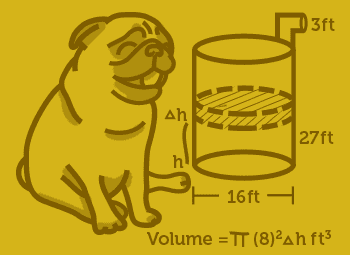
Applications of derivatives. Related rates, linear approximation, critical points, the Mean Value Theorem, curve sketching (using first and second derivatives), and optimisation problems. This section is where the algebra becomes applied and many students meet their first real difficulty — word problems that require you to construct the mathematical model before you differentiate.
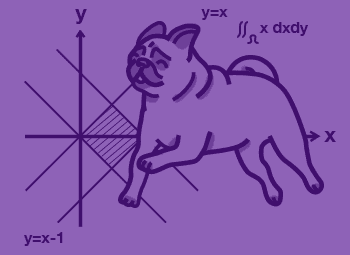
Integration. The definite and indefinite integral, the Fundamental Theorem of Calculus, substitution (u-substitution), and basic applications including area under a curve. Some courses include introductory techniques such as integration by parts, though this is often left for Calculus 2.
Is Calculus 1 hard at Irish universities?
Calculus 1 has a well-earned reputation as one of the steepest first-year modules in Ireland. Students who achieved strong Leaving Cert grades often find the jump significant, not because the individual rules are complicated, but because the course demands sustained reasoning across multi-step problems under time pressure.
The most common difficulty points are: (1) making sense of limits conceptually rather than just plugging into formulas; (2) applying the chain rule reliably inside composite functions; (3) setting up related-rates and optimisation problems from a written description; and (4) understanding what the Fundamental Theorem of Calculus is actually saying, as opposed to just using it mechanically.
The students who do best are those who practise consistently and actively — working problems, not just reading solutions. Recognising where your understanding breaks down early, before the end-of-semester exam, is the single biggest factor in a strong result.
How is Calculus 1 assessed at Irish universities?
Assessment formats vary across UCD, TCD, UCC, University of Galway, University of Limerick, DCU, and Maynooth, but the typical structure is a written end-of-semester examination worth 60–70% of the module grade, with the remaining 30–40% from continuous assessment — in-class tests, online quizzes, or graded problem sets submitted during the semester.
Some programmes include a formal mid-semester test, often around week seven or eight, worth 15–20%. This is an important milestone: it covers limits and differentiation, and a strong result here significantly reduces pressure going into the final exam.
University calculus exams are structured around multi-step problems. A single question may require you to apply three or four techniques in sequence. Preparing with timed, full-question practice — not just topic-by-topic drills — is the most effective way to build the exam fluency that written assessments reward.
What is the hardest topic in Calculus 1, and how do you get past it?
Related rates problems are the topic students at Irish universities find most consistently difficult. The challenge is not the calculus itself — it is constructing the problem. You must identify every quantity that is changing, write an equation relating those quantities (often using a geometric formula such as the Pythagorean theorem or the volume of a cone), differentiate implicitly with respect to time, and substitute known values at the specific instant described.
The most effective approach is to separate the set-up step from the calculus step. Before you differentiate anything, draw a labelled diagram and write the relationship equation. Students who rush straight to differentiation almost always make errors because they are working with the wrong equation. Once the equation is correctly formed, the implicit differentiation is usually straightforward and follows directly from the chain rule.
Optimisation problems are closely related and carry the same lesson: invest time in the set-up (defining variables, writing the objective function and any constraints) and the calculus becomes mechanical. Practising five to ten well-chosen related-rates examples — focusing on getting the equation right each time — is enough for most students to feel confident before an exam.
Why use StudyPug for Calculus 1?
StudyPug is built for exactly the kind of student who is working through university Calculus 1 in Ireland: someone who understands the basics from school but needs to go further and faster, with clear explanations that teach the reasoning behind the rules, not just the rules themselves.
Every Calculus 1 lesson on StudyPug is taught by a certified teacher in a step-by-step video format — not AI-generated content, but instructors who know where students get stuck and explain the method in the order that makes it click. The goal is deep understanding: if you can follow the reasoning in the video, you can adapt it to a question you have never seen before, which is exactly what university exams require.
The diagnostic assessment at the start of your StudyPug session identifies your specific gaps in Calculus 1 — whether that is limits, implicit differentiation, or integral set-up — so you are not wasting revision time on topics you have already got. From there, the adaptive practice adjusts to your performance, pushing you into the areas where improvement is fastest.
One StudyPug subscription covers every course you need: Calculus 1, Calculus 2, Calculus 3, Linear Algebra, Differential Equations, Statistics, and more. There are no per-course fees. You can watch any lesson as many times as you need until the concept clicks, and all mock exam and practice test content is included.
What you learn in Calculus 1 on StudyPug
StudyPug's Calculus 1 content follows the standard Irish university curriculum and covers every major topic area of the course:
- Limits and continuity, including one-sided limits, limits at infinity, and the Squeeze Theorem
- The formal definition of the derivative and differentiation from first principles
- Differentiation rules: power, product, quotient, and chain rules, with full worked examples
- Implicit differentiation and logarithmic differentiation
- Applications of derivatives: related rates, optimisation, and the Mean Value Theorem
- Curve sketching using first and second derivative tests
- Introduction to integration: the definite integral, the Fundamental Theorem of Calculus, and u-substitution
- Practice tests and mock exams based on real university exam formats
Because all topics are included in one subscription, you can move forward into Calculus 2 or Linear Algebra without switching platforms or paying again. Students who finish Calculus 1 on StudyPug are already familiar with the tool they will use for the rest of their degree.
How to use StudyPug for Calculus 1
The most effective way to use StudyPug alongside your Calculus 1 module is to run the diagnostic at the start of each new topic block — limits, differentiation, applications, integration — so you know which specific sub-skills to address rather than working through everything from the beginning.
Watch the concept video for any topic you find difficult. The videos are designed to be rewatched: the first time for the big picture, the second time following the steps alongside the worked example. After watching, move directly to the adaptive practice problems for that topic. The practice adjusts to your level, so early sessions will feel achievable and later sessions will challenge you in the areas that actually need work.
In the two to three weeks before your end-of-semester exam or mid-semester test, shift to the mock exam and practice test content. Work through full timed sets rather than individual topic drills. This is where the diagnostic and adaptive work pays off: you arrive at exam conditions having already identified and addressed your weak areas, and having practised the multi-step problem format the exam rewards.
StudyPug works on desktop and mobile, so you can keep up with practice between lectures or on the way home. Every plan comes with a 30-day money-back guarantee — there is no risk in starting today and seeing how much it helps before your next assessment.
Calculus 1 FAQ
Unsure how StudyPug works? Need help with setting up? Check our frequently asked questions or contact us for help.
What do you learn in Calculus 1, and what topics does it cover?
Calculus 1 introduces the mathematics of change and accumulation. Core topics include limits and continuity, the definition of the derivative, differentiation rules (product, quotient, and chain rules), implicit differentiation, related rates, curve sketching, optimisation, and an introduction to integration and the Fundamental Theorem of Calculus. By the end of the course you have the foundational toolkit needed for every subsequent quantitative module in science, engineering, economics, and mathematics programmes across Irish universities.
What is the difference between Calculus 1 and Calculus 2?
Calculus 1 focuses on limits, differential calculus, and an introduction to integration. Calculus 2 builds directly on that foundation, going deeper into integration techniques (integration by parts, partial fractions, trigonometric substitution), infinite sequences and series, and sometimes introductory differential equations. You must be comfortable with all Calculus 1 differentiation and basic integration before starting Calculus 2, as the material accelerates quickly and assumes fluency with everything covered in the first course.
What are the prerequisites for Calculus 1, and what course comes after it?
In Ireland, the standard prerequisite is Leaving Certificate Higher Level Mathematics, particularly strong algebra, functions, and trigonometry. Some programmes recommend reviewing pre-calculus topics such as exponential and logarithmic functions before the semester begins. After Calculus 1, students typically progress to Calculus 2 (integral calculus and series) and, depending on their programme, Linear Algebra or Differential Equations. Building solid Calculus 1 skills is essential — every one of those follow-on courses relies on the concepts introduced here.
Is Calculus 1 hard, and where do students struggle most?
Calculus 1 is widely regarded as one of the most challenging first-year modules in Irish universities, particularly for students who found Leaving Cert maths manageable but never had to justify why rules work. The biggest sticking points are understanding the formal definition of a limit, applying the chain rule correctly in multi-step problems, setting up related-rates and optimisation problems from word descriptions, and grasping what the Fundamental Theorem of Calculus actually says. Consistent practice with varied problem types — not just re-reading notes — is what closes these gaps most reliably.
How is Calculus 1 assessed at Irish universities — midterms, finals, and assignments?
Assessment structures vary by institution, but the typical Irish university pattern for Calculus 1 is a written end-of-semester examination worth 60–70% of the final grade, combined with continuous assessment (in-class tests, online quizzes, or graded assignments) worth 30–40%. Some programmes hold a formal mid-semester test. There is no CAO-style standardised exam for university calculus — grading is set by the department. Being prepared for time-pressured, multi-step problems is essential, as exam questions rarely isolate a single technique.
What is one of the hardest topics in Calculus 1, and how do you approach it?
Related rates problems are consistently the hardest topic in Calculus 1 for Irish university students. The difficulty is conceptual: you must identify all changing quantities, express their relationship as an equation, differentiate implicitly with respect to time, and substitute known values at a specific instant — all in one problem. The most effective approach is to practise the set-up phase separately: draw a diagram, label every variable, and write the geometric or physical relationship before touching a derivative. Once the equation is right, the calculus itself is usually straightforward. Working through many varied examples is the fastest route to fluency.





Written by the StudyPug Team
Last updated June 5, 2026
3 M+
students
★★★★★
4.8 average
K–12
all grades