College Statistics Help: Video Lessons & Practice
Work through every topic with clear solutions. Start your free practice test now!

Value vs. Private Tutor
Expert help without the tutor price tag.

Multi-Subject
Switch to any subject anytime you need.
Build Mastery
Stop moving on until it actually clicks.
Try It Now
Test your knowledge
Our approach aligns with the evidence
Exam Scores
Better Recall
Less Anxiety
College Statistics Topics
1. Basic Concepts
2. Data Representation
3. Data Interpretation
4. Probability
5. Set Theory
6. Discrete Probabilities
7. Normal Distribution and Z-Scores
8. Confidence Intervals
9. Hypothesis Testing
9 Chapters · 54 Topics · 423 Videos
Discover Our Learning Areas
Explore key subjects and start learning with interactive content.

















What is College Statistics?
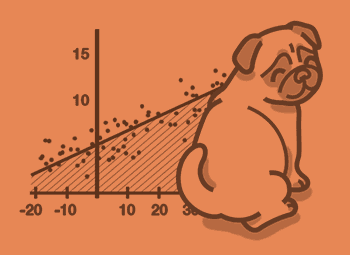
College Statistics is the systematic study of how to collect, organise, analyse, and interpret data to make informed decisions under uncertainty. It is one of the most broadly applicable university courses — taught across science, social science, business, and engineering faculties — because real-world conclusions almost always require reasoning from incomplete information. At its core, the subject bridges descriptive methods (summarising what data shows) and inferential methods (drawing conclusions about a population from a sample). Singapore university students taking College Statistics typically encounter the subject in modules such as ST1131, QF1100, or equivalent foundation statistics offerings at NUS, NTU, SMU, and SUTD.
What Topics Are Covered in College Statistics?
College Statistics moves from descriptive foundations through to inferential techniques. The first third of most courses covers descriptive statistics: measures of centre (mean, median, mode), measures of spread (variance, standard deviation, interquartile range), graphical displays (histograms, box plots, scatter plots), and basic data types. From there, students enter probability theory — sample spaces, rules of probability, conditional probability, and Bayes' theorem — before studying named distributions including the binomial, Poisson, normal, t, chi-square, and F distributions.
The latter half of the course focuses on inferential statistics: sampling distributions, the Central Limit Theorem, confidence intervals for means and proportions, and hypothesis testing using z-tests, t-tests, chi-square tests of independence and goodness-of-fit, and one-way ANOVA. The course concludes with regression analysis — building, interpreting, and assessing simple and multiple linear regression models, including coefficient interpretation, R-squared, and residual diagnostics. Many Singapore programmes also include an introduction to non-parametric tests (Mann-Whitney, Kruskal-Wallis) toward the end of the syllabus.
Is College Statistics Hard? Where Do Students Struggle?
Most students find the first few weeks — descriptive statistics and basic probability — accessible. The difficulty spike arrives when the course transitions to inferential statistics. The abstract nature of the null hypothesis, the meaning of a p-value, and the logic of "failing to reject" rather than "accepting" a hypothesis are conceptual hurdles that trip up even algebraically confident students. Choosing the correct test for a given scenario (z vs. t, chi-square vs. ANOVA) is another persistent challenge, as is interpreting regression output — students often confuse statistical significance with practical significance.
The consistent remedy is exposure to many worked examples. Students who watch a concept explained step-by-step, then attempt a parallel practice problem immediately, build the pattern recognition that makes exam questions feel familiar rather than foreign. StudyPug's certified-teacher videos are designed with exactly this loop in mind: explanation of the method, a fully worked example, then adaptive practice to consolidate.
How Is College Statistics Assessed in Singapore?
At Singapore universities, College Statistics modules typically carry a continuous assessment component (20–40% of the final grade) comprising assignments, quizzes, lab reports, or tutorial participation, alongside a mid-semester test and a final examination. The final exam — which may be closed-book or open-book depending on the faculty — commonly accounts for 40–60% of the module grade and tests hypothesis testing, probability problem-solving, and regression interpretation under timed conditions.
Exam questions in Singapore tend to blend computation with interpretation: students are expected not just to compute a test statistic, but to state hypotheses correctly, communicate conclusions in plain language, and comment on assumptions. Practising with mock exams that include full worked solutions — and reviewing where your reasoning broke down — is the most direct path to GCE-aligned exam readiness.
Why StudyPug for College Statistics?
StudyPug is built for university students who need more than a textbook restatement. Three features set it apart for College Statistics.
Diagnostic Assessment. Before you spend hours reviewing content, StudyPug's diagnostic identifies exactly which College Statistics topics contain your gaps. You get a targeted study path rather than reviewing material you already know — which matters when exam season is weeks away.
Certified-Teacher Concept Videos. Every lesson is delivered by an experienced, certified teacher — not generated by AI. The emphasis is on the method: why you set up a hypothesis test the way you do, not just the mechanical steps. This deeper understanding means you stay ready for the courses that follow College Statistics, whether that is Econometrics, Regression Analysis, or Data Science.
Adaptive Practice. After watching a lesson, adaptive practice problems adjust in difficulty based on how you perform. If you nail confidence intervals, the system advances you. If you falter on chi-square tests, it keeps you in that zone until you are solid. This dynamic adjustment makes every practice session efficient.
Beyond College Statistics, one StudyPug subscription covers Calculus I, II, and III, Linear Algebra, Differential Equations, and every other course on the platform — so you are never paying twice as your programme advances.
What You Learn in College Statistics: Course Coverage
A complete College Statistics course on StudyPug covers the full university syllabus. Key areas include:
- Descriptive Statistics — measures of centre and spread, data visualisation, frequency distributions
- Probability Theory — probability rules, conditional probability, Bayes' theorem, independence
- Probability Distributions — binomial, Poisson, normal, t, chi-square, F distributions
- Sampling Distributions & the Central Limit Theorem — the theoretical backbone of inference
- Confidence Intervals — for means (one-sample, two-sample) and proportions
- Hypothesis Testing — z-tests, t-tests, chi-square tests, ANOVA, non-parametric alternatives
- Regression Analysis — simple linear regression, multiple regression, interpretation of output
Internal links to individual topic pages will be added when validated URLs become available in the SP_PageFeed. No topic URLs have been confirmed for /sg/sg-university-statistics/ at this time; links are omitted per O15 to avoid 404s.
Using StudyPug to Improve Your College Statistics Grade
The most effective workflow on StudyPug has three stages. First, run the diagnostic assessment at the start of your semester or before an exam period. This generates a prioritised list of topics — spend your first study sessions on these, not on topics where you are already comfortable.
Second, watch the certified-teacher video lesson for each targeted topic. Pause, write out the steps, and make sure you understand why each step follows from the last — not just what the answer is. The goal is to build the intuition that transfers to unseen exam questions.
Third, immediately follow each video with adaptive practice problems. The system will adjust difficulty in real time. When you can work through problems at examination difficulty without referring back to the video, you are ready for that topic.
In the weeks before your GCE-aligned final examination, shift to full mock exams. Timed, full-paper practice under exam conditions — followed by careful review of worked solutions — is the highest-yield activity available in the final revision phase. You can rewatch video solutions for any question you found difficult as many times as you need.
StudyPug is available on any device, so you can fit a practice session in between lectures, on public transport, or late at night before an early tutorial. Free practice content is available to get you started, and every paid plan is backed by a 30-day money-back guarantee.
College Statistics FAQ
Unsure how StudyPug works? Need help with setting up? Check our frequently asked questions or contact us for help.
What do you learn in College Statistics, and what topics does it cover?
College Statistics introduces the core tools for collecting, analysing, and interpreting data. Topics typically include descriptive statistics (mean, median, standard deviation), probability theory, discrete and continuous distributions, sampling methods, confidence intervals, hypothesis testing (z-tests, t-tests, chi-square, ANOVA), correlation, simple and multiple linear regression, and non-parametric methods. By the end, students can draw evidence-based conclusions from data — a skill used across business, science, and social science programmes.
What is the difference between College Statistics and Calculus?
College Statistics focuses on data analysis, probability, and inference — you study how to draw conclusions from samples and test claims about populations. Calculus is concerned with change and accumulation: limits, derivatives, and integrals. Statistics relies on algebra and basic probability rather than calculus. Many students take both, but they develop different thinking styles. Statistics is more conceptual and interpretive; Calculus is more procedurally mathematical. Some advanced statistics courses (e.g. Mathematical Statistics) do use calculus, but College Statistics typically does not.
What are the prerequisites for College Statistics, and what comes after it?
Most universities require at least secondary-school algebra or pre-calculus before enrolling in College Statistics. A basic familiarity with summation notation is helpful. After completing College Statistics, common next steps include Regression Analysis, Mathematical Statistics, Biostatistics, Econometrics, or Data Science courses depending on your major. In Singapore, students progressing in quantitative fields often continue to Applied Probability or Statistical Computing. StudyPug covers College Statistics plus many of these follow-on subjects in one subscription.
Is College Statistics hard, and where do students struggle most?
College Statistics is considered moderately challenging. The conceptual leap most students struggle with is moving from descriptive to inferential statistics — understanding what a p-value actually means, why we reject or fail to reject a null hypothesis, and how confidence intervals should be interpreted. Probability distributions (especially the normal, t, and chi-square) and selecting the correct hypothesis test for a given scenario are the two most common stumbling blocks. Consistent practice on real problem sets and watching worked solutions step-by-step significantly reduce these difficulties.
How is College Statistics assessed — in-semester tests and finals?
Assessment typically combines in-semester continuous assessment (assignments, quizzes, and lab reports) with a mid-semester test and a final examination. In Singapore universities such as NUS, NTU, and SMU, the final exam (GCE-style closed-book or open-book depending on faculty) often carries 40–60% of the module grade. Professors regularly draw on hypothesis testing, regression output interpretation, and probability problem-solving for exam questions. StudyPug provides practice tests and mock exams designed to prepare you for exactly this format.
What is one of the hardest topics in College Statistics, and how do you approach it?
Hypothesis testing is consistently rated the hardest topic in College Statistics. Students often confuse the null and alternative hypotheses, misread p-values, or pick the wrong test statistic. The best approach is to follow a structured five-step framework: (1) state the hypotheses, (2) choose the significance level, (3) identify and compute the test statistic, (4) determine the p-value or critical value, (5) state your conclusion in context. Practising this framework across many different scenarios — using worked video solutions and then attempting problems independently — builds the pattern recognition needed to handle any exam question.





Written by the StudyPug Team
Last updated June 5, 2026
3 M+
students
★★★★★
4.8 average
K–12
all grades