Primary 6 Maths Help — Step-by-Step Video Lessons & Practice
Help your child build confidence and understand every P6 maths topic, one lesson at a time.

Step-by-Step Video Lessons
Real teaching helps you solve problems alone.
Practice Until Perfect
You keep going until it truly clicks.
Real Exam Practice
Practice real Singapore exam questions.
Try It Now
Test your knowledge
Our approach aligns with the evidence
Exam Scores
Better Recall
Less Anxiety
Primary 6 Maths Topics
1. Understanding Numbers
2. Operations with Whole Numbers
3. Number Theory
4. Operations with Decimals
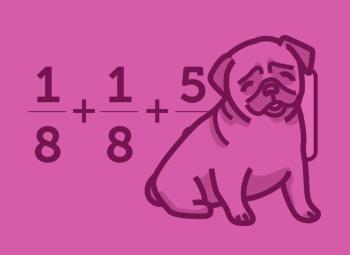
5. Adding and Subtracting Fractions
6. Multiplying and Dividing Fractions
7. Introduction to Ratios, Rates and Percentages
8. Measuring Systems
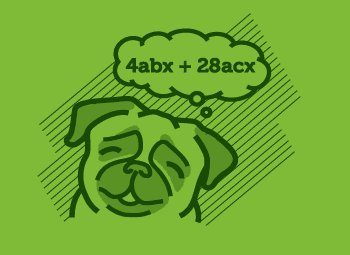
9. Introduction to Variables and Expressions
10. Angles, Lines and Transversals
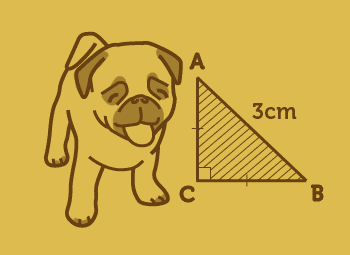
11. Properties of triangles
12. Circles
13. Symmetry and Surface Area
14. Surface Area of 3D Shapes
15. Volume of 3D Shapes
17 Chapters · 66 Topics · 537 Videos

Ready to practice Primary 6 Maths?
Try practice questions on every Primary 6 Maths topic — with instant feedback and step-by-step video solutions when you get stuck.
Discover Our Learning Areas
Explore key subjects and start learning with interactive content.




What is Primary 6 Maths?
Primary 6 Maths is the final year of Singapore's primary mathematics curriculum, culminating in the Primary School Leaving Examination (PSLE). It builds directly on P5 foundations and challenges students to apply multiple concepts together to solve complex, multi-step problems. The syllabus — set by Singapore's Ministry of Education (MOE) — covers fractions, ratio, percentage, speed, algebra, geometry, and data analysis. Doing well at this stage sets the foundation for secondary school maths and opens doors to the stream that best fits each child's strengths.
What topics are covered in Primary 6 Maths?
The MOE P6 Maths syllabus is broad and interconnected. The major topic areas are:
Numbers and Algebra: Fractions (including division of fractions), ratio, rate, percentage (including percentage change and percentage of a quantity), speed-distance-time, and introductory algebra with letters representing unknowns.
Geometry: Area and perimeter of composite figures, volume of cubes and cuboids, and angles in geometric figures. Students are expected to identify and apply properties accurately under exam conditions.
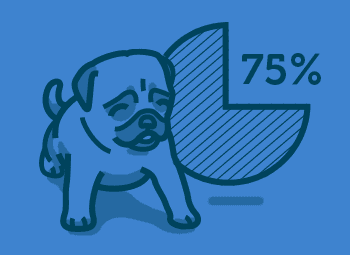
Data Analysis: Interpreting and constructing pie charts, line graphs, and tables. Students must read data precisely and draw conclusions in structured answers.
Problem Sums: The hallmark of Singapore Maths — multi-step word problems that combine any of the above. Students are assessed on their ability to choose the right method, show clear working, and communicate their reasoning. Model drawing and heuristics (e.g., working backwards, guess and check) are key skills for PSLE success.
Why is Primary 6 Maths challenging, and how can StudyPug help?
P6 Maths demands more than knowing individual topics — it requires students to integrate knowledge across topics under timed exam conditions. The jump from P5 to P6 catches many children off guard, particularly when ratio, algebra, and speed-distance-time problems demand multi-step reasoning. Even students who performed well in P5 can find themselves stuck once problems grow in complexity.
StudyPug helps in a specific and structured way. The journey starts with a diagnostic assessment that identifies exactly which topics your child has gaps in — no guesswork, no wasted revision time. From there, certified teachers guide your child through each concept in short, focused video lessons that teach the method step by step. After every lesson, adaptive practice questions adjust to your child's current level, presenting problems that are challenging but achievable, building genuine confidence rather than frustration. The parent dashboard shows your child's progress per topic so you can see precisely where improvement is happening.
Why choose StudyPug for Primary 6 Maths?
There are many maths resources available for P6 students in Singapore, but StudyPug combines several things that are hard to find together in one place.
Certified-teacher video lessons — every video is made by a real, qualified teacher. You will never find AI-generated explanations here. Teachers explain the concept, show the working, and point out the mistakes students most commonly make.
Diagnostic + adaptive learning — instead of working through every topic from the start, StudyPug's diagnostic finds the gaps so your child focuses their time where it counts. Adaptive practice then builds from their actual level upward, which is far more effective than repeating topics they already know.
MOE syllabus alignment — every lesson maps to Singapore's MOE Primary 6 Maths curriculum. Topics are covered in the right sequence and at the right depth for PSLE, so there's no disconnect between what your child studies on StudyPug and what their teacher covers in the classroom.
Family Plan value — if you have more than one child, the Family Plan covers up to 5 children across all grades and all four subjects (Maths, English, Science, and Social Studies) for one price. That's exceptional value during the primary school years when multiple children may be studying different levels at the same time.
30-day money-back guarantee — StudyPug stands behind its platform. If you're not satisfied within the first 30 days, you'll receive a full refund. No risk to try it during a critical revision period.
What will my child learn in Primary 6 Maths on StudyPug?
StudyPug's Primary 6 Maths coverage follows the full MOE syllabus scope and sequence. Your child will work through lessons and practice on every major topic area assessed at PSLE:
- Fractions — operations with fractions, fraction of a set, division of fractions
- Ratio — comparing quantities, part-whole models, changing ratios, ratio in problem sums
- Percentage — finding percentage of a quantity, percentage increase and decrease, GST and discount problems
- Speed — speed-distance-time relationships, average speed, converting units
- Algebra — using letters for unknowns, simplifying expressions, solving simple equations
- Geometry — area of composite figures, volume of solids, properties of angles and shapes
- Data Analysis — pie charts, line graphs, average (mean), interpreting and comparing data sets
- Problem Sums — model drawing method, working backwards, guess and check, making a table
Each topic is broken into individual concept lessons so your child can target exactly what they need. No validated internal topic URLs are available for this page at this time — browse all P6 Maths topics directly from the StudyPug Primary 6 course page.
How to use StudyPug for Primary 6 Maths revision
Getting started is straightforward. When your child first logs in, the diagnostic assessment will quickly identify which P6 Maths topics need the most attention. This takes just a few minutes and removes the uncertainty of not knowing where to begin — especially valuable in the months before PSLE.
From there, a typical study session looks like this: watch the short certified-teacher video for the target topic (usually 5–15 minutes), then complete the adaptive practice questions. If your child gets stuck, they can rewatch the relevant part of the video or step through the worked solution. The system adjusts the difficulty of questions automatically as your child improves.
Parents can check the dashboard at any time to see which topics have been covered, where confidence is growing, and where more practice is still needed. This makes it easy to build a simple, consistent daily revision plan — whether your child is starting revision early in P6 or doing a focused push in the final weeks before PSLE.
Free daily practice content is available without a subscription, so your child can try real lessons and practice questions before you commit. When you're ready, every plan is backed by a 30-day money-back guarantee.
Primary 6 Maths FAQ
Unsure how StudyPug works? Need help with setting up? Check our frequently asked questions or contact us for help.
What does my child learn in Primary 6 Maths, and what topics does it cover?
Primary 6 Maths in Singapore covers the full MOE syllabus leading up to the PSLE. Key topics include fractions, ratio, percentage, speed, algebra, area and perimeter of composite figures, volume of solids, data analysis (pie charts, line graphs), and problem-sum heuristics. Students learn to apply multiple concepts together to solve complex multi-step problems. StudyPug covers every one of these topics with clear, step-by-step video lessons and adaptive practice questions that mirror the PSLE format.
Is Primary 6 Maths hard, and where do children commonly struggle?
P6 Maths is widely considered the most challenging year of primary school, as it combines and extends all prior learning under PSLE pressure. The most common struggle points are ratio and proportion, speed-distance-time problems, algebra with unknowns, and multi-step problem sums that require students to choose and combine the right strategies. Many children also find percentage change and area of composite figures difficult. StudyPug's diagnostic quickly identifies these weak spots so your child can focus their revision where it matters most.
What should my child already know before Primary 6 Maths, and what comes next?
A solid grounding in P5 Maths is essential: fractions, decimals, percentage, whole-number operations, and basic geometry. Students who are confident with these foundations move through P6 content more smoothly. After PSLE, students move to secondary school where the maths curriculum branches into Express, Normal Academic, or Normal Technical streams. StudyPug supports the full primary-to-secondary transition, covering topics across all levels so your child keeps building on what they know.
How does StudyPug Maths map to what my child learns at school?
Every StudyPug Primary 6 Maths lesson is aligned to the Singapore MOE Primary Mathematics syllabus. Topics follow the same sequence used in Singapore classrooms, so lessons directly reinforce what your child is currently studying. Whether their school uses Maths in Focus, My Pals Are Here!, or another approved textbook, StudyPug's curriculum coverage matches the MOE scope and sequence — meaning no time is wasted on irrelevant content during PSLE revision.
What is one of the trickiest maths concepts in Primary 6, and how is it taught?
Ratio is consistently one of the toughest P6 topics. Students must understand part-whole relationships, compare ratios, and apply ratio to solve multi-step word problems — all under exam conditions. On StudyPug, certified teachers break ratio down into small, logical steps using the model-drawing method familiar to Singapore students. After watching, children practise with adaptive questions that start simple and build in difficulty, giving them the confidence to handle PSLE-level ratio problems independently.
How much maths practice should my child do at Primary 6?
For PSLE preparation, most Singapore education specialists recommend 30–45 minutes of focused maths practice daily in the lead-up to the exam. Consistent shorter sessions beat occasional long study marathons. StudyPug is designed for exactly this: short, targeted video lessons followed by adaptive practice questions. The parent dashboard shows you at a glance how many topics your child has covered and where they still need work, making it easy to plan a steady revision schedule right through to PSLE.




Written by the StudyPug Team
Last updated June 5, 2026
3 M+
students
★★★★★
4.8 average
K–12
all grades