GCE N(A)-Level Maths Help — Step-by-Step Video Lessons & Practice
Help your child understand every topic and build confidence, one lesson at a time
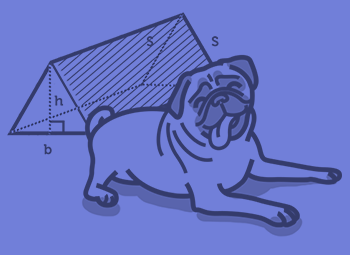
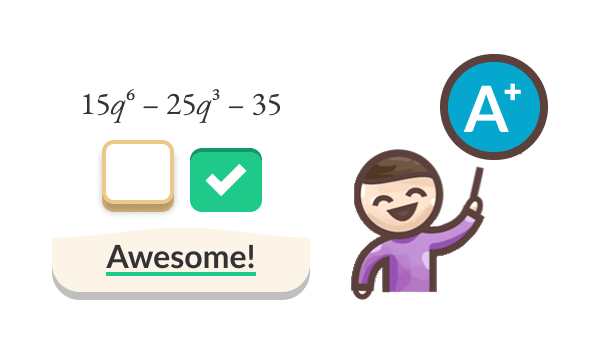
Expert Video Solutions
Real teaching that helps you solve problems.
Unlimited Practice
Practice each topic until it truly sticks.
Real Exam Practice
Real exam questions included in your plan.
Try It Now
Test your knowledge
Our approach aligns with the evidence
Exam Scores
Better Recall
Less Anxiety
GCE N(A)-Level Maths Topics
1. Numbers and Relations
2. Number Theory
3. Adding and Subtracting Integers
4. Multiplying and Dividing Integers
5. Operations with decimals
6. Adding and Subtracting Fractions
7. Multiplying and Dividing Fractions
8. Ratios, Rates, and Proportions
9. Percents
10. Scale Factors and Similarity
11. Measuring Systems
12. Number Systems
13. Solving Linear Equations
14. Linear Inequalities
15. Algebraic Expressions
16. Linear Functions
17. Simultaneous Equations
18. Laws of Indices
19. Quadratic Functions
20. Solving Quadratic Equations
21. Algebraic Fractions
22. Exponential Functions
23. Geometry and Measurement
24. Congruent Triangles
25. Angles, Lines, and Transversals
26. Circles
27. Surface Area and Volume
28. Trigonometry
29. Angle Measure in Radian
30. Sine Rule and Cosine Rule
31. Bearings
32. Data and Graphs
33. Representing Data
34. Statistics
35 Chapters · 186 Topics · 1512 Videos

Ready to practice GCE N(A)-Level Maths?
Try practice questions on every GCE N(A)-Level Maths topic — with instant feedback and step-by-step video solutions when you get stuck.
Discover Our Learning Areas
Explore key subjects and start learning with interactive content.



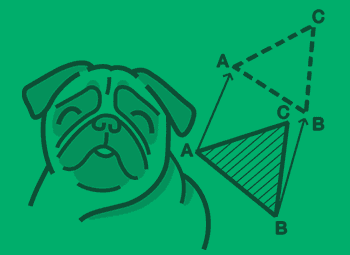
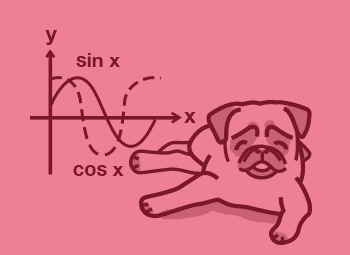
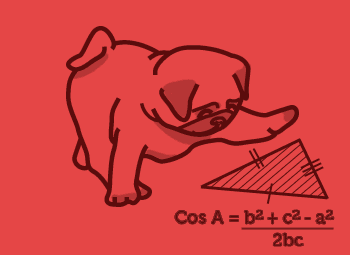
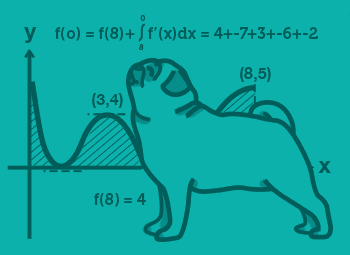
What is GCE N(A)-Level Maths?
GCE N(A)-Level Maths is a national examination course offered in Singapore secondary schools, set by the Singapore Examinations and Assessment Board (SEAB) under MOE guidelines. It is studied during Secondary 3 and Secondary 4, and the final examination is sat at the end of Secondary 4. The N(A) — Normal (Academic) — stream is designed to provide students with a solid grounding in mathematical thinking, practical problem-solving, and the quantitative skills needed for further education and working life. A good N(A)-Level Maths result opens pathways to GCE O-Level, Polytechnic Foundation Programmes, and ITE courses.
What topics does GCE N(A)-Level Maths cover?
The MOE GCE N(A)-Level Maths syllabus is organised into three broad strands: Number and Algebra, Geometry and Measurement, and Statistics and Probability.
Under Number and Algebra, students study integers, rational numbers, indices, standard form, algebraic manipulation, linear and quadratic equations, simultaneous equations, and functions and graphs. Geometry and Measurement covers congruence and similarity, Pythagoras' theorem, trigonometry, properties of circles, mensuration of plane figures and solids, and coordinate geometry. Statistics and Probability includes data handling, statistical diagrams, measures of central tendency and spread, and basic probability.
Across both Secondary 3 and Secondary 4, the syllabus builds progressively. Topics introduced in Secondary 3 — such as linear graphs and basic trigonometry — are extended in Secondary 4 to include more complex applications and examination-style multi-step problems based on the SEAB exam format.
Is GCE N(A)-Level Maths hard, and what do students struggle with most?
Most students find N(A)-Level Maths challenging at specific points rather than throughout — and the difficulty is usually concentrated in a handful of high-stakes topics.
Algebra is consistently the area where students lose the most marks. Forming equations from word problems, manipulating expressions, and solving simultaneous equations under timed conditions are all common pain points. Trigonometry causes difficulty because it requires both conceptual understanding (what the ratios mean) and procedural fluency (when and how to apply them). Many students also find statistics questions harder than expected — not because the maths is complex, but because the questions require careful reading and interpretation.
The good news is that N(A)-Level Maths rewards consistent practice. Every topic in the syllabus follows a learnable method. When students watch a clear explanation of the method — not just the answer — and then practise with feedback, most stumbling blocks resolve quickly.
Why StudyPug for GCE N(A)-Level Maths?
StudyPug is built around the way students actually learn maths: watch the method explained clearly, try it yourself, get instant feedback, and repeat until it sticks.
The process starts with a diagnostic assessment that identifies exactly where your child needs to focus. Instead of working through the entire syllabus from the beginning, they go straight to the topics where they need support. This saves time and removes the frustration of revisiting material they already know.
Every video lesson is made by a certified teacher — not AI-generated. Teachers explain the reasoning behind each step, so your child understands why a method works, not just how to copy it. That understanding is what allows them to tackle unfamiliar exam questions independently.
Adaptive practice questions adjust to your child's current level. If they are getting questions right consistently, the difficulty increases. If they are struggling, the system provides additional scaffolded questions to build confidence before moving on. This means every practice session is productive — neither too easy nor overwhelming.
For families with more than one child at secondary school, the Family Plan covers up to 5 children under one subscription at one price. The Parent Dashboard gives you a clear view of each child's progress — topics completed, areas of improvement, and where additional practice might help.
All content is aligned to the MOE GCE N(A)-Level Maths syllabus, so your child's StudyPug lessons reinforce exactly what they are learning at school.
What your child will learn — GCE N(A)-Level Maths curriculum coverage
StudyPug covers the full scope of the MOE GCE N(A)-Level Maths syllabus across Secondary 3 and Secondary 4. Key areas include:
- Algebra and functions — linear, quadratic, and simultaneous equations; algebraic fractions; indices; graphs of functions
- Geometry and trigonometry — Pythagoras' theorem; sine, cosine, and tangent ratios; bearings; circle properties; coordinate geometry
- Mensuration — areas and volumes of plane figures and solids including cylinders, cones, and spheres
- Statistics and probability — mean, median, mode; cumulative frequency; box-and-whisker plots; probability trees
- Number and proportion — ratio, rate, percentage, standard form, and practical applications
Practice tests on StudyPug are structured in line with the SEAB exam format — Paper 1 (non-calculator) and Paper 2 (calculator-allowed) — so your child becomes familiar with the timing, question style, and mark allocation they will face in the actual N(A)-Level examination. Because no validated curriculum-leaf topic URLs are available for this course in our current sitemap index, we link only to the main course page above rather than constructing unverified addresses.
Using StudyPug for GCE N(A)-Level Maths — a practical guide for parents
Getting started takes about five minutes. After signing up, your child completes a short diagnostic assessment in maths. The results show exactly which N(A)-Level topics need attention, and StudyPug builds a recommended study path from there.
A typical session looks like this: your child watches a 5-to-10-minute certified-teacher video on the topic their school is currently covering (or one the diagnostic flagged as a gap). They then work through adaptive practice questions. Each question comes with an immediate explanation if they get it wrong — so mistakes become learning moments rather than sources of frustration.
Before tests and prelims, your child can use the practice tests to work through exam-style questions under timed conditions. This builds the exam technique and time management skills that make a real difference on the day.
StudyPug works on any device — desktop, tablet, or smartphone — so your child can study at home, on the bus, or anywhere with a connection. Free daily practice content is available without a subscription, making it easy to try before committing. When you are ready to subscribe, every plan is backed by a 30-day money-back guarantee — the only guarantee StudyPug makes. There is no free trial period, but the money-back guarantee means there is no financial risk in getting started today.
GCE N(A)-Level Maths FAQ
Unsure how StudyPug works? Need help with setting up? Check our frequently asked questions or contact us for help.
What does my child learn in GCE N(A)-Level Maths, and what topics does it cover?
GCE N(A)-Level Maths covers a broad range of topics aligned to Singapore's MOE syllabus. Students work through algebra and functions, geometry and trigonometry, statistics and probability, and mensuration. They also develop number skills, ratio and proportion, and problem-solving strategies. The course builds the mathematical reasoning and procedural fluency needed to sit the national GCE N(A)-Level examination at the end of Secondary 4, and it lays a foundation for students who progress to GCE O-Level or ITE pathways.
Is GCE N(A)-Level Maths hard, and where do students commonly struggle?
Many students find N(A)-Level Maths manageable with consistent practice, but certain areas cause regular difficulty. Algebra — especially forming and solving equations — is the most common stumbling block, followed by trigonometry and working with graphs. Statistics questions that require interpreting data can also trip students up. The shift from concrete arithmetic to abstract reasoning in Secondary 3 is where most students first feel the pressure. Early identification of weak areas and targeted practice make a significant difference to exam confidence and results.
What should my child know before GCE N(A)-Level Maths, and what comes next?
Students entering N(A)-Level Maths in Secondary 3 should be comfortable with the Lower Secondary Maths topics covered in Secondary 1 and 2 — including fractions, percentages, basic algebra, and simple geometry. After N(A)-Level Maths, students who perform well can progress to the GCE O-Level or continue to ITE courses. Some students also use N(A)-Level Maths as a stepping stone into Polytechnic Foundation Programmes, so a strong result in the national exam opens several post-secondary pathways.
How does GCE N(A)-Level Maths map to the MOE syllabus and what your child studies at school?
The GCE N(A)-Level Maths syllabus is set by the Singapore Examinations and Assessment Board (SEAB) and taught in accordance with MOE guidelines. StudyPug lessons are structured to follow this syllabus closely, covering the same topics in the same sequence your child encounters at school. Whether their teacher is working on linear graphs one week or trigonometric ratios the next, StudyPug provides matching video lessons and practice questions so home learning reinforces what happens in the classroom.
What is one of the trickiest topics in GCE N(A)-Level Maths, and how is it taught?
Simultaneous equations is one of the trickiest topics for N(A)-Level students. Many pupils can follow one method in class but struggle to decide which approach — substitution or elimination — to use under exam conditions. StudyPug's certified teachers break the topic into clear steps: identifying the type of equations, choosing the most efficient method, and checking the solution. Worked examples build from straightforward cases to exam-style word problems, so students develop both the skill and the judgement to apply it confidently in their GCE paper.
How much maths practice should my child do at the GCE N(A)-Level stage?
At Secondary 3 and 4, education specialists generally recommend 30 to 45 minutes of focused maths practice four to five times a week. Consistency matters more than marathon sessions. Short daily practice — working through a set of exam-style problems after watching a video lesson — helps consolidate understanding and prevents the common pattern of cramming just before prelims. StudyPug's adaptive practice adjusts question difficulty to your child's current level, so every session is productive without becoming overwhelming.




Written by the StudyPug Team
Last updated June 5, 2026
3 M+
students
★★★★★
4.8 average
K–12
all grades