Secondary 4 Maths Help — Video Lessons & Practice
Get clear explanations for any Sec 4 Maths problem and build O-Level exam-ready confidence.
Step-by-Step Video Lessons
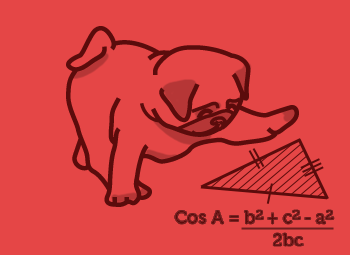
See each step solved to learn on your own.
Practice Until Perfect
You keep going until it clicks.
Test Prep Included
Practice real Singapore exam questions daily.
Try It Now
Test your knowledge
Our approach aligns with the evidence
Exam Scores
Better Recall
Less Anxiety
Secondary 4 Maths Topics
1. Number System and Radicals
2. Rational Numbers
3. Solving Linear Equations
4. Linear Inequalities
5. Introduction to Relations and Functions
6. Linear Functions
7. Linear Equations (Advanced)
8. Solving Simultaneous Equations
9. Exponents
10. Exponential Functions
11. Exponential Growth and Decay
12. Operations of Polynomials
13. Factorising Quadratic Equations
14. Quadratic Functions
15. Quadratic Equations and Inequalities
16. Pythagorean Theorem
17. Angles, Lines and Transversals
18. Properties of Triangles
19. Congruent Triangles
20. Symmetry and Surface Area
21. Circle Geometry
22. Scale Factors and Similarity
23. Surface Area and Volume
24. Algebraic Fractions
25. Reciprocal Functions
26. Introduction to Trigonometry
27. Trigonometry
28. Bearings
29. Vectors
30. Probability
33. Derivatives
34. Introduction to Matrices
34 Chapters · 211 Topics · 1457 Videos

Ready to practice Secondary 4 Maths?
Try practice questions on every Secondary 4 Maths topic — with instant feedback and step-by-step video solutions when you get stuck.
Discover Our Learning Areas
Explore key subjects and start learning with interactive content.

What is Secondary 4 Maths?
Secondary 4 Maths is the final year of lower-secondary mathematics in Singapore, leading directly to the GCE O-Level examination set by SEAB and Cambridge Assessment. Students study either Elementary Mathematics (E-Maths), Additional Mathematics (A-Maths), or both. The syllabus moves from the algebraic and geometric foundations of Secondary 3 into more demanding territory: quadratic functions, trigonometric identities, coordinate geometry proofs, and an introduction to differentiation and integration. Success at this level is a gateway to Junior College H2 Mathematics and ultimately to university science, engineering, and business programmes.
What topics are covered in Sec 4 Maths?
The E-Maths syllabus at Sec 4 covers numbers and algebra (including quadratic equations and inequalities), geometry and measurement (circle properties, vectors), and statistics and probability (cumulative frequency, box-and-whisker plots, standard deviation). The A-Maths syllabus adds surds and indices, polynomials and partial fractions, binomial theorem, circular measure, trigonometric functions and identities, differentiation, and integration. Both syllabuses are examined at the O-Level, so knowing which paper you are sitting — and practising the right question types — is essential revision strategy.
Is Sec 4 Maths hard, and how do students typically struggle?
The most common difficulty spike occurs in A-Maths, where students encounter abstract proof for the first time. Trigonometric proofs require manipulating identities without a fixed algorithm, while differentiation and integration demand both conceptual understanding and fast, accurate technique under timed conditions. In E-Maths, statistics topics such as standard deviation calculation and probability trees catch many students off guard because they appear straightforward but require precise working. The students who do best are those who practise mixed exam-style questions regularly rather than only drilling worked examples.
How is Secondary 4 Maths assessed in Singapore?
Sec 4 Maths is assessed through the GCE O-Level examination. E-Maths consists of Paper 1 (without a calculator, 2 hours) and Paper 2 (with a scientific calculator, 2 hours 30 minutes). A-Maths is two calculator-allowed papers. Both subjects are graded A1 through F9. Schools also run Preliminary Examinations — commonly called prelims — in Term 3, which serve as a timed rehearsal. Building exam technique through timed practice tests, especially on the types of multi-step questions that appear in Paper 2, is one of the highest-value things a Sec 4 student can do in the months before the O-Level.
What is the hardest concept in Sec 4 A-Maths and how do you approach it?
Trigonometric identities and proofs are consistently the topic students find most challenging. Unlike equation solving, there is no single procedure to follow — success depends on recognising which identity to substitute and working systematically from one side of the equation to the other. The most effective approach is to watch a fully worked proof at least twice — once for the overall structure and once following each algebraic step — then immediately attempt a similar question from scratch. Spacing these practice attempts across several days (spaced repetition) strengthens retention far more than massed revision in one sitting.
Why use StudyPug for Secondary 4 Maths?
StudyPug is built around the way students actually learn — by watching a clear explanation, then practising immediately. Every Sec 4 Maths lesson is recorded by certified teachers who teach the method behind the answer, not just the solution steps. This matters for O-Level, where questions test reasoning and multi-step problem solving rather than memorised procedures.
The platform's diagnostic assessment identifies exactly which topics are weakest before you start revising, so you spend time where it counts rather than re-covering topics you already know. As you practise, adaptive difficulty adjusts so the questions always stretch you at the right level — neither too easy to feel productive nor too hard to be discouraging. All of this is covered by a 30-day money-back guarantee, so there is no risk in trying.
What you learn: Secondary 4 Maths curriculum coverage
StudyPug covers the full Singapore GCE O-Level Maths curriculum for both E-Maths and A-Maths, including:
- Quadratic functions, equations, and inequalities
- Indices, surds, and logarithms (A-Maths)
- Coordinate geometry including proofs
- Trigonometry: ratios, identities, and proofs
- Binomial theorem and polynomial operations (A-Maths)
- Differentiation and integration (A-Maths)
- Vectors in two dimensions (E-Maths)
- Circle theorems and mensuration
- Statistics: mean, standard deviation, cumulative frequency
- Probability including combined events
Lessons are structured to match the exact sequence of the SEAB syllabus, so you can jump to any topic that matches what your school is currently teaching or that came up in your most recent class test.
How to use StudyPug for Sec 4 Maths revision
Start with the diagnostic. It takes about ten minutes and produces a prioritised list of topics to tackle — especially valuable if the O-Level is approaching and you need to triage your revision. From there, select a topic, watch the certified-teacher video lesson, then use the adaptive practice questions to consolidate what you have just seen. For exam preparation specifically, the platform includes practice tests based on real O-Level exam-style questions, allowing you to rehearse Paper 1 and Paper 2 conditions before the actual examination.
StudyPug is available on any device, so whether you revise on your laptop after school, on your phone on the MRT, or on a tablet at home, your progress carries across sessions. Free daily practice problems are available without a subscription, making it easy to build a consistent daily revision habit before committing to a full plan.
Secondary 4 Maths FAQ
Unsure how StudyPug works? Need help with setting up? Check our frequently asked questions or contact us for help.
What do you learn in Secondary 4 Maths, and what topics does it cover?
Secondary 4 Maths in Singapore covers algebra, quadratic functions, indices and surds, coordinate geometry, trigonometry, mensuration, statistics, probability, and an introduction to differentiation and integration under the O-Level Pure Maths syllabus. Students learn to apply these skills to multi-step problems that test both method and reasoning. The course builds directly on Secondary 3 work and forms the foundation for A-Level H2 Mathematics if you continue further.
What is the difference between Secondary 4 Pure Maths and Elementary Maths?
Elementary Mathematics (E-Maths) is taken by almost all O-Level students and covers core numeracy, algebra, geometry, and statistics. Pure Mathematics (A-Maths) goes deeper into functions, calculus, trigonometric identities, and binomial theorem. Most secondary students take both. E-Maths is the foundation; A-Maths is the stretch subject that opens pathways to science and engineering at A-Level. StudyPug covers both syllabuses so you can practise whichever you need.
Is Secondary 4 Maths hard, and where do students struggle most?
Many students find the jump from Secondary 3 to Sec 4 significant, particularly in A-Maths. The topics students struggle with most are trigonometric proofs, differentiation and integration, and coordinate geometry proofs that require linking multiple concepts. The key challenge is that the O-Level examination tests understanding of method, not just memorisation. Consistent practice on past-paper questions and reviewing worked solutions step-by-step makes a measurable difference in managing these harder topics.
What should I take before Secondary 4 Maths, and what comes after it?
Secondary 3 Maths is the direct prerequisite — you should be confident with linear and simultaneous equations, basic trigonometry (SOH-CAH-TOA), and Pythagoras. After Sec 4, students who pass O-Level Maths with a strong grade can progress to Junior College H1 or H2 Mathematics, or Polytechnic mathematics modules. Students aiming for engineering or science at university typically need H2 Maths, which requires a solid A-Maths foundation built in Sec 3 and 4.
Is Secondary 4 Maths on the GCE O-Level, and how is it tested?
Yes. Secondary 4 Maths culminates in the Singapore–Cambridge GCE O-Level examination, administered by SEAB. E-Maths is examined across two papers (Paper 1 is no-calculator; Paper 2 allows a scientific calculator). A-Maths is also two papers, both calculator-allowed, with a greater emphasis on proof and multi-step problem solving. Grades run from A1 to F9. StudyPug includes practice based on real exam-style O-Level questions so you can build familiarity with the question format.
What is one of the hardest concepts in Secondary 4 Maths, and how do you tackle it?
Trigonometric identities and proofs are consistently rated the hardest A-Maths topic. Students must manipulate expressions using identities such as sin²x + cos²x = 1 and double-angle formulae without a set algorithm to follow. The best approach is to work from the more complex side, look for opportunities to substitute a known identity, and practise enough varied examples that patterns become intuitive. Watching a worked proof video and then attempting similar questions immediately after is the most effective way to build this skill.




Written by the StudyPug Team
Last updated June 5, 2026
3 M+
students
★★★★★
4.8 average
K–12
all grades