GCE N(T)-Level Maths Help — Step-by-Step Video Lessons & Practice
Help your child build confidence and understand every topic, one lesson at a time.
Step-by-Step Video Lessons
Learn each step so you solve it alone.
Unlimited Practice
Keep going until you get it right.
Test Prep Included
Practice real N(T)-Level exam questions free.
Try It Now
Test your knowledge
Our approach aligns with the evidence
Exam Scores
Better Recall
Less Anxiety
GCE N(T)-Level Maths Topics
1. Numbers and Relations
2. Number Theory
3. Adding and Subtracting Integers
4. Multiplying and Dividing Integers
5. Operations with decimals
6. Adding and Subtracting Fractions
7. Multiplying and Dividing Fractions
8. Ratios, Rates, and Proportions
9. Percents
10. Linear Relations
11. Solving Linear Equations
12. Linear Functions
13. Simultaneous Equations
14. Quadratic Functions
15. Solving Quadratic Equations
16. Algebraic Fractions
17. Trigonometry
18. Geometry and Measurement
19. Angles, Lines, and Transversals
21. Scale Factors and Similarity
22. Congruent Triangles
23. Circles
24. Surface Area and Volume
25. Data and Graphs
26. Representing Data
28 Chapters · 145 Topics · 1241 Videos

Ready to practice GCE N(T)-Level Maths?
Try practice questions on every GCE N(T)-Level Maths topic — with instant feedback and step-by-step video solutions when you get stuck.
Discover Our Learning Areas
Explore key subjects and start learning with interactive content.

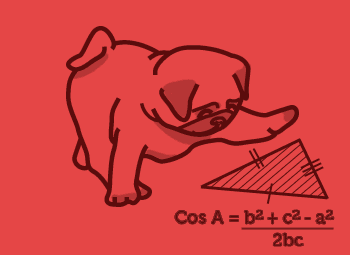
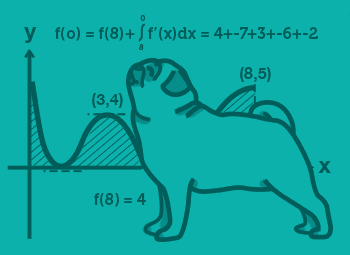

What Is GCE N(T)-Level Maths?
GCE N(T)-Level Maths is Singapore's practical mathematics course for students in the Normal (Technical) stream, leading to the GCE N(T) examination at the end of Secondary 4. Aligned to the MOE N(T) Maths syllabus, it focuses on numeracy, real-world problem solving, and the mathematical skills students need for technical post-secondary education at ITE. The course spans number operations, algebra, geometry, mensuration, statistics, and probability — all taught in a context that connects maths to everyday and vocational situations.
What Topics Does GCE N(T)-Level Maths Cover?
The MOE N(T) Maths syllabus is built around five broad strands. Number and Algebra covers whole numbers, fractions, decimals, percentages, ratio, rate, proportion, and introductory algebra including forming and solving simple linear equations. Geometry and Measurement addresses angles, triangles, polygons, circles, and three-dimensional solids, as well as perimeter, area, and volume calculations for composite shapes. Statistics and Probability introduces data collection, bar charts, pie charts, frequency tables, averages, and basic probability. Through Secondary 3 and 4, these strands deepen, and students are expected to apply concepts to multi-step word problems that reflect real technical or practical contexts — exactly the style of questions that appear on the GCE N(T) exam.
Is GCE N(T)-Level Maths Hard? Common Struggles and How to Overcome Them
For many students, the jump from primary-school arithmetic to secondary-level algebra is the biggest hurdle. Translating a word problem into an algebraic equation requires a kind of thinking that does not come automatically — and if a student is shaky on fractions or ratios from primary school, those gaps compound quickly in Secondary 3 and 4. Mensuration is another frequent stumbling block: students can memorise formulas but struggle to identify which formula applies to which shape, especially with composite figures. Statistics questions that ask students to interpret data or calculate a missing frequency also catch students off guard. The good news is that N(T)-Level Maths is highly structured and concept-driven — once a student understands the method behind a topic, the practice questions become manageable. The key is catching gaps early, revisiting the concept with a clear explanation, and practising similar problems until the method is automatic.
Why StudyPug for GCE N(T)-Level Maths?
StudyPug is built for exactly the kind of learner who benefits from a second explanation. When your child's teacher moves on and your child is still unsure, StudyPug is there — 24 hours a day, on any device. Here is what makes it work for N(T)-Level Maths families in Singapore.
Diagnostic Assessment: StudyPug begins with a quick diagnostic that identifies precisely where your child has gaps. Instead of working through topics they already know, your child focuses on the areas that will make the biggest difference — whether that is fractions, algebra, or mensuration.
Certified-Teacher Video Lessons: Every lesson is taught by a certified teacher, not generated by AI. The teacher explains the concept step by step, showing the reasoning behind each move so your child understands the method — not just the answer. This means they can handle variations of the same problem type independently in their GCE N(T) exam.
Adaptive Practice: After watching a video, your child practises with questions that adjust to their level. If they answer confidently, the questions increase in difficulty. If they are still unsure, the system steps back and reinforces the concept. This gradual progression builds real confidence rather than false reassurance.
Parent Dashboard: You can see exactly how your child is progressing — which topics they have completed, where they are spending time, and where they still need support. No more guessing whether the revision session was productive.
Family Plan: If you have more than one child in school, StudyPug's Family Plan covers up to five children under a single subscription across all grade levels and all subjects — strong value for Singapore families.
MOE Syllabus Alignment: Every topic in StudyPug's N(T)-Level Maths course maps to the official MOE N(T) syllabus, so your child is always practising what they need for school assessments and their GCE N(T) exam.
What Your Child Will Learn in GCE N(T)-Level Maths on StudyPug
StudyPug's GCE N(T)-Level Maths course covers the full MOE N(T) syllabus across both Secondary 3 and Secondary 4 content. Key areas include:
- Number and Arithmetic: Whole numbers, HCF and LCM, fractions, decimals, percentages, ratio, rate, and proportion — building the numerical fluency that underpins everything else.
- Algebra: Writing algebraic expressions, simplifying, substitution, and solving linear equations and inequalities — including forming equations from word problems, one of the highest-impact skills for the N(T) exam.
- Geometry: Properties of angles, triangles, quadrilaterals, and polygons; Pythagoras' theorem; circle properties; and coordinate geometry basics.
- Mensuration: Perimeter, area, surface area, and volume for a range of shapes including composite figures — a consistent exam focus.
- Statistics and Probability: Reading and drawing statistical diagrams, calculating mean, median, and mode, and solving basic probability problems.
Because no validated topic-level URLs are available in the current internal link map for this course, links to individual topic pages are omitted here. You can browse all N(T)-Level Maths topics directly from the StudyPug course page.
How to Use StudyPug for GCE N(T)-Level Maths
Getting started is straightforward. When your child first logs in, the diagnostic assessment takes a few minutes and immediately surfaces the topics where they need the most work. From there, your child can watch the relevant certified-teacher video — pausing, rewinding, and replaying as many times as needed — and then move into the adaptive practice session for that topic. Free daily practice content is available without a subscription, so your child can try it before you commit. Once subscribed, you have full access to every video lesson, every practice problem set, and the parent dashboard. For exam preparation, the platform's practice tests are structured to reflect the style and difficulty of the GCE N(T) Maths exam, giving your child a realistic sense of readiness before the actual sitting. StudyPug works on desktop, tablet, and mobile — so your child can revise at home or on the go, and you can check their progress from wherever you are. With a 30-day money-back guarantee, there is no risk in getting started today.
GCE N(T)-Level Maths FAQ
Unsure how StudyPug works? Need help with setting up? Check our frequently asked questions or contact us for help.
What does my child learn in GCE N(T)-Level Maths, and what topics does it cover?
GCE N(T)-Level Maths covers practical, everyday mathematics aligned to the MOE N(T) syllabus. Key topics include whole numbers, fractions, decimals, percentages, ratio, basic algebra, mensuration, geometry, statistics, and probability. The course is designed to build numeracy and problem-solving skills relevant to real-world and technical contexts. Students are also introduced to data handling and interpreting information. StudyPug covers all these topic areas with video lessons and practice questions mapped to what your child encounters in school.
Is GCE N(T)-Level Maths hard, and where do students commonly struggle?
Many students find GCE N(T)-Level Maths manageable once the foundational concepts are solid, but certain areas cause consistent difficulty. Algebra — especially forming and solving equations — trips up many learners. Fractions and ratios also challenge students who have gaps from earlier years. Mensuration (calculating areas, volumes, and perimeters of composite shapes) and interpreting statistical data are other common stumbling blocks. Catching and fixing these gaps early, rather than leaving them to accumulate, makes a big difference to confidence and exam performance.
What should my child know before GCE N(T)-Level Maths, and what comes next?
Students entering the N(T)-Level Maths stream should be comfortable with basic arithmetic — addition, subtraction, multiplication, and division — as well as simple fractions and percentages from primary school. A firm grasp of place value and number sense also helps. After completing N(T)-Level Maths, students typically proceed to the GCE N(T) exam at the end of Secondary 4. Stronger students may progress to post-secondary technical education at ITE, where this foundation in applied maths becomes directly relevant.
How does StudyPug Maths map to what my child learns at school?
StudyPug's GCE N(T)-Level Maths content is aligned to the Singapore MOE N(T) Maths syllabus. Every topic your child covers in school — from number operations and basic algebra to geometry and statistics — has a corresponding set of video lessons and practice problems on StudyPug. This means your child can review exactly what was taught in class, get a second explanation from a certified teacher, and practise with questions that mirror the style and level of their school assessments and GCE N(T) exam.
What is one of the trickiest Maths concepts at N(T)-Level, and how is it taught?
Solving linear equations and forming algebraic expressions from word problems is consistently one of the hardest skills for N(T)-Level students. Many learners can handle arithmetic but struggle to translate a real-world situation into an equation. On StudyPug, a certified teacher walks through this step by step — identifying the unknown, setting up the equation, and solving it methodically. The video shows the reasoning behind each step, not just the answer, so students understand the method and can apply it independently in their GCE N(T) exam.
How much Maths practice should my child do at N(T)-Level?
For GCE N(T)-Level students, consistent short practice sessions are more effective than occasional marathon study. Aim for 20–30 minutes of focused maths practice four to five times per week. In the months leading up to the GCE N(T) exam, increase this to include timed practice tests to build exam stamina. StudyPug's adaptive practice automatically adjusts to your child's level, so each session targets the areas where they need the most work — making practice time efficient and confidence-building rather than repetitive.




Written by the StudyPug Team
Last updated June 5, 2026
3 M+
students
★★★★★
4.8 average
K–12
all grades