Differential Calculus Help: Video Lessons & Practice
Work through every topic with clear solutions. Start your free practice test now!

Value vs. Private Tutor
Get expert Differential Calculus help free.

Multi-Subject
One subscription for all your subjects.

Build Mastery
Master calculus before test day not after.
Try It Now
Test your knowledge
Our approach aligns with the evidence
Exam Scores
Better Recall
Less Anxiety
Differential Calculus Topics
1. Limits
2. Differentiation
3 Chapters · 31 Topics · 217 Videos
Discover Our Learning Areas
Explore key subjects and start learning with interactive content.
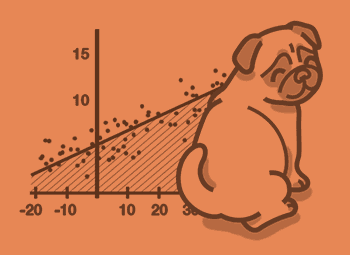



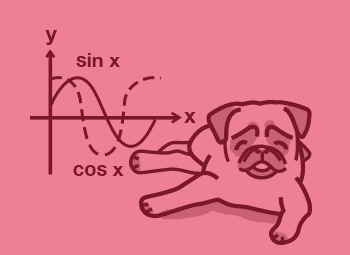
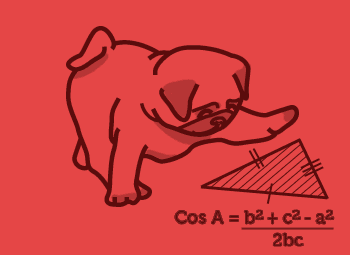

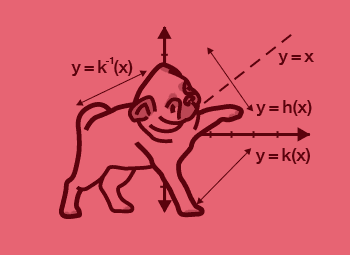
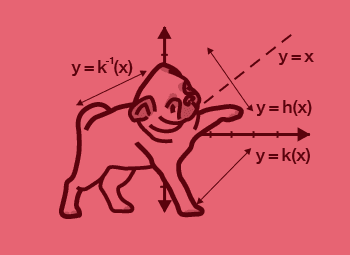

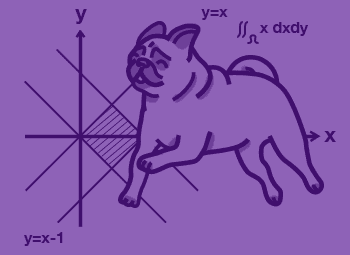





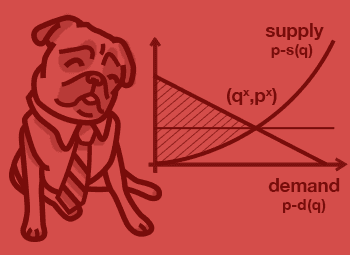

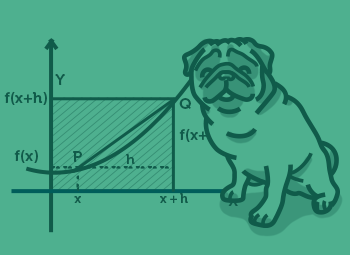
What is Differential Calculus?
Differential Calculus is the branch of mathematics concerned with the study of rates of change — how quickly quantities increase, decrease, or shift at any given instant. Its central concept is the derivative, which measures the instantaneous rate of change of a function with respect to one of its variables. If you have ever asked how fast a ball is moving at exactly one second after it is thrown, or how a company's cost changes when production increases by a single unit, you are already thinking in the language of differential calculus.
At university level in Singapore — across NUS, NTU, SMU, SUTD, and SIM — Differential Calculus forms the foundation of Calculus I and is a prerequisite for virtually every quantitative module in engineering, data science, economics, and the physical and life sciences. Mastery of this course opens the door to Integral Calculus, Multivariable Calculus, Linear Algebra, and Differential Equations.
What Topics Are Covered in Differential Calculus?
A typical Differential Calculus module moves through the following areas in roughly this order:
- Limits and continuity — the formal foundation of calculus; understanding what a function approaches as the input gets arbitrarily close to a value.
- The derivative from first principles — the limit definition of the derivative before shortcut rules are introduced.
- Differentiation rules — power rule, product rule, quotient rule, and chain rule for composite functions.
- Derivatives of transcendental functions — trigonometric, exponential, and logarithmic functions.
- Implicit differentiation — differentiating equations where y cannot be isolated explicitly.
- Higher-order derivatives — second and third derivatives; concavity and the second derivative test.
- Related rates — using differentiation to relate changing quantities in real-world scenarios.
- L'Hôpital's rule — evaluating indeterminate limit forms using derivatives.
- Curve sketching — combining derivative information to determine increasing/decreasing behaviour, local extrema, and concavity.
- Optimisation — finding maximum or minimum values subject to constraints, one of the most applied areas of the subject.
Each of these topics appears in midterm and final exam papers across Singapore universities, making comprehensive practice essential.
Is Differential Calculus Hard? Where Do Students Struggle?
Differential Calculus has a reputation for difficulty, and that reputation is partly deserved — but the difficulty is usually concentrated in a few specific areas rather than spread evenly across the whole course.
The limit definition of the derivative is the first major hurdle. It is abstract, requires careful algebraic manipulation, and is unlike anything most students have encountered before. Many students move past it too quickly in search of the differentiation rules, and this creates gaps that show up later.
The chain rule causes the most widespread confusion among all the differentiation rules. Its application requires identifying the outer function and the inner function correctly — something that is obvious in simple cases but subtle in nested or multi-step composites.
Implicit differentiation and related rates demand a different kind of thinking: you are differentiating an equation as a whole rather than an isolated function, treating every variable as potentially a function of time. Students who skip the problem-setup phase and jump straight to calculus almost always arrive at the wrong equation.
Optimisation is the topic where algebraic errors and misread problem statements cause the most lost marks in exams. The calculus itself is usually straightforward once you have correctly defined the objective function and the constraint.
The good news: every one of these difficulty areas responds well to deliberate, structured practice with clear explanations of the method — not just the answer.
How is Differential Calculus Assessed in Singapore?
At Singapore universities, Differential Calculus is assessed through a combination of continuous assessment and a final examination, following the GCE-aligned and module-based grading systems used at NUS, NTU, SMU, and SUTD.
Continuous assessment components typically include weekly or bi-weekly graded assignments, online quizzes administered through the university's learning management system, and a midterm test. Together these usually account for 30–50% of the final module grade. The midterm commonly covers limits through implicit differentiation, and the final examination spans the entire syllabus.
Exam questions in Singapore university calculus modules are generally divided into short-answer procedural questions (apply the correct rule, get the correct answer) and longer structured questions that test multi-step reasoning — for example, a related-rates scenario followed by an optimisation sub-question. Both types require not just knowing the method but being able to execute it cleanly under time pressure.
Practising with full past-paper-style mock exams — covering both the mechanical and the applied question types — is the most direct way to prepare.
Why StudyPug for Differential Calculus?
StudyPug is built around the reality that understanding calculus requires more than re-reading lecture notes — it requires seeing the method demonstrated clearly, then applying it yourself with immediate feedback.
Certified-teacher concept videos form the core of the StudyPug experience. Every video is made by an experienced, qualified instructor — not generated by AI. The videos teach the reasoning behind each step: why the chain rule works the way it does, how to recognise when implicit differentiation is needed, what the second derivative is actually telling you about a curve. Understanding the method deeply means you are prepared for the next module, not just this semester's exam.
Before you begin, a diagnostic assessment identifies exactly which Differential Calculus topics you need to focus on. Instead of reviewing everything from limits to optimisation in sequence, you can target the gaps that are actually costing you marks. This makes your study time significantly more efficient — especially in the weeks before a midterm or final.
Adaptive practice then adjusts the difficulty of practice problems to your current performance level. If you are comfortable with the power rule but struggling with the quotient rule, the system will weight your practice accordingly. You stay challenged without being overwhelmed, and you progress faster as a result.
StudyPug's subscription covers Differential Calculus alongside Integral Calculus, Multivariable Calculus, Linear Algebra, Differential Equations, and Statistics — all in a single plan. You never pay separately for each module you need help with.
What You Learn: Differential Calculus Course Coverage
StudyPug covers the full Differential Calculus curriculum as it is taught at Singapore universities. The lesson library includes:
- Limits — one-sided limits, limit laws, the squeeze theorem, limits at infinity
- Continuity — types of discontinuity, the intermediate value theorem
- The derivative — limit definition, tangent line problems, differentiability
- Differentiation rules — power, product, quotient, chain (with multi-layer examples)
- Derivatives of sin, cos, tan, sec, csc, cot, e^x, ln x, and inverse trig functions
- Implicit differentiation — including second-order implicit derivatives
- Related rates — distance, area, volume, angle problems
- Higher-order derivatives and their applications
- L'Hôpital's rule — all indeterminate forms
- Curve sketching — critical points, inflection points, asymptotes, full graph analysis
- Applied optimisation — closed interval method, real-world max/min problems
Every topic is covered with video lessons, worked examples, and practice problems. Mock exam sets mirror the midterm and final examination format used in Singapore university modules.
Note: No internal topic URLs are linked here as none are currently validated for this page in the MAP. If you are looking for a specific topic, use the Browse Topics button above to navigate the full lesson library.
How to Use StudyPug for Differential Calculus
The most effective pattern for using StudyPug alongside your university module looks like this:
- Run the diagnostic at the start of the semester. Get a clear picture of which topics you already understand and which need work before lectures cover them.
- Watch the concept video before or after each lecture. The certified-teacher videos are typically 8–15 minutes and focus on one clearly defined concept. Watching a StudyPug explanation alongside your lecturer's treatment helps the method solidify from two angles.
- Practice immediately after watching. Adaptive practice problems follow each lesson. Getting feedback while the method is fresh is far more effective than batching practice at the end of the week.
- Use Photo Search if you are stuck on a specific problem. Photo Search lets you find the matching lesson for any Differential Calculus problem — available across all topics and grades on StudyPug.
- Run a mock exam two weeks before your midterm or final. StudyPug's mock exams cover the full syllabus in exam format — timed, structured, and followed by worked solutions. This is where you confirm that your understanding holds under exam conditions, not just in practice mode.
You can cancel at any time, and every plan comes with a 30-day money-back guarantee. Start with free practice today — no commitment required.
Differential Calculus FAQ
Unsure how StudyPug works? Need help with setting up? Check our frequently asked questions or contact us for help.
What do you learn in Differential Calculus, and what topics does it cover?
Differential Calculus is the branch of calculus that studies rates of change and slopes of curves. Core topics include limits and continuity, the definition and rules of differentiation (power, product, quotient, chain), implicit differentiation, related rates, higher-order derivatives, L'Hôpital's rule, and curve sketching including maxima and minima. Applied optimisation problems — finding the best solution under given constraints — round out the course. By the end you can model and analyse how quantities change, a skill that underpins engineering, economics, and the sciences.
What is the difference between Differential Calculus and Integral Calculus?
Differential Calculus focuses on the derivative — measuring how quickly a quantity changes at any instant, such as the slope of a curve or the instantaneous speed of an object. Integral Calculus focuses on the antiderivative and the accumulation of quantities — areas under curves, volumes, and totals over an interval. The two are connected by the Fundamental Theorem of Calculus. Most university programmes cover Differential Calculus first because differentiation rules and limit concepts are prerequisites for understanding integration and the broader Calculus I–III sequence.
What are the prerequisites for Differential Calculus, and what course comes after it?
You should be comfortable with precalculus: algebraic manipulation, functions and their graphs, trigonometry (sine, cosine, identities), exponentials, and logarithms. A solid grasp of limits is also essential — many programmes teach limits in the opening weeks. After Differential Calculus the natural progression is Integral Calculus (Calculus II), which then leads to Multivariable Calculus (Calculus III), Linear Algebra, and Differential Equations — all standard in engineering, mathematics, and science degrees in Singapore.
Is Differential Calculus hard, and where do students struggle most?
Many students find the conceptual jump from algebra to calculus challenging — particularly the formal definition of the limit and the concept of instantaneous rate of change. The chain rule and implicit differentiation trip up a large number of students because they require correctly identifying composite structures inside functions. Related rates problems demand translating a word problem into a derivative equation, which is a separate skill. Optimisation problems add another layer: setting up the objective function correctly before differentiating. Regular practice with varied problem types is the most effective way to build fluency across all these areas.
How is Differential Calculus assessed at university in Singapore?
Assessment typically combines continuous assessment and end-of-semester examinations under the GCE A-Level and university module systems used across NUS, NTU, SMU, and SUTD. Continuous assessment usually includes graded assignments, online quizzes, and midterm tests worth 30–50% of the final mark. The end-of-semester exam covers the full syllabus and carries the remaining weightage. Exam questions test both procedural fluency — applying differentiation rules correctly — and conceptual understanding, including proofs, applications, and multi-step optimisation or related-rates scenarios.
What is one of the hardest topics in Differential Calculus, and how do you approach it?
Related rates problems are consistently cited as one of the most difficult topics. The challenge is not the differentiation itself but the problem-setup stage: identifying which quantities are changing, writing an equation that links them (using geometry, trigonometry, or a given formula), and then differentiating implicitly with respect to time. A reliable approach is to draw a diagram, label every variable and its rate of change, write the linking equation before touching derivatives, and only then differentiate both sides with respect to time. Substituting known values comes last — not first.





Written by the StudyPug Team
Last updated June 5, 2026
3 M+
students
★★★★★
4.8 average
K–12
all grades