Physics Help: Video Lessons & Practice
Step-by-step lessons for every NCEA Physics topic. Build real understanding — not just exam answers.

Value vs. Private Tutor
Expert physics help at no high cost.

Multi-Subject
Struggling with Physics? Switch subjects freely.
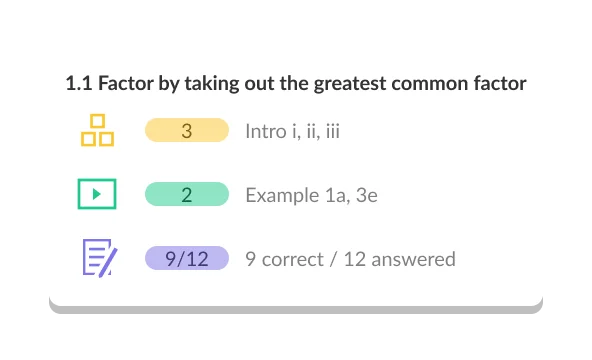
Practice Until Perfect
Practice until it actually clicks.
Physics Topics
1. Scalars, Vectors and Motion
2. Kinematics
3. Forces
4. Work and Energy
5. Momentum
6. Equilibrium
7. Circular Motion
8. Gravitation
9. Electrostatics
10. Geometric Optics
10 Chapters · 33 Topics · 202 Videos
Discover Our Learning Areas
Explore key subjects and start learning with interactive content.



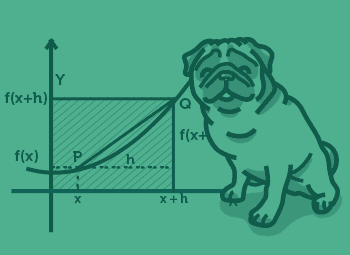
What is NCEA Level 3 Physics?
NCEA Level 3 Physics is the senior secondary science course in New Zealand that examines the fundamental laws governing the physical world — from the motion of objects and the behaviour of waves, to electric and magnetic fields and the structure of the atom. It is assessed by NCEA (National Certificate of Educational Achievement), New Zealand's national qualification framework, through a combination of school-based internal standards and national external examinations held each November. Strong performance at Level 3 earns credits toward University Entrance and provides the essential foundation for first-year university science, engineering, and health-science degrees.
What topics are covered in NCEA Level 3 Physics?
Level 3 Physics covers four broad areas. Mechanics addresses motion in a straight line and in circles, momentum, gravitational fields, and simple harmonic motion. Waves and optics covers the wave model of light, interference, diffraction, and the behaviour of sound. Electricity and magnetism introduces electric fields, DC circuits, electromagnetic induction, transformers, and AC theory. Modern physics explores atomic models, the photoelectric effect, nuclear decay, and the dual wave-particle nature of matter. Each area is examined both conceptually and mathematically, so students need to be comfortable moving between written explanations and quantitative calculations.
Is Level 3 Physics harder than Level 2, and where do students struggle?
Yes — the jump from Level 2 to Level 3 Physics is significant. The mathematical demands increase sharply, and the course expects students to apply multiple concepts together rather than in isolation. Electromagnetic induction is consistently the topic students find hardest: Faraday's and Lenz's laws must be applied simultaneously, and visualising a changing magnetic flux through a moving coil under time-pressure is genuinely difficult. Circular motion and gravitational field calculations also trip up many students, as does wave interference when the geometry of path differences needs to be set up correctly from scratch. The students who improve most are those who practise varied problem types regularly rather than rereading notes — active retrieval and working through real exam-style questions makes the critical difference.
How is NCEA Level 3 Physics assessed?
NCEA Level 3 Physics uses a dual assessment model. Internal standards are assessed by your school throughout the year — these commonly include experimental design, data analysis, and report writing, and results are moderated nationally. External standards are sat in the November examination window and are marked centrally by NZQA. The external standards cover the high-credit topics: mechanics, waves, and electromagnetism. Most students aim for 14–20 credits from Physics, and earning Merit or Excellence endorsements on external standards requires both conceptual accuracy and clean, well-structured mathematical working. Preparation that combines timed mock exams with careful review of NZQA exemplar answers is the most effective approach for the externals.
What comes before and after Level 3 Physics?
The standard pathway into Level 3 Physics is NCEA Level 2 Physics, which introduces the core mechanics and electricity concepts in less mathematical depth. A solid background in Level 2 or Year 11 science, combined with concurrent Level 3 Mathematics or Calculus, gives you the best preparation. After Level 3, the natural next step is first-year university Physics — typically a Stage 1 paper in mechanics and electromagnetism or a combined physical science course. New Zealand universities such as the University of Auckland, Victoria University of Wellington, and the University of Canterbury all offer Stage 1 Physics papers that build directly on NCEA Level 3 content. Students who finish Level 3 with a strong grasp of electromagnetic induction, mechanics, and wave theory find the transition significantly smoother.
Why StudyPug for Physics?
StudyPug is built around three things that actually move Physics results: finding your gaps fast, practising at the right level, and understanding the method — not just the answer.
The diagnostic assessment takes only a few minutes and identifies precisely which Physics topics are holding you back, so you spend study time where it counts rather than reviewing content you already know. Once your gaps are identified, adaptive practice adjusts the difficulty of questions in real time to match your current level — giving you enough challenge to grow without overwhelming you.
The certified-teacher concept videos are what make StudyPug different. Every lesson is made by an experienced instructor who teaches the reasoning behind each step — why you choose Faraday's law over Lenz's law, how to set up a circular motion free-body diagram, what the interference geometry is actually telling you. You can watch each video as many times as you need until the concept genuinely clicks. These are not AI-generated explanations: they are structured, step-by-step teaching from real instructors who know where students go wrong.
All Physics content — plus every other subject including Maths, English, Science, and Social Studies — is included in one subscription. There is no need to pay separately for each course. Free daily practice content is available without a subscription, and all paid plans are backed by a 30-day money-back guarantee.
What you learn: Physics topic coverage on StudyPug
StudyPug covers the full range of NCEA Level 3 Physics content. In mechanics you will find lessons on kinematics, Newton's laws, circular and rotational motion, momentum and impulse, gravitational fields, and simple harmonic motion. Waves and optics content includes the wave model, diffraction and interference (double-slit and single-slit), standing waves, and the optical properties of lenses and mirrors. Electricity and magnetism lessons cover electric fields and potential, DC circuit analysis, electromagnetic induction, transformers, AC circuits, and Faraday's and Lenz's laws. Modern physics content includes atomic emission spectra, the photoelectric effect, nuclear decay series, half-life calculations, and the wave-particle duality of matter.
Practice tests and mock exams are structured to reflect the format of NCEA external assessments, so the problem types and marking style you encounter on StudyPug are directly relevant to what you will face in November.
Note: No internal topic links are placed here — no validated URLs are available in the current MAP for this page. Links will be added in a future MAP refresh.
Using StudyPug for Physics: a practical approach
The most effective way to use StudyPug for Level 3 Physics is to start with the diagnostic. It takes a short set of questions across the main topic areas and returns a clear picture of where your understanding is solid and where the gaps are. From there, work through the concept videos for your weakest areas first — pause, rewind, and rewatch until each step makes sense. Then move into the adaptive practice questions for that topic: the system adjusts difficulty as you go, so you are always working at the productive edge of your ability.
As your internal assessment dates and the November externals approach, shift to the mock exams and practice tests. Work through them under timed conditions, then use the step-by-step solutions to identify exactly where marks were dropped and why. Repeat this cycle — video, practice, mock exam, review — across each topic area, and you will arrive at your NCEA externals with both the conceptual understanding and the exam technique that Merit and Excellence grades require.
StudyPug is available on any device, so you can watch lessons or complete practice questions on your phone, tablet, or laptop — at home, on the bus, or in a free period at school. Start your free practice test now and see which Physics topics to focus on first.
Physics FAQ
Unsure how StudyPug works? Need help with setting up? Check our frequently asked questions or contact us for help.
What do you learn in Physics, and what topics does it cover?
Physics at NCEA Level 3 covers mechanics (motion, forces, momentum, circular motion), waves and optics (light, sound, interference), electricity and magnetism (circuits, fields, electromagnetic induction), and modern physics (nuclear decay, atomic models, photoelectric effect). You develop skills in applying mathematical models to real-world phenomena and interpreting experimental data. The course builds the conceptual and quantitative foundation needed for university-level science, engineering, and health-science programmes across New Zealand.
What is the difference between Physics and Chemistry at Year 13?
Physics focuses on fundamental forces, energy, motion, fields, and the structure of matter at a macroscopic and subatomic level — using mathematical modelling as its core tool. Chemistry examines atomic structure, bonding, reactions, and the behaviour of substances at a molecular level, with a stronger emphasis on laboratory technique and qualitative analysis. Both courses count toward NCEA Level 3 and University Entrance, and many students study both. Physics tends to be more equation-heavy; Chemistry balances equations with descriptive understanding of reactions and equilibria.
What are the prerequisites for Physics, and what comes after it?
NCEA Level 2 Physics (or a strong Year 11 science background) is the standard entry point for Level 3 Physics. Solid algebra and trigonometry skills are essential — many students take Level 3 Calculus alongside it. After Level 3 Physics you are well prepared for first-year university courses in engineering, physical sciences, or health sciences. Topics like mechanics and electromagnetism map directly onto Stage 1 university Physics, so strong NCEA performance means a smoother transition to university study.
Is Physics hard, and where do students struggle most?
Physics is widely regarded as one of the more demanding NCEA Level 3 subjects because it requires both conceptual understanding and mathematical fluency simultaneously. Students most often struggle with circular motion and gravitational fields, electromagnetic induction, wave interference calculations, and applying equations under time pressure in externals. The key difficulty is knowing which principle to apply when — not just memorising formulas. Consistent practice with varied problem types, alongside clear explanation of the method behind each solution, makes the biggest difference to results.
How is NCEA Level 3 Physics assessed — internals, externals, and credits?
NCEA Level 3 Physics uses a mix of internally assessed standards (completed during the year, submitted to your school) and externally assessed standards (sat as written exams in November). External standards typically cover mechanics, waves, and electromagnetism — these are the high-credit, high-stakes components. Internal standards often involve experimental design and data analysis. Most Level 3 Physics students target 14–20 credits from Physics alone, with Merit and Excellence endorsements requiring consistent performance across both internal and external assessments throughout the year.
What is one of the hardest topics in NCEA Level 3 Physics, and how do you approach it?
Electromagnetic induction consistently challenges Level 3 students. It requires understanding Faraday's and Lenz's laws simultaneously, visualising changing magnetic flux, and applying them correctly to generators, transformers, and induced EMF calculations. The approach that works best is to start with the physical picture — draw the field lines, identify what is changing, then apply the law step by step before reaching for numbers. Working through multiple varied practice problems (rotating coils, moving conductors, transformer ratios) cements both the concept and the calculation routine needed for Excellence-level external questions.




Written by the StudyPug Team
Last updated June 5, 2026
3 M+
students
★★★★★
4.8 average
K–12
all grades