Grade 12 College Algebra Help — Video Lessons & Practice
Get clear explanations for any College Algebra problem and build exam-ready confidence.
Value vs. Private Tutor
Get expert instruction without the price tag.

Multi-Subject
Struggling with limits? Try Statistics instead.
Practice Until Perfect
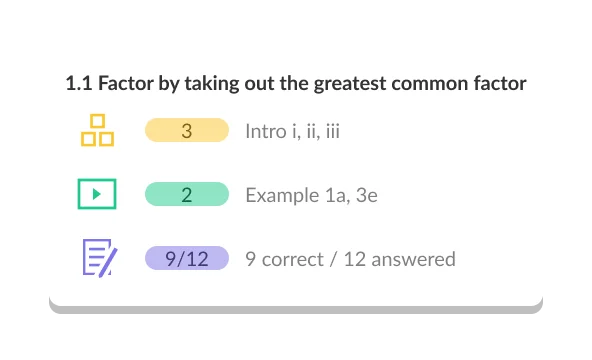
Practice until it truly clicks.
Try It Now
Test your knowledge
Our approach aligns with the evidence
Exam Scores
Better Recall
Less Anxiety
College Algebra Topics
1. Surface Area and Volume
2. Rational Numbers
3. Powers and Exponents
4. Number System and Radicals
5. Radicals
6. Exponents
7. Operations of Polynomials
8. Factorising Polynomial Expressions
9. Introduction to Relations and Functions
10. Linear Functions
11. Absolute Value Functions
12. Linear Equations
13. Solving Linear Systems
14. Linear Inequalities
15. Inequalities in Two Variables
16. Factorising Quadratic Equations
17. Quadratic Functions
18. Quadratic Equations and Inequalities
19. Graphing Rational Functions
20. Functions
21. Direct and Inverse Variation
22. Piecewise Functions
23. Transformations of Functions
24. Exponential Functions
25. Logarithmic Functions
26. Applications of Exponential and Logarithmic Functions
27. Sequences and Series
28 Chapters · 215 Topics · 1321 Videos
Discover Our Learning Areas
Explore key subjects and start learning with interactive content.







What is College Algebra?
College Algebra is the branch of mathematics that formalises and extends the algebraic skills students build throughout secondary school, focusing on functions, equations, and mathematical modelling. At Year 13 level in New Zealand, it serves as the critical bridge between school maths and university-level courses in science, engineering, economics, and technology. College Algebra is not just symbol manipulation — it is a systematic way of thinking about relationships between quantities, and that thinking underpins almost every quantitative field.
The course sits within the NCEA Level 2 and Level 3 Mathematics framework, with content assessed through both internal standards and the November external examinations. Whether you are targeting Merit, Excellence, or simply a solid pass, the algebraic fluency you build here will follow you into every quantitative subject you study next.
What topics are covered in College Algebra?
College Algebra is broader than many students expect. The key topic areas include:
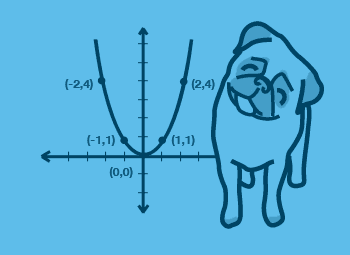
Functions and their graphs — understanding what a function is, how to read and sketch graphs, identify domain and range, and apply transformations. Functions are the central language of all higher mathematics.
Polynomial and rational expressions — factoring, long division, finding roots, and working with rational functions including asymptotes. These skills underpin later work in calculus.
Exponential and logarithmic functions — one of the most important and most misunderstood topic clusters. Exponential growth and decay models appear in biology, finance, and physics, and logarithms are the tool used to solve them.
Systems of equations — solving two or more equations simultaneously using substitution, elimination, and matrix methods at more advanced levels.
Sequences and series — arithmetic and geometric sequences, sigma notation, and sum formulas. These appear in financial mathematics and form a foundation for introductory calculus concepts.
Conic sections — parabolas, circles, ellipses, and hyperbolas. These geometric curves have direct applications in physics and engineering.
Understanding how these topics connect — rather than treating each as an isolated unit — is what separates students who find College Algebra manageable from those who battle through it year after year.
Is College Algebra hard for Year 13 students?
College Algebra has a well-earned reputation for being demanding, but the difficulty is usually a symptom of gaps in earlier algebra rather than the course itself being impossibly hard. Students who struggled with Year 11 quadratics or Year 12 functions often find College Algebra topics compound those same difficulties.
The three areas where students most commonly lose marks in NCEA assessments are: logarithms and exponential equations (the notation feels unfamiliar), function composition and inverse functions (the abstract nature trips students up), and solving systems with three or more variables (where organisation and method matter as much as calculation).
The good news is that each of these topics responds very well to seeing multiple worked examples and then practising immediately. The step-by-step method — where you watch a solution built from scratch, then attempt a similar problem — is consistently the most effective approach for College Algebra. Students who can see the method, not just the final answer, are the ones who can adapt when a question is worded differently on an exam.
How does College Algebra connect to NCEA and what comes after?
In New Zealand, College Algebra content maps directly to NCEA Level 2 and Level 3 Mathematics achievement standards. At Level 2, the core algebra standards include AS91261 (Apply algebraic methods, 4 credits — external) and AS91269 (Apply systems of equations, 2 credits — internal). At Level 3, students encounter AS91573 (Apply the algebra of complex numbers, 3 credits — external) and AS91575 (Apply trigonometric methods, 4 credits — external), both of which rely on the algebraic fluency built in College Algebra.
After College Algebra, the natural academic progression is Pre-Calculus and then Calculus, which is available at NCEA Level 3 through standards like AS91578 (Apply differentiation methods). From there, students are well-positioned for university mathematics, engineering, economics, statistics, and computer science programmes at institutions across New Zealand and internationally. The algebraic grounding from this course is genuinely transferable — it is one of the most future-proof courses a Year 12 or 13 student can invest time in.
Why StudyPug for Grade 12 College Algebra?
StudyPug is built specifically for the way students actually study — in short, focused sessions, often late at night before a test or internal assessment deadline. Here is what makes it different for College Algebra students in New Zealand:
A diagnostic assessment that tells you exactly where to start. Rather than watching lessons on topics you already understand, the diagnostic identifies your specific gaps. That means every study session is targeted and efficient — study smarter, not harder, and spend your time on the College Algebra topics that will actually move your grade.
Certified-teacher video lessons that teach the method. Every StudyPug lesson is created by a certified teacher, not generated by AI. The focus is on explaining the reasoning behind each step — why you factor this way, why you apply this log law here — so that when you see a different version of the question on your NCEA exam, you know what to do. This is the core difference between understanding College Algebra and just memorising procedures.
Adaptive practice that grows with you. Once you have watched a lesson, the practice problems adapt to your performance. If you are getting questions right, the difficulty increases to keep pushing you. If you are making errors, the system identifies the pattern and brings you back to the right level. This means you are always practising at the edge of your ability — which is where learning happens fastest.
Curriculum alignment to NCEA. All College Algebra content on StudyPug is mapped to the New Zealand curriculum. The topics, the terminology, and the exam-style questions are matched to what you will actually encounter in your NCEA Level 2 and Level 3 Mathematics assessments.
Free practice content available now. You can start practising College Algebra problems on StudyPug today without a subscription. It is real free content — not a countdown clock or a locked preview. When you are ready for full access to all video lessons, the diagnostic, and adaptive practice, the paid plan is backed by a 30-day money-back guarantee.
What you will learn — College Algebra curriculum coverage
StudyPug's College Algebra course covers all the major topic areas assessed in NCEA Level 2 and Level 3 Mathematics, including:
- Functions: domain, range, transformations, composition, and inverse functions
- Polynomial functions: factoring, the remainder and factor theorems, graphing
- Rational functions: simplifying, finding asymptotes, graphing
- Exponential functions: growth and decay models, graphing
- Logarithmic functions: log laws, solving equations, natural log
- Systems of equations: substitution, elimination, and applications
- Sequences and series: arithmetic and geometric, sigma notation, sum formulas
- Conic sections: parabolas, circles, ellipses, hyperbolas
- Complex numbers (NCEA Level 3 extension): operations and applications
Each topic is broken into short, focused video lessons so you can target exactly what you need without sitting through material you already know. Every lesson is followed by practice problems, and the adaptive system tracks your progress across all topic areas.
Because this page is for the NZ College Algebra course, internal curriculum-page links are not yet available in our validated sitemap — as new topic pages are published and verified, they will be linked here directly.
How to use StudyPug to improve your College Algebra results
The most effective pattern for Year 12 and 13 students using StudyPug for College Algebra is straightforward:
Step 1 — Take the diagnostic. Do not skip this. Five to ten minutes on the diagnostic will tell you exactly which College Algebra topics need the most attention right now. This is far more efficient than starting at the beginning and working through everything linearly.
Step 2 — Watch the lesson, then practise immediately. For each weak topic, watch the certified-teacher video lesson in full. Pay attention to the method — the why, not just the what. Then attempt the follow-up practice problems while the approach is fresh. This watch-then-practise loop is the fastest way to build genuine understanding.
Step 3 — Use adaptive practice to consolidate. Once you have worked through the targeted lessons, use the adaptive practice to consolidate across multiple topics. The system will increase difficulty as you improve, keeping your sessions productive rather than repetitive.
Step 4 — Practise with exam-style questions before assessments. In the lead-up to NCEA internals or the November external exams, focus your StudyPug sessions on exam-style practice questions. These are based on real exam formats and help you practise the time management and question interpretation skills that NCEA assessments require.
Step 5 — Revisit and review. College Algebra topics build on each other. If you find a later topic difficult, the diagnostic will often reveal that an earlier topic needs reinforcement. Use StudyPug's lesson library to revisit those foundations quickly — the short-format videos make it easy to review a concept in under ten minutes before moving forward again.
With consistent use of this approach, College Algebra moves from one of the most stressful Year 13 subjects to one of the most manageable. The key is targeted, method-focused study — and that is exactly what StudyPug is built to deliver.
College Algebra FAQ
Unsure how StudyPug works? Need help with setting up? Check our frequently asked questions or contact us for help.
What do you learn in College Algebra, and what topics does it cover?
College Algebra covers the core mathematical structures students need for advanced study and everyday problem-solving. You will explore functions and their graphs, polynomial and rational expressions, exponential and logarithmic functions, systems of equations, sequences and series, and introductory conic sections. The course builds strong algebraic reasoning, preparing students for calculus and higher mathematics. By the end, you should be able to model real-world situations mathematically and solve complex multi-step problems with confidence.
What is the difference between College Algebra and Calculus?
College Algebra focuses on the language and structure of mathematics — functions, equations, inequalities, and algebraic manipulation. Calculus builds directly on top of that foundation to study rates of change (differentiation) and accumulation (integration). Think of College Algebra as the toolkit and Calculus as one of the first major things you build with it. Strong algebra skills make calculus significantly easier, which is why College Algebra is typically the prerequisite course taken just before calculus at Year 13 level.
Is College Algebra hard, and where do students struggle most?
College Algebra is challenging but very manageable with the right approach. Students most commonly struggle with function notation and transformations, factoring higher-degree polynomials, working with logarithms and exponential equations, and solving systems of equations with multiple variables. The biggest hurdle is usually abstract notation — when you can see a worked example step-by-step and practise immediately afterward, these topics become much clearer. Breaking problems into smaller steps is the key strategy most successful students use.
What should I take before College Algebra, and what comes after it?
Before College Algebra you should be comfortable with Year 11–12 algebra fundamentals: linear equations, quadratics, basic functions, and graphing. Some students also complete a pre-algebra or pre-calculus bridging unit. After College Algebra, the natural progression is Pre-Calculus and then Calculus, which opens pathways to university-level mathematics, engineering, physics, economics, and computer science. College Algebra sits right at the gateway to higher mathematics, so a solid foundation here pays off enormously in tertiary study.
Is College Algebra covered in NCEA, and how is it assessed?
In New Zealand, College Algebra content maps closely to NCEA Level 2 and Level 3 Mathematics standards. Key achievement standards include algebraic methods (AS91261 / AS91573), graphical methods (AS91269 / AS91575), and simultaneous equations at Level 2. At Level 3, students encounter complex functions and calculus readiness content. Assessment is through a mix of internal assessments (coursework) and external examinations sat in November. Practising exam-style questions and understanding marking schedules is essential for achieving Merit and Excellence grades.
What is one of the hardest concepts in College Algebra, and how do you tackle it?
Logarithms and exponential equations are consistently the toughest topics for Year 12–13 students. The abstract relationship between log and exponential form confuses many learners. The best approach is to start by deeply understanding the definition: a logarithm is simply an exponent. From there, practise converting between exponential and logarithmic form until it feels automatic, then build up to solving equations using log laws. Seeing multiple worked examples — especially with real-world contexts like compound interest — makes the concept click much faster than memorising rules alone.





Written by the StudyPug Team
Last updated June 5, 2026
3 M+
students
★★★★★
4.8 average
K–12
all grades