AP Calculus AB Help — Video Lessons & Practice
Get clear explanations for any AP Calculus AB problem and build exam-ready confidence.
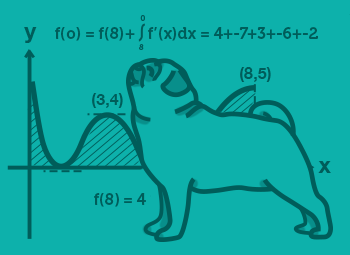
Step-by-Step Video Lessons
Real teaching so you solve problems alone.
Unlimited Practice
Keep practicing until it truly clicks.

Real Exam Practice
Includes free real AP exam questions.
Try It Now
Test your knowledge
Our approach aligns with the evidence
Exam Scores
Better Recall
Less Anxiety
AP Calculus AB Topics
1. Limits & Continuity
2. Derivatives
3. Derivative Applications
4. Integrals
5. Integration techniques
6. Integral Applications
7 Chapters · 44 Topics · 313 Videos
Discover Our Learning Areas
Explore key subjects and start learning with interactive content.






What Is AP Calculus AB?
AP Calculus AB is a College Board Advanced Placement course that introduces students to the core concepts of differential and integral calculus. Completing it successfully is equivalent to passing a first-semester university calculus course, and a strong AP exam score — typically 3, 4, or 5 — can earn university credit at institutions in New Zealand and around the world. The course moves at a brisk pace and demands genuine mathematical reasoning, not just formula recall.
What Topics Are Covered in AP Calculus AB?
The course is built around three major idea clusters: limits and continuity, differential calculus (derivatives), and integral calculus.
Limits and continuity lay the theoretical foundation — you learn what it means for a function to approach a value and where and why functions can break down. Derivatives build on limits to describe rates of change. You practise the power rule, product rule, quotient rule, and the all-important chain rule, then apply derivatives to real-world problems: optimisation, related rates, and curve sketching. Integrals bring the course together. You learn to find areas under curves, work with antiderivatives, and use the Fundamental Theorem of Calculus to connect differentiation and integration. Integration by substitution is the primary technique assessed in AP Calculus AB (integration by parts appears in the BC course).
The College Board structures the content into eight units, from Unit 1 (Limits and Continuity) through Unit 8 (Applications of Integration). The AP exam in May tests all eight units across multiple-choice and free-response sections.
Is AP Calculus AB Hard?
AP Calculus AB is genuinely challenging — it is consistently ranked among the more demanding AP courses — but it is also one of the most rewarding. The difficulty is less about raw complexity and more about the need to understand ideas deeply rather than memorise steps.
The topics students find hardest most often are: applying the chain rule inside complicated composite functions, setting up related-rates problems from a word description, and interpreting the two parts of the Fundamental Theorem of Calculus correctly. Students who rely on memorising formulas without understanding what those formulas describe tend to hit a wall around the applications-of-derivatives unit. The solution is consistent practice with feedback — working a problem, checking the reasoning (not just the answer), and revisiting the concept video when the reasoning is unclear. That cycle is exactly what AP Calculus AB study tools should support.
How Is AP Calculus AB Graded and What Is the AP Exam Like?
The AP Calculus AB exam runs for 3 hours and 15 minutes each May and is divided into two sections:
Section I — Multiple Choice: 45 questions (30 without a calculator, 15 with a calculator). This section is worth 50% of the total score.
Section II — Free Response: 6 questions (2 with a calculator, 4 without). This section is also worth 50%. Free-response questions demand full written solutions — you must show your reasoning clearly, not just circle an answer.
Final scores run from 1 to 5. In New Zealand, many universities recognise AP scores of 3 or above for credit or advanced standing; check with your target institution early because policies vary. An AP score of 4 or 5 is widely regarded as strong evidence of first-year university readiness in calculus.
Preparing specifically for the AP exam format matters. The free-response rubric rewards correct mathematical communication — correct notation, logical steps, and a clear answer statement — so practising past free-response questions under timed conditions is essential in the final weeks before the exam.
Why StudyPug for AP Calculus AB?
AP Calculus AB rewards students who understand the reasoning behind every step, not just the final answer. StudyPug is built around that principle.
When you start, a short diagnostic assessment identifies exactly which AP Calculus AB topics you are confident in and which ones need work. That means your study time is focused from the first session — no wading through content you already know.
Certified-teacher video lessons walk through each concept step by step. These are not AI-generated explanations — they are made by qualified teachers who know what the AP exam expects. The goal is always to teach you the method: why you choose a particular differentiation rule, what the integral is actually measuring, how to set up a related-rates diagram before writing a single equation. When you understand the method, you can handle variations of the problem on the actual AP exam, not just the version you happened to practise.
Adaptive practice keeps you in the right difficulty zone. As you get problems right, the difficulty increases. If you struggle, the system provides more support at the current level before pushing forward. This is how you build genuine fluency rather than false confidence.
Free daily practice content is available without a subscription — a real, no-risk way to experience the StudyPug approach before committing. For full access, subscriptions come with a 30-day money-back guarantee.
What You Learn: AP Calculus AB Curriculum Coverage
StudyPug's AP Calculus AB content is aligned to the College Board's course and exam description. Key areas covered include:
- Limits and Continuity — evaluating limits algebraically and graphically, one-sided limits, continuity and discontinuity, the Squeeze Theorem, and limits involving infinity.
- Differentiation: Definition and Fundamental Properties — the definition of the derivative as a limit, basic differentiation rules, derivatives of trigonometric functions.
- Differentiation: Composite, Implicit, and Inverse Functions — the chain rule in depth, implicit differentiation, and derivatives of inverse functions including inverse trigonometric functions.
- Contextual Applications of Differentiation — rates of change in applied contexts, related rates, linearisation and tangent-line approximations.
- Analytical Applications of Differentiation — the Mean Value Theorem, extreme values (local and global), the first and second derivative tests, curve sketching, and optimisation problems.
- Integration and Accumulation of Change — Riemann sums, definite integrals, the Fundamental Theorem of Calculus (both parts), and antiderivatives of basic functions.
- Differential Equations — slope fields, verifying solutions to differential equations, and separable differential equations.
- Applications of Integration — average value of a function, area between curves, and particle motion problems.
No validated internal topic-page links are available for this regional course in the current sitemap — content links will be added as the NZ AP Calculus AB topic library is confirmed in the page feed.
How to Use StudyPug for AP Calculus AB
A simple weekly routine makes a significant difference in AP Calculus AB.
Start with the diagnostic. Before watching any videos, take the diagnostic assessment. It takes about 15 minutes and produces a personalised gap list. Students who skip this often spend hours on topics they already understand while their real weak spots go unaddressed.
Watch concept videos for your gap topics. For each weak area, watch the relevant certified-teacher video. Pause when a step is unclear — rewatch that section rather than pushing through. The goal is to understand the method well enough to explain it yourself.
Do adaptive practice immediately after. Watching and doing are different skills. After any concept video, go straight to practice problems on that topic. The adaptive system will push you harder as you improve and slow down if you hit a wall.
Use Photo Search if you are stuck on a specific problem. Photo Search lets you find matching lessons by photographing a problem — useful when you encounter a homework or practice-test question where you are not sure which concept applies.
Run timed practice tests in the final four weeks. Simulate the AP exam format: 30 minutes of no-calculator multiple choice, then 15 minutes with a calculator, then free-response under time pressure. The combination of video lessons, adaptive practice, and timed test simulation is what moves students from understanding calculus to performing under AP exam conditions.
StudyPug is available 24/7 on any device — revision at midnight before a mock, a quick concept check on the bus, or a full study session over the weekend all work equally well. AP Calculus AB is demanding, but with the right support and a consistent approach, a strong score is within reach.
AP Calculus AB FAQ
Unsure how StudyPug works? Need help with setting up? Check our frequently asked questions or contact us for help.
What do you learn in AP Calculus AB, and what topics does it cover?
AP Calculus AB covers the foundations of differential and integral calculus. Core topics include limits and continuity, derivatives and differentiation rules (product, quotient, chain), applications of derivatives (related rates, optimization, curve sketching), definite and indefinite integrals, the Fundamental Theorem of Calculus, and basic techniques of integration such as substitution. The course is roughly equivalent to a first-semester university calculus course and is assessed by the College Board's AP exam in May each year.
What is the difference between AP Calculus AB and AP Calculus BC?
AP Calculus AB covers about one semester of university-level calculus — limits, derivatives, and integrals. AP Calculus BC covers all of AB plus additional topics: parametric and polar equations, sequences and series, and advanced integration techniques like integration by parts. BC is the faster, deeper course and awards more potential university credit. Most students take AB first; strong maths students sometimes jump straight to BC. Either way, a solid understanding of AB content is essential before moving further in calculus.
Is AP Calculus AB hard, and where do students struggle most?
AP Calculus AB is considered one of the more demanding AP courses, but it is very manageable with consistent practice. Students most often struggle with the chain rule applied to complex composite functions, related rates word problems (setting up the equation correctly), and understanding what the Fundamental Theorem of Calculus actually says. Many also find definite integrals and u-substitution tricky at first. The key is working through problems step by step and understanding the reasoning behind each technique, not just memorising procedures.
What should I know before taking AP Calculus AB, and what comes after?
You should be confident in Pre-Calculus: functions, trigonometry, exponential and logarithmic functions, and basic algebra. Most students complete Pre-Calculus or an equivalent course before AP Calculus AB. After AB, the natural next step is AP Calculus BC if you want broader calculus coverage, or university-level Calculus II if you have already earned AP credit. AP Statistics is a popular parallel elective for students who want a different branch of mathematics alongside or after calculus.
Is AP Calculus AB on the AP exam, and how is it tested?
Yes — AP Calculus AB is assessed by the College Board AP exam held each May. The exam is 3 hours 15 minutes and has two sections. Section I is multiple choice (45 questions: 30 no-calculator, 15 with calculator). Section II is free response (6 questions: 2 with calculator, 4 without). The exam tests limits, derivatives, integrals, and the Fundamental Theorem. Scores range from 1–5; a score of 3 or higher typically earns university credit in New Zealand and internationally depending on the institution.
What is one of the hardest concepts in AP Calculus AB, and how do you tackle it?
The Fundamental Theorem of Calculus (FTC) is consistently cited as the concept that trips students up most. It has two parts: Part 1 says that differentiation and integration are inverse operations; Part 2 connects definite integrals to antiderivatives. Students often memorise the statement without understanding the link. The best approach is to work through specific examples — find an accumulation function, differentiate it, and verify you get the original integrand back. Once the connection feels intuitive, applying it in free-response questions becomes much more reliable.





Written by the StudyPug Team
Last updated June 5, 2026
3 M+
students
★★★★★
4.8 average
K–12
all grades