Grade 8 Science Help
Diagnostic assessments pinpoint exactly where your child needs support across cells, fluids, and mechanical systems.

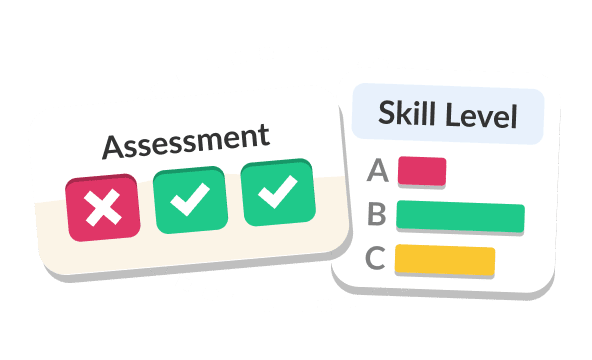
Find Learning Gaps
See exactly where your child needs help.
Step-by-Step Video Lessons
Your child sees steps and learns to solve alone.

School-Aligned
Matches your child's provincial curriculum.
Try It Now
Test your knowledge
Our approach aligns with the evidence
Exam Scores
Better Recall
Less Anxiety
Grade 8 Science Topics
1. Advanced Methods
2. Cell Theory
3. Cell Structure
4. Cell Processes
7. Atomic Theory
14. Behavior
16. Resources
18. Technology
19. Ecosystems
20. Human Impact
21. Engineering
22 Chapters · 44 Topics
Discover Our Learning Areas
Explore key subjects and start learning with interactive content.










What Is Grade 8 Science?
Grade 8 Science is the final year of middle-school science in Canada, and it lays the groundwork for every science course your child will take in high school. The provincial science curriculum at Grade 8 introduces four interconnected units: cells and cell systems, fluids, mechanical advantage and mechanical systems, and water systems on Earth. Each unit builds on concepts from earlier grades while introducing the level of abstract thinking that high school science demands. By the end of Grade 8, students are expected to design investigations, analyse data, and communicate findings — skills that matter far beyond the science classroom.
Is Grade 8 Science Hard for Students?
For many students, Grade 8 Science marks the first time science feels genuinely difficult. The topics shift from observation-based learning — watching plants grow or identifying rock types — to understanding systems and processes that cannot be seen directly. How do cell membranes control what enters and exits a cell? Why does increasing pressure change the behaviour of a fluid? These questions require both conceptual understanding and the ability to apply ideas to new situations. Students who arrive with gaps from earlier grades often find Grade 8 Science particularly challenging because each new unit assumes prior knowledge is secure. Identifying and filling those gaps early makes a measurable difference in how your child experiences the year.
What Comes After Grade 8 Science?
Grade 8 Science leads directly into Grade 9 Science, which in most Canadian provinces introduces separate streams of biology, chemistry, physics, and earth and space science within a single integrated course. From Grade 10 onward, many students begin choosing specialist science courses — Biology, Chemistry, Physics — that carry significant weight for university admission. A strong Grade 8 foundation, particularly in cell biology and the principles of forces and fluids, gives your child a meaningful head start in all of these directions. Gaps left unaddressed in Grade 8 have a tendency to resurface and grow in Grade 9 and beyond.
How Is Grade 8 Science Assessed?
Across Canadian provinces, Grade 8 Science is assessed through a combination of unit tests, lab investigations, science journals, and project-based tasks. In Ontario, assessment is structured around four categories: Knowledge and Understanding, Thinking and Investigation, Communication, and Application — all aligned to the Ontario science curriculum. In British Columbia, assessment reflects the BC provincial curriculum's competency-based approach, with a strong emphasis on scientific inquiry and applying concepts to real-world contexts. In both provinces, tests on cells, fluids, and mechanical systems tend to be the most conceptually demanding assessments students face in the year. Practising with questions built around these exact topics — rather than generic science questions — prepares your child specifically for how they will be evaluated.
What Are the Key Grade 8 Science Concepts?
The four units of Grade 8 Science each carry distinct vocabulary and reasoning skills. In the cells unit, students learn about cell structure, organelle function, cell division, and how cells form tissues and organs. In the fluids unit, key concepts include viscosity, buoyancy, density, and Pascal's and Archimedes' principles. The mechanical systems unit covers simple machines, mechanical advantage, efficiency, and how force and load interact in structures. Finally, the water systems unit examines the water cycle, freshwater and ocean systems, and how human activity affects water quality and distribution. Each unit has its own set of terms that students are expected to use accurately in written and practical assessments.
Why Do Students Struggle with Grade 8 Science?
The most common difficulty in Grade 8 Science is the gap between remembering a definition and understanding a concept well enough to apply it. A student might be able to name the parts of a cell but struggle to explain why a cell with a damaged mitochondrion would behave differently. Similarly, students often memorise that denser objects sink but cannot predict what will happen when two fluids of different densities are mixed. StudyPug's adaptive practice is designed specifically to address this gap — questions do not just test recall; they require your child to apply concepts to new scenarios, which is exactly how provincial science assessments work.
Why StudyPug for Grade 8 Science?
StudyPug combines certified-teacher video lessons, adaptive practice, diagnostic assessments, and a real-time parent dashboard into one platform — all aligned to the provincial science curriculum for Grade 8. Here is what makes the approach effective for Canadian families:
- Diagnostic assessment first. Before your child practises a single question, a diagnostic assessment maps their current understanding across all four Grade 8 Science units. You see immediately where confidence is solid and where gaps exist — no guesswork, no wasted time on topics already understood.
- Certified-teacher video lessons. Real teachers explain the method behind every concept. Whether your child needs to understand how osmosis works at the cellular level or how a pulley system multiplies force, step-by-step video lessons taught by certified teachers provide clear, accurate explanations your child can pause, rewind, and rewatch.
- Adaptive practice that adjusts. After each practice session, the platform adjusts the difficulty and focus of the next set of questions based on how your child performed. This means practice stays appropriately challenging — not so easy that it wastes time, not so hard that it discourages.
- Quiz replay for real understanding. Your child can retake any quiz as many times as needed. This is especially valuable in Grade 8 Science, where a concept like fluid pressure underlies multiple later topics — genuine understanding of one concept makes the next one easier to learn.
- 30-day money-back guarantee. There is no financial risk. If StudyPug is not the right fit for your child within the first 30 days, you receive a full refund.
What Will Your Child Learn? Grade 8 Science Topics
StudyPug's Grade 8 Science course covers the full provincial science curriculum for Grade 8, including all four major units. Key topics include:
- Cell structure, organelle function, and cell processes
- Tissues, organs, and organ systems
- Properties of fluids: viscosity, density, and buoyancy
- Pascal's law and hydraulic systems
- Simple machines: levers, pulleys, gears, and inclined planes
- Mechanical advantage, efficiency, and work
- The water cycle and freshwater systems
- Ocean systems and the role of water in climate
- Human impact on water quality
- Scientific inquiry: designing fair tests, collecting data, and drawing conclusions
For families in Ontario and British Columbia, you can review the full topic alignment on the ontario grade 8 science curriculum page and the british columbia grade 8 science curriculum page to see exactly how StudyPug's content maps to what your child's school teaches.
How to Use StudyPug for Grade 8 Science
Getting started takes less than five minutes. After creating an account, your child completes a short diagnostic assessment that identifies their current level in each Grade 8 Science unit. StudyPug then builds a personalised practice path that focuses on the areas most in need of attention. A recommended routine of 20–30 minutes of daily practice — watching a video lesson to understand a new concept, then working through adaptive practice questions and replaying quizzes until confident — consistently produces stronger science understanding than occasional long study sessions. The parent dashboard updates in real time, so you can check in after any session to see what your child practised, how they scored, and where the next area of focus will be. You stay informed without needing to sit beside your child during every session.
Grade 8 Science FAQ
Unsure how StudyPug works? Need help with setting up? Check our frequently asked questions or contact us for help.
What science topics are covered in Grade 8 Science?
Grade 8 Science covers four core units: cells and cell systems, fluids, mechanical advantage and mechanical systems, and water systems on Earth. Content is aligned to the provincial science curriculum so your child practises exactly what their teacher is covering in class — no guesswork about what is relevant.
Is Grade 8 Science difficult for most students?
Many Grade 8 students find the jump to abstract concepts — like how cells function or how hydraulic systems transfer force — challenging. The key is catching gaps early. A diagnostic assessment shows precisely which concepts need more attention so your child spends practice time where it counts, rather than reviewing material they already understand.
How does Grade 8 Science prepare students for high school?
Grade 8 Science builds the foundational thinking skills and vocabulary your child will need in high school biology, chemistry, and physics. Understanding cell structure, fluid dynamics, and forces now makes Grade 9 and Grade 10 science significantly more manageable. Addressing gaps in Grade 8 prevents them from compounding in later courses.
How is Grade 8 Science assessed in Ontario and BC?
In Ontario, Grade 8 Science is assessed through teacher-designed tests, lab reports, and projects aligned to the Ontario science curriculum. In British Columbia, assessment follows the BC provincial curriculum with a mix of formative and summative tasks. StudyPug's practice is aligned to both provincial curricula to help your child prepare for these assessments.
How will StudyPug help my child with Grade 8 Science?
StudyPug starts with a diagnostic assessment that identifies exactly where your child has gaps in cells, fluids, mechanical systems, or water science. Adaptive practice then targets those gaps with step-by-step explanations and real-teacher video lessons. Your child can replay any quiz until the concept is truly understood — and you can track every step from the parent dashboard.
Does StudyPug match the provincial science curriculum for Grade 8?
Yes. StudyPug's Grade 8 Science content is aligned to the provincial science curriculum. Whether your child follows the Ontario curriculum or the BC curriculum, the topics, terminology, and learning expectations match what their school teaches. You can explore the alignment details for the ontario grade 8 science curriculum and the british columbia grade 8 science curriculum directly.





Written by the StudyPug Team
Last updated June 5, 2026
3 M+
students
★★★★★
4.8 average
K–12
all grades