Grade 6 Science Help
Targeted practice in biodiversity, electricity, and space — aligned to the provincial curriculum.

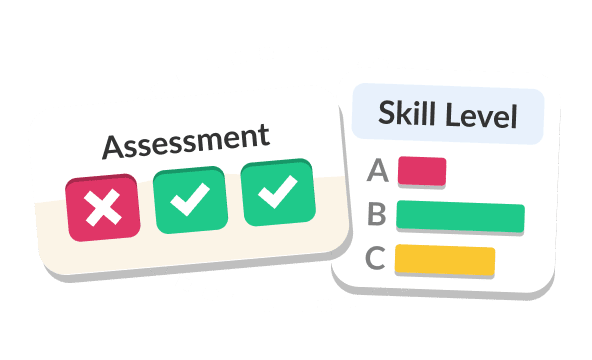
Diagnostic Finds Gaps
Know exactly where your child needs help.
Step-by-Step Videos
Real teaching so your child solves alone.

Matches School Work
Matches your child's provincial curriculum.
Try It Now
Test your knowledge
Our approach aligns with the evidence
Exam Scores
Better Recall
Less Anxiety
Grade 6 Science Topics
1. Advanced Research
2. Classification
3. Evolution
4. Cell Theory
7. Particle Theory
8. Energy Transfer
9. Flight
10. Space
11. Circuits
12. Applications
13. Geology
17. Ecosystems
18. Human Impact
19. Advanced Process
20. Traditional Knowledge
20 Chapters · 42 Topics · 35 Videos
Discover Our Learning Areas
Explore key subjects and start learning with interactive content.




What Is Grade 6 Science?
Grade 6 Science is the year provincial curricula bring three major strands together in a single course: life science through the lens of biodiversity and ecosystems, physical science through electricity and circuits, and earth and space science through exploration of the solar system and beyond. For many children, it is the first time science feels genuinely big — and genuinely demanding. The vocabulary expands, the concepts become more abstract, and the expectation shifts from simple observation to structured inquiry. Understanding what lives in an ecosystem, how electrical current moves through a circuit, and why planets orbit the sun all require different kinds of thinking, and most children encounter at least one strand that does not come naturally to them.
The provincial science curriculum for Grade 6 is designed to develop scientific literacy — the ability to ask questions, gather evidence, and draw conclusions — alongside content knowledge. Practice that mirrors this approach, rather than simple fact recall, is what builds lasting understanding and prepares children for the more advanced science that follows in Grades 7 and 8.
What Does My Child Learn in Grade 6 Science?
The three curriculum strands in Grade 6 Science each cover distinct and important ground. In biodiversity, children learn how living things are classified, why diversity within ecosystems matters, and what threats to biodiversity look like in the real world. This strand connects directly to environmental literacy and is often one children find personally meaningful once the concepts click.
In electricity and circuits, students move from everyday observations about light switches and batteries to understanding how electrical energy is transferred, how series and parallel circuits behave differently, and how responsible energy use connects to larger environmental questions. This is frequently the strand where gaps appear — the concepts are invisible and require careful mental modelling to grasp.
In space exploration, children study the solar system, the tools scientists use to explore space, and the contributions Canadian space science has made to global exploration. The scale of space can be difficult to visualise, but once it lands, it tends to spark lasting curiosity.
Across all three strands, Grade 6 students are expected to practise scientific inquiry — forming hypotheses, designing fair tests, recording observations, and communicating findings. These skills underpin every science course that follows.
Is Grade 6 Science Hard?
For many children, Grade 6 Science is a meaningful step up in difficulty. The three strands are genuinely different from each other, which means a child who finds biodiversity straightforward may struggle with circuits, or vice versa. The inquiry expectations also increase — students are not just asked to remember facts but to apply knowledge to new situations and explain their reasoning.
The good news is that difficulty in one strand rarely predicts difficulty across all of them. A diagnostic assessment that identifies exactly which concepts need attention makes it possible to focus practice where it counts, rather than reviewing everything from scratch. Most parents notice real improvement in classroom confidence within a few weeks once targeted practice is in place.
How Is Grade 6 Science Assessed in Canada?
Across Canadian provinces, Grade 6 Science assessment typically combines written tests on content knowledge, hands-on or inquiry-based tasks, and science journals or reports. In Ontario, assessment follows the Achievement Chart with four categories: Knowledge and Understanding, Thinking and Investigation, Communication, and Application. In British Columbia, assessment is competency-based and emphasises applying and innovating alongside content knowledge.
Regardless of province, children who understand the underlying concepts — rather than memorising isolated facts — perform significantly better on both written and applied assessments. Adaptive practice that asks your child to apply knowledge in varied contexts, not just repeat definitions, is the most effective preparation for how Grade 6 Science is actually assessed.
What Comes After Grade 6 Science?
Grade 7 Science builds directly on Grade 6 foundations. The biodiversity strand expands into ecosystem interactions — how species depend on each other and what disrupts those relationships. Electricity becomes more sophisticated, leading into heat transfer and the behaviour of matter at a molecular level. Space science gives way to chemistry, with mixtures and solutions forming a new strand. Children who leave Grade 6 with solid understanding across all three strands find Grade 7 transitions much more manageable. Gaps left unaddressed, particularly in circuits or classification, tend to compound quickly.
Why StudyPug for Grade 6 Science Help?
StudyPug is built around one core idea: find the gap, fix the gap, then confirm it is fixed. The diagnostic assessment takes only a few minutes and identifies exactly which Grade 6 Science concepts your child has not yet secured — biodiversity classification, circuit types, space vocabulary, or inquiry skills. From there, adaptive practice adjusts to your child's current level and builds toward grade-level expectations step by step.
Certified-teacher video lessons teach the method, not just the answer. Real teachers explain how to think through an electrical circuit, how to classify organisms using a dichotomous key, and how to structure a scientific inquiry — the same way a strong classroom teacher would. Quiz replay means your child can retake any quiz until they genuinely understand, not just until they guess correctly once. The parent dashboard ties it all together, giving you a clear picture of progress across all three strands week over week.
All content follows the provincial science curriculum. There is no mismatch between what StudyPug teaches and what your child's teacher expects. For Ontario families, the ontario grade 6 science curriculum alignment is fully mapped. For British Columbia families, the british columbia grade 6 science curriculum alignment covers all competency expectations. StudyPug backs every subscription with a 30-day money-back guarantee — there is no free trial, but you can start with full confidence.
What Grade 6 Science Topics Does StudyPug Cover?
StudyPug covers all three major strands of the Grade 6 provincial science curriculum in depth. Within biodiversity, topics include characteristics of living things, classification systems and taxonomy, ecosystem roles and food webs, and the effects of human activity on biodiversity. Within electricity and circuits, topics include static and current electricity, conductors and insulators, series and parallel circuits, and energy conservation. Within space exploration, topics include the solar system and its components, tools of space exploration, Canada's contributions to space science, and the effects of space exploration on daily life.
Inquiry skills — forming questions, designing investigations, analysing results, and communicating findings — are woven across all topic areas, mirroring the way the provincial curriculum frames scientific literacy at Grade 6.
How to Use StudyPug for Grade 6 Science
The most effective approach is simple and consistent. Start with the diagnostic assessment on your first visit — it takes less than ten minutes and immediately shows where your child's Grade 6 Science knowledge has gaps. Follow the adaptive practice path the assessment generates: this ensures every session targets what actually needs work rather than covering ground your child already knows well.
Encourage your child to watch the certified-teacher video lessons before attempting practice questions on any new topic — seeing a real teacher explain biodiversity classification or walk through a circuit diagram makes the follow-up practice significantly more effective. When quiz scores are low, use quiz replay immediately rather than moving on. Retaking a quiz after reviewing the lesson is one of the fastest ways to turn a gap into genuine understanding.
Check the parent dashboard weekly. The progress view shows exactly which topics are improving, which need more time, and how your child's overall Grade 6 Science understanding is developing. Twenty to thirty minutes of focused daily practice, guided by the diagnostic and tracked through the dashboard, is what consistently produces results that show up in classroom confidence and report cards alike.
Grade 6 Science FAQ
Unsure how StudyPug works? Need help with setting up? Check our frequently asked questions or contact us for help.
What topics are covered in Grade 6 Science?
Grade 6 Science covers three main areas: biodiversity and ecosystems, electricity and circuits, and space exploration. StudyPug aligns all practice content directly to the provincial science curriculum so your child practises exactly what their teacher is covering in class — nothing extra, nothing missing.
Is Grade 6 Science hard for most children?
Many students find Grade 6 Science challenging because the topics branch in multiple directions — life science, physical science, and earth and space science all appear in the same year. Abstract ideas like electrical circuits or the scale of the solar system can be tricky. Adaptive practice that meets your child where they are makes these concepts much more approachable.
How does StudyPug help my child with Grade 6 Science?
A short diagnostic assessment identifies your child's exact science gaps. From there, adaptive practice builds understanding step by step in the areas that need the most attention. Certified-teacher video lessons explain key concepts clearly, and quiz replay lets your child retake questions until they genuinely understand the material — not just guess through it.
Does the content match what my child learns in school?
Yes. All Grade 6 Science content follows the provincial science curriculum. Whether your child is in Ontario, British Columbia, or another province, the topics and expectations align with what their teacher is covering. There is no mismatch between school learning and at-home practice.
How does the diagnostic assessment work?
The assessment presents a short set of grade-level questions covering biodiversity, electricity, and space. Based on how your child answers, StudyPug identifies exactly which concepts are solid and which need more practice. A targeted path is then created so time spent practising is focused on what actually matters — not random review.
What comes after Grade 6 Science?
Grade 7 Science builds directly on the foundations established in Grade 6. Students move from biodiversity into ecosystems interactions in greater depth, from basic circuits into more complex electrical systems, and begin exploring chemistry through mixtures and solutions. Strong Grade 6 foundations make Grade 7 transitions significantly smoother.





Written by the StudyPug Team
Last updated June 5, 2026
3 M+
students
★★★★★
4.8 average
K–12
all grades