Grade 8 Math Help — Step-by-Step Video Lessons & Practice
Help your child understand every topic and build confidence, one lesson at a time
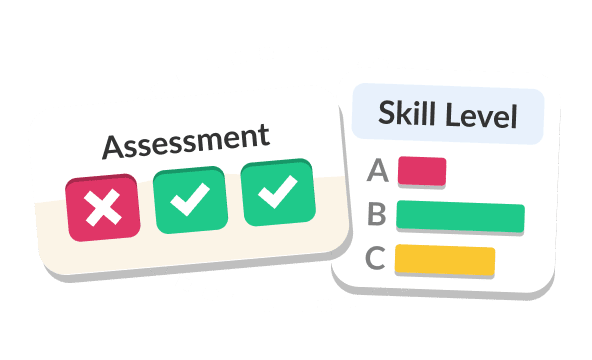
Find Your Weak Spots
Know exactly what your child studies next.
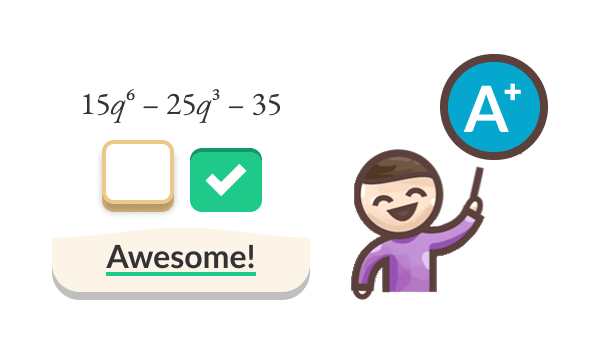
Step-by-Step Video Lessons
Your child learns the method not answer.

Curriculum Aligned
Built for BC so your child stays focused.
Try It Now
Test your knowledge
Our approach aligns with the evidence
Exam Scores
Better Recall
Less Anxiety
BC Grade 8 Math Topics
1. Square roots and cubic roots
2. Pythagorean Theorem
3. Percents
4. Fractions
5. Cartesian Planes & Linear Relations
6. Linear Equations
7. Surface Area
8. Volume
9. Central Tendency
10 Chapters · 41 Topics · 333 Videos

Ready to practice BC Grade 8 Math?
Try practice questions on every BC Grade 8 Math topic — with instant feedback and step-by-step video solutions when you get stuck.
Discover Our Learning Areas
Explore key subjects and start learning with interactive content.









What Is BC Grade 8 Math?
BC Grade 8 math is the point where students move from arithmetic into genuine algebraic thinking. Following the BC Ministry of Education mathematics curriculum, Grade 8 organises learning across five core areas: number, algebra and equations, geometry and measurement, data and probability, and financial literacy. Students who build strong foundations here are well-positioned for the more demanding Grade 9 and high school math courses that follow.
What Topics Does Grade 8 Math Cover in BC?
The BC Grade 8 math curriculum covers more ground than many parents realise. Key topic areas include:
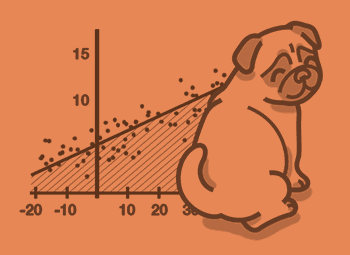
- Linear equations and graphing — solving one- and two-step equations, graphing linear relations on a coordinate plane, and interpreting slope.
- Operations with integers, fractions, and decimals — extending and solidifying arithmetic skills needed for algebraic work.
- Introduction to polynomials — understanding terms, coefficients, and how to add and subtract polynomial expressions.
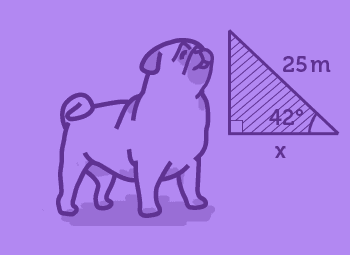
- Pythagorean theorem — applying the theorem to find missing side lengths in right triangles and connecting it to real-world measurement problems.
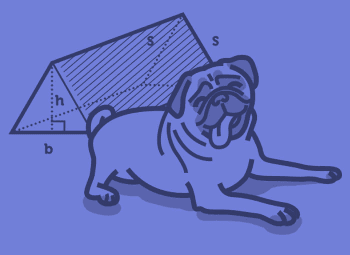
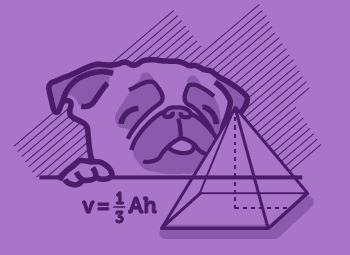
- Surface area and volume — calculating measurements for prisms, cylinders, and composite 3D shapes.
- Data analysis and probability — reading and constructing graphs, understanding measures of central tendency, and working with theoretical and experimental probability.
- Financial literacy — percentages in context, discounts, tax, and budgeting scenarios.
StudyPug has video lessons and adaptive practice for every one of these BC curriculum topics, in the same sequence your child encounters them in school.
Is Grade 8 Math Hard? Common Struggle Points
Grade 8 is where many students hit their first real wall with math — and it is completely normal. The shift to abstract reasoning catches students off guard, particularly when they were strong at arithmetic. The most common trouble spots are:
Linear equations with variables on both sides. Students who learned to solve simple equations in Grade 7 often freeze when they see expressions like 4x − 3 = 2x + 9. The method is straightforward once it is modelled clearly, but without a reliable step-by-step approach, students guess and lose confidence fast.
Negative integer operations inside algebra. Arithmetic errors with negatives are the single biggest source of wrong answers in Grade 8 math. A student who understands the concept may still lose marks because they drop a negative sign mid-calculation.
Connecting graphing to equations. Understanding that y = 2x + 1 describes a line — and knowing what the 2 and the 1 actually represent visually — requires a kind of abstract thinking that takes time to develop.
The good news: all of these struggle points respond well to clear, methodical teaching and consistent practice. StudyPug's certified teachers walk through each concept in short videos, explaining the reasoning behind every step so students know what to do when a problem looks slightly different from the example.
Why StudyPug for Grade 8 Math?
There is a difference between a resource that gives answers and one that builds understanding. StudyPug is built around the second approach — and it is designed specifically for how students at this level actually learn.
The platform begins with a diagnostic assessment that identifies exactly where gaps exist. Rather than working through a course from the beginning, your child jumps straight to the topics where they need the most support. No wasted time, no guessing.
From there, certified teachers — not AI-generated content — explain every BC Grade 8 math concept in step-by-step video lessons. The videos are short, focused, and built to teach the method so your child can handle similar problems independently when they sit a test. Each lesson can be paused, rewound, and rewatched as many times as needed, with no pressure.
Adaptive practice adjusts the difficulty of questions to match where your child is right now — challenging enough to build skill, achievable enough to maintain confidence. Instant feedback after every question means errors are corrected immediately, before they become habits.
The parent dashboard gives you a clear view of each child's activity, the topics they have covered, and the areas where they are still building. For families with more than one child, the Family Plan covers up to five children under one subscription — one price, all grade levels, all subjects.
Free practice content is available to start without a subscription, and every paid plan is backed by a 30-day money-back guarantee. That is the only commitment StudyPug makes — and it means you can get started without any financial risk.
What Your Child Will Learn in Grade 8 Math
By working through the BC Grade 8 math curriculum on StudyPug, your child will build skills across several interconnected areas. In algebra, they will learn to solve multi-step linear equations confidently, graph linear relations, and interpret what a graph communicates about a relationship between two quantities. In number, they will strengthen their fluency with integers, fractions, and rational numbers — the arithmetic foundation that algebra depends on. They will apply the Pythagorean theorem to geometry problems, calculate surface area and volume of 3D shapes, and use data literacy skills to read, build, and critically evaluate graphs and charts. The financial literacy strand connects math to practical decision-making, which many students find genuinely engaging.
All topics on StudyPug are aligned to the BC provincial curriculum. Because no validated topic-level URLs are currently available in the link map for this course, topic links are not included here — you can browse the full topic list directly from the Grade 8 math course page.
Using StudyPug for Grade 8 Math
Getting started is simple. When your child first logs in, the diagnostic assessment gives them a personalised starting point — they do not have to wade through content they already know. From there, a typical study session looks like this: watch a short video lesson on the concept they are working on in class, then complete a set of adaptive practice problems. If they get a question wrong, the platform shows them where the error occurred and how to approach it correctly.
StudyPug works on any device — desktop, tablet, or phone — so your child can fit practice into their schedule without being tied to a desk. The Photo Search feature is available across all grades and subjects: your child can photograph a problem from a worksheet or textbook and find the matching lesson instantly.
For parents, the dashboard makes it easy to stay involved without hovering. Check in once a week to see which topics your child has covered, how their practice scores are trending, and where a little extra encouragement might help. If you have multiple children, each one has a separate profile under the same Family Plan account, so their progress is always clearly separated.
Ready to help your child get better at Grade 8 math? Free practice is available right now — and every subscription is backed by a 30-day money-back guarantee.
BC Grade 8 Math FAQ
Unsure how StudyPug works? Need help with setting up? Check our frequently asked questions or contact us for help.
What does my child learn in Grade 8 math, and what topics does it cover?
Grade 8 math in BC covers a broad range of core topics: linear equations and graphing, operations with fractions and integers, introduction to polynomials, Pythagorean theorem, surface area and volume of 3D shapes, data analysis and probability, and financial literacy concepts. Students build on arithmetic skills to develop algebraic thinking and reasoning. By the end of Grade 8, they should be comfortable solving multi-step equations, interpreting graphs, and applying math to real-world problems. StudyPug covers every one of these BC curriculum topics with clear video lessons and practice.
Is Grade 8 math hard, and where do students commonly struggle?
Grade 8 math is a significant step up for many students because abstract thinking becomes central. The most common struggle points are linear equations — especially when variables appear on both sides — and operations with negative integers and fractions. Many students also find graphing linear relations and the Pythagorean theorem challenging at first. Polynomials can feel confusing when introduced because the terminology is new. The good news is that these topics follow clear patterns, and with step-by-step video lessons and targeted practice, most students move from confusion to confidence relatively quickly.
What should my child know before Grade 8 math, and what comes next?
Before Grade 8, students should be solid on Grade 7 foundations: integer operations, ratios and proportional reasoning, basic equations, and working with fractions and decimals. Gaps in those areas tend to surface quickly in Grade 8 algebra. After Grade 8, students move into Grade 9 math, which deepens algebraic skills with polynomials, linear inequalities, and an introduction to functions — content that feeds directly into high school mathematics. StudyPug's diagnostic assessment identifies any Grade 7 gaps so your child can fill them before they become blockers in Grade 8.
How does Grade 8 math fit the BC curriculum, and how is my child assessed?
BC Grade 8 math follows the BC Ministry of Education mathematics curriculum, which organises learning around number, algebra, geometry, data, and financial literacy strands. Students are assessed through class assignments, chapter tests, and term reports — not a single provincial exam at this grade. Schools report progress using letter grades or percentages on report cards. Teachers use formative checks and summative tests throughout the year. StudyPug's lessons are built to match the BC curriculum sequences, so every topic your child encounters in class has a corresponding video lesson and practice set on the platform.
What is one of the trickiest Grade 8 math concepts, and how is it taught?
Linear equations with variables on both sides — for example, 3x + 5 = x + 13 — trip up many Grade 8 students. The confusion usually comes from not having a reliable method for deciding which side to isolate the variable on. StudyPug's certified teachers break this down in a clear step-by-step video: collect like terms, move the variable to one side using inverse operations, then solve. The lesson explains the reasoning behind each step, not just the procedure, so students can apply the same logic to any similar equation — including multi-step problems that appear on tests.
How much math practice should my child do at Grade 8?
Most educators suggest 20–30 minutes of focused math practice on school nights at Grade 8. Consistency matters more than marathon sessions. Short daily practice — working through a few problems right after a lesson — reinforces understanding and prevents the 'I forgot how to do this' feeling before a test. StudyPug's adaptive practice adjusts to your child's level, so they are never stuck on problems that are too easy or too frustrating. On busier nights, even 10 minutes reviewing a concept video and doing a few practice questions keeps the momentum going.




Written by the StudyPug Team
Last updated June 5, 2026
3 M+
students
★★★★★
4.8 average
K–12
all grades