Year 10 Geometry Help — Video Lessons & Practice
Get clear explanations for any Geometry problem and build exam-ready confidence.
Value vs. Private Tutor
Get expert Geometry help for free.

Multi-Subject
Struggling with geometry isn't permanent.
Practice Until Perfect
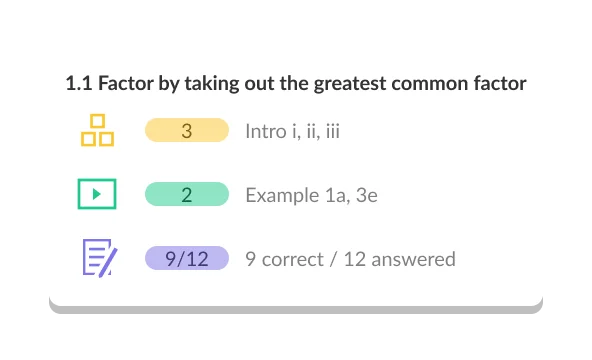
Practice proofs until they click before test.
Try It Now
Test your knowledge
Our approach aligns with the evidence
Exam Scores
Better Recall
Less Anxiety
Geometry Topics
1. Measuring Systems
2. Surface Area and Volume
3. Points, Lines, Segments, Midpoints and Chords
4. Circles, plane and coordinate
5. Triangles and special triangles
6. Angles and trigonometry
7. Sine Rule and Cosine Rule
8. Bearings
9. Transformations
10. Similarity
11. 2D figures and 3D figures
12. Probability
13. Logic
15. Set Theory
16. Vectors
17 Chapters · 88 Topics · 766 Videos
Discover Our Learning Areas
Explore key subjects and start learning with interactive content.




What is Year 10 Geometry?
Year 10 Geometry is the study of shapes, their properties, and the spatial relationships between them. It is a core strand of the Australian Mathematics curriculum at Year 10, building directly on earlier work with angles, polygons, and measurement. In Year 10, geometry becomes more formal: students write structured proofs, apply circle theorems, work with similar and congruent figures, and connect geometry to algebra through coordinate geometry. These skills underpin every senior secondary mathematics pathway, making Year 10 the critical preparation year for students aiming for strong ATAR results.
What topics are covered in Year 10 Geometry?
Year 10 Geometry in Australia spans several interconnected areas. The core topics include:
Angles and parallel lines: co-interior, alternate, and corresponding angle relationships, and applying these to multi-step problems.
Similarity and congruence: tests for triangle congruence (SSS, SAS, AAS, RHS) and similarity (AA, SAS, SSS), and using them in formal proofs.
Circle theorems: angles at the centre and circumference, angles in the same segment, cyclic quadrilaterals, tangent and radius relationships, and chords.
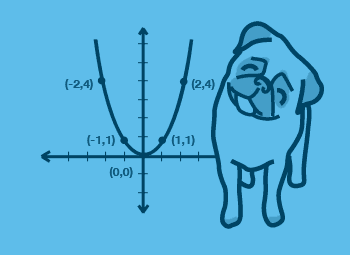
Coordinate geometry: distance between points, midpoint, gradient, equations of lines, and perpendicular and parallel lines on the Cartesian plane.
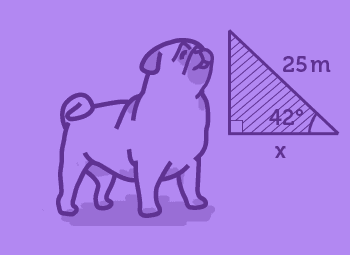
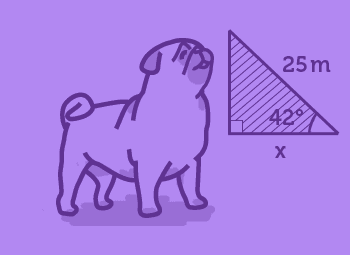
Pythagoras' theorem and trigonometry: applying Pythagoras in 2D and 3D contexts; using sine, cosine, and tangent ratios; solving problems with angles of elevation and depression.
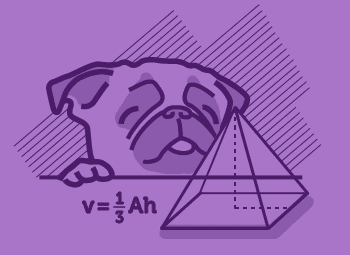
Surface area and volume: calculating surface area and volume of prisms, cylinders, pyramids, cones, and spheres, including composite solids.
Across all topics, Year 10 emphasises mathematical reasoning — students are expected to justify each step, not just calculate an answer.
Why do Year 10 students struggle with Geometry?
Geometry challenges students in a way that algebra does not: it requires both visual reasoning and formal logic at the same time. The three most common struggle points at Year 10 are:
Geometric proofs: Many students know the theorems but cannot structure a clear, logical proof. Each step needs a stated reason, and knowing which theorem to apply — and in what order — requires practice with many different problem types.
Circle theorems: There are multiple theorems to recall, and exam questions frequently require chaining two or three of them together in one solution. Students who try to memorise without understanding the visual logic behind each theorem often mix them up under pressure.
Coordinate geometry: When geometry and algebra combine — finding the equation of a perpendicular bisector, for example — students who are shaky in either strand get stuck. The coordinate geometry section rewards those who keep their algebraic skills sharp alongside their geometric reasoning.
Seeing each concept worked through step by step — rather than just reading a textbook definition — is what makes the difference for most students.
How does Geometry connect to the ATAR?
Geometry is not a standalone ATAR subject in Australia, but it is woven through every senior secondary mathematics course that contributes to ATAR calculations. In Year 11 and 12 Mathematics Standard 2, Advanced, Extension 1, and Extension 2 (NSW), and equivalent courses in other states and territories, students encounter trigonometric functions, geometric applications of calculus, vectors, and complex number geometry. Every one of these topics builds directly on Year 10 Geometry.
For students sitting senior assessments based on real exam-style questions — including school-based assessments and external exams — a strong Year 10 Geometry foundation means fewer surprises. StudyPug's lessons are built around real exam-style geometry problems so students practise the way they will be tested, not just the way textbooks present the theory.
Is Geometry hard to improve in quickly?
Geometry is one of the subjects where targeted practice produces fast results. Because the topic is visual, a well-explained video lesson can close a gap that weeks of re-reading a textbook could not. Students who identify their specific weak spots — rather than reviewing everything broadly — tend to see meaningful improvement within a short period.
The key is starting with a clear diagnosis. Knowing whether you are struggling with circle theorems specifically, or with coordinate geometry, or with proofs generally, lets you focus your study time where it counts. That focused approach is far more effective than random revision, and it is exactly what a diagnostic assessment is designed to make possible.
Why StudyPug for Year 10 Geometry?
StudyPug is built around three things that Year 10 Geometry students consistently need: a clear diagnosis of where to start, certified-teacher video lessons that teach the method (not just the answer), and adaptive practice that builds difficulty as you improve.
Diagnostic assessment: Rather than starting from Topic 1, StudyPug's diagnostic identifies the exact geometry gaps that are holding you back. This means every study session targets something that actually needs work.
Certified-teacher video lessons: Every lesson is made by a certified teacher, not generated by AI. The focus is on teaching you how to think through a geometry problem — how to spot which theorem applies, how to structure a proof, how to set up a coordinate geometry solution — so you can handle any variation that appears on an assessment.
Adaptive practice: The practice system adjusts to your performance. As you get more answers right, questions become more challenging, pushing you toward the level needed to perform confidently on assessments. If you struggle, the system steps back and reinforces the foundation before moving on.
All content is aligned to the Australian Mathematics curriculum, so what you study on StudyPug maps directly to what your teacher covers in class — no gaps, no irrelevant material.
What you learn — Geometry curriculum coverage
The Year 10 Geometry curriculum on StudyPug covers every major topic area in the Australian curriculum strand for Measurement and Geometry at Year 10 level:
- Angle relationships — parallel lines, transversals, polygons
- Congruence and similarity — all four congruence tests, similarity ratios, scale factors
- Circle theorems — all major theorems including tangent and chord properties
- Geometric proofs — structured, step-by-step proof writing
- Coordinate geometry — gradient, distance, midpoint, equations of lines
- Pythagoras' theorem — 2D and 3D applications
- Trigonometry — sine, cosine, tangent; angles of elevation and depression
- Surface area and volume — all standard solids including composite shapes
Each topic has its own video lessons, worked examples, and practice problem sets. Students can move through topics in the order their class follows, or jump directly to a topic where they need extra help.
Note: No validated internal topic links are available for this page at the time of publication. Links will be added once topic URLs are confirmed in the SP_PageFeed.
How to use StudyPug for Geometry
Step 1 — Take the diagnostic. The diagnostic assessment identifies which geometry topics need the most attention. This takes only a few minutes and replaces the guesswork of deciding where to start.
Step 2 — Watch the concept video. For each topic you need to work on, watch the certified-teacher video lesson. Pause, rewind, and rewatch any step until the method makes sense. The videos are designed to teach you the reasoning process, not just walk through one example.
Step 3 — Work through practice problems. After watching, attempt the practice problems. The adaptive system adjusts difficulty based on your answers, so you are always working at the level that challenges you without overwhelming you.
Step 4 — Use Photo Search if you get stuck on a specific problem. If you have a geometry question from homework or a past paper that you cannot crack, Photo Search lets you find the matching lesson quickly. Take a photo of the problem and find the relevant video — available across all Year levels and subjects.
Step 5 — Practise with exam-style questions. Before assessments, work through practice tests built around real exam-style geometry questions. These are structured to reflect how geometry is tested in school assessments and senior secondary exams, giving you the repetition that builds genuine confidence.
StudyPug is available 24 hours a day, seven days a week — on desktop, tablet, or mobile. Whether you are revising the night before an assessment or working through a topic weeks ahead of time, the full geometry course is always there when you need it. And if you are not satisfied within the first 30 days, the 30-day money-back guarantee means there is no risk in getting started.
Geometry FAQ
Unsure how StudyPug works? Need help with setting up? Check our frequently asked questions or contact us for help.
What do you learn in Year 10 Geometry, and what topics does it cover?
Year 10 Geometry covers the properties of shapes, angle relationships, similarity and congruence, circle theorems, coordinate geometry, surface area, volume, and an introduction to trigonometry. Students work with Pythagoras' theorem, geometric proofs, and transformations. By the end of Year 10, you should be able to apply geometric reasoning to both familiar and unfamiliar problems, setting a strong foundation for further mathematical study in Years 11 and 12.
What is the difference between Geometry and Trigonometry?
Geometry focuses on the properties, measurements, and relationships of shapes — including angles, lines, polygons, and solids. Trigonometry is a branch that grew out of geometry and specifically studies the relationships between the sides and angles of triangles using ratios like sine, cosine, and tangent. In Year 10, you begin to see them overlap: you use trigonometry to solve geometric problems involving right-angled triangles and, later, non-right-angled triangles using the sine and cosine rules.
Is Year 10 Geometry hard, and where do students struggle most?
Geometry is manageable, but many Year 10 students find geometric proofs the hardest part — knowing which theorem justifies each step requires both memory and logical reasoning. Circle theorems are also a common sticking point, since there are several rules to apply correctly. Coordinate geometry trips students up when algebra and geometry combine. The good news is that geometry is highly visual, and once you see a concept demonstrated step by step, it usually makes much more sense.
What should I take before Year 10 Geometry, and what comes after it?
Before Year 10 Geometry, students should be comfortable with Year 9 topics: basic angle rules, properties of triangles and quadrilaterals, Pythagoras' theorem, and introductory coordinate geometry. After Year 10, geometry skills feed directly into Years 11 and 12 Mathematics — particularly in topics like trigonometric functions, vectors, and calculus applications. Strong geometry fundamentals also support Year 11 and 12 Advanced or Specialist Mathematics, where formal proofs and spatial reasoning become central.
Is Geometry on the ATAR, and how is it tested?
Geometry is not a separate ATAR subject — it is embedded within the Year 11 and 12 Mathematics courses (Mathematics Standard, Mathematics Advanced, and Mathematics Extension) that contribute to your ATAR. Year 10 Geometry builds the foundation for these courses. In Senior Secondary assessments, geometric reasoning, trigonometry, and coordinate geometry appear across both school-based assessments and external exams. Solid Year 10 Geometry preparation directly improves your readiness for these assessments.
What is one of the hardest concepts in Year 10 Geometry, and how do you tackle it?
Circle theorems are among the trickiest Year 10 Geometry concepts. There are eight or more theorems — angles at the centre, angles in the same segment, cyclic quadrilaterals, tangent properties — and exam questions often require you to chain several theorems together in one proof. The best approach is to memorise each theorem with a clear diagram, then practise identifying which theorem applies by working through many varied examples. Seeing each theorem demonstrated step by step in a video lesson first makes the pattern recognition much faster.




Written by the StudyPug Team
Last updated June 5, 2026
3 M+
students
★★★★★
4.8 average
K–12
all grades