Year 10 Maths Help — Video Lessons & Practice
Get clear explanations for any Year 10 Maths problem and build exam-ready confidence.
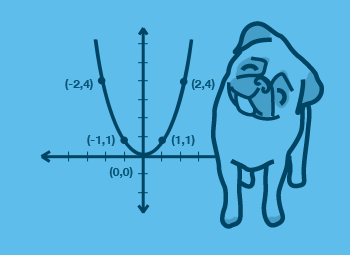
Expert Video Solutions
Watch it solved then solve one alone.
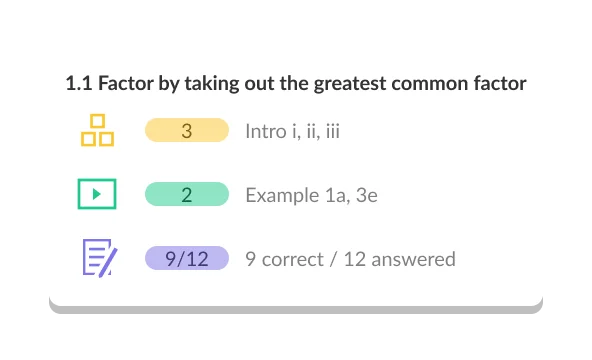
Practice Until Perfect
Keep practicing until it clicks.
Real Exam Practice
Study real exam questions in your plan.
Try It Now
Test your knowledge
Our approach aligns with the evidence
Exam Scores
Better Recall
Less Anxiety
Year 10 Maths Topics
1. Number System and Radicals
2. Patterns and Solving Equations
3. Linear Equations (Basic)
4. Solving Linear Equations
5. Solving Linear Inequalities
6. Introduction to Relations and Functions
7. Linear Relations
8. Linear Functions
9. Solving Simultaneous Equations
10. Transformations of Functions
11. Exponents
12. Exponential Functions
13. Logarithmic Functions
14. Introduction to Polynomials
15. Multiplying and Dividing Polynomials
16. Operations of Polynomials
17. Factorising Polynomial Expressions
18. Factorising Polynomial (Advanced)
19. Quadratic Functions
21. Radicals
22. Algebraic Fractions
23. Reciprocal Functions
24. Scale Factors and Similarity
25. Properties of Triangles
26. Congruent Triangles
27. Pythagorean Theorem
28. Introduction to Surface Area of 3D Shapes
29. Introduction to Volume
30. Surface Area and Volume
31. Circles
32. Introduction to Trigonometry
33. Trigonometric Ratios and Angle Measure
34. Bearings
35. Graphing Trigonometric Functions
36. Introduction to Probability
38. Data and Graphs
39. Introduction to Matrices
40. Determinants and Inverses of Matrices
40 Chapters · 254 Topics · 1722 Videos

Ready to practice Year 10 Maths?
Try practice questions on every Year 10 Maths topic — with instant feedback and step-by-step video solutions when you get stuck.
Discover Our Learning Areas
Explore key subjects and start learning with interactive content.





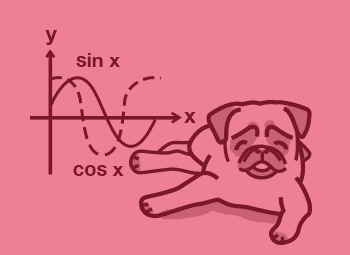
What is Year 10 Maths?
Year 10 Maths is the final compulsory mathematics year in the Australian Curriculum before students choose their senior pathway. It consolidates and extends the algebra, geometry, statistics, and trigonometry introduced in Years 8 and 9, while introducing new ideas — such as more complex functions, financial mathematics, and advanced measurement — that appear across every Australian state's senior maths subjects. Whether you are in NSW, VIC, QLD, WA, SA, or any other state, Year 10 Maths provides the foundation for everything that follows.
What topics are covered in Year 10 Maths?
The Australian Curriculum for Year 10 Maths organises content into three main strands: Number and Algebra, Measurement and Geometry, and Statistics and Probability.
In Number and Algebra, students work with surds and indices, expand and factorise quadratic expressions, solve quadratic equations using multiple methods, work with linear and non-linear functions, and develop fluency with simultaneous equations.
In Measurement and Geometry, students apply trigonometry more broadly — including the sine rule, cosine rule, and area formula — and use Pythagoras' theorem in three-dimensional contexts. Geometric reasoning and circle properties also feature in many state curricula.
In Statistics and Probability, students analyse bivariate data using scatter plots and lines of best fit, calculate and interpret measures of spread, and apply conditional probability. Financial mathematics — including compound interest and depreciation — appears across most Australian state syllabuses.
Students following the 10A (Advanced) pathway additionally encounter the binomial theorem, harder logarithms, and polynomial functions, preparing them for Mathematical Methods or Specialist Mathematics in senior years.
Is Year 10 Maths difficult, and why do students fall behind?
Year 10 Maths is widely seen as a turning point. The content becomes more abstract, and the pace picks up noticeably compared to Year 9. Students often fall behind on quadratic equations because factorising requires pattern recognition that takes practice to build. Trigonometry is another common sticking point: applying the sine and cosine rules in unfamiliar diagram configurations catches many students off guard.
Statistics — particularly bivariate data analysis and conditional probability — can feel disconnected from the algebra work, making it harder to study as a coherent whole. The students who struggle most are often those who have a small gap in their Year 9 algebra knowledge that compounds once harder Year 10 content arrives.
The good news is that these gaps are very fixable with targeted practice and clear explanations. A short diagnostic that identifies exactly where the gap sits saves hours of unfocused revision.
How does Year 10 Maths connect to senior maths and the ATAR?
Year 10 Maths is not directly assessed for the ATAR, but it determines which senior maths pathway a student can realistically access — and senior maths pathways have a significant influence on ATAR outcomes.
In New South Wales, students typically progress to Mathematics Standard 2, Mathematics Advanced, Mathematics Extension 1, or Mathematics Extension 2 for the HSC. In Victoria, VCE offers General Mathematics, Mathematical Methods, and Specialist Mathematics. Queensland's QCE system includes Essential Mathematics, General Mathematics, Mathematical Methods, and Specialist Mathematics. WA uses the WACE framework with similar tiered options.
Students who finish Year 10 with a strong understanding of algebra and trigonometry are far better positioned to attempt Mathematical Methods or Extension-level courses, which carry higher ATAR scaling in most states. Year 10 is effectively the last low-stakes opportunity to consolidate those foundations before the marks start counting.
What are the hardest concepts in Year 10 Maths?
Based on common student difficulty patterns across Australian schools, three concepts stand out as consistently challenging.
Quadratic equations. Students need to choose between factorising, completing the square, and the quadratic formula — and to know when each method is appropriate. Rushing past the factorising methods and relying only on the formula leads to errors later in calculus-based senior courses.
Trigonometric applications. Applying the sine rule, cosine rule, and area formula to multi-step problems — especially in three-dimensional or bearing contexts — requires both formula recall and spatial reasoning. Working through varied diagram types is the most effective preparation.
Bivariate data and lines of best fit. Students often underestimate the statistics strand. Interpreting correlation, distinguishing causation, and constructing a line of best fit by eye or by calculation all require careful reading of the question — a skill built through repeated practice rather than memorisation.
Why use StudyPug for Year 10 Maths?
StudyPug is built around the way students actually learn maths — by understanding the method, not just checking the answer.
Every Year 10 Maths lesson on StudyPug is taught by a certified teacher in a video format that walks through each concept step-by-step. These are not AI-generated explanations. They are structured lessons that mirror how a skilled classroom teacher would build understanding, covering the same topics your school covers and in the same order your Australian Curriculum requires.
When you start, a quick diagnostic assessment maps out which Year 10 Maths topics you already understand and which ones need work. This means you spend your study time on the areas that will actually move your results — not re-watching content you already know. As you work through practice problems, the adaptive system adjusts the difficulty to match your current level, so you are always in the zone where improvement happens fastest.
StudyPug also provides free practice problems you can try before subscribing, and every paid plan is backed by a 30-day money-back guarantee. There are no lock-in contracts. For Australian students preparing for school assessments, half-yearlies, and the senior-maths pathway decision at the end of Year 10, that combination of targeted support and flexibility is genuinely useful.
What you learn — Year 10 Maths curriculum coverage
StudyPug's Year 10 Maths content aligns to the Australian Curriculum and covers the full range of topics assessed in school throughout the year. Key areas include:
- Algebra — expanding and factorising quadratics, solving quadratic equations, working with surds and index laws
- Functions — linear, quadratic, and exponential functions; graphing and interpreting function behaviour
- Trigonometry — sine rule, cosine rule, area formula, applications to real-world and three-dimensional problems
- Geometry — Pythagoras in 3D, circle geometry, geometric reasoning
- Statistics — scatter plots, lines of best fit, bivariate data, measures of spread
- Probability — conditional probability, two-way tables, Venn diagrams
- Financial mathematics — compound interest, depreciation, loans
Lessons are available any time, so students can revisit a concept the night before a test or work ahead during school holidays. The curriculum coverage extends to 10A topics for students on an advanced pathway, providing seamless preparation for Year 11 Mathematical Methods or Extension courses.
Note: No validated internal topic-page links were available for this page in the current sitemap feed. Links will be added once the topic-URL map is updated.
How to use StudyPug for Year 10 Maths
Getting started is straightforward. When you sign up, you take a short diagnostic that identifies your Year 10 Maths strengths and gaps. StudyPug then recommends which topics to focus on first — whether that is catching up on quadratics, preparing for a trigonometry test, or reviewing statistics before a school assignment.
From there, the typical session looks like this: watch a certified-teacher video that teaches the concept and the method clearly; work through adaptive practice problems that start at your current level and increase in difficulty as you improve; and use the step-by-step video solutions whenever you get stuck, so you learn from mistakes rather than just moving past them.
You can also search for a specific Year 10 Maths topic by taking a photo of a problem using Photo Search, which finds the matching lesson instantly across all subjects and grade levels. This is especially useful when you encounter an unfamiliar question type in homework or a past paper and need a worked explanation fast.
Because StudyPug covers every Australian state curriculum and every grade level in one subscription, you can also look ahead to Year 11 and Year 12 content — useful if you want to prepare early for Mathematical Methods or see what the Extension pathway actually involves before making subject selections.
Year 10 Maths FAQ
Unsure how StudyPug works? Need help with setting up? Check our frequently asked questions or contact us for help.
What do you learn in Year 10 Maths, and what topics does it cover?
Year 10 Maths in Australia covers algebra and equations, linear and non-linear functions, trigonometry (including the unit circle and sine/cosine rules), geometry and measurement, statistics and probability, and financial mathematics. The course follows the Australian Curriculum and builds the foundation skills needed for senior maths subjects in Years 11 and 12. Students also develop reasoning and problem-solving skills that appear on school assessments throughout the year.
What is the difference between Year 10 Maths and Year 10 Advanced Maths?
Standard Year 10 Maths focuses on core curriculum concepts required for all students, including algebra, basic trigonometry, and introductory statistics. Year 10 Advanced Maths (sometimes called 10A in the Australian Curriculum) extends into more complex topics such as the binomial theorem, harder logarithms, and advanced trigonometric identities. Completing 10A is generally recommended for students planning to study Mathematics Extension or Methods in Years 11 and 12.
Is Year 10 Maths hard, and where do students struggle most?
Many students find Year 10 Maths a step up in difficulty because abstract thinking becomes more central. The most common struggle points are quadratic equations and factorising, trigonometric ratios and applications, simultaneous equations, and interpreting statistical data. Students who fall behind on one concept often find later topics harder because maths builds on prior knowledge. Targeted practice and clear concept explanations help students catch up quickly.
What should I know before Year 10 Maths, and what comes after it?
Before Year 10 Maths, students should be confident with Year 9 topics: indices and surds, linear equations, basic trigonometry (SOHCAHTOA), and introductory statistics. After Year 10, students choose a pathway for Years 11 and 12 — options in most Australian states include General Maths, Mathematical Methods, and Specialist Mathematics. A strong Year 10 foundation is especially important for students aiming to study Methods or Specialist, which lead to HSC, VCE, QCE, or WACE higher-level maths.
Is Year 10 Maths on the ATAR, and how is it tested?
Year 10 Maths itself is not directly ATAR-assessed, but it is the critical foundation for the senior maths subjects that are. In New South Wales the HSC includes Mathematics Standard, Advanced, Extension 1, and Extension 2. In Victoria, VCE Mathematical Methods and Specialist Maths count toward the ATAR. Other states have equivalent senior qualifications — QCE in Queensland, WACE in WA, SACE in SA, and TCE in Tasmania. Year 10 performance shapes which senior pathway a student can access.
What is one of the hardest concepts in Year 10 Maths, and how do you tackle it?
Quadratic equations — specifically factorising and solving using the quadratic formula — are consistently among the hardest concepts for Year 10 students. The key is recognising which method to use (factorising, completing the square, or the formula) and practising each one on varied problem types. Breaking the method into clear steps first, then working through progressively harder examples, builds the pattern recognition that makes quadratics manageable under exam pressure.




Written by the StudyPug Team
Last updated June 5, 2026
3 M+
students
★★★★★
4.8 average
K–12
all grades