Year 9 Maths Help — Step-by-Step Video Lessons & Practice
Help your child understand every Year 9 maths topic and build confidence, one lesson at a time.
Expert Video Solutions
Watch it solved then try the next one.
Unlimited Practice
Practice until it actually clicks.
Real Exam Practice
Practice real Australian exam questions.
Try It Now
Test your knowledge
Our approach aligns with the evidence
Exam Scores
Better Recall
Less Anxiety
Year 9 Maths Topics
1. Number System and Radicals
2. Adding and Subtracting Integers
3. Multiplying and Dividing Integers
4. Ratios, Rates, and Proportions
5. Percents
6. Lines, Angles and Transversals
7. Pythagorean Theorem
8. Introduction to Surface Area of 3D Shapes
9. Introduction to Volume
10. Scale Factors and Similarity
11. Introduction to Trigonometry
12. Patterns and Solving Equations
13. Linear Equations (Basic)
14. Solving Linear Equations
15. Solving Linear Inequalities
16. Introduction to Relations and Functions
17. Linear Relations
18. Linear Functions
19. Solving Simultaneous Equations
20. Introduction to Powers and Exponents
21. Exponents
22. Introduction to Polynomials
23. Multiplying and Dividing Polynomials
24. Factorising Polynomial Expressions
25. Radicals
26. Algebraic Fractions
27. Reciprocal Functions
28. Introduction to Probability
30 Chapters · 170 Topics · 1368 Videos

Ready to practice Year 9 Maths?
Try practice questions on every Year 9 Maths topic — with instant feedback and step-by-step video solutions when you get stuck.
Discover Our Learning Areas
Explore key subjects and start learning with interactive content.






What is Year 9 Maths?
Year 9 Maths is the final year of the lower secondary mathematics sequence in Australian schools, sitting within the Australian National Curriculum's strands of Number and Algebra, Measurement and Geometry, and Statistics and Probability. At this level, students move decisively from concrete arithmetic reasoning into abstract algebraic thinking — solving multi-step equations, graphing linear and non-linear relationships, applying trigonometric ratios, analysing data sets, and reasoning about probability. It is the bridging year between the foundational skills built in Years 7 and 8 and the more demanding content of Years 10 through 12.
What topics are covered in Year 9 Maths?
The Australian National Curriculum organises Year 9 Maths across three main strands. In Number and Algebra, students work with indices and surds, simplify algebraic expressions, solve linear equations and inequalities, explore simultaneous equations, and extend into non-linear relationships including parabolas. In Measurement and Geometry, the main event is trigonometry — students apply Pythagoras' theorem and the sine, cosine and tangent ratios to find unknown sides and angles in right-angled triangles, alongside surface area and volume of prisms, cylinders and composite solids. In Statistics and Probability, students interpret and compare data using back-to-back stem-and-leaf plots, histograms and box plots, calculate measures of spread, and work with theoretical and experimental probability including multi-step events. Financial mathematics — calculating interest, GST and budgeting — is woven through the number strand as well. Together, these topics give students the toolkit they need for senior secondary maths and for everyday quantitative reasoning.
Is Year 9 Maths hard — and what trips students up most?
For most Australian students, Year 9 represents the biggest jump in difficulty they have encountered in maths. The challenge is not just new content — it is the expectation that students can now chain several techniques together to solve a single problem. Trigonometry is consistently cited by teachers and students as the hardest new topic: the mistake students make is memorising SOH-CAH-TOA as a mantra rather than understanding which ratio applies and why. Simultaneous equations and working with surds are the next most common stumbling blocks. Statistics becomes more demanding too, as students move from reading simple graphs to constructing and critically interpreting them. The good news is that all of these topics have a clear logical structure — once the underlying method clicks, students usually find they can extend it to new problems with practice.
Why StudyPug for Year 9 Maths?
StudyPug is built around one idea: your child should come away from a lesson able to solve the next problem on their own, not just copy a worked example. Every Year 9 Maths lesson is taught by a certified teacher in a short, focused video that explains the concept first, walks through a worked example step by step, and then connects the method to the kinds of questions that appear in school assessments based on real exam formats. There is no AI-generated content — real teachers, real explanations.
What makes the StudyPug approach effective for Year 9 is the combination of a diagnostic assessment, adaptive practice, and the parent dashboard. The diagnostic does not just give you a score — it maps your child's understanding across every Year 9 topic so you know precisely where to focus. Adaptive practice then adjusts question difficulty automatically, keeping your child challenged without overwhelming them. The parent dashboard gives you a per-topic view of progress, so you are never guessing whether the extra study is working. Every lesson is available 24/7 on any device, and free practice content lets your child get started straight away. All paid plans come with a 30-day money-back guarantee — no risk to get started. The Family Plan covers up to five children at all year levels under one subscription, which is real value for families with more than one student at home.
What your child will learn in Year 9 Maths on StudyPug
StudyPug's Year 9 Maths curriculum coverage is aligned to the Australian National Curriculum, so every topic your child's school teaches is supported here. Core areas include:
- Algebra — simplifying expressions, solving linear and simultaneous equations, and introducing non-linear relationships
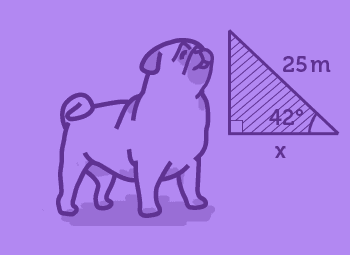
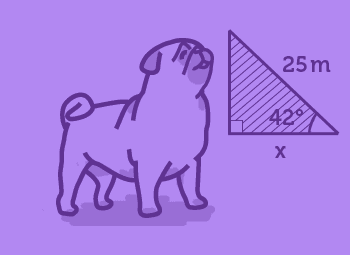
- Trigonometry — Pythagoras' theorem and the three trigonometric ratios applied to right-angled triangles
- Measurement — surface area and volume of prisms, cylinders and composite solids
- Statistics and probability — data displays, measures of spread, and multi-step probability
- Financial maths — percentages, interest calculations and GST
Each topic is broken into short, focused lessons so your child can find exactly what they need, whether they are revising for a test, working through homework, or getting ahead before a new unit begins.
How to use StudyPug for Year 9 Maths
Getting started takes a few minutes. When your child logs in for the first time, the diagnostic assessment identifies which Year 9 topics they are confident with and which need attention — so the first study session is already targeted, not generic. From there, your child can watch a certified-teacher video for any topic they are working on at school, work through the adaptive practice questions that follow, and review their results in real time. As a parent, you can check the dashboard at any point to see which topics have been studied and how your child is performing. StudyPug also offers Photo Search across all year levels and subjects — if your child has a specific maths problem in front of them, they can use Photo Search to find the matching lesson instantly. Use StudyPug alongside your child's school textbook for day-to-day homework support, or as a focused revision tool in the weeks leading up to assessments and exams.
Year 9 Maths FAQ
Unsure how StudyPug works? Need help with setting up? Check our frequently asked questions or contact us for help.
What does my child learn in Year 9 Maths, and what topics does it cover?
Year 9 Maths under the Australian National Curriculum covers linear and non-linear algebra, coordinate geometry, trigonometry (including Pythagoras and right-angled triangles), statistics and probability, measurement of surface area and volume, and financial mathematics. Students extend their number sense to real numbers and indices, and begin working with more abstract algebraic expressions and equations. By the end of Year 9, students should be comfortable solving multi-step problems across all these strands in preparation for senior secondary mathematics.
Is Year 9 Maths hard, and where do students commonly struggle?
Year 9 Maths is a significant step up for most Australian students. The biggest stumbling blocks are trigonometry (setting up and solving trig ratios), linear equations and graphing, working with indices and surds, and interpreting statistical data. Many students also find simultaneous equations and the move from arithmetic to abstract algebra challenging. These topics require understanding the method, not just memorising steps — which is why seeing the reasoning explained clearly in video lessons, and then practising immediately afterwards, makes such a difference to marks.
What should my child know before Year 9 Maths, and what comes next?
Before Year 9, students should be confident with Year 8 topics: fractions, decimals and percentages, basic algebra and equations, geometry angles and area, and introductory statistics. A shaky foundation in algebra especially tends to slow progress in Year 9. After Year 9, students move into Year 10 Maths, which introduces quadratics, more advanced trigonometry, and the financial and statistical reasoning needed for Years 11 and 12 — and ultimately for tertiary entrance exams such as the HSC, VCE, QCE, ATAR, or WACE.
How does StudyPug Year 9 Maths map to what my child learns at school?
StudyPug's Year 9 Maths content is aligned to the Australian National Curriculum strands — Number and Algebra, Measurement and Geometry, and Statistics and Probability. Lessons cover the same topics in the same sequence your child's school follows. Whether your child's school uses Pearson, Oxford, or another textbook, the underlying curriculum requirements are the same, so StudyPug lessons directly reinforce what is being taught in class and help close gaps before assessments.
What is one of the trickiest maths concepts in Year 9, and how is it taught?
Trigonometry — specifically applying sine, cosine, and tangent ratios to find unknown sides and angles in right-angled triangles — is consistently the concept Year 9 students find hardest. Many students memorise SOH-CAH-TOA without understanding when and why to apply each ratio. On StudyPug, certified teachers walk through the conceptual reasoning first, then show a worked example step by step, and finally provide graded practice problems so students can apply the method themselves. This approach means they can handle new triangle problems they have never seen before.
How much maths practice should my child do at Year 9?
For Year 9, education researchers and teachers generally recommend around 20–30 minutes of focused maths practice four to five times per week, rather than long infrequent sessions. Consistent shorter sessions help consolidate new techniques like solving equations or interpreting graphs. StudyPug's adaptive practice adjusts question difficulty to your child's current level, so every session is productive — reinforcing strengths and targeting the exact gaps that need attention — without overwhelming them or wasting time on topics they have already mastered.




Written by the StudyPug Team
Last updated June 5, 2026
3 M+
students
★★★★★
4.8 average
K–12
all grades