Differential Calculus Help: Video Lessons & Practice
Work through every topic with clear solutions. Start your free practice test now!
Value vs. Private Tutor
Get expert tutoring for less than lessons.

Multi-Subject
One subscription unlocks all subjects.

Build Mastery
You actually master it before test day.
Try It Now
Test your knowledge
Our approach aligns with the evidence
Exam Scores
Better Recall
Less Anxiety
Differential Calculus Topics
1. Limits
2. Differentiation
3 Chapters · 31 Topics · 217 Videos
Discover Our Learning Areas
Explore key subjects and start learning with interactive content.


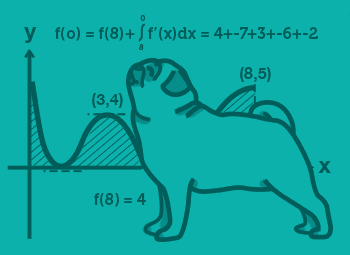
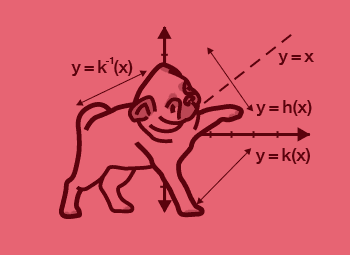


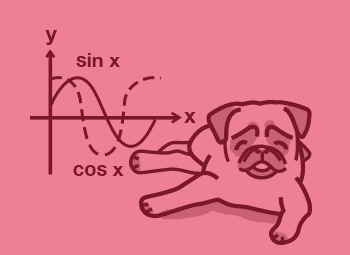
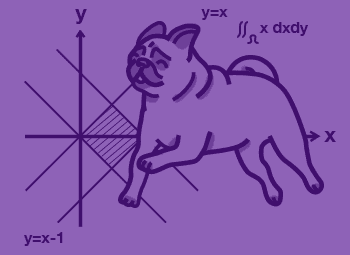

What Is Differential Calculus?
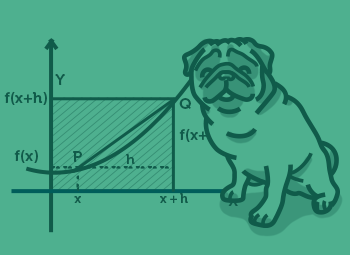
Differential Calculus is the branch of mathematics that studies rates of change — how quantities shift from one moment to the next. At its core sits the derivative, a tool that measures how fast a function's output changes relative to its input at any given point. If you have ever wanted to know the speed of an object at a precise instant, the slope of a curve at a single point, or the rate at which a business's revenue responds to a price change, you are asking a differential calculus question.
At Australian universities, Differential Calculus forms the first major pillar of a Calculus sequence. It underpins almost every quantitative discipline — engineering stress analysis, pharmacokinetic modelling in medical science, marginal cost functions in economics, and signal processing in electrical engineering all rely directly on differentiation techniques covered in this course.
What Topics Are Covered in Differential Calculus?
A typical Australian university Differential Calculus unit moves through a well-defined sequence of ideas. Understanding the order helps you plan your study.
Limits and continuity come first. Before you can differentiate anything, you need to understand what a function approaches as its input gets close to a value — even if it never quite reaches it. Continuity then formalises the idea that a function has no breaks or jumps. These concepts underpin every definition that follows.
The derivative and differentiation rules are the heart of the course. From the limit definition of the derivative you derive the power rule, and from there the product, quotient, and chain rules. These four rules together let you differentiate almost any function you will encounter at university level. Trigonometric, exponential, and logarithmic derivatives are built on top of them.
Implicit differentiation extends the toolbox to equations where y cannot be isolated as an explicit function of x — a situation that arises constantly in geometry and physics. Higher-order derivatives (the second derivative and beyond) then let you analyse concavity and classify stationary points.
Applications bring everything together: curve sketching, optimisation problems, related rates, and L'Hôpital's rule for evaluating indeterminate limits. These application sections are where exam questions draw their hardest problems from.
How Is Differential Calculus Different from Integral Calculus?
Students often ask whether they should study both at once. The short answer is: learn differentiation first, then integration — that is how every Australian university structures its calculus sequence, and for good reason.
Differential Calculus asks: given a function, how fast is it changing? Integral Calculus asks the reverse question: given a rate of change, what is the total accumulated quantity? The Fundamental Theorem of Calculus shows that these two operations are inverses of each other. But you cannot properly understand the Fundamental Theorem — or integration techniques like substitution and parts — without first being fluent in differentiation. Every integral you encounter in Calculus II will require you to recognise and reverse a differentiation step.
What Are the Hardest Parts of Differential Calculus for University Students?
Based on consistent patterns across Australian universities, three topics cause the most difficulty.
The chain rule in complex compositions is the most common source of errors on assessments. Students understand the rule in isolation but lose track of layers when a trigonometric function is composed with an exponential, which is itself composed with a polynomial. The fix is deliberate practice: identify the outer and inner functions explicitly before differentiating, every single time, until the process becomes automatic.
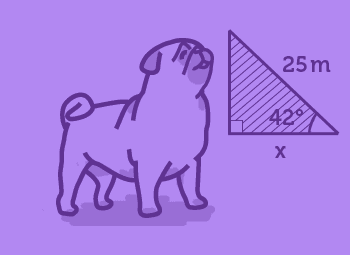
Related rates problems demand a skill that pure computation practice does not build on its own — mathematical modelling. You must read a word problem, draw a diagram, write an equation linking changing quantities, and only then differentiate implicitly with respect to time. Students who skip the diagram step almost always make a sign or variable error. Practising fifteen to twenty varied related-rates problems before a final exam is a reliable way to build the pattern recognition these questions require.
Optimisation under constraints is the third stumbling block. Setting up the objective function correctly, applying domain restrictions, and correctly classifying critical points using the second derivative test all require careful logical reasoning in addition to calculus technique.
How Does Differential Calculus Connect to Your Degree?
The relevance of differential calculus extends well beyond the assessment. In engineering degrees, Newton's laws and circuit analysis are expressed as differential equations — which you cannot approach without fluency in differentiation. In economics and commerce degrees, marginal analysis (marginal cost, marginal revenue, elasticity) is pure differential calculus applied to business functions. In physics and applied science, every kinematics problem you solve using calculus is a differentiation problem. Even data science and machine learning rely on gradient descent — an optimisation algorithm built directly on the derivative concept you study in this course.
Strong performance in Differential Calculus signals to future employers and postgraduate programs that you can handle quantitative reasoning at university level — a credential that opens doors across STEM and business disciplines.
Why Use StudyPug for Differential Calculus?
StudyPug is built around how university students actually learn calculus — not by passively watching one explanation, but by cycling between understanding the method and applying it under exam conditions.
Certified-teacher concept videos that teach the method. Every Differential Calculus lesson on StudyPug is recorded by an experienced, certified teacher who walks through the reasoning behind each step — not just the mechanical procedure. The chain rule video, for example, does not just show you the formula; it shows you why the formula works and how to identify when to use it in a problem you have never seen before. That depth is what distinguishes genuine understanding from exam-only recall, and it is why students report being prepared for their next course, not just the current one.
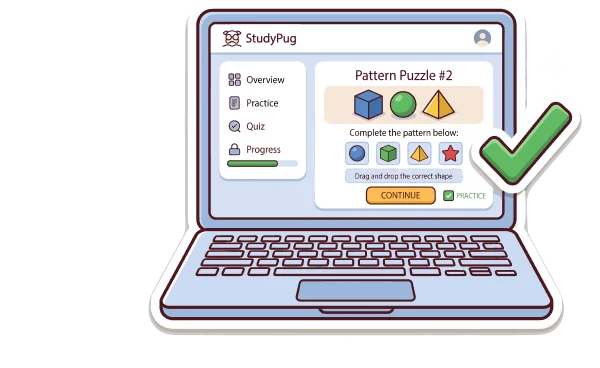
Diagnostic assessment that saves time. Starting a calculus review session without knowing where your gaps are wastes hours. StudyPug's diagnostic assessment identifies precisely which topics need your attention — so if your limits are solid but your chain rule is shaky, the diagnostic routes you directly to chain rule content rather than making you sit through material you already know.
Adaptive practice that grows with you. Once you begin practising, StudyPug's adaptive system adjusts problem difficulty based on your performance. Get a series of product-rule questions right and the system moves you toward harder composite problems. Stumble on implicit differentiation and it serves you more foundational questions before raising the stakes. This prevents the common trap of practising only the questions you are already comfortable with.
One subscription, every course. Differential Calculus, Integral Calculus, Linear Algebra, Differential Equations, Statistics — all included under a single plan. There is no extra fee when you move from one course to the next. For students working through a full mathematics or engineering sequence over multiple semesters, that breadth represents significant value.
30-day money-back guarantee. If StudyPug is not the right fit for you, request a full refund within 30 days. No lock-in, no risk.
What You Learn: Differential Calculus Course Coverage
StudyPug's Differential Calculus content is structured to follow the sequence used by Australian universities, so each lesson builds on the last. Here is what the full coverage looks like:
- Limits and continuity — evaluating limits algebraically and graphically, one-sided limits, continuity and the intermediate value theorem
- Definition of the derivative — the limit definition, tangent lines, differentiability, and the connection to instantaneous rate of change
- Differentiation rules — power rule, constant multiple rule, sum and difference rules, product rule, quotient rule, chain rule
- Derivatives of special functions — trigonometric functions, inverse trigonometric functions, exponential functions, logarithmic functions
- Implicit differentiation — differentiating equations that cannot be solved for y explicitly; logarithmic differentiation
- Higher-order derivatives — second and third derivatives, concavity, points of inflection
- Applications of derivatives — curve sketching using first and second derivative tests, absolute and local extrema, optimisation problems, related rates, L'Hôpital's rule
- Exam preparation — full practice tests and mock assessments designed to reflect the structure and difficulty of Australian university mid-semester exams and finals
Because no validated internal topic URLs are currently available for this page, we recommend using the StudyPug course listing directly to navigate to individual topic lessons once you are logged in.
How to Use StudyPug for Differential Calculus
Getting the most from StudyPug is straightforward when you follow a structured approach that mirrors how calculus courses are assessed at Australian universities.
Step 1 — Run the diagnostic. Before watching any videos or attempting practice problems, complete the diagnostic assessment. It takes only a few minutes and gives you a personalised map of where to begin. Students who skip this step often spend time on topics they already know well and run out of time before their exam.
Step 2 — Watch the concept video for each topic. For every gap the diagnostic identifies, watch the corresponding certified-teacher video. Pause it. Try the worked example yourself before the instructor completes it. Rewind and rewatch the steps you find confusing — there is no penalty for watching a video multiple times, and repetition is how procedural fluency develops.
Step 3 — Practice with adaptive problems. After watching, move straight into practice. StudyPug's adaptive system will start you at an appropriate difficulty level and raise the challenge as your accuracy improves. Aim to complete at least ten problems per topic before moving on.
Step 4 — Take a practice test before each assessment. One week before your mid-semester exam or final, attempt a full Differential Calculus practice test under timed conditions. Review every question you got wrong by rewatching the relevant video lesson. Then take a second practice test to confirm the gap is closed.
Step 5 — Use Photo Search if you are stuck on a specific problem. StudyPug's Photo Search feature lets you photograph a problem from your textbook or assignment sheet and find the matching lesson — available across all grades and subjects, including university calculus. It is a fast way to locate exactly the video you need without browsing through the full topic list.
StudyPug is available on any device — desktop, tablet, or mobile — so you can keep practising between lectures, on the bus, or late at night before a big exam. The content does not change based on when you access it; every video and every practice problem is available any time you need it.
Ready to build your differential calculus skills? Start Now — your free practice content is waiting, and a 30-day money-back guarantee means there is nothing to lose.
Differential Calculus FAQ
Unsure how StudyPug works? Need help with setting up? Check our frequently asked questions or contact us for help.
What do you learn in Differential Calculus, and what topics does it cover?
Differential Calculus focuses on the study of rates of change and slopes of curves. Core topics include limits and continuity, the definition of the derivative, differentiation rules (product, quotient, and chain rules), implicit differentiation, related rates, curve sketching, and optimisation. Most Australian university courses also cover L'Hôpital's rule and applications to real-world problems in physics, engineering, and economics. By the end of the course you will be able to analyse how functions behave and apply derivatives to solve practical problems.
What is the difference between Differential Calculus and Integral Calculus?
Differential Calculus deals with the derivative — measuring how a quantity changes instantaneously. Integral Calculus deals with the antiderivative and the accumulation of quantities over an interval. Together they form the two branches of calculus, united by the Fundamental Theorem of Calculus. Differential Calculus is typically studied first because differentiation techniques are prerequisites for understanding integration. If you are enrolled in a combined Calculus I unit at an Australian university, you will usually cover differentiation in the first half of semester.
What are the prerequisites for Differential Calculus, and what course comes after it?
You should have a solid grounding in Year 12 Mathematics (especially functions, algebra, and trigonometry — equivalent to Mathematical Methods or Specialist Maths in Australian states). Familiarity with exponential and logarithmic functions is also expected. After Differential Calculus, students typically progress to Integral Calculus or a combined Calculus II unit covering integration techniques, sequences and series. From there the pathway leads to Multivariable Calculus, Differential Equations, and Linear Algebra depending on your degree.
Is Differential Calculus hard, and where do students struggle most?
Differential Calculus is considered one of the more challenging first-year mathematics units at Australian universities. Students most commonly struggle with three areas: understanding the formal epsilon-delta definition of a limit, applying the chain rule correctly in multi-step compositions, and setting up related-rates problems from a word description. Implicit differentiation also catches many students off guard. The key is consistent practice — working through many problems, not just watching solutions — and making sure algebraic skills from secondary school are solid before the semester starts.
How is Differential Calculus assessed — mid-semesters, finals, and assignments?
At most Australian universities, Differential Calculus (or its parent Calculus unit) is assessed through a mix of weekly or fortnightly assignments worth around 20–30% of your final grade, a mid-semester exam worth roughly 20–30%, and a final examination worth 40–60%. Some institutions use online quiz systems for formative assessment throughout the semester. The final exam is typically a two- to three-hour closed-book paper. Grading uses the standard Australian scale: High Distinction (HD), Distinction (D), Credit (C), Pass (P), and Fail (F).
What is one of the hardest topics in Differential Calculus, and how do you approach it?
Related rates is widely considered one of the most difficult topics in Differential Calculus. The challenge is translating a word problem into a mathematical relationship, differentiating implicitly with respect to time, and then substituting known values carefully. A reliable approach: (1) draw a diagram and label all quantities with variables; (2) write one equation relating those variables; (3) differentiate both sides with respect to time using the chain rule; (4) substitute the given values and solve for the unknown rate. Practising ten to fifteen varied problems builds the pattern recognition needed to handle any variant on an exam.





Written by the StudyPug Team
Last updated June 5, 2026
3 M+
students
★★★★★
4.8 average
K–12
all grades