TOPIC
Traditional Practices, Sustainable methodsMY PROGRESS
Pug Score
0%
Getting Started
"Let's build your foundation!"
Best Streak
0 in a row
Study Points
+0
Overview
Practice
Read
Quiz
Next Steps
Get Started
Get unlimited access to all videos, practice problems, and study tools.
BACK TO MENU
Topic Progress
Pug Score
0%
Getting Started
"Let's build your foundation!"
Best Practice
No score
Read
Not viewed
Best Quiz
No attempts
Best Streak
0 in a row
Study Points
+0
Overview
Practice
Read
Quiz
Next Steps
Read
Traditional Practices and Sustainable Methods: Learning from Indigenous Environmental Wisdom
This topic explores traditional and indigenous sustainable practices used to manage soil, water, biodiversity, and ecosystems responsibly across generations. Students examine how these time-tested methods align with modern environmental conservation principles.
Traditional Practices and Sustainable Methods in Environmental Science
For thousands of years, communities around the world have developed traditional practices and sustainable methods to manage land, water, and living resources without depleting them. These time-tested approaches reflect deep ecological wisdom passed down through generations. Understanding them connects directly to topics such as Ecological Wisdom and Sustainable Practices and Environmental Science, Resource Management, and Sustainable Practices.
Traditional sustainable practices work with natural cycles rather than against them, reducing dependence on synthetic chemicals and heavy machinery. This makes them fundamentally different from many modern industrial farming methods.
Traditional Sustainable Farming Methods
Traditional communities developed numerous farming techniques to maintain soil fertility and maximize land productivity without harming the environment.
Intercropping and Companion Planting
Intercropping is the practice of growing two or more crops simultaneously in the same field to improve soil health and reduce pest problems. A classic example is companion planting, where plants are chosen for their mutually beneficial relationships.
The famous Three Sisters method, practiced by Indigenous peoples of North America, involves growing corn, beans, and squash together. Corn provides a structure for beans to climb, beans fix nitrogen in the soil, and squash shades the ground to retain moisture a perfect example of sustainable intercropping.
Crop Rotation and Fallowing
Crop rotation involves changing the crop type planted in a field each season to restore soil nutrients naturally and prevent pest buildup. Different crops use and replenish different nutrients, preventing soil exhaustion.
Fallowing means intentionally leaving land unplanted for one or more seasons so the soil can naturally recover its nutrients and structure. This temporary rest is different from permanent abandonment and is a key sustainable principle.
Shifting Cultivation
Shifting cultivation, also called slash-and-burn farming, involves clearing a small area of forest, farming it for a few years, then moving on to allow the land to recover. When practiced traditionally with long fallow periods, it is a sustainable method used by indigenous groups worldwide.
Composting and Green Manuring
Composting transforms organic waste such as food scraps and plant matter into nutrient-rich natural fertilizer, completing the nutrient cycle without synthetic chemicals. Green manuring involves growing specific plants often legumes and plowing them back into the soil while still green to add organic matter and nutrients.
Using animal manure as fertilizer adds organic nutrients without causing harmful chemical pollution, improving soil structure and fertility naturally.
Mulching
Mulching involves covering soil with organic materials like straw, leaves, or grass clippings to retain moisture, regulate temperature, and suppress weeds. As the mulch decomposes, it also adds nutrients to the soil, creating favorable growing conditions.
Agroforestry
Agroforestry is the practice of growing crops alongside trees to create a balanced, productive ecosystem. Trees provide shade, windbreaks, and nitrogen fixation while supporting biodiversity. This is the opposite of clearing all trees for monoculture farming.
Traditional agroforestry connects to the broader study of Food Webs and Energy Transfer, as diverse farming systems support complex ecological relationships.
Water and Land Management Practices
Traditional communities developed ingenious methods to conserve water and protect land from erosion, especially in challenging environments.
Terracing and Contour Farming
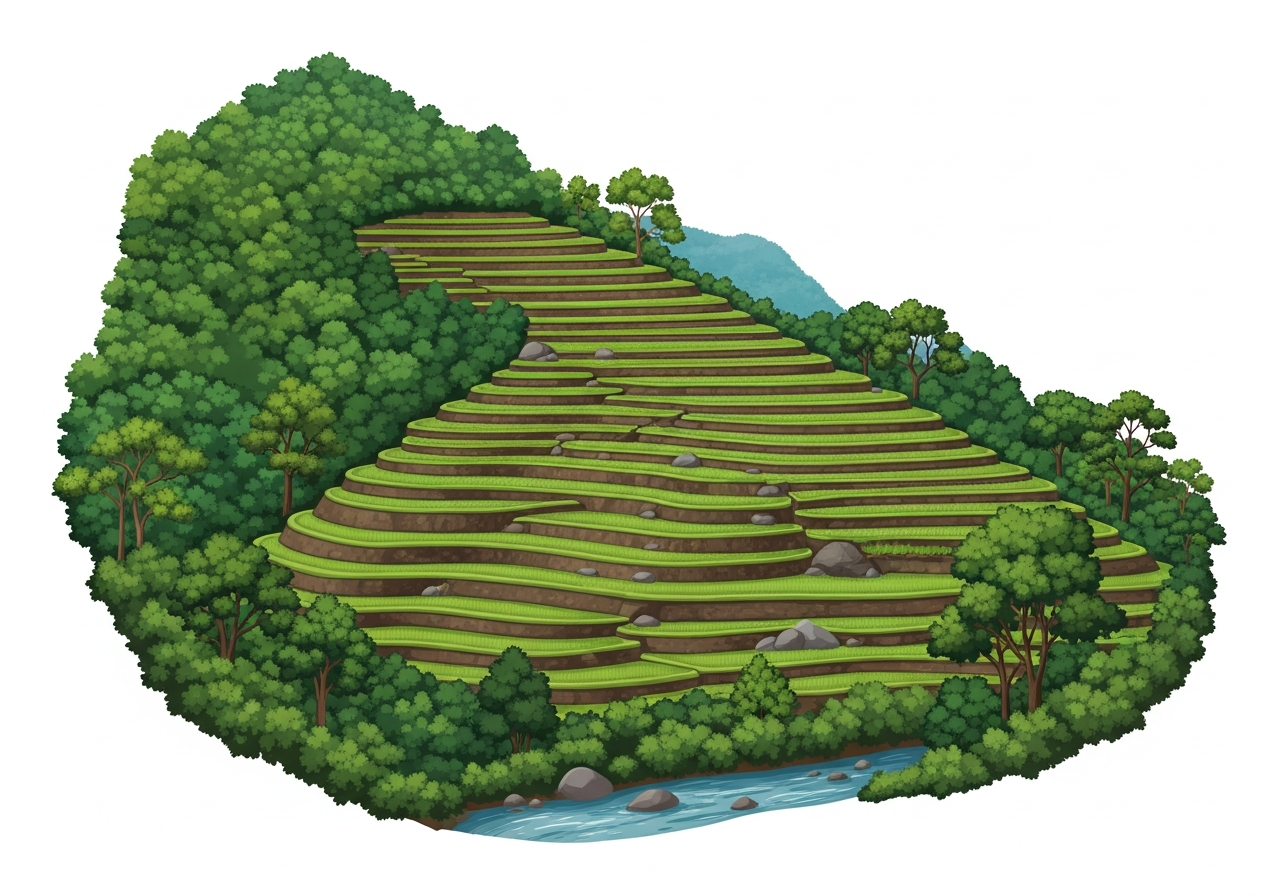
Terracing creates flat, step-like platforms on hillsides that slow water runoff and reduce soil erosion. This ancient technique has been used by cultures worldwide, including in Asia and South America, for thousands of years. Contour farming follows the natural shape of a hill to slow runoff and prevent erosion.
Rainwater Harvesting and Groundwater Recharge
Rainwater harvesting is a traditional sustainable practice where rain is collected and stored in tanks, ponds, or reservoirs for later agricultural use. This differs from modern approaches like groundwater pumping or desalination, which require significant energy.
Infiltration is the physical process of water moving into the soil. When infiltrated water reaches underground aquifers, this is called groundwater recharge, which replenishes underground water supplies naturally.
In arid regions, traditional underground channels called qanats transport water from mountain sources while minimizing evaporation a sustainable solution tested over millennia.
Check Dams and Windbreaks
Check dams are small barriers made from stones, earth, or branches that slow water flow and reduce erosion. Windbreaks (also called shelterbelts) are rows of trees or shrubs planted along field edges to slow wind and protect topsoil from wind erosion.
Prescribed Burns
A prescribed burn (or controlled burn) is a traditional land management tool used by Indigenous communities worldwide to manage vegetation and maintain ecosystem health. These intentional, controlled fires prevent larger wildfires and promote the growth of certain plant species.
Biodiversity and Conservation Practices
Traditional communities developed conservation strategies long before modern environmental science, recognizing the importance of protecting biodiversity and ecosystem balance. This connects directly to Conservation and Environmental Protection and Biodiversity and Species Relationships.
Sacred Groves and Community Forests
Sacred groves are patches of forest protected by local communities for religious or cultural reasons, effectively preserving biodiversity and ecosystem services. They represent one of the oldest forms of community-based conservation found across many cultures worldwide.
Traditional community-managed forests prioritize long-term forest health over short-term profit, following rules about how many trees can be cut and when, ensuring the forest regenerates for future generations.
Seed Saving
Seed saving is the traditional practice of collecting and storing seeds from successful harvests to maintain crop diversity and ensure varieties well-adapted to local conditions survive. This preserves genetic diversity of locally adapted crop varieties, which is crucial for resilience against diseases and climate change.
Seasonal Restrictions and Sustainable Harvesting
Many traditional fishing and hunting communities follow seasonal restrictions rules about when and how much to harvest to allow animal and fish populations time to reproduce and recover naturally. Sustainable harvesting means taking only what is needed and allowing ecosystems time to regenerate.
Biological Pest Control
Biological pest control is a sustainable method where natural predators, parasites, or pathogens are used to manage pest populations on farms. Unlike synthetic pesticides, this approach does not contaminate soil and water sources and works with nature to maintain ecological balance.
Mixed Farming
Mixed farming integrates crop production with livestock rearing, creating a sustainable nutrient cycle where animal waste fertilizes crops and crop residues feed animals. This reduces waste and dependence on external inputs, maintaining soil health naturally.
Mangrove and Shoreline Protection
Traditional coastal communities recognized the importance of preserving mangrove forests along vulnerable coastal areas. Mangroves have extensive root systems that stabilize shorelines and protect against erosion, storm surges, and flooding. Planting native trees and grasses along shorelines is another traditional practice that prevents soil erosion.
Key Terms and Definitions
Companion Planting: The practice of growing different plant species near each other so they mutually benefit for example, the Three Sisters method where corn, beans, and squash support each other's growth.
Crop Rotation: The practice of alternating different types of crops in the same field across seasons to replenish soil nutrients naturally and prevent pest buildup.
Nitrogen Fixation: A process carried out by bacteria in legume roots that converts atmospheric nitrogen into a form plants can use, naturally replenishing soil nitrogen without chemical fertilizers.
Composting: The process of transforming organic waste such as food scraps and plant matter into nutrient-rich natural fertilizer, completing the nutrient cycle sustainably.
Agroforestry: The practice of growing crops alongside trees (and sometimes livestock) on the same land to create a diverse, balanced, and sustainable ecosystem.
Contour Farming: A traditional farming technique that follows the natural shape of a hill to slow water runoff and reduce soil erosion.
Terracing: The creation of flat, step-like platforms on steep hillside slopes to hold water, prevent soil erosion, and make farming possible on hilly terrain.
Infiltration: The physical process by which water moves downward into the soil from the surface.
Groundwater Recharge: The process that occurs when infiltrated water travels through soil layers and reaches underground aquifers, replenishing underground water supplies.
Prescribed (Controlled) Burn: A traditional land management tool used by Indigenous communities to intentionally and carefully burn vegetation in order to manage ecosystems, prevent larger wildfires, and promote healthy plant growth.
Intercropping: The traditional practice of growing two or more crops simultaneously in the same field to maximize land use, improve soil health, and reduce pest problems.
Shifting Cultivation (Slash-and-Burn): A traditional farming method where a small area of forest is cleared and farmed for a few years, then abandoned to allow natural regrowth and soil recovery before farming moves to a new area.
Rainwater Harvesting: The traditional practice of collecting and storing rainwater in tanks, ponds, or reservoirs for later agricultural or domestic use.
Sacred Groves: Patches of forest protected by local communities for religious or cultural reasons, which effectively preserve biodiversity and serve as natural conservation reserves.
Seed Saving: The traditional practice of collecting and storing seeds from successful harvests to preserve genetic diversity and maintain crop varieties adapted to local growing conditions.
Biological Pest Control: A sustainable pest management method that uses natural predators, parasites, or pathogens to control pest populations without synthetic chemicals.
Mulching: The practice of covering soil with organic materials such as straw, leaves, or grass clippings to retain moisture, regulate soil temperature, suppress weeds, and add nutrients as the material decomposes.
Fallowing: The practice of intentionally leaving agricultural land unplanted for one or more seasons to allow the soil to naturally restore its lost nutrients and recover its fertility.
Green Manuring: The practice of growing specific plants often legumes and plowing them back into the soil while still green to add organic matter and nutrients naturally.
Mixed Farming: An agricultural system that combines crop production with livestock rearing, creating a sustainable nutrient cycle where animal waste fertilizes crops and crop residues feed animals.
Check Dams: Small traditional barriers made from stones, earth, or branches that are built across water channels to slow water flow, reduce soil erosion, and promote groundwater recharge.
Windbreaks (Shelterbelts): Rows of trees or shrubs planted along the edges of fields to reduce wind speed and protect topsoil from wind erosion.
Seasonal Restrictions: Traditional rules that limit hunting or fishing during certain times of year to allow animal and fish populations to reproduce and recover naturally.
Sustainability: The principle of using natural resources in a way that meets current needs while preserving them for future generations, without causing long-term environmental harm.
Applying Traditional Sustainable Practices
Students can deepen their understanding by analyzing how traditional practices address modern environmental challenges. For example, a farmer noticing declining fish populations after using chemical fertilizers could switch to natural compost to reduce harmful runoff into waterways a direct application of traditional sustainable knowledge.
Learners can also examine how indigenous knowledge about local plant species provides deep understanding of ecosystem relationships and biodiversity, offering valuable insights for modern conservation efforts. This connects to the study of Environmental Change and Ecosystem Alterations and Human Impact and Anthropogenic Effects.
Comparing traditional practices with modern industrial farming methods helps students recognize that traditional approaches work with natural cycles instead of relying on synthetic inputs a key distinction that explains their long-term sustainability.
Building on Prior Knowledge
This topic builds on several foundational concepts. Students should be familiar with Climate Change and Human Impact and System Interactions, Energy and Matter Flow, which explain why unsustainable practices cause environmental harm. Knowledge of Biodiversity and Species Relationships helps learners understand why practices like sacred groves and seed saving are ecologically important.
Understanding Natural Systems and Environmental Relationships provides the ecological framework for appreciating how traditional practices maintain balance within ecosystems. Prior study of Ecological Wisdom and Sustainable Practices and Conservation and Environmental Protection directly prepares students for this topic's deeper exploration of specific traditional methods.
Related Topics and Connections
This topic sits at the center of a rich network of environmental science concepts. The study of Matter Cycles and Biogeochemical Cycles explains the scientific basis for practices like composting and nitrogen fixation, showing how nutrients move through ecosystems. Resource Formation, Mineral and Fossil Fuel Formation provides context for why sustainable resource use is critical when non-renewable resources are finite.
Traditional practices directly address the problems explored in Future Scenarios and Climate Predictions and connect to modern solutions studied in Environmental Technology and Green Solutions. The historical dimension of traditional knowledge links to Climate Records and Historical Knowledge, showing how communities tracked environmental changes over time.
Mastering this topic prepares students for advanced study in Environmental Science, Sustainability, and Conservation Strategies and Global Change and Environmental Effects. It also lays groundwork for understanding Energy Resources, Renewable and Non-Renewable and System Dynamics and Complex Interactions, where students will analyze how traditional and modern approaches can be integrated for a sustainable future.