TOPIC

Human Impact, Anthropogenic effects

MY PROGRESS

Pug Score

0%

Getting Started

"Let's build your foundation!"

Best Streak

0 in a row

Study Points

+0

Overview

Practice

Read

Quiz

Next Steps


Get Started

Get unlimited access to all videos, practice problems, and study tools.

Unlimited practice
Full videos

BACK TO MENU

Topic Progress

Pug Score

0%

Getting Started

"Let's build your foundation!"

Best Practice

No score

Read

Not viewed

Best Quiz

No attempts


Best Streak

0 in a row

Study Points

+0

Overview

Practice

Read

Quiz

Next Steps

Read

Human Impact on Climate: Understanding Anthropogenic Effects

This topic examines how human activities such as burning fossil fuels, deforestation, and industrial processes contribute to climate change through the release of greenhouse gases and disruption of natural systems.

What Are Anthropogenic Effects on Climate?

The term anthropogenic refers to changes caused by human activities rather than natural processes. When scientists discuss anthropogenic climate change, they are describing how human behaviors burning fossil fuels, clearing forests, and running factories are altering Earth's climate at an unprecedented rate.

Understanding these effects builds directly on foundational knowledge of Climate Change and Human Impact, Climate Zones and Global Patterns, and Weather Patterns and Global Circulation, all of which establish how Earth's climate systems naturally function before human interference.

The Greenhouse Effect and Global Warming

The greenhouse effect occurs when gases in Earth's atmosphere such as carbon dioxide, methane, and water vapor absorb heat from the sun and re-radiate it back toward Earth's surface. This natural process keeps the planet warm enough to support life.

However, human activities have intensified this effect. Burning fossil fuels like coal, oil, and natural gas releases large quantities of carbon dioxide (CO) into the atmosphere. This enhanced greenhouse effect traps excess heat, causing global warming a measurable rise in Earth's average surface temperature over time.

This connects directly to the study of Climate Factors, Global Patterns, and the Atmosphere, which examines how atmospheric composition influences temperature regulation on a global scale.

Deforestation and the Carbon Cycle

Forests serve as critical carbon sinks natural systems that absorb and store carbon dioxide from the atmosphere through photosynthesis. When forests are cleared for agriculture, logging, or urban development, two damaging effects occur simultaneously.

First, the trees can no longer remove CO from the air. Second, the carbon stored in wood and roots is released back into the atmosphere when trees burn or decompose. Between 2000 and 2020, approximately 10 million hectares of forest were lost each year, significantly disrupting the global carbon cycle.

This process is closely linked to Matter Cycles and Biogeochemical Cycles, which explains how carbon, nitrogen, and other elements move through Earth's systems.

Other Major Sources of Greenhouse Gas Emissions

Beyond fossil fuels and deforestation, agriculture is a significant contributor to climate change. Livestock produce methane through digestion, and synthetic fertilizers release nitrous oxide a greenhouse gas nearly 300 times more potent than CO at trapping heat. Rice paddies and landfills also release methane as organic material decomposes.

Industrial processes, including cement and steel manufacturing, burn fossil fuels and release greenhouse gases during production. Transportation cars, trucks, ships, and aircraft is one of the largest global sources of CO emissions. Urbanization compounds these effects by creating urban heat islands, where concrete and asphalt absorb and radiate heat, increasing local and regional temperatures.

Consequences of Anthropogenic Climate Change

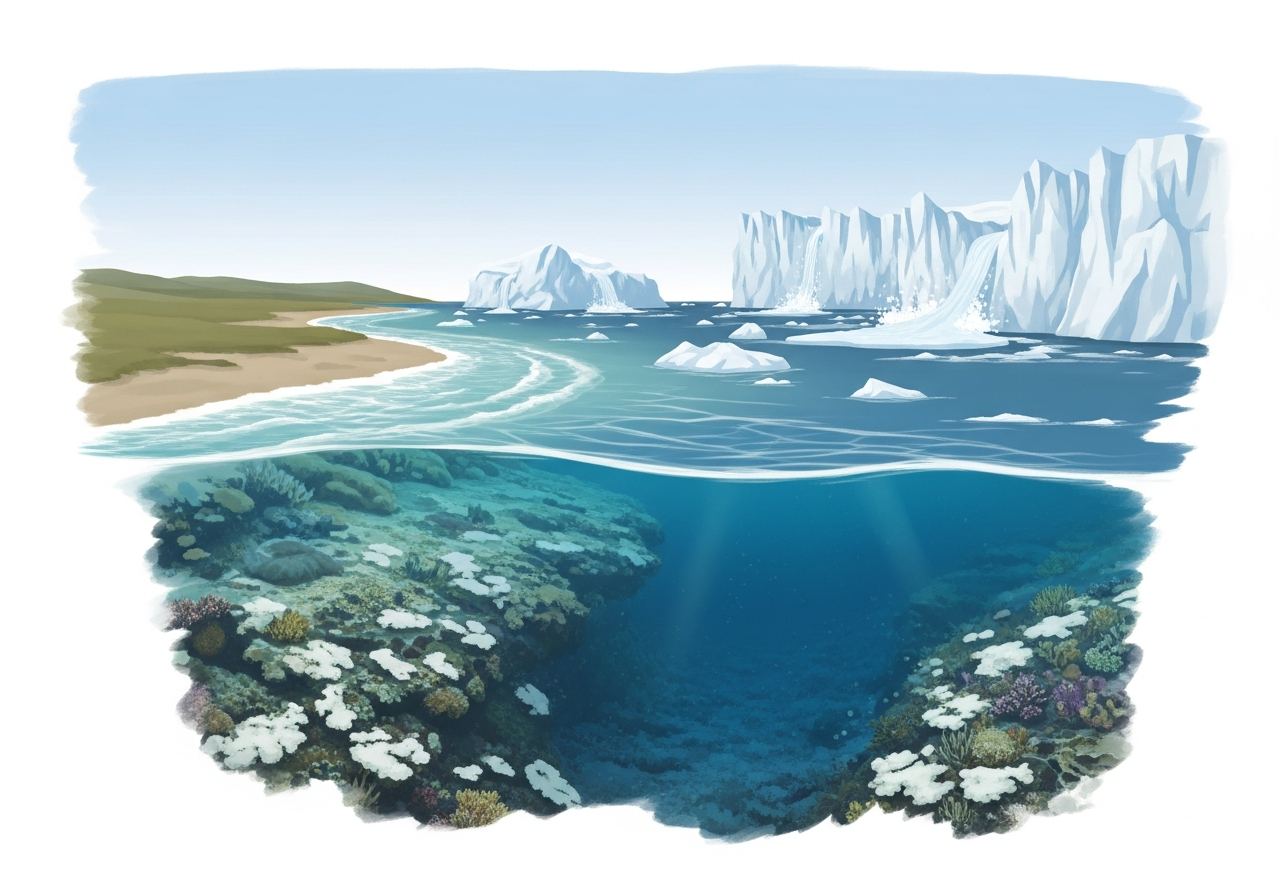
Rising global temperatures produce a cascade of environmental consequences. Polar ice sheets and glaciers are melting rapidly, contributing to sea level rise that threatens coastal communities worldwide. Warmer ocean temperatures cause coral reefs to expel their symbiotic algae in a process called coral bleaching, reducing marine biodiversity.

As oceans absorb excess CO, they undergo ocean acidification a decrease in pH that harms marine organisms, particularly those with calcium carbonate shells. Thawing permafrost releases stored methane and CO, creating a dangerous feedback loop that accelerates warming further.

Climate change also disrupts weather patterns, leading to more frequent and intense extreme weather events such as hurricanes, droughts, floods, and heat waves. These changes affect ecosystems worldwide, forcing many species to migrate or adapt a concept explored further in Environmental Change and Ecosystem Alterations and Ecosystems, Sustainability, and Conservation Strategies.

The concept of albedo is also important here: ice and snow reflect sunlight back into space, but as ice melts, darker ocean and land surfaces absorb more solar energy, amplifying warming in a positive feedback loop.
Solutions and Global Responses

Addressing anthropogenic climate change requires both individual and collective action. Renewable energy sources including solar, wind, and hydroelectric power generate electricity without releasing greenhouse gases, reducing reliance on fossil fuels. Individuals can reduce their personal carbon footprint by using public transportation, conserving energy, and choosing sustainable products.

The Paris Agreement is an international treaty in which nearly 200 countries committed to limiting global temperature rise to well below 2°C above pre-industrial levels by collectively reducing greenhouse gas emissions. This global cooperation reflects the scale of action required.

These solutions connect to Environmental Technology and Green Solutions, Traditional Practices and Sustainable Methods, and Ecological Wisdom and Sustainable Practices, all of which explore pathways toward a more sustainable relationship with Earth's systems.

Key Terms & Definitions

Anthropogenic: Originating from or caused by human activities. In climate science, anthropogenic effects are changes to Earth's climate driven by human behavior rather than natural processes.

Greenhouse Gases: Gases such as carbon dioxide (CO), methane (CH), and nitrous oxide (NO) that trap heat in Earth's atmosphere, intensifying the greenhouse effect and driving global warming.

Greenhouse Effect: The process by which gases in Earth's atmosphere absorb and re-radiate heat from the sun, keeping the planet warm. Human activities have enhanced this effect, causing excess warming.

Carbon Footprint: The total amount of greenhouse gases measured in CO equivalents produced directly and indirectly by an individual, organization, or activity. Reducing one's carbon footprint helps mitigate climate change.

Deforestation: The large-scale removal of forests for agriculture, logging, or development. Deforestation eliminates carbon sinks and releases stored carbon into the atmosphere, raising greenhouse gas levels.

Fossil Fuels: Ancient carbon-rich materials including coal, oil, and natural gas formed from decomposed organisms over millions of years. Burning fossil fuels releases CO and is the largest source of anthropogenic greenhouse gas emissions.

Global Warming: The measurable rise in Earth's average surface temperature caused by the enhanced greenhouse effect, driven primarily by increased concentrations of CO and other greenhouse gases.

Carbon Sinks: Natural systems such as forests and oceans that absorb and store more carbon than they release, helping to balance the global carbon cycle. Deforestation and ocean acidification reduce the effectiveness of carbon sinks.

Ocean Acidification: The process by which oceans become more acidic as they absorb excess CO from the atmosphere, forming carbonic acid. This harms marine organisms, especially those with calcium carbonate shells such as corals and mollusks.

Renewable Energy: Energy generated from naturally replenishing sources such as solar, wind, and hydroelectric power that produce little to no greenhouse gas emissions during operation, reducing dependence on fossil fuels.

Albedo: The measure of how much solar energy a surface reflects. Ice and snow have high albedo, reflecting sunlight. As ice melts due to warming, darker surfaces absorb more heat, creating a positive feedback loop that accelerates climate change.

Permafrost: Permanently frozen ground found in polar and high-altitude regions. As global temperatures rise, permafrost thaws and releases stored methane and CO, amplifying the greenhouse effect in a dangerous feedback cycle.

Methane (CH): A potent greenhouse gas released by livestock digestion, landfills, rice paddies, and natural gas leaks. Methane traps approximately 80 times more heat than CO over a 20-year period.

Nitrous Oxide (NO): A greenhouse gas released primarily from synthetic fertilizers used in agriculture. It is nearly 300 times more effective at trapping heat than CO and contributes significantly to anthropogenic climate change.

Paris Agreement: An international climate treaty signed by nearly 200 countries, committing them to reduce greenhouse gas emissions and limit global temperature rise to well below 2°C above pre-industrial levels.

Sea Level Rise: The increase in ocean water levels caused by melting glaciers and ice sheets adding water to the oceans, and by the thermal expansion of warming seawater. Sea level rise threatens coastal communities worldwide.

Coral Bleaching: A stress response in corals caused by rising ocean temperatures, in which corals expel their symbiotic algae and turn white. Without these algae, corals can starve and die, reducing marine biodiversity.

Urban Heat Islands: Areas within cities where concrete, asphalt, and buildings absorb and radiate heat, making urban areas significantly warmer than surrounding rural regions and increasing overall energy consumption.

Applying Knowledge: Real-World Connections

Students can deepen their understanding of anthropogenic effects by analyzing real-world data on CO concentrations, global temperature records, and deforestation rates. Examining the relationship between industrial growth and rising greenhouse gas levels helps learners connect scientific concepts to historical and current events.

Calculating a personal carbon footprint accounting for transportation, energy use, and food choices makes abstract concepts tangible. Learners can then identify specific actions to reduce emissions, connecting individual behavior to global outcomes. This practical application is supported by the study of Conservation and Environmental Protection and Environmental Science, Resource Management, and Sustainable Practices.

Building on Prior Knowledge

This topic builds on several foundational concepts. System Interactions, Energy and Matter Flow and Natural Systems and Environmental Relationships provide the framework for understanding how Earth's interconnected systems respond to human interference. Biodiversity and Species Relationships explains why ecosystem disruption from climate change threatens the variety of life on Earth.

Mastery of this topic prepares learners for more advanced study in Global Change and Environmental Effects, Environmental Science, Sustainability, and Conservation Strategies, and Energy Resources: Renewable and Non-Renewable.

Related Topics & Connections

This topic is part of a broader network of interconnected science concepts. Future Scenarios and Climate Predictions extends the analysis of anthropogenic effects by modeling what Earth's climate may look like if current trends continue. Climate Records and Historical Knowledge provides the long-term data needed to understand how dramatically human activity has altered Earth's climate compared to natural baselines.

Ocean Influence and Marine Effects on Climate explores how oceans regulate temperature and absorb CO, making them central to understanding both the causes and consequences of anthropogenic change. Food Webs and Energy Transfer shows how climate disruption cascades through ecosystems, affecting species at every level of the food chain.

Together, these related topics form a comprehensive picture of how human activity reshapes Earth's natural systems and what learners, communities, and nations can do to respond.