Multivariable Calculus Help: Video Lessons & Practice
Work through every topic with clear solutions. Start your free practice test now!
Value vs. Private Tutor
Expert instruction at an affordable price.

Multi-Subject
Master any subject and switch anytime.

Build Mastery
You keep going until it truly sticks.
Try It Now
Test your knowledge
Our approach aligns with the evidence
Exam Scores
Better Recall
Less Anxiety
Multivariable Calculus Topics
1. Three Dimensions
2. Vector Functions
3. Partial Derivatives
4. Partial Derivative Applications
5. Multiple Integrals
6. Multiple Integral Applications
6 Chapters · 34 Topics · 249 Videos
Discover Our Learning Areas
Explore key subjects and start learning with interactive content.







What is Multivariable Calculus?
Multivariable Calculus is the branch of mathematics that extends the ideas of differentiation and integration to functions of more than one variable. Where single-variable calculus studies curves in a plane, multivariable calculus studies surfaces, volumes, and vector fields in three-dimensional space. It is a compulsory module in most UK mathematics, physics, and engineering degrees, typically taken in the first or second year after A-Level Mathematics.
The course builds directly on your knowledge of limits, derivatives, and integrals from Calculus I and II, and it prepares you for Differential Equations, Real Analysis, and advanced applied mathematics. If you are looking for Multivariable Calculus help — whether for coursework, a class test, or your end-of-year written exam — understanding the core ideas deeply is far more useful than memorising procedures.
What topics are covered in Multivariable Calculus?
A typical UK university Multivariable Calculus module covers the following areas:
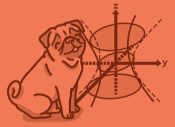
Functions of several variables. You learn to read, sketch, and interpret functions f(x, y) and f(x, y, z) — including level curves and level surfaces — before any calculus begins. Building this geometric intuition early makes every later topic easier.
Partial derivatives and the gradient. Partial differentiation is the first major new operation. You differentiate with respect to one variable while holding the others fixed. From there you build the gradient vector, directional derivatives, and the multivariable chain rule — topics that appear heavily in both coursework and exams.
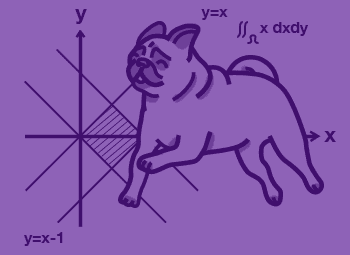
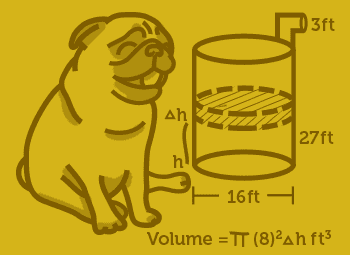
Multiple integrals. Double and triple integrals extend the area-under-a-curve idea to volumes and mass calculations over two- and three-dimensional regions. A significant part of the course involves switching between Cartesian, polar, cylindrical, and spherical coordinates to simplify integrals — a skill that requires plenty of timed practice to become reliable.
Vector calculus. The final section introduces vector fields together with the operations of divergence, curl, and flux. Line integrals and surface integrals follow, leading to the three major theorems: Green's Theorem, Stokes' Theorem, and the Divergence Theorem. These theorems unify the course and are the most common source of exam questions at the higher mark bands.
Is Multivariable Calculus hard for UK university students?
Honestly, most students find it a genuine step up from A-Level work. The abstraction increases quickly once you move from partial derivatives into multiple integrals and vector calculus. The most common struggles are:
Visualisation. Working comfortably in three dimensions takes time. Sketching surfaces and understanding orientation is not something most students have practised before university.
Coordinate changes in multiple integrals. Knowing when to switch to polar or spherical coordinates — and then carrying out the substitution correctly — is where many students lose marks. It requires both conceptual understanding and procedural fluency.
Stokes' Theorem and the Divergence Theorem. These are the hardest topics for most students. The difficulty is not just algebraic — you need to understand what the theorems are saying geometrically, and you need to choose the right one for each problem. Working through many varied examples, watching each step explained clearly, is the most effective preparation.
The good news is that these are learnable difficulties. Students who work through structured practice problems and watch concept-led explanations consistently outperform those who only attend lectures.
How is Multivariable Calculus assessed at UK universities?
Most UK universities assess this module through a combination of weekly or fortnightly problem sets and a final written examination. The exam typically carries 60–80% of the module mark and lasts two to three hours. Questions range from routine computation — evaluating a double integral, finding a gradient — to multi-step applied problems and, at some institutions, short proof questions.
Some departments also include a mid-term class test worth 10–20% of the mark. Regardless of your specific institution, timed practice under exam conditions is one of the highest-value study activities you can do in the weeks before assessment.
What comes before and after Multivariable Calculus?
The standard UK prerequisite is A-Level Mathematics, ideally with A-Level Further Mathematics if your institution requires it. You should be confident with single-variable differentiation and integration, including integration by parts and substitution, as well as the basics of vectors and matrices. Some universities require students to take a bridging or refresher calculus module in their first term before advancing to the multivariable course.
After Multivariable Calculus, the natural next steps are Ordinary Differential Equations, Vector Analysis or Mathematical Methods (which extends the vector calculus ideas), Real Analysis, and — for physics and engineering students — Classical Mechanics and Electromagnetism modules that apply multivariable calculus directly.
Why use StudyPug for Multivariable Calculus help?
StudyPug is built specifically for university-level mathematics students who need more than a lecture recording. Here is what makes it different for Multivariable Calculus in particular:
Diagnostic assessment. Before you start revising, a quick diagnostic identifies the exact topics where your understanding has gaps. Instead of working through everything and hoping for the best, you study what actually needs attention. For a course as broad as Multivariable Calculus, this is a genuine time-saver in the weeks before exams.
Certified-teacher concept videos. The videos are made by experienced instructors, not AI-generated content. Each lesson teaches the method — the reasoning behind each step — so you understand deeply enough to adapt when exam questions vary the format. You can rewatch any lesson as many times as you need, at your own pace, until it genuinely clicks. That is something a single lecture cannot offer.
Adaptive practice. The practice system adjusts difficulty based on your performance. As you get more confident with partial derivatives, the system moves you on; if you struggle with a surface integral, it gives you more of those until you are solid. This keeps practice sessions efficient and targeted.
Mock exams for midterms and finals. Full practice tests built around the structure of university assessments help you develop exam technique alongside subject knowledge. Timed mock exams are the closest simulation to the real thing, and finishing them under pressure is the best confidence-builder before your written exam.
All courses in one subscription. Multivariable Calculus does not exist in isolation. Your degree will take you through Calculus I and II, Linear Algebra, Differential Equations, and beyond. StudyPug covers all of these in a single subscription, so you are never starting from scratch when a new module begins.
What you learn in Multivariable Calculus on StudyPug
StudyPug's Multivariable Calculus content covers the full scope of a typical UK university module. Topic areas include:
- Functions of several variables, domains, and level curves
- Limits and continuity in two and three dimensions
- Partial derivatives, higher-order partial derivatives, and the Clairaut theorem
- The gradient vector, directional derivatives, and tangent planes
- The multivariable chain rule and implicit differentiation
- Optimisation — local maxima and minima, saddle points, and the second derivative test
- Lagrange multipliers for constrained optimisation
- Double integrals in Cartesian and polar coordinates
- Triple integrals in Cartesian, cylindrical, and spherical coordinates
- Change of variables and the Jacobian
- Vector fields, divergence, and curl
- Line integrals of scalar functions and vector fields
- The Fundamental Theorem for Line Integrals and conservative fields
- Green's Theorem
- Surface integrals and flux
- Stokes' Theorem
- The Divergence Theorem
Each topic has dedicated practice problems and worked video solutions. If you are stuck on a specific area — even something as narrow as switching to spherical coordinates in a triple integral — you can go straight to that lesson without sitting through material you already know.
How to use StudyPug effectively for Multivariable Calculus
The students who get the most out of StudyPug treat it as an active study tool rather than passive viewing. Here is a practical approach that works well for this course:
Step 1 — Run the diagnostic. Do this at the start of term or as soon as you feel you are falling behind. It takes a few minutes and gives you a prioritised list of topics to address. Do not skip this step — it is the single fastest way to make your revision efficient.
Step 2 — Watch the concept video before attempting problems. For each topic, watch the lesson first. Pay attention to the reasoning, not just the algebra. Pause and replay any step that is unclear. The goal is to understand why the method works, not just what to write.
Step 3 — Work through the practice problems immediately after. Do not wait until the day before an exam to practise. The adaptive system will adjust difficulty as you go. Make mistakes now — they are far less costly here than in your exam.
Step 4 — Use mock exams for exam preparation. In the final two to three weeks before your written exam, shift your focus to timed full-length practice tests. These build both stamina and exam technique. Review every question you lost marks on and rewatch the relevant lesson if the concept is still shaky.
Step 5 — Revisit weak areas using the free practice content. Free daily practice problems are available without a subscription — use them to stay sharp on topics you have already studied, so they do not fade before exam day.
Multivariable Calculus is challenging, but it is entirely learnable with the right resources and consistent effort. Start your free practice test today and find out exactly where to focus first.
Multivariable Calculus FAQ
Unsure how StudyPug works? Need help with setting up? Check our frequently asked questions or contact us for help.
What do you learn in Multivariable Calculus, and what topics does it cover?
Multivariable Calculus extends single-variable calculus into higher dimensions. Core topics include functions of several variables, partial derivatives, gradients, directional derivatives, multiple integrals (double and triple), line integrals, surface integrals, and the major theorems — Green's, Stokes', and the Divergence Theorem. You develop the ability to analyse curves, surfaces, and vector fields, skills that underpin physics, engineering, economics, and machine learning at university level.
What is the difference between Multivariable Calculus and Single-Variable Calculus?
Single-Variable Calculus deals with functions of one input — derivatives and integrals of f(x). Multivariable Calculus generalises this to functions of two or more variables, introducing partial derivatives, multiple integrals, and vector calculus tools. The jump in abstraction is significant: you work in 3D space, reason about surfaces and fields, and apply theorems like Stokes' and the Divergence Theorem that have no single-variable equivalent. It is a prerequisite for many advanced modules in mathematics, physics, and engineering.
What are the prerequisites for Multivariable Calculus, and what course comes after it?
You need a solid grounding in Single-Variable Calculus — differentiation, integration, sequences, and series — and ideally some exposure to vectors and basic linear algebra. A-Level Mathematics (or equivalent) is the typical UK entry point. After Multivariable Calculus, students commonly progress to Differential Equations, Vector Analysis, Real Analysis, or Complex Analysis, depending on their degree programme.
Is Multivariable Calculus hard, and where do students struggle most?
Most students find it a significant step up. The three most common sticking points are: visualising functions in three dimensions, applying the chain rule correctly across multiple variables, and understanding when and how to switch coordinate systems in multiple integrals. Vector calculus theorems — especially Stokes' and the Divergence Theorem — also trip up many students because they require connecting abstract theory to concrete computation. Regular practice with worked examples is the most effective way through these challenges.
How is Multivariable Calculus assessed at UK universities?
Assessment typically combines coursework and written examinations. Most UK universities use a mix of problem-set assignments throughout the term and a final written exam — often worth 60–80% of the module mark. Some departments include a class test or progress exam mid-term. Questions focus on computation (evaluating integrals, applying theorems) as well as proof and conceptual explanation. Past paper practice and timed mock exams are the most effective preparation strategies.
What is one of the hardest topics in Multivariable Calculus, and how do you approach it?
Stokes' Theorem is widely considered the most challenging topic. It relates a surface integral of a vector field's curl to a line integral around the boundary curve. The difficulty is threefold: choosing the correct orientation, parameterising the surface or boundary correctly, and knowing when to apply Stokes' versus the Divergence Theorem. The best approach is to build intuition by working through many concrete examples — cylinders, paraboloids, planes — before tackling abstract proofs. Seeing the steps worked out visually, multiple times, makes the pattern recognisable.





Written by the StudyPug Team
Last updated June 5, 2026
3 M+
students
★★★★★
4.8 average
K–12
all grades