Calculus 1 Help: Video Lessons & Practice
Step-by-step solutions for limits, derivatives and integrals — so you're ready for every problem, not just the next one.
Value vs. Private Tutor
Learn Calculus 1 without pricey tutors.

Multi-Subject
Struggling with limits but need chem help.
Build Mastery
Master every topic before moving on.
Try It Now
Test your knowledge
Our approach aligns with the evidence
Exam Scores
Better Recall
Less Anxiety
Calculus 1 Topics
1. Limits
2. Differentiation
3 Chapters · 31 Topics · 217 Videos
Discover Our Learning Areas
Explore key subjects and start learning with interactive content.





What is Calculus 1?
Calculus 1 is the first university-level calculus course, introducing the two foundational pillars of calculus: differential calculus (the study of rates of change) and the beginnings of integral calculus (the study of accumulation). It is a core module for mathematics, engineering, physics, economics, and computer science degrees across UK universities.
The course begins with limits — the precise language that makes calculus rigorous — and builds through derivatives, their rules, and their applications, before closing with definite and indefinite integrals and the Fundamental Theorem of Calculus. Students who leave Calculus 1 with a genuine understanding of derivatives and limits are set up to succeed in Calculus 2, Linear Algebra, and beyond.
What topics are covered in Calculus 1?
Calculus 1 covers a well-defined sequence of topics that build on each other. A typical UK university syllabus includes the following.
Limits and continuity. The epsilon-delta definition, one-sided limits, limits at infinity, and identifying where functions are continuous or discontinuous. Limits underpin every other concept in the course.
Differentiation rules. The power rule, product rule, quotient rule, and chain rule are the workhorses of Calculus 1. Students apply these rules to polynomial, trigonometric, exponential, and logarithmic functions.
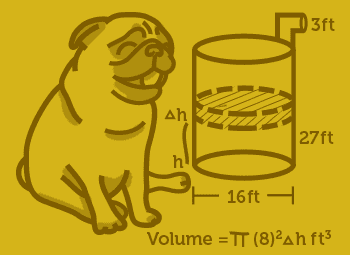
Implicit differentiation and related rates. When a relationship between variables is not written explicitly as y = f(x), implicit differentiation allows you to find dy/dx anyway. Related rates problems apply this to real scenarios — a balloon inflating, a ladder sliding — where multiple quantities change simultaneously with respect to time.
Applications of derivatives. L'Hôpital's Rule for indeterminate limits, curve sketching using first and second derivative tests, finding local and global extrema, and applied optimisation problems.
Introduction to integration. Antiderivatives, indefinite integrals, Riemann sums, definite integrals, and the Fundamental Theorem of Calculus. Some courses also introduce the substitution rule (u-substitution) as the first integration technique.
Is Calculus 1 hard at university?
Calculus 1 is widely considered one of the most challenging first-year courses — not because the ideas are impossible, but because they require a shift from the procedural approach common at A-Level to a more conceptual understanding.
The topics where students most commonly struggle are: (1) the formal definition of a limit, which can feel abstract compared to the intuitive idea; (2) the chain rule in multi-layered compositions; (3) related rates problems, which demand careful problem-setup before any calculus is done; and (4) knowing which technique to apply in integration, even at the introductory level.
The students who perform best in Calculus 1 do not leave practice until the week before the exam. They work through problems consistently — using past papers, problem sets, and timed quizzes — and they treat every mistake as information about which method they have not yet internalised.
What comes after Calculus 1 — where does it lead?
Calculus 1 is the gateway to the rest of the calculus sequence and to a wide range of higher mathematics. The direct next step is Calculus 2, which extends integration techniques (integration by parts, partial fractions, improper integrals) and introduces sequences and series, including power series and Taylor expansions.
After Calculus 2, students typically progress to Calculus 3 (multivariable calculus — partial derivatives, multiple integrals, vector fields) alongside Linear Algebra and Ordinary Differential Equations. All of these courses depend directly on the skills built in Calculus 1.
Beyond pure mathematics, Calculus 1 content underpins engineering mechanics, economic optimisation, statistical modelling, signal processing, and machine learning. A strong Calculus 1 foundation is not just useful for passing the module — it pays dividends across an entire degree and into a career.
Why StudyPug for Calculus 1?
StudyPug is built for exactly the kind of intensive, course-specific support that Calculus 1 demands. Here is what makes the difference.
Certified-teacher concept videos that teach the method, not just the answer. Every Calculus 1 video lesson is recorded by an experienced instructor who walks through the reasoning behind each step. You do not just see that the chain rule gives a particular answer — you understand why, so you can apply the same logic to the next problem without needing to look it up. These are not AI-generated explanations; they are real teachers delivering real instruction, and you can watch any lesson as many times as you need until it clicks.
Diagnostic assessment that finds your gaps immediately. Before you spend hours reviewing topics you already know, StudyPug's diagnostic assessment identifies exactly where your Calculus 1 understanding breaks down. This means your study time is spent on the topics that will move your grade, not on revision you do not need.
Adaptive practice that responds to your performance. Once you begin practising, the difficulty of questions adjusts to your current level. If you are comfortable with straightforward derivatives, the system challenges you with chain rule compositions and optimisation. If you are still consolidating limits, it stays there until you are ready to progress. Every session is focused and efficient.
Full exam preparation for midterms and finals. Practice tests and mock exams are structured to reflect the format of university end-of-term examinations. You can practise under timed conditions, review worked solutions, and identify patterns in the types of questions that appear. Being familiar with the exam format is one of the most reliable ways to reduce exam-day anxiety and improve your mark.
All university courses in one subscription. StudyPug includes Calculus 1 and 2, Calculus 3, Linear Algebra, Differential Equations, Statistics, and much more — all in one plan. There is no extra charge when you move from Calculus 1 to Calculus 2. You start building familiarity with the next course the moment you finish the current one.
30-day money-back guarantee. If StudyPug is not right for you, contact support within 30 days for a full refund — no questions asked.
What you will learn in Calculus 1 with StudyPug
StudyPug's Calculus 1 content covers the complete university syllabus, including all major topic areas: limits and continuity, differentiation rules, implicit differentiation, related rates, applications of derivatives (curve sketching, optimisation, L'Hôpital's Rule), and introductory integration. Each topic has dedicated video lessons, worked examples, and adaptive practice problems.
Because no validated topic-specific URLs are available for the UK Calculus 1 course at this time, individual topic pages are not linked here. Use the Topics browser in your StudyPug dashboard to navigate directly to any Calculus 1 chapter and begin practising.
How to use StudyPug for Calculus 1
The most effective way to use StudyPug for Calculus 1 is to begin with the diagnostic assessment before your first lecture or in the first week of term. This creates a clear map of which foundational skills (from A-Level) are solid and which need reinforcement before the university content builds on them.
From there, use the video lessons to preview each new topic before your lecture, and return to them after for consolidation. Work through the adaptive practice problems after each topic — do not skip to the mock exams without building the underlying skills. Save the full practice tests and mock final exams for the final three to four weeks before your university exams, and use them under timed conditions.
Between sessions, the StudyPug mobile app means you can fit in short practice sets — even ten minutes on a single topic — which compounds into significant improvement over a semester. Free practice content is available without a subscription, so you can start immediately and decide whether the full platform is right for you before committing.
Calculus 1 FAQ
Unsure how StudyPug works? Need help with setting up? Check our frequently asked questions or contact us for help.
What do you learn in Calculus 1, and what topics does it cover?
Calculus 1 is the first university-level calculus course, covering the foundational ideas of change and accumulation. Core topics include limits and continuity, differentiation rules (power, product, quotient, chain), implicit differentiation, related rates, curve sketching, optimisation, and an introduction to integration with the Fundamental Theorem of Calculus. By the end of the course you should be comfortable computing derivatives and basic integrals and applying them to real-world problems in science and engineering.
What is the difference between Calculus 1 and Calculus 2?
Calculus 1 focuses on limits and differential calculus — learning how to find and apply derivatives — with a brief introduction to integration. Calculus 2 extends the integration work substantially, covering techniques such as integration by parts, partial fractions, and improper integrals, as well as sequences, series, and Taylor expansions. Calculus 1 is the prerequisite for Calculus 2; a solid understanding of differentiation and basic antiderivatives from Calculus 1 is essential before progressing.
What are the prerequisites for Calculus 1, and what course comes after it?
Most UK universities require strong A-Level Maths (or equivalent) as the prerequisite for Calculus 1 — particularly confidence with algebra, functions, trigonometry, and basic differentiation and integration concepts from A-Level. Some programmes accept Further Maths A-Level students directly into more advanced content. After Calculus 1 the natural progression is Calculus 2 (advanced integration and series), followed by Calculus 3 (multivariable calculus), Linear Algebra, and Differential Equations depending on your degree pathway.
Is Calculus 1 hard, and where do students struggle most?
Calculus 1 has a reputation for being one of the more demanding first-year courses, particularly for students whose A-Level preparation focused on procedures rather than understanding. The most common difficulty spots are the epsilon-delta definition of a limit, applying the chain rule correctly in complex compositions, related rates word problems (translating a real scenario into a derivative equation), and knowing when and how to apply L'Hôpital's Rule. Consistent practice on each topic — rather than leaving revision until the week before exams — makes the biggest difference.
How is Calculus 1 assessed — coursework, midterms, and finals?
Assessment structures vary by UK university, but Calculus 1 is typically examined through a combination of weekly or fortnightly problem sets (coursework worth 20–30% of the module), a mid-semester test or class test, and a final written examination at the end of the term (often 70–80% of the module mark). Some institutions replace the midterm with additional coursework. Past papers and timed mock exams are the most reliable way to prepare for the final examination.
What is one of the hardest topics in Calculus 1, and how do you approach it?
Related rates problems are consistently rated the hardest topic in Calculus 1. The challenge is two-fold: setting up the correct geometric or physical relationship between variables, then differentiating implicitly with respect to time. The most effective approach is to follow a fixed structure — draw a diagram, assign variables, write an equation relating them, differentiate both sides with respect to t using the chain rule, substitute known values last. Practising 10–15 varied examples (expanding balloon, sliding ladder, filling cone) until the setup feels automatic is more valuable than memorising specific answers.





Written by the StudyPug Team
Last updated June 5, 2026
3 M+
students
★★★★★
4.8 average
K–12
all grades