Physics Help: Video Lessons & Practice
Step-by-step solutions for every topic — so you're prepared for A-Level exams, not just tonight's homework.

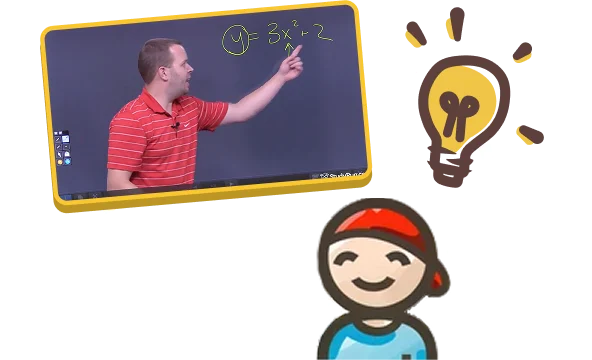
Certified-Teacher Concept Videos
Learn the method behind every answer. Experienced instructors walk you through mechanics, electricity and waves step by step — watch as many times as you need until it clicks.
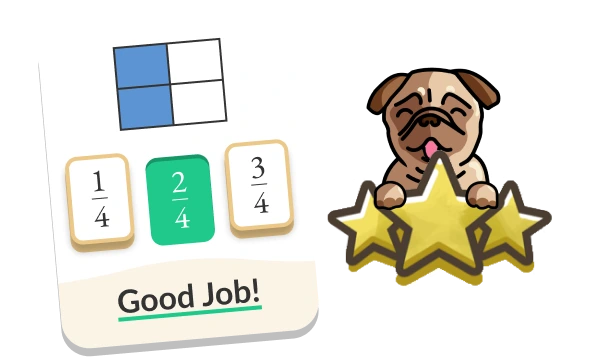
Diagnostic Assessment & Adaptive Practice
A quick diagnostic pinpoints exactly where to focus. Then practice adjusts to your level — so every session builds real confidence, not wasted effort.

A-Level Exam Preparation
Work through mock papers and topic-based practice tests built around the A-Level curriculum. Spot your weak areas before results day — not after.
Physics Topics
1. Scalars, Vectors and Motion
2. Kinematics
3. Forces
4. Work and Energy
5. Momentum
6. Equilibrium
7. Circular Motion
8. Gravitation
9. Electrostatics
10. Geometric Optics
Discover Our Learning Areas
Explore key subjects and start learning with interactive content.


What is A-Level Physics?
A-Level Physics is a two-year qualification studied in Years 12 and 13 in England, Wales, and Northern Ireland. It is one of the most respected and challenging science A-Levels, providing a rigorous grounding in the laws and principles that underpin the physical world. Students who complete A-Level Physics leave with strong analytical and quantitative skills valued by universities and employers across science, technology, engineering, and mathematics fields.
The course is examined by major awarding bodies including AQA, OCR (A and B), and Edexcel. While specifications differ slightly, all share a core of classical and modern physics — from Newtonian mechanics to quantum behaviour and nuclear physics. Assessment takes place through written exams at the end of Year 13, supplemented by a non-graded Practical Endorsement.
What topics are covered in A-Level Physics?
A-Level Physics is broad and progressive. In Year 12, students typically cover measurements and units, mechanics (forces, momentum, energy, and power), materials, waves, electricity, and an introduction to quantum physics. Year 13 deepens this into fields (gravitational, electric, and magnetic), simple harmonic motion, thermal physics, nuclear and particle physics, and optional topics such as astrophysics, medical physics, or engineering physics depending on the specification.
Mathematical content is woven throughout. Students work with vectors, trigonometry, logarithms, exponential functions, and basic calculus. Confidence with algebra and graph interpretation is essential from day one. The GCSE-to-A-Level transition is steep precisely because the mathematics becomes a primary tool for expressing physical ideas — not just a supporting skill.
Is A-Level Physics hard? Where do students struggle most?
A-Level Physics is consistently ranked among the harder A-Levels. The difficulty is not simply content volume — it is the requirement to think mathematically about abstract physical situations. Students who found GCSE Physics manageable are often surprised by how demanding Year 12 becomes within the first term.
The topics that cause the most difficulty are: fields and potential (students struggle to connect the mathematics to physical intuition), simple harmonic motion (the layered relationships between displacement, velocity, and acceleration are non-trivial), quantum and nuclear physics (highly abstract, with unfamiliar terminology), and circuit analysis under A-Level conditions (more complex scenarios than GCSE). The answer to all of these is the same: work through problems step by step, understand the method behind each equation, and practise with exam-standard questions until the approach becomes automatic.
How is A-Level Physics assessed?
Under all major specifications, A-Level Physics is assessed entirely by written examinations at the end of Year 13. AQA, for example, uses three papers: Paper 1 (mechanics and materials, waves, electricity, further mechanics, and fields), Paper 2 (nuclear physics, thermal physics, and optional topics), and Paper 3 (practical skills and data analysis, plus further optional topics). Each paper is 2 hours and together they cover the full specification.
In addition to the written exams, students complete a Practical Endorsement — a teacher-assessed record of practical competence. This appears on your certificate as a separate pass/fail mark and is required by many university courses (particularly Physics, Engineering, and Medicine), but it does not contribute numerically to your A-Level grade. Your letter grade depends entirely on exam performance, which is why consistent physics practice and past-paper work are so important throughout both years.
Why use StudyPug for A-Level Physics?
StudyPug is built around the way students actually learn physics — by seeing a method explained clearly, then practising until it becomes second nature. The platform combines three things that work together: a diagnostic assessment, certified-teacher video lessons, and adaptive practice.
The diagnostic assessment identifies exactly which topics need attention before you waste time on areas you already know. This is especially valuable for A-Level Physics, where a weak foundation in mechanics or electricity can cascade into problems across later topics like fields and SHM.
The certified-teacher concept videos are made by experienced instructors — not AI-generated content. Each video teaches the method: why an equation applies, how to set up the problem, and what to check. You can rewatch any lesson as many times as you need — until it genuinely clicks, not just until the exam is over. This depth of understanding is what prepares you for the next course, not just this one.
Adaptive practice adjusts to your performance. As you improve on a topic, questions increase in difficulty — so you are always working at the right level rather than repeating easy problems or being thrown into questions beyond your current ability.
For A-Level Physics, StudyPug also provides mock exam papers and topic-based practice tests structured around the A-Level format. Practising under exam conditions — timed, topic-matched, and reviewed with step-by-step solutions — is one of the most effective ways to improve marks on the actual papers.
What A-Level Physics topics can I study on StudyPug?
StudyPug covers the full scope of A-Level Physics content, including mechanics, waves and optics, electricity and circuits, fields (gravitational, electric, and magnetic), simple harmonic motion, thermal physics, quantum physics, nuclear and particle physics, and astrophysics. All of these are included within a single StudyPug subscription — alongside other subjects you may be studying, such as A-Level Maths or Chemistry.
For each topic, you have access to video lessons that teach the concept, practice problems that build fluency, and worked solutions that show every step. Whether you are working through a topic for the first time, revisiting something before a mock, or doing final revision before your A-Level papers, the same resources are available whenever you need them.
No validated internal topic URLs were available for this page at time of publication. Visit the StudyPug Physics course page to browse the full topic list and start practising.
How to get started with StudyPug for Physics
Getting started is straightforward. Begin with the diagnostic assessment — it takes a short time to complete and gives you a clear picture of which Physics topics to prioritise. From there, watch the concept video for your first target topic, then move into practice problems. Use the adaptive practice to build fluency, and work through mock papers as your exams approach.
Free practice content is available without a subscription, so you can try the platform before committing. When you are ready for full access — unlimited video lessons, all practice tests, and every topic across the A-Level Physics specification — a paid subscription unlocks everything. Every subscription includes a 30-day money-back guarantee: if StudyPug is not right for you, you can get your money back, no questions asked.
Start your free practice test now and see how StudyPug can improve your Physics results before your next exam.
Physics FAQ
Unsure how StudyPug works? Need help with setting up? Check our frequently asked questions or contact us for help.
What do you learn in A-Level Physics, and what topics does it cover?
A-Level Physics covers a broad range of topics across two years. Core areas include mechanics (forces, motion, energy), waves and optics, electricity and circuits, fields (gravitational, electric, magnetic), quantum physics, nuclear physics, and particle physics. Many specifications also include astrophysics or medical physics as optional modules. The course builds strong analytical and mathematical skills, making it excellent preparation for physics, engineering, or any science degree.
What is the difference between A-Level Physics and A-Level Chemistry?
A-Level Physics focuses on fundamental laws that govern matter and energy — motion, forces, fields, waves, and quantum behaviour. A-Level Chemistry centres on atomic structure, chemical bonding, reactions, and organic chemistry. Physics is more mathematically intensive, requiring confident use of calculus and algebra, while Chemistry balances calculation with descriptive and practical content. Many students study both; they complement each other well, particularly for medicine, biomedical science, or chemical engineering pathways.
What are the prerequisites for A-Level Physics, and what comes after it?
You typically need a strong GCSE grade in Physics (or Combined Science) and GCSE Maths — most sixth forms ask for at least grade 6 in both. A-Level Maths alongside Physics is highly recommended, as the course involves significant mathematical reasoning. After A-Level Physics, students commonly progress to undergraduate Physics, Engineering, Computer Science, or Astrophysics. The skills developed — problem-solving, modelling, and quantitative analysis — are valued across many degree disciplines.
Is A-Level Physics hard, and where do students struggle most?
A-Level Physics is widely regarded as one of the most demanding A-Levels. The step up from GCSE is steep: topics become much more mathematical, and abstract concepts like quantum mechanics, electric fields, and simple harmonic motion challenge even strong students. The areas students find hardest most often are fields and potential, SHM, and nuclear/particle physics. Consistent practice with past-paper questions and understanding the method — not just the formula — is what separates students who struggle from those who thrive.
How is A-Level Physics assessed — papers, coursework, and practical skills?
A-Level Physics in England (AQA, OCR, Edexcel) is assessed entirely through written exams at the end of Year 13 — typically three papers covering different topic areas. There is no coursework, but practical skills are assessed separately through a Practical Endorsement, which is reported as a pass/fail on your certificate and does not contribute to your letter grade. Strong performance in the written papers is therefore decisive, making thorough exam practice essential throughout both years.
What is one of the hardest topics in A-Level Physics, and how do you approach it?
Simple Harmonic Motion (SHM) is consistently one of the most challenging topics. It requires students to connect displacement, velocity, acceleration, and energy through calculus-based relationships — and to visualise a system oscillating in real time. The best approach is to start with the defining equation (a = −ω²x), understand what each term means physically, then practise sketching the graphs before touching calculations. Working through a sequence of past-paper SHM questions with full solutions — pausing to check your understanding of each step — builds the pattern recognition that exam questions reward.