College Algebra Help — Video Lessons & Practice
Get clear explanations for any College Algebra problem and build exam-ready confidence.
Value vs. Private Tutor
Expert instruction at a fraction of the cost.

Multi-Subject
One subscription unlocks all subjects.
Practice Until Perfect
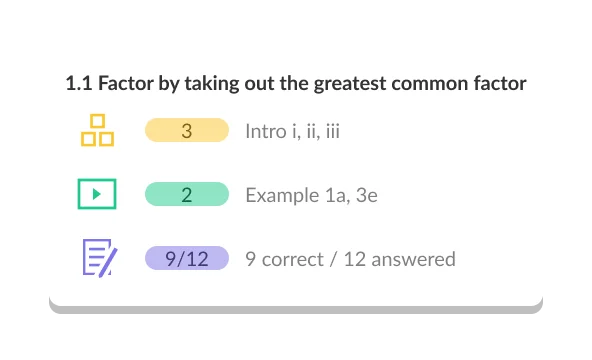
Practice until it truly clicks.
Try It Now
Test your knowledge
Our approach aligns with the evidence
Exam Scores
Better Recall
Less Anxiety
College Algebra Topics
1. Surface Area and Volume
2. Rational Numbers
3. Powers and Exponents
4. Number System and Radicals
5. Radicals
6. Exponents
7. Operations of Polynomials
8. Factorising Polynomial Expressions
9. Introduction to Relations and Functions
10. Linear Functions
11. Absolute Value Functions
12. Linear Equations
13. Solving Linear Systems
14. Linear Inequalities
15. Inequalities in Two Variables
16. Factorising Quadratic Equations
17. Quadratic Functions
18. Quadratic Equations and Inequalities
19. Graphing Rational Functions
20. Functions
21. Direct and Inverse Variation
22. Piecewise Functions
23. Transformations of Functions
24. Exponential Functions
25. Logarithmic Functions
26. Applications of Exponential and Logarithmic Functions
27. Sequences and Series
28 Chapters · 215 Topics · 1321 Videos
Discover Our Learning Areas
Explore key subjects and start learning with interactive content.



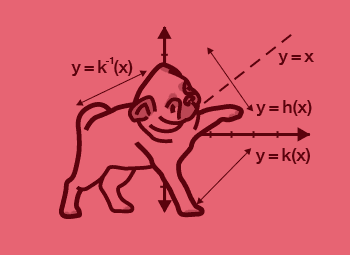

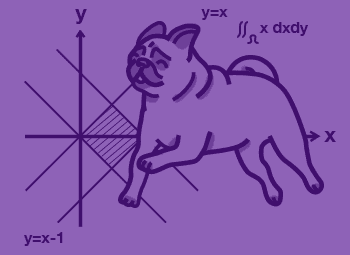



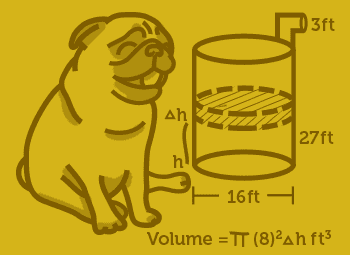
What is College Algebra?
College Algebra is a structured mathematics course that develops deep algebraic fluency. It covers functions and their graphs, polynomial and rational expressions, exponential and logarithmic relationships, systems of equations, sequences and series, and complex numbers. In the UK context, the content maps closely onto the pure mathematics strand of A-Level Mathematics, making it an essential foundation for Year 12 and Year 13 students preparing for their A-Level exams and beyond.
The course sits above GCSE algebra in complexity but is fully accessible to students who are comfortable solving quadratic equations and working with algebraic expressions. It is both a standalone qualification and a bridge to higher-level mathematics, statistics, physics, economics, and computer science.
What topics does College Algebra cover?
College Algebra is broader than many students expect. The main topic areas are:
Functions. Definition, notation, domain and range, composite functions, inverse functions, transformations of graphs, and piecewise-defined functions. Functions are the language of all higher mathematics, so this section receives significant weight.
Polynomial and rational expressions. Factorising, dividing polynomials using long division and the factor theorem, rational expressions, partial fractions, and asymptotic behaviour. These skills appear directly in A-Level pure papers.
Exponential and logarithmic functions. Laws of logarithms, solving exponential equations, natural logarithm, and real-world modelling with growth and decay. This is one of the most practically useful topics in the course.
Systems of equations. Solving simultaneous linear and nonlinear systems using substitution, elimination, and matrix methods. These problems develop logical, systematic thinking.
Sequences and series. Arithmetic and geometric sequences, sigma notation, the binomial theorem, and convergence of geometric series. These topics feature prominently in UK A-Level examinations.
Conic sections and complex numbers. Circles, parabolas, ellipses, and hyperbolas; introduction to imaginary and complex numbers. These areas extend algebraic thinking into new mathematical territory.
Is College Algebra hard?
College Algebra is rigorous, but students who build their skills progressively find it very manageable. The difficulty comes in three forms.
First, abstraction: unlike GCSE maths, College Algebra asks you to reason about functions and variables in general terms, not just specific numbers. Students who are used to plugging values in can find the shift to symbolic reasoning uncomfortable at first.
Second, precision: algebraic manipulation requires exact working. A sign error on line three will produce a wrong answer on line ten, and the examiner cannot award follow-through marks unless the method is clear. Developing neat, structured working habits is as important as understanding the concepts.
Third, volume: there are many interconnected topics, and the A-Level exam draws on all of them. Students who fall behind on functions, for example, will find logarithms harder because the two topics are closely linked.
The most commonly struggled-with areas are inverse and composite functions, logarithmic equations, and partial fractions. Each of these becomes straightforward with targeted practice — which is exactly where an adaptive platform makes the biggest difference.
What comes before and after College Algebra?
The prerequisite is solid GCSE-level algebra: expanding brackets, factorising quadratics, solving linear and quadratic equations, working with indices and surds, and sketching straight-line graphs. Students who arrive without these foundations will find College Algebra very challenging. A short diagnostic can reveal any gaps quickly, allowing targeted catch-up before the main course begins.
After College Algebra, the natural progression is Pre-Calculus (deepening function knowledge and introducing trigonometry) and then A-Level Mathematics at Year 13, which adds calculus — differentiation, integration, differential equations — alongside statistics and mechanics. Students aiming for mathematics, physics, engineering, economics, or computer science at university will use College Algebra content throughout their degree. It is one of the most rewarding investments a sixth-form student can make.
How does College Algebra connect to A-Level Maths?
In the UK, College Algebra is not a separate qualification in the way it is in the US college system. Instead, its content forms the pure mathematics core of A-Level Mathematics (and to a greater depth, A-Level Further Mathematics). The AQA, Edexcel, OCR, and WJEC A-Level specifications all assess functions, polynomials, logarithms, sequences, and proof — every major College Algebra strand.
A-Level examinations are sat at the end of Year 13, typically comprising three written papers of two hours each. Two papers cover pure mathematics (where College Algebra topics are central) and one covers applied mathematics (statistics and mechanics). Questions are unseen, multi-step, and reward clear algebraic working. Students who can fluently manipulate expressions, solve equations, and reason about functions are well placed to score in the upper grade bands.
Practising with exam-style questions based on real A-Level paper formats — rather than generic textbook exercises — is the fastest route to exam readiness.
Why StudyPug for College Algebra?
StudyPug is built around three things that make a measurable difference for College Algebra students.
A diagnostic that removes wasted time. Rather than working through the course from page one, you begin with a short diagnostic assessment that identifies exactly which College Algebra topics you already understand and which need work. The result is a personalised study path — no more spending an hour on something you could already do.
Certified-teacher video lessons that teach the method. Every lesson is recorded by a certified teacher who explains not just what the answer is but how to think through the problem. This is the critical difference between copying a solution and being able to reproduce it under exam conditions. The explanations are clear, paced for self-study, and available any time — including the night before a mock exam.
Adaptive practice that builds real fluency. After watching a lesson, you practise. StudyPug's adaptive practice adjusts question difficulty based on your responses, so you are always working at the edge of your ability rather than coasting on easy problems or drowning in ones that are too hard. This is how students move from fragile familiarity to genuine exam-ready confidence.
The content is aligned to the UK curriculum and A-Level Mathematics specifications, so every lesson and practice set is relevant to what you will actually be assessed on. You can access everything on any device, at any time, making it easy to fit study into a busy sixth-form schedule.
What you will learn — College Algebra curriculum coverage
StudyPug's College Algebra content covers every major topic area in the UK A-Level pure mathematics curriculum:
- Functions: domain, range, composite and inverse functions, graph transformations
- Polynomials: factor theorem, polynomial division, remainder theorem
- Rational expressions and partial fractions
- Exponential and logarithmic functions: laws of logs, solving exponential equations, natural log
- Systems of equations: simultaneous linear and nonlinear, matrix methods
- Sequences and series: arithmetic, geometric, binomial theorem, convergence
- Conic sections: circles, parabolas, ellipses
- Complex numbers: imaginary unit, arithmetic with complex numbers, Argand diagram
- Algebraic proof and inequality
Each topic has dedicated video lessons, worked examples, and practice problems. You can jump directly to any topic using the course navigation, or follow the recommended sequence generated by your diagnostic results.
Note: No validated internal topic-page links are available in the current site map for this page. Links will be added as topic pages are published.
How to use StudyPug for College Algebra
Step 1 — Run the diagnostic. Take the short diagnostic assessment when you first sign up. It maps your current knowledge across all College Algebra topics and generates a prioritised study plan. This takes around fifteen minutes and immediately tells you where to focus.
Step 2 — Watch the concept video. For each topic on your plan, start with the certified-teacher video lesson. Watch it through once, then replay any section that was not immediately clear. The videos are designed for self-study, so the teacher anticipates the exact points where students tend to get confused.
Step 3 — Practise adaptively. After the video, move to practice problems. The adaptive system will adjust difficulty based on your answers. Aim to reach a comfortable level of fluency on each topic before moving on — the system will tell you when you are ready.
Step 4 — Use exam-style practice before assessments. In the weeks before a mock or A-Level exam, use StudyPug's exam-style questions to practise under timed conditions. These are based on real exam formats and cover the multi-step problem types that appear on A-Level papers. Review any video lesson for a topic you get wrong, then attempt similar questions again.
Step 5 — Track your progress. Use StudyPug's progress tracking to see which topics are secure and which still need work. Revisit the diagnostic periodically to check that earlier topics have not faded. Consistent, spaced review is the most reliable way to retain College Algebra content for the long exam season.
Everything is available 24 hours a day, on desktop, tablet, or mobile — so you can fit College Algebra practice into whatever time you have, whether that is a full study session or fifteen minutes between lessons.
College Algebra FAQ
Unsure how StudyPug works? Need help with setting up? Check our frequently asked questions or contact us for help.
What do you learn in College Algebra, and what topics does it cover?
College Algebra covers the core algebraic skills needed for advanced maths study. Topics include functions and their graphs, polynomial and rational expressions, exponential and logarithmic functions, systems of equations, sequences and series, and complex numbers. You will also work through inequalities, conic sections, and algebraic proof. The course builds the analytical reasoning skills that underpin A-Level Mathematics and further STEM study, giving students a thorough grounding in algebraic thinking and problem-solving techniques.
What is the difference between College Algebra and Pre-Calculus?
College Algebra focuses on algebraic structures: manipulating expressions, solving equations and inequalities, and understanding functions in depth. Pre-Calculus extends that foundation by introducing trigonometry, limits, and the behaviour of functions as they approach calculus concepts. Think of College Algebra as the essential toolkit and Pre-Calculus as the bridge toward differentiation and integration. Many students study College Algebra first to ensure their algebraic fluency is solid before tackling the additional demands of Pre-Calculus and A-Level further maths content.
Is College Algebra hard, and where do students struggle most?
College Algebra is manageable with consistent practice, but several topics catch students out. Functions — particularly composite and inverse functions — are a common stumbling block, as is working with logarithms and exponential equations. Rational expressions and systems of equations with multiple variables also cause difficulty. The abstract nature of proof and the precision required in algebraic manipulation trip up even diligent students. The good news is that these are learnable skills: breaking each concept into small steps and practising regularly makes a significant difference to both understanding and exam performance.
What should I study before College Algebra, and what comes after it?
Before College Algebra you should be comfortable with GCSE-level algebra: solving linear and quadratic equations, working with indices, and basic graph sketching. A solid understanding of number and ratio also helps. After completing College Algebra, students are well placed to move into Pre-Calculus, A-Level Mathematics, or equivalent further maths qualifications. It also underpins statistics, physics, economics, and computer science at sixth-form level and beyond, making it one of the most transferable mathematical foundations a Year 12 student can build.
Is College Algebra assessed in A-Level Maths, and how is it tested?
Yes. The algebraic content of College Algebra maps directly onto the A-Level Mathematics specification in England, Wales, and Northern Ireland. Functions, polynomials, logarithms, and sequences all appear in the A-Level pure mathematics papers. Students are tested through unseen written examinations at the end of Year 13, typically three papers of two hours each. Questions range from short procedural problems to extended multi-step proofs. Practising with exam-style questions based on real A-Level paper formats is one of the most effective ways to build the fluency and timing needed to perform well.
What is one of the hardest concepts in College Algebra, and how do you tackle it?
Inverse and composite functions are consistently the most challenging area for College Algebra students. Inverse functions require you to reverse the operations of a function algebraically and understand the graphical reflection in y = x — a concept that demands both algebraic accuracy and spatial reasoning. Composite functions add a layer of abstraction by feeding one function into another. The best approach is to start with simple linear examples, master the notation, then work up to rational and exponential cases. Drawing graphs at each stage and checking answers by verifying that f(f⁻¹(x)) = x cements understanding.





Written by the StudyPug Team
Last updated June 5, 2026
3 M+
students
★★★★★
4.8 average
K–12
all grades