Integral Calculus Help: Video Lessons & Practice
Work through every topic with clear solutions. Start your free practice test now!

Value vs. Private Tutor
Expert Integral Calculus help affordably.

Multi-Subject
One subscription covers all subjects.
Unlimited Practice
Practice integrals until they truly click.
Try It Now
Test your knowledge
Our approach aligns with the evidence
Exam Scores
Better Recall
Less Anxiety
Integral Calculus Topics
1. Integrals
2. Integration Techniques
3. Integration Applications
4. Differential Equations
5. Sequence and Series
6. Parametric Equations and Polar Coordinates
6 Chapters · 49 Topics · 346 Videos
Discover Our Learning Areas
Explore key subjects and start learning with interactive content.






What Is Integral Calculus?
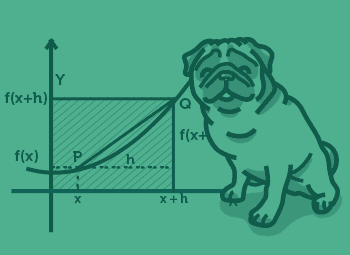
Integral Calculus is the branch of mathematics that studies accumulation — how quantities build up over an interval. At its core, an integral measures the area under a curve, but the applications stretch across physics, engineering, economics, and biology. In Irish universities and at Leaving Certificate Higher Level, Integral Calculus typically follows Differential Calculus and forms a core part of any mathematics or science programme.
The subject splits into two main strands: indefinite integrals, which reverse the process of differentiation to find a general antiderivative, and definite integrals, which compute a precise numerical value over a fixed interval. The bridge between them — the Fundamental Theorem of Calculus — is one of the most important results in all of mathematics.
Why Is the Fundamental Theorem of Calculus So Important?
The Fundamental Theorem of Calculus connects differentiation and integration, showing they are inverse operations. Part 1 states that if you integrate a continuous function and then differentiate the result, you recover the original function. Part 2 gives you a practical way to evaluate definite integrals using antiderivatives, avoiding the lengthy limit-of-sums approach. Understanding this theorem deeply — not just as a formula to apply — is what separates students who find integration intuitive from those who feel lost when problems vary slightly from the examples they have seen.
What Are the Main Integration Techniques, and When Do You Use Each One?
Integral Calculus requires you to recognise patterns and choose the right strategy. The principal techniques are:
Substitution (u-substitution): Use this when the integrand contains a function and its derivative. It effectively reverses the chain rule and is the most frequently tested technique at first-year level.
Integration by Parts: Derived from the product rule, this technique handles products of functions — for example, x·eˣ or x·ln x. The LIATE priority rule helps you choose which factor to differentiate.
Partial Fractions: Used for rational functions where the degree of the numerator is less than the denominator. You decompose the fraction into simpler terms that can each be integrated directly.
Trigonometric Integrals and Substitution: Certain integrands involving sin²x, cos²x, or expressions like √(a²−x²) require trigonometric identities or a trigonometric substitution to simplify before integrating.
Building fluency means practising each technique on its own, then on mixed problem sets where you must first identify the right approach before computing.
What Are the Most Common Applications of Definite Integrals?
Definite integrals are not just abstract calculations — they model real-world accumulation. The most important applications covered in Irish university Integral Calculus courses include:
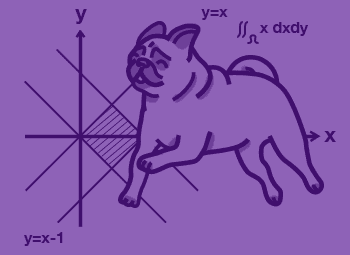
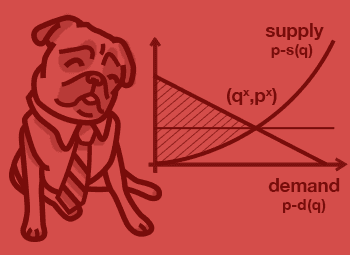
Area between curves: Subtract the lower function from the upper function and integrate over the intersection interval. Watch for cases where the curves switch position.
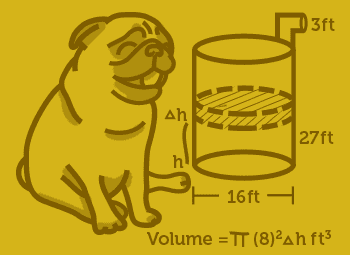
Volumes of solids of revolution: Using the disc, washer, or shell method, you can calculate the volume generated by rotating a curve around an axis. This appears in both engineering and physics modules.
Arc length and surface area: Integration computes the exact length of a curve between two points, useful in structural engineering and differential geometry.
Improper integrals: When a limit of integration is infinite or the integrand has a discontinuity, you use limits to evaluate whether the integral converges to a finite value.
How Does Integral Calculus Relate to Differential Equations?
Differential Equations are the direct follow-on from Integral Calculus. A separable ordinary differential equation (ODE) is solved by rearranging and integrating both sides — so your integration technique skills transfer immediately. First-order linear ODEs use an integrating factor, again relying on integration by parts or substitution. Students who develop strong Integral Calculus technique before starting Differential Equations consistently find that module much more manageable. StudyPug covers both courses under one subscription, so the progression is seamless.
How Is Integral Calculus Examined in Ireland?
At Leaving Certificate level, integral calculus appears in the Leaving Certificate Higher Level Mathematics paper and requires you to evaluate definite integrals, find areas under curves, and work with antiderivatives — all under timed conditions. At university, assessment typically combines continuous assessment (quizzes, assignments) worth 20–30% with a formal end-of-semester examination worth the remainder. Timed practice under exam conditions is essential: being able to recognise the correct technique quickly is as important as executing it accurately. Mock tests and past-paper practice are among the highest-leverage study activities for this course.
Why Use StudyPug for Integral Calculus Help?
StudyPug is built specifically for students who need more than a textbook re-read. Here is what makes it effective for Integral Calculus:
Certified-teacher video lessons that teach the method. Every lesson is recorded by an experienced, certified mathematics teacher — not generated by AI. The focus is always on why a technique works and how to choose it, so you build genuine understanding that carries forward into Differential Equations and beyond.
Diagnostic assessment that finds your gaps fast. Before you spend hours on topics you already understand, a quick diagnostic identifies exactly which areas of Integral Calculus need work. You study what matters, not what is easiest to review.
Adaptive practice that grows with you. As your skills improve, the practice problems adjust in difficulty. You are always working at the right level — challenging enough to push progress, clear enough to avoid frustration.
Exam preparation based on real exam formats. Practice tests and mock exams are structured to reflect the format of Leaving Certificate Higher Level Maths papers and university semester examinations. You can replay video solutions as many times as you need until each technique is secure.
All courses in one subscription. Integral Calculus, Calculus I–III, Linear Algebra, Differential Equations, and Statistics are all included. There is no extra charge for additional modules.
30-day money-back guarantee. Every subscription is backed by a full 30-day money-back guarantee. Start with confidence — if it is not the right fit, you get your money back.
What You Learn: Integral Calculus Topic Coverage
StudyPug's Integral Calculus course covers all major topics you will encounter at Irish university and Leaving Certificate Higher Level. Core areas include:
- Antiderivatives and indefinite integrals
- The Fundamental Theorem of Calculus (Parts 1 and 2)
- Definite integrals and properties of integration
- U-substitution and change of variables
- Integration by parts
- Trigonometric integrals and trigonometric substitution
- Partial fraction decomposition
- Area between curves
- Volumes of solids of revolution (disc, washer, and shell methods)
- Arc length and surface area of revolution
- Improper integrals and convergence
- Numerical integration (trapezoidal rule, Simpson's rule)
Each topic has its own set of video lessons, worked examples, and practice problems so you can move through the course systematically or jump directly to the area causing difficulty.
How to Use StudyPug for Integral Calculus Practice
The most effective way to use StudyPug is to start with the diagnostic assessment. It takes only a few minutes and produces a personalised focus list — the specific Integral Calculus topics where your time will have the greatest impact.
From there, watch the certified-teacher concept video for that topic. Pause after each worked example and try the next problem yourself before watching the solution. This active retrieval approach is the single best way to move from recognising a method to being able to execute it independently under exam pressure.
Use the adaptive practice problems to build fluency. As you get more right, the difficulty increases automatically. When you are comfortable with individual techniques, move to mixed practice sets that require you to identify the correct method — exactly what your Leaving Cert or university examination will ask.
In the weeks before your exam, run through the mock tests under timed conditions. Review any question you got wrong by rewatching the relevant video lesson, then attempt a similar practice problem. Repeat until confident. This cycle — diagnose, watch, practise, test — is how StudyPug students build the kind of solid understanding that holds up on exam day and carries forward into the next course.
Integral Calculus FAQ
Unsure how StudyPug works? Need help with setting up? Check our frequently asked questions or contact us for help.
What do you learn in Integral Calculus, and what topics does it cover?
Integral Calculus focuses on the theory and computation of integrals. You will cover antiderivatives and indefinite integrals, definite integrals and the Fundamental Theorem of Calculus, integration techniques such as substitution, integration by parts, partial fractions, and trigonometric integrals, as well as applications including areas between curves, volumes of solids of revolution, and improper integrals. At Irish universities it typically forms the second half of a first-year calculus sequence following Differential Calculus.
What is the difference between Integral Calculus and Differential Calculus?
Differential Calculus studies rates of change — derivatives tell you how a function is changing at any point. Integral Calculus studies accumulation — integrals measure the total amount accumulated over an interval. The two are linked by the Fundamental Theorem of Calculus, which shows that differentiation and integration are inverse operations. Students typically study Differential Calculus first, then Integral Calculus, before combining both skills in courses such as Multivariable Calculus or Differential Equations.
What are the prerequisites for Integral Calculus, and what course comes after it?
You should be comfortable with Differential Calculus — limits, derivatives, and the rules of differentiation — before starting Integral Calculus. Leaving Certificate Higher Level Maths provides a solid foundation. After Integral Calculus, most students progress to Multivariable Calculus (Calculus II or Calculus III depending on your programme), Differential Equations, or Real Analysis. Engineering and physics programmes also build directly on integration in modules covering mechanics and electromagnetism.
Is Integral Calculus hard, and where do students struggle most?
Integral Calculus is widely considered one of the more demanding first-year university modules in Ireland. The biggest difficulty is recognising which integration technique to use — substitution, integration by parts, or partial fractions — because unlike differentiation, there is no single universal rule. Students also struggle with improper integrals and setting up area or volume problems correctly. The key is deliberate practice: working through varied problems, not just re-reading notes, is what builds real fluency with integration.
How is Integral Calculus assessed — continuous assessment, midterms, and finals in Ireland?
At most Irish universities, Integral Calculus is assessed through a combination of continuous assessment and end-of-semester written examinations. Continuous assessment typically accounts for 20–30% of your grade and may include online quizzes, homework assignments, or in-class tests. The remaining 60–80% is examined in a formal end-of-semester or summer examination. Some programmes use Leaving Certificate Higher Level Maths results for entry placement, and students aiming for first-class honours should practise both timed problem sets and proof-based questions.
What is one of the hardest topics in Integral Calculus, and how should you approach it?
Integration by parts is consistently the topic students find most difficult. The method follows the formula ∫u dv = uv − ∫v du, and the challenge lies in choosing u and dv wisely — a poor choice creates a harder integral than you started with. The LIATE rule (Logarithmic, Inverse trig, Algebraic, Trigonometric, Exponential) gives a useful priority order for choosing u. The best approach is to practise many worked examples, study the method in each step, and then attempt similar problems independently before checking solutions.





Written by the StudyPug Team
Last updated June 5, 2026
3 M+
students
★★★★★
4.8 average
K–12
all grades