Macroeconomics Help: Video Lessons & Practice
Work through every topic with clear solutions. Start your free practice test now!
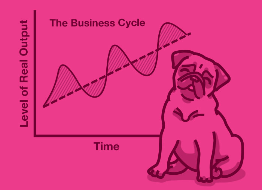
Value vs. Private Tutor
Get expert Macroeconomics help for less.

Multi-Subject
All Irish curriculum subjects in one plan.
Build Mastery
Master it before moving on.
Macroeconomics Topics
1. Measuring GDP
2. Jobs and Inflation
3. Understanding Economic Growth
4. Finance and Loans
5. Money and Banks
6. The Exchange Rate
7. Aggregate Supply and Demand
8. The Keynesian Model
9. Inflation and Unemployment
9 Chapters · 36 Topics · 118 Videos
Discover Our Learning Areas
Explore key subjects and start learning with interactive content.
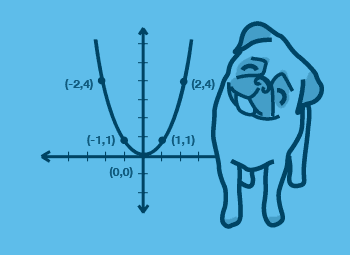













What is Macroeconomics?
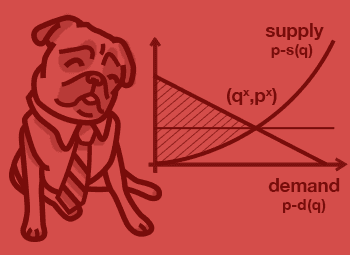
Macroeconomics is the branch of economics that studies how entire economies behave — examining national output, employment, price levels, and the policies governments and central banks use to influence them. Rather than looking at a single firm or consumer, macroeconomics asks questions at the broadest scale: why do some economies grow faster than others, what causes recessions, and how does a change in interest rates ripple through wages, investment, and trade? For Irish university students, macroeconomics sits at the core of every economics, business, and finance degree, providing the analytical toolkit needed to understand policy debates and global markets.
What Topics Are Covered in a University Macroeconomics Course?
A typical first- or second-year macroeconomics module at an Irish university covers a wide range of interconnected topics. You begin with the measurement of national income — GDP, GNP, and Ireland's distinctive GNI* measure — and the expenditure, income, and output approaches. From there the course moves into aggregate demand and aggregate supply, exploring what shifts each curve and how the economy reaches equilibrium.
Fiscal policy examines how government spending and taxation affect output and employment, while monetary policy looks at how the European Central Bank uses interest rates and other tools to control inflation in the euro area. Inflation itself is studied in depth — its causes, its measurement through the CPI and HICP, and its relationship with unemployment via the Phillips Curve. International topics include comparative advantage, exchange rate determination, the balance of payments, and the current account — all especially relevant for an open economy like Ireland's. Advanced modules introduce the IS-LM framework, DSGE models, and open-economy extensions such as the Mundell-Fleming model.
Is Macroeconomics Hard? Where Do Students Struggle?
Macroeconomics has a reputation for being difficult, and for good reason: it requires thinking in interconnected systems where every variable affects several others simultaneously. The IS-LM model is the single topic students most frequently find overwhelming — it combines the goods market and the money market into one diagram, and small errors in reasoning about one market cascade into wrong conclusions about the other.
Other common sticking points include the AD-AS framework under different supply shocks, the transmission mechanism of monetary policy, and the balance of payments accounting identity. Students who come from the Leaving Cert Economics syllabus sometimes find the shift to formal model-based analysis at university level jarring — the Leaving Cert rewards definition and description, while university exams reward analytical application and diagram interpretation.
The most effective remedy is deliberate practice: work through past exam questions topic by topic, draw the diagrams by hand until the logic is automatic, and make sure you can explain the mechanism in plain English as well as in the model. StudyPug's certified-teacher videos teach each mechanism step by step, so you understand why the result follows — not just what the textbook says to write.
How Is Macroeconomics Assessed at Irish Universities?
Assessment structures vary by institution, but most Irish university macroeconomics modules combine continuous assessment with a terminal written examination. Continuous assessment typically accounts for 20–40% of the overall grade and may include problem sets, short essays, data-analysis assignments, or in-class tests. The remaining 60–80% usually comes from a two- to three-hour written examination held in the Summer or Autumn sitting.
Exam questions commonly mix short-answer definitions or data-response sections with longer analytical essays requiring diagram work and policy evaluation. Some modules include a multiple-choice component. Unlike the Leaving Cert Economics paper, university macroeconomics exams place heavy emphasis on applying models to unseen scenarios — for example, analysing the macroeconomic impact of a government spending shock under fixed versus flexible exchange rates. Practising with timed mock exams and past papers is the single highest-return study activity in the weeks before your sitting.
What Is the Hardest Topic in Macroeconomics, and How Do You Tackle It?
The IS-LM model stands out as the topic that most consistently separates students who do well from those who struggle. It simultaneously determines the equilibrium interest rate and output level by combining the investment-savings relationship (IS curve) with money market equilibrium (LM curve). Students often memorise the slopes without understanding the intuition, which means any twist in an exam question — a change in money demand behaviour, an investment function with different parameters — leaves them unable to adapt.
The best approach is to build each curve from scratch. For the IS curve, start from the Keynesian cross, introduce investment as a function of the interest rate, and derive the inverse relationship between interest rates and output. For the LM curve, use money demand and supply to show why higher income raises interest rates. Once both curves are clear independently, practise shifting them under different fiscal and monetary policy scenarios — expansionary fiscal policy, quantitative easing, a fall in consumer confidence — until you can predict the direction of change and explain the mechanism in a sentence or two.
Why StudyPug for Macroeconomics Help?
StudyPug is built for university students who need more than a textbook. Three things set it apart for macroeconomics.
First, the diagnostic assessment. Before you watch a single video, StudyPug identifies exactly which macroeconomics topics are solid and which ones need work. You stop wasting revision time on material you already understand and focus where it counts — whether that is aggregate demand, monetary policy transmission, or the open-economy Mundell-Fleming model.
Second, certified-teacher concept videos that teach the method. StudyPug's instructors are experienced teachers — not AI-generated narration — and every video is structured around understanding the mechanism, not just copying the answer. That depth matters: if you understand why the IS curve slopes downward, you can answer any IS-LM question the exam throws at you, not just the ones you have seen before.
Third, adaptive practice. The practice system adjusts its difficulty to your current level, pushing you forward when you are confident and slowing down when a concept needs more attention. Mock exam sets replicate the pressure of an end-of-semester sitting, so your first timed attempt is not in the exam hall.
One subscription covers every course on the platform — Macroeconomics, Microeconomics, Econometrics, Calculus, Statistics, and more — with no per-course fees and a 30-day money-back guarantee.
What You Learn: Macroeconomics Course Coverage
StudyPug's macroeconomics content covers the full range of topics taught at Irish universities, including:
- National income accounting — GDP, GNP, GNI*, and Ireland's open-economy adjustments
- Aggregate demand and aggregate supply — shifts, shocks, and short-run versus long-run equilibrium
- Fiscal policy — multiplier effects, automatic stabilisers, government budget and debt dynamics
- Monetary policy — ECB tools, interest rate transmission, and inflation targeting
- Inflation and unemployment — CPI, HICP, the Phillips Curve, and expectations
- The IS-LM model — derivation, policy analysis, and liquidity traps
- International trade and exchange rates — comparative advantage, nominal and real exchange rates
- Balance of payments — current account, capital account, and Ireland's external position
- Economic growth — Solow model, human capital, and total factor productivity
- Open-economy macroeconomics — Mundell-Fleming under fixed and flexible exchange rates
Because no validated internal topic-page URLs are currently available for this course, explore the full topic list directly on the StudyPug Macroeconomics course page after signing in.
How to Use StudyPug for Macroeconomics
The most effective StudyPug workflow for macroeconomics students has four steps.
Step 1 — Run the diagnostic. Spend ten minutes on the diagnostic assessment at the start of term or when you join. It maps your current knowledge against the full course and builds a personalised priority list.
Step 2 — Watch the concept video before practising. For each topic, watch the certified-teacher video first. These are structured to explain the mechanism — why the result follows from the model — so that when the exam question changes the scenario, you can still work it out. Watch as many times as you need; there is no limit.
Step 3 — Practice problems with adaptive difficulty. After each video, move straight into the adaptive practice set. The system adjusts to your responses, spending more time on weaker areas and less on ones you have already secured. Track your progress by topic so you always know where you stand.
Step 4 — Mock exams before midterms and finals. In the week before your exam, use StudyPug's mock exam sets under timed conditions. Review every question you got wrong — the step-by-step solution video for each question shows the full method, not just the final number.
Students who follow this process consistently report that they arrive at their macroeconomics exam feeling prepared rather than anxious. Start your free practice questions today and see the difference a structured approach makes.
Macroeconomics FAQ
Unsure how StudyPug works? Need help with setting up? Check our frequently asked questions or contact us for help.
What do you learn in Macroeconomics, and what topics does it cover?
Macroeconomics examines how entire economies function. You study national income and GDP measurement, aggregate demand and supply, fiscal and monetary policy, inflation, unemployment, economic growth theory, international trade, and the balance of payments. At university level you also explore IS-LM and AD-AS models, exchange rate mechanisms, and open-economy macroeconomics. The course builds a framework for understanding government policy decisions and global economic events, equipping you to analyse real-world news through an economic lens.
What is the difference between Macroeconomics and Microeconomics?
Microeconomics studies individual decision-making — how consumers choose between goods, how firms set prices, and how markets clear at the product level. Macroeconomics zooms out to the whole economy: national output, overall price levels, aggregate employment, and the role of government and central banks. Both are essential; micro gives you the building blocks and macro shows how those blocks interact at a national and global scale. Most economics degrees require both, often in the same year.
What are the prerequisites for Macroeconomics, and what course comes after it?
Most Irish university macroeconomics modules assume Leaving Cert Economics or equivalent and a comfort with basic algebra and graphs. Some programmes pair it with introductory mathematics for economists in first year. After first-year macroeconomics, you typically progress to Intermediate Macroeconomics, then Advanced Macroeconomics covering DSGE models and open-economy dynamics. Econometrics is usually taken alongside or after intermediate macro, and many students specialise in monetary economics, development economics, or international finance at postgraduate level.
Is Macroeconomics hard, and where do students struggle most?
Macroeconomics is conceptually demanding because it requires you to think in systems — changes in one variable ripple across the whole model. Students most commonly struggle with the IS-LM model, understanding how monetary policy transmits through interest rates, and interpreting the AD-AS diagram correctly under different shocks. The balance of payments and exchange rate mechanics also trip people up. The key is working through plenty of practice problems and making sure you understand the mechanism behind each result, not just the graph shape.
How is Macroeconomics assessed at Irish universities — exams and assignments?
Assessment typically combines continuous assessment (problem sets, essays, or group projects worth 20–40%) with a terminal written examination at the end of semester. The end-of-year exam is usually the Autumn or Summer sitting and carries the majority of marks. Some modules include multiple-choice sections alongside longer analytical essay or diagram questions. Preparing with past papers and timed mock exams is essential — the Leaving Cert Economics exam format differs from university-level assessments, which demand more model application and critical analysis.
What is one of the hardest topics in Macroeconomics, and how do you approach it?
The IS-LM model is consistently the toughest topic for first- and second-year students. It links the goods market (IS curve) and the money market (LM curve) to determine equilibrium output and interest rates simultaneously. The best approach is to build each curve from first principles before combining them — understand why investment falls when interest rates rise (IS) and why money demand rises with income (LM). Then practise shifting each curve under fiscal and monetary shocks step by step, drawing the diagram each time until the logic is automatic.





Written by the StudyPug Team
Last updated June 5, 2026
3 M+
students
★★★★★
4.8 average
K–12
all grades