Year 11 Chemistry Help — Video Lessons & Practice
Get clear, step-by-step explanations for every Chemistry topic and build exam-ready confidence for your ATAR.

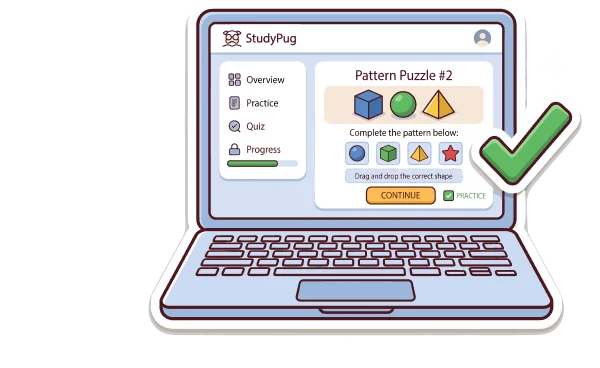
Value vs. Private Tutor
Expert Chemistry teaching without the price tag.
Multi-Subject
Stuck on chemistry? Switch anytime.
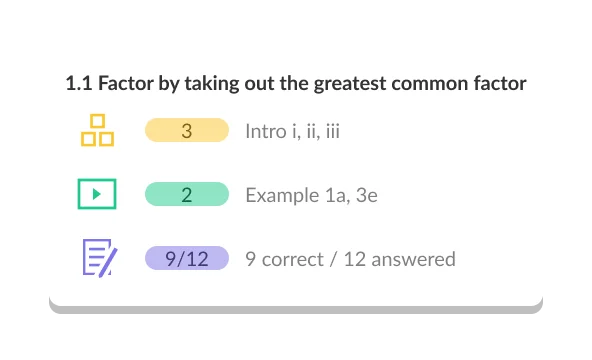
Build Mastery
Master one topic before the next.
Chemistry Topics
1. Introduction to Chemistry
2. The Atom
3. The Periodic Table and Elements
4. Compounds and Bonding
5. Chemical Reactions and Groups
6. Stoichiometry
7. Basic Organic Chemistry
8. Solution Chemistry
9. Energetics, Kinetics and Reaction Rate
10. Equilibrium
11. Acid-Base Theory
12. Solubility Equilibria
13 Chapters · 84 Topics · 695 Videos
Discover Our Learning Areas
Explore key subjects and start learning with interactive content.




What is Year 11 Chemistry?
Year 11 Chemistry is a senior secondary science subject that studies the composition, properties, and transformation of matter. Students investigate how atoms bond to form compounds, how chemical reactions occur and can be quantified, and how energy is involved in chemical changes. Across Australian states it is typically structured around themes such as the properties of matter, chemical reactions and stoichiometry, and the behaviour of acids and bases — forming the essential foundation for Year 12 Chemistry and ATAR success.
What topics are covered in Year 11 Chemistry?
The core content areas you will encounter in Year 11 Chemistry across Australian state syllabuses include:
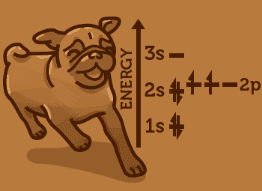
Atomic structure and the periodic table. You will study how atoms are built from protons, neutrons, and electrons, and how the periodic table organises elements by their electronic configurations and chemical behaviour. Understanding periodic trends — electronegativity, atomic radius, ionisation energy — underpins nearly everything that follows.
Chemical bonding. Ionic, covalent, and metallic bonding each produce materials with distinct properties. You will learn to predict bond types from electronegativity differences, draw Lewis structures, and use VSEPR theory to predict molecular shapes. This conceptual work connects directly to understanding solubility, conductivity, and melting points in practical assessments.
Stoichiometry and the mole concept. Converting between grams, moles, and particles; balancing equations; and calculating theoretical yield are the mathematical backbone of chemistry. Multi-step stoichiometry problems — including limiting reagents and percentage yield — are high-stakes topics in both internal assessments and ATAR-style external examinations.
Chemical reactions and equations. You will classify reactions (synthesis, decomposition, combustion, acid–base, redox) and practise writing balanced ionic and molecular equations. Practical investigations such as titrations reinforce the link between theory and experiment.
Acids and bases. The Arrhenius and Brønsted–Lowry models, pH calculations, neutralisation, and buffer concepts are central to Year 11 and continue into Year 12 equilibrium topics.
Introductory thermochemistry. Enthalpy changes, exothermic and endothermic reactions, and Hess's law introduce the energy dimension of chemical transformations and prepare you for more advanced Year 12 content on entropy and free energy.
Is Year 11 Chemistry hard?
Year 11 Chemistry is widely regarded as one of the more demanding senior subjects in Australia, and for good reason — it requires both deep conceptual understanding and reliable mathematical problem-solving. The difficulty is not that the ideas are impossibly abstract; it is that several concepts must be understood together before the next layer makes sense. Stoichiometry trips up students who try to memorise steps rather than understand the logic of converting between units. Bonding becomes clearer once periodic trends are internalised. Acids and bases click when you stop treating pH as a formula and start thinking about what proton transfer actually means.
The most effective approach is to engage with worked examples first — watching a certified teacher explain the reasoning behind each step — and then immediately attempt practice problems that push you to apply the same method independently. Passive reading of a textbook rarely produces the exam-ready skill that active problem-solving does.
Why use StudyPug for Year 11 Chemistry?
StudyPug is designed around the specific challenges Year 11 Chemistry students in Australia face. Before you spend a single minute on content, a diagnostic assessment identifies your exact knowledge gaps — so your study time goes to the concepts that will move your marks, not the ones you already understand. There is no guesswork, and no wasted revision sessions covering ground you have already covered.
Every lesson is delivered by a certified teacher in a short concept video that teaches the method, not just the answer. This matters most in Chemistry: watching how a teacher sets up a mole calculation, or decides which bonding model to apply, builds the problem-solving instinct that external assessments actually test. StudyPug lessons are not AI-generated — they are taught by real educators who understand where students get stuck.
After each video, adaptive practice adjusts difficulty based on your performance. Work through straightforward stoichiometry questions and the platform increases the challenge; struggle with electron configuration and it pulls back to rebuild the foundation. This keeps every study session productive rather than frustrating.
For Australian students preparing for ATAR examinations — whether the NSW HSC, VIC VCE, QLD QCAA, WA WACE, or other state assessments — StudyPug's content is aligned to local senior science syllabuses. Practice questions are based on real exam-style problems so that the format and style of your state's external examination feels familiar by the time you sit it.
You can start with free practice content right now — no subscription required — to see how the platform works. Full access, including all video lessons, the diagnostic, and adaptive practice, comes with a subscription backed by a 30-day money-back guarantee.
What you learn — Year 11 Chemistry curriculum coverage
StudyPug covers the complete Year 11 Chemistry curriculum as taught across Australian states and territories. Whether your school follows the NSW Stage 6 Chemistry Syllabus, the VIC VCE Chemistry Units 1 and 2 framework, the QLD QCAA Chemistry Senior Syllabus, or the WA WACE Chemistry Course, you will find lessons mapped to your specific topics and assessment requirements.
Core topic areas covered include:
- Atomic structure, electron configuration, and periodic trends
- Ionic, covalent, and metallic bonding; molecular geometry and VSEPR
- The mole concept, molar mass, and Avogadro's number
- Stoichiometry: balancing equations, limiting reagents, percentage yield
- Types of chemical reactions and ionic equations
- Acids and bases: pH, neutralisation, and titration calculations
- Introductory thermochemistry: enthalpy, calorimetry, and Hess's law
- Solutions, concentration, and solution stoichiometry
- Practical and investigative chemistry skills aligned to depth studies
Because no validated topic-level URLs are available for the Australian Chemistry course in the current sitemap, individual topic links are not listed here. You can browse the full topic list directly on the StudyPug Year 11 Chemistry course page.
How to use StudyPug for Year 11 Chemistry
Step 1 — Run the diagnostic. Sign up and complete the short Chemistry diagnostic assessment. It takes around ten minutes and gives you a personalised picture of which topic areas are strong and which need work. This is your study roadmap.
Step 2 — Watch the concept video for your first priority topic. Each video is short and focused on a single idea. Pause, rewind, and watch again if needed — there is no pressure to keep up with a class pace. The certified teacher works through the method so you understand the logic, not just the steps.
Step 3 — Do the adaptive practice immediately after. The practice problems that follow each video start at a matched difficulty level and adjust as you go. Getting a question wrong is part of the process — the platform responds by reinforcing the concept before progressing.
Step 4 — Use Photo Search if you are stuck on a specific problem. Photo Search lets you find the matching lesson for any Chemistry problem directly — useful when you have homework or a past exam question you cannot work through and need to find the right video fast.
Step 5 — Review ATAR-style practice questions before assessments. In the weeks before internal assessments or your state's external examination, work through exam-style practice sets. These are based on the question formats and content weighting of your state's Chemistry exam, so the real thing feels familiar rather than surprising.
StudyPug works best when you use it consistently alongside your school lessons — a short session after each class to review and practise is more effective than a long cramming session the night before an exam. Start with the diagnostic today and let the platform show you exactly where to focus.
Chemistry FAQ
Unsure how StudyPug works? Need help with setting up? Check our frequently asked questions or contact us for help.
What do you learn in Year 11 Chemistry, and what topics does it cover?
Year 11 Chemistry introduces the foundational ideas you need for senior science. You cover atomic structure and the periodic table, chemical bonding (ionic, covalent, and metallic), stoichiometry and the mole concept, chemical reactions and equations, acids and bases, and introductory thermochemistry. In most Australian states the course follows a state-specific senior science syllabus (for example, the NSW Stage 6 Chemistry Syllabus or the VIC Units 1–2 Chemistry curriculum), so the exact sequence can vary slightly by state.
What is the difference between Year 11 Chemistry and Year 11 Physics?
Chemistry focuses on the composition, structure, and transformation of matter — you spend a lot of time with atoms, molecules, bonding, and chemical reactions. Physics focuses on energy, forces, motion, and the physical laws that govern the universe. Both are quantitative sciences that use maths heavily, but Chemistry places more emphasis on understanding why substances react the way they do, while Physics explains how objects and energy behave. Many students take both; the skills complement each other well heading into Year 12 and ATAR examinations.
Is Year 11 Chemistry hard, and where do students struggle most?
Year 11 Chemistry is considered one of the more challenging senior subjects because it combines conceptual understanding with mathematical problem-solving. Students most commonly struggle with stoichiometry (especially multi-step mole calculations), balancing complex chemical equations, understanding electron configuration and periodic trends, and visualising molecular geometry. The jump from junior science is real, but consistent practice with worked examples — going step by step rather than just memorising formulas — makes a significant difference.
What should I study before Year 11 Chemistry, and what comes after it?
A solid understanding of Year 10 Science — particularly the basics of atomic structure, the periodic table, and simple chemical reactions — gives you the best foundation. Strong maths skills (algebra and proportional reasoning) are equally important for stoichiometry. After Year 11, students move into Year 12 Chemistry, which deepens equilibrium, electrochemistry, organic chemistry, and analytical techniques. Year 12 Chemistry is assessed as part of the ATAR in most states, so the work you do in Year 11 directly shapes your Year 12 performance.
Is Year 11 Chemistry part of the ATAR, and how is it assessed?
In most Australian states, Year 11 Chemistry contributes to your ATAR pathway. Assessment typically combines school-based internal assessments (practical reports, tests, and depth studies or scientific investigations) throughout the year with a final external examination in Year 12. In NSW, for example, the HSC Chemistry exam is the external component; in VIC it is the VCE Chemistry Units 3 & 4 exam. Doing well in Year 11 builds the knowledge base directly tested in the Year 12 external exam that contributes to your ATAR score.
What is one of the hardest concepts in Year 11 Chemistry, and how do you tackle it?
Stoichiometry — calculating the amounts of reactants and products in a chemical reaction — is consistently the concept students find most difficult. The key is mastering one step at a time: first convert grams to moles using molar mass, then use the mole ratio from the balanced equation, then convert back. Writing out each conversion factor explicitly (rather than trying to do it all in one step) prevents most errors. Practising a range of problem types — limiting reagent, percentage yield, solution stoichiometry — cements the method until it becomes automatic.




Written by the StudyPug Team
Last updated June 5, 2026
3 M+
students
★★★★★
4.8 average
K–12
all grades