Calculus 3 Help: Video Lessons & Practice
Step-by-step lessons from certified teachers. Practice tests, adaptive quizzes, and a diagnostic that shows you exactly what to focus on.
Value vs. Private Tutor
Get expert Calc 3 help without the price tag.

Multi-Subject
Struggling with vectors? Switch free.

Practice Until Perfect
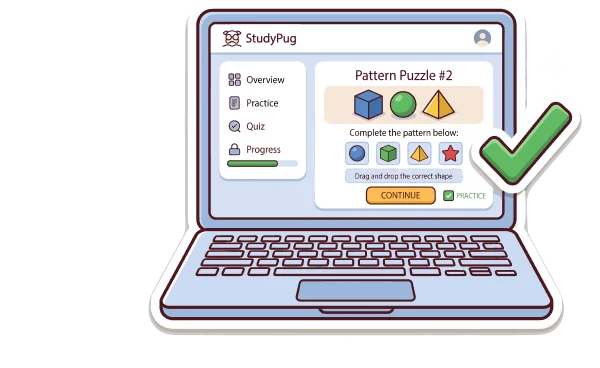
Practice until it truly clicks.
Try It Now
Test your knowledge
Our approach aligns with the evidence
Exam Scores
Better Recall
Less Anxiety
Calculus 3 Topics
1. Three Dimensions
2. Vector Functions
3. Partial Derivatives
4. Partial Derivative Applications
5. Multiple Integrals
6. Multiple Integral Applications
6 Chapters · 34 Topics · 249 Videos
Discover Our Learning Areas
Explore key subjects and start learning with interactive content.




What is Calculus 3?
Calculus 3 — formally known as Multivariable Calculus — is the third course in the university calculus sequence. Where Calculus 1 introduced limits and derivatives and Calculus 2 developed integration techniques and series, Calculus 3 extends all of that into two and three dimensions. You move from working with functions of a single variable to functions of several variables, and from curves to surfaces and volumes. It is a core requirement for Australian university students in engineering, mathematics, physics, computer science, and economics programs.
What topics are covered in Calculus 3?
Calculus 3 covers a wide range of interconnected topics, roughly in the following sequence:
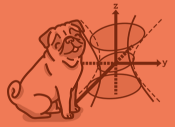
Vectors and 3D geometry. You begin by extending coordinate geometry into three dimensions — dot products, cross products, lines and planes in space, and quadric surfaces. This spatial reasoning underpins everything else in the course.
Multivariable functions and partial derivatives. Functions of two or three variables have multiple rates of change. Partial derivatives capture how a function changes with respect to one variable while the others are held fixed. The gradient vector, directional derivatives, and the chain rule all extend naturally from single-variable calculus here.
Optimisation. Finding maxima and minima of multivariable functions requires the second derivative test for functions of two variables and the method of Lagrange multipliers for constrained optimisation — both high-frequency exam topics.
Multiple integrals. Double and triple integrals extend single-variable integration to compute volumes, masses, and averages over 2D and 3D regions. Setting up the correct limits of integration — especially when converting between Cartesian, polar, cylindrical, and spherical coordinates — is where most students spend the most practice time.
Vector calculus. Line integrals and surface integrals generalise integration along curves and across surfaces. The three major theorems — Green's Theorem, Stokes' Theorem, and the Divergence Theorem — unify these ideas and are the conceptual climax of the course.
Is Calculus 3 harder than Calculus 2?
Most students find Calculus 3 conceptually harder than Calculus 2, even if the individual calculations are sometimes more routine. The difficulty is primarily geometric: you need to visualise surfaces, volumes, and vector fields in three dimensions, then translate that picture into correct integral bounds or the right theorem to apply.
The most commonly failed topics in Australian university Calculus 3 units are triple integrals (getting the order of integration and the coordinate system right), surface integrals (parameterising the surface correctly), and Stokes' Theorem (correctly identifying orientation). These are not impossible — they require methodical practice with many worked examples, not just re-reading lecture notes.
The students who do well are the ones who work problems every day, sketch every surface before integrating, and use practice tests to simulate the time pressure of a real exam.
How is Calculus 3 taught and assessed at Australian universities?
Australian universities typically deliver Calculus 3 as a single semester unit (worth 6 credit points in most cases), combining two or three lectures per week with a weekly tutorial. Assessment usually includes online assignments or weekly quizzes accounting for 10–20% of the final grade, a mid-semester test worth 20–30%, and a final examination worth 50–60%. Some institutions include a lab or computing component using MATLAB or Python for numerical methods.
The final exam is closed-book at most institutions and runs for two to three hours. Questions tend to test whether you can set up and evaluate integrals correctly, apply the vector calculus theorems to unfamiliar problems, and interpret results geometrically. Practising under timed, closed-book conditions — using mock finals that reflect this format — is the single most effective exam preparation strategy.
What comes after Calculus 3?
After Calculus 3, most Australian engineering and mathematics students move into Differential Equations (ordinary and partial), Linear Algebra, and — depending on their program — Numerical Methods or Complex Analysis. The multivariable calculus tools you develop in Calculus 3 appear constantly in these follow-on courses: partial derivatives underpin partial differential equations; line and surface integrals appear in electromagnetism and fluid mechanics; the gradient and divergence are central to mathematical physics.
Building genuine conceptual understanding in Calculus 3 — not just procedural skill — pays dividends across your entire degree.
Why StudyPug for Calculus 3?
StudyPug is designed specifically for university students who need more than a textbook. Here is what makes it effective for Calculus 3:
Certified-teacher video lessons that teach the method. Every topic is explained by an experienced instructor in a step-by-step video. The focus is on understanding how to approach a problem, not just copying a procedure. You can watch any lesson as many times as you need — at 2 a.m. before a mid-semester test, or on the bus between lectures. These lessons are made by qualified teachers, not AI-generated content.
A diagnostic that finds your gaps. Before you spend hours on topics you already understand, StudyPug's diagnostic assessment identifies exactly where your knowledge breaks down. You get a personalised starting point, so every study session is focused and efficient.
Adaptive practice that keeps you in your learning zone. Practice problems adjust in difficulty based on your performance. If you are getting triple integrals right, the system moves you forward. If surface integrals are causing problems, you get more of them — at a level that challenges without overwhelming.
Mock exams built for university formats. StudyPug's practice tests are structured to reflect the mid-semester and final exam formats used at Australian universities. You can practise under timed conditions, review every solution in detail, and identify where your exam technique needs work — before the real thing.
One subscription, every course. Calculus 1, 2 and 3, Linear Algebra, Differential Equations, Statistics — all included. As you progress through your degree, StudyPug covers the full sequence without any additional cost.
Free daily practice content is available without a subscription. A paid plan unlocks unlimited video lessons, the full adaptive practice system, and complete mock exams. Every subscription is backed by a 30-day money-back guarantee.
What you learn: Calculus 3 topic coverage
StudyPug covers the full Calculus 3 curriculum as taught at Australian universities. Key topic areas include:
- Vectors, dot and cross products, and 3D coordinate geometry
- Multivariable limits and continuity
- Partial derivatives, the gradient, and directional derivatives
- The chain rule for multivariable functions
- Optimisation: critical points, second derivative test, Lagrange multipliers
- Double integrals in Cartesian and polar coordinates
- Triple integrals in Cartesian, cylindrical, and spherical coordinates
- Vector fields, divergence, and curl
- Line integrals and the Fundamental Theorem of Line Integrals
- Green's Theorem
- Surface integrals and flux
- Stokes' Theorem
- The Divergence Theorem
No validated internal topic links are available for this page at this time. For the full topic list and lesson access, browse the Calculus 3 course page directly after signing in.
How to use StudyPug for Calculus 3
Step 1 — Take the diagnostic. Start with the Calculus 3 diagnostic assessment. It takes around 10–15 minutes and tells you exactly which topics need the most work. This is the most efficient way to begin, especially mid-semester when time is short.
Step 2 — Watch the concept video. For each weak area the diagnostic surfaces, watch the certified-teacher video lesson. Focus on the method — why each step is taken, not just what it is. Pause and replay freely.
Step 3 — Do adaptive practice. After the video, move into adaptive practice for that topic. The system will adjust difficulty based on how you perform, keeping you challenged and building real confidence.
Step 4 — Use Photo Search when you are stuck on a specific problem. If you have a homework question you cannot get past, Photo Search helps you find the matching lesson in seconds.
Step 5 — Take a mock exam. One to two weeks before your mid-semester test or final exam, attempt a full timed mock exam. Review every solution carefully, note where you lost marks, and return to the relevant video lessons to close those gaps.
Repeat this cycle across all the topics the diagnostic identifies, and you will walk into every Calculus 3 exam better prepared than you were before.
Calculus 3 FAQ
Unsure how StudyPug works? Need help with setting up? Check our frequently asked questions or contact us for help.
What do you learn in Calculus 3, and what topics does it cover?
Calculus 3 — also called Multivariable Calculus — extends single-variable calculus into two and three dimensions. Core topics include vectors and the geometry of space, multivariable limits and continuity, partial derivatives, the gradient and directional derivatives, multiple integrals (double and triple), and vector calculus: line integrals, surface integrals, Green's Theorem, Stokes' Theorem, and the Divergence Theorem. Most Australian university engineering and mathematics programs cover these across one full semester unit.
What is the difference between Calculus 3 and Calculus 2?
Calculus 2 focuses on single-variable techniques: integration methods (integration by parts, partial fractions), sequences, series, and convergence tests. Calculus 3 moves into multiple dimensions — you work with functions of two or three variables, learn to differentiate and integrate across surfaces and volumes, and apply theorems that connect different types of integrals. The conceptual jump from 2D to 3D thinking is the biggest challenge students face at this transition.
What are the prerequisites for Calculus 3, and what course comes after it?
You need a solid pass in Calculus 2 (or its equivalent) before tackling Calculus 3. Strong algebra and trigonometry skills are also essential. After Calculus 3, most students move into Differential Equations or Linear Algebra, and often both simultaneously. These three courses — Calculus 3, Linear Algebra, and Differential Equations — form the mathematical backbone of most Australian engineering, physics, and applied mathematics degrees.
Is Calculus 3 hard, and where do students struggle most?
Calculus 3 is considered one of the toughest undergraduate mathematics units. Students most commonly struggle with visualising 3D surfaces, setting up the correct bounds for double and triple integrals, and knowing when to apply Green's, Stokes', or the Divergence Theorem. Partial derivatives are conceptually new, and the notation can be overwhelming at first. The key is working through many practice problems — not just reading theory — and reviewing the geometric interpretation of each concept before the calculation.
How is Calculus 3 assessed at Australian universities?
Assessment structure varies by institution, but a typical Calculus 3 unit at an Australian university includes weekly assignments or online quizzes (worth 10–20%), a mid-semester test (20–30%), and a final examination (50–60%). Some units include group projects or lab components. The final exam is typically three hours and covers all unit content. Practising under timed conditions using mock finals is one of the most effective ways to prepare.
What is one of the hardest topics in Calculus 3, and how do you approach it?
Stokes' Theorem is consistently one of the most difficult topics. It relates a surface integral of a curl to a line integral around the boundary — requiring you to correctly identify the surface, the orientation, and the bounding curve simultaneously. The best approach is to start with simple examples (flat surfaces, circular boundaries), sketch the geometry every time, and practise choosing the easiest surface for a given boundary. Working through many varied examples builds the pattern recognition you need for exam questions.




Written by the StudyPug Team
Last updated June 5, 2026
3 M+
students
★★★★★
4.8 average
K–12
all grades