TOPIC

Adaptation, Environmental pressures

MY PROGRESS

Pug Score

0%

Getting Started

"Let's build your foundation!"

Best Streak

0 in a row

Study Points

+0

Overview

Practice

Watch

Read

Quiz

Next Steps


Get Started

Get unlimited access to all videos, practice problems, and study tools.

Unlimited practice
Full videos

BACK TO MENU

Topic Progress

Pug Score

0%

Getting Started

"Let's build your foundation!"

Videos Watched

0/0

Best Practice

No score

Read

Not viewed

Best Quiz

No attempts


Best Streak

0 in a row

Study Points

+0

Overview

Practice

Watch

Read

Quiz

Next Steps

Read

Adaptation and Environmental Pressures: How Life Responds to Change

This topic examines how environmental pressures such as predation, climate, and food scarcity drive the development of structural, behavioral, and physiological adaptations in organisms through the process of natural selection.

What Are Adaptations and Environmental Pressures?

An adaptation is a trait physical, behavioral, or internal that helps an organism survive and reproduce in its environment. Adaptations are inherited and shaped by natural selection over many generations, not developed within a single lifetime.

An environmental pressure is any condition in the environment such as predation, drought, extreme cold, or food scarcity that affects which organisms survive and reproduce. These pressures determine which traits become more common in a population over time.
Understanding adaptations connects directly to Natural Selection, Adaptation and Survival, which establishes the foundational mechanism by which beneficial traits spread through populations.

The Three Types of Adaptations

Structural Adaptations

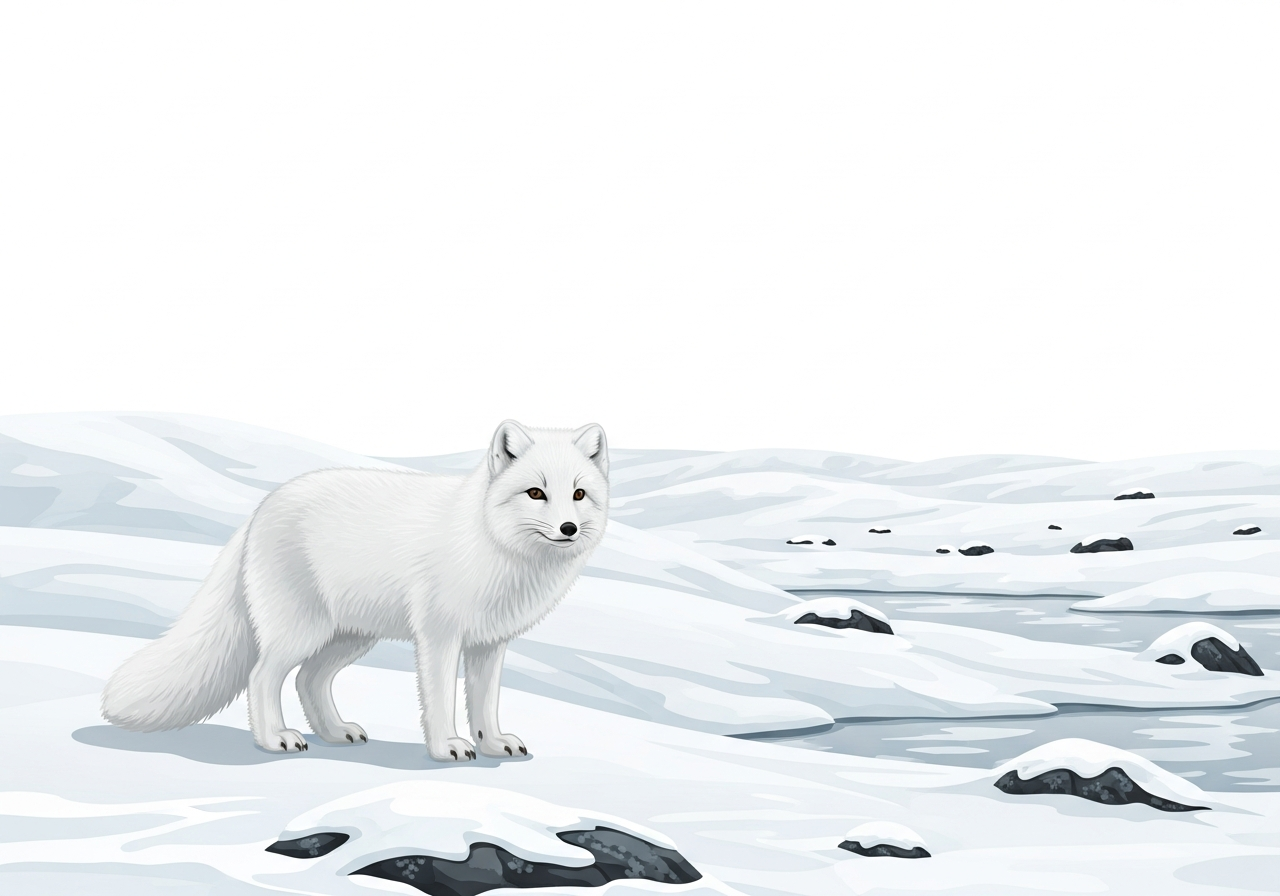
Structural adaptations are physical features of an organism's body that improve its chances of survival. Examples include a polar bear's thick fur for insulation, a cactus's thick waxy skin to reduce water loss, and white fur in arctic foxes for camouflage against snow.

Behavioral Adaptations

Behavioral adaptations are actions organisms perform to increase survival. Migration to warmer regions in winter, hibernation during food scarcity, and food caching storing surplus food for later retrieval are classic examples. Arctic foxes cache lemmings and birds during summer to survive winter food shortages.

Physiological Adaptations

Physiological adaptations involve internal body processes that support survival, such as a snake producing venom, a whale's blubber providing thermal insulation, or desert foxes having larger ears to release excess body heat through increased surface area.

How Environmental Pressures Drive Adaptation

Environmental pressures such as predation, climate change, and competition for resources create conditions where certain traits provide a survival advantage. Organisms with those traits survive and reproduce more, passing the traits to offspring this is natural selection.

For example, in a population of moths living on dark tree bark, dark-colored moths are better camouflaged from predators. Over many generations, dark moths increase in the population because they survive and reproduce more successfully. This connects to the study of Genetic Variation, Sources of Diversity, which explains why individuals within a population have different traits for natural selection to act upon.

If a species cannot adapt to rapidly changing conditions, its population may decline and eventually face extinction a concept explored further in Environmental Change, Ecosystem Alterations.

Key Terms & Definitions

Adaptation: A trait structural, behavioral, or physiological that increases an organism's fitness in its environment. Adaptations are inherited and shaped by natural selection over generations.

Environmental Pressure: A condition in the environment, such as predation, climate, disease, or food availability, that affects which organisms survive and reproduce.

Structural Adaptation: A physical feature of an organism's body that helps it survive, such as a polar bear's thick fur or a cactus's waxy skin.

Behavioral Adaptation: An action or pattern of activity that increases an organism's survival chances, such as migration, hibernation, or food caching.

Physiological Adaptation: An internal body process or chemical function that aids survival, such as venom production or thermoregulation.

Natural Selection: The process by which organisms with traits better suited to their environment survive and reproduce more, gradually increasing those traits in the population.

Camouflage: A structural adaptation where an organism's coloring or pattern helps it blend into its surroundings, reducing detection by predators or prey.

Mimicry: An adaptation where a harmless species closely resembles a dangerous or toxic species, deterring predators. Example: the harmless king snake resembling the venomous coral snake.

Food Caching: A behavioral adaptation where an organism stores surplus food during times of abundance to retrieve and consume during periods of scarcity.

Countershading: A structural adaptation where an animal is darker on top and lighter underneath, reducing visibility to predators by minimizing the appearance of shadow.

Echolocation: A physiological and behavioral adaptation used by bats and dolphins to navigate and hunt in darkness by emitting sound waves and interpreting their echoes.

Estivation: A behavioral and physiological adaptation similar to hibernation but triggered by heat and drought, allowing animals such as lungfish to survive dry seasons in a dormant state.

Genetic Variation: Differences in inherited traits among individuals of the same species, providing the raw material upon which natural selection acts.

Fitness: An organism's ability to survive and reproduce successfully in its environment, often increased by well-suited adaptations.

Applying Adaptation Concepts

Learners can strengthen their understanding by analyzing real-world examples: Why do desert foxes have larger ears than arctic foxes? (Thermoregulation larger surface area releases heat.) Why do prey animals have eyes on the sides of their heads? (Wider field of vision to detect approaching predators.)

Students should also consider how Human Impact, Anthropogenic Effects and Climate Factors, Global Patterns, Atmosphere create new environmental pressures that challenge species' ability to adapt quickly enough to survive.

Examining cases like cave fish losing eyesight over generations because eyes provided no advantage in darkness helps learners understand that adaptations are maintained only when they provide a survival benefit.

Building on Prior Knowledge

This topic builds on several foundational concepts. Taxonomy Systems, Kingdoms and Classification Criteria and Species Diversity, Biodiversity Measurements provide the framework for understanding how organisms are grouped and how diversity is measured. Evidence of Change, Fossil Record and Similarities offers historical evidence that species change over time in response to environmental pressures.

Knowledge of Biodiversity, Species Relationships Basic and System Interactions, Energy and Matter Flow helps students understand the ecological context in which adaptations evolve. Climate Change, Human Impact and Conservation, Environmental Protection demonstrate how human-driven pressures are now significant forces shaping adaptation.

Related Topics & Connections

This topic connects directly to Natural Selection, Survival and Reproduction and Genetic Variation, Sources of Diversity together these three topics form the core of evolutionary biology at this level. Fossil Record, Historical Evidence and Comparative Biology, Anatomical and Genetic Evidence provide supporting evidence for how adaptations have changed over geological time.

Ecological connections are explored through Food Webs, Energy Transfer and Matter Cycles, Biogeochemical Cycles, which show how adapted organisms function within ecosystems. Environmental Change, Ecosystem Alterations and Future Scenarios, Climate Predictions extend the discussion to how ongoing environmental change continues to drive adaptation or extinction.

Sustainability connections are found in Ecosystems, Sustainability, Conservation Strategies and Traditional Practices, Sustainable Methods. Looking ahead, this topic prepares students for Population Studies, Growth and Regulation, Global Change, Environmental Effects, Environmental Science, Sustainability, Conservation Strategies, and Introduction, System Dynamics, Complex Interactions.